 Everett
 One Product, One Standard
Homeowners sometimes ask why we don't offer a menu of siding brands the way some contractors do. The honest answer is that we made a decision years ago to install James Hardie fiber cement siding exclusively, and we haven't found a reason to change course. That's not a marketing angle — it's a standard we hold because of what we see on Everett homes, both when we tear old siding off and when we come back years later to look at our own work.
Everett sits in a tough spot for exterior materials. You've got salt-laden air moving in off Possession Sound and the Snohomish River delta, driving rain off the water most of the fall and winter, and a moss season that can stretch from October well into spring on shaded, north-facing walls. Siding here doesn't get an easy life. It gets tested every year, and the materials that cut corners show it within a decade.
What "Fiber Cement" Actually Is
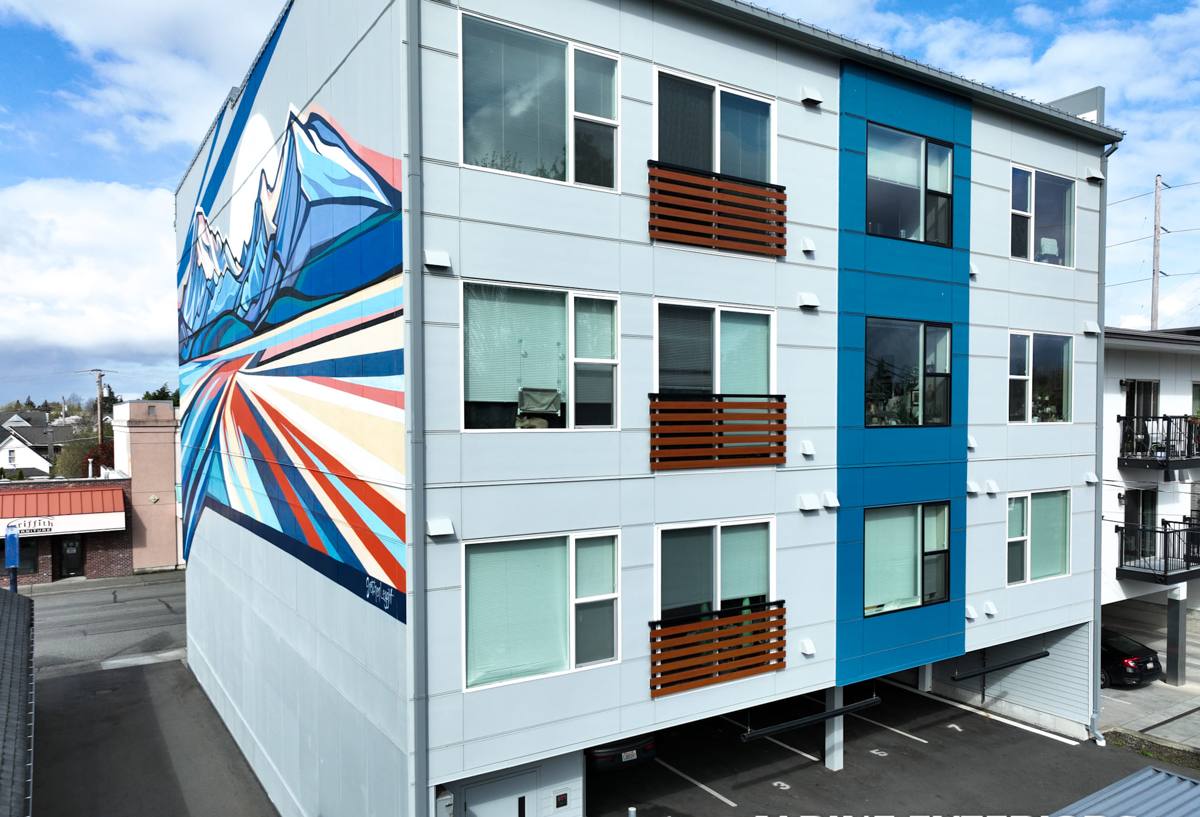
James Hardie siding is made from a mix of Portland cement, sand, and cellulose fiber, cured under pressure and heat. It's not a wood product with a fire-resistant coating, and it's not a plastic product formed to look like wood — it's an engineered mineral-based board that happens to be milled and painted to look like cedar lap, shingle, or board-and-batten siding.
That composition matters for three reasons that show up directly in how a house performs:
- It doesn't rot. There's no organic wood fiber for moisture to break down over time the way it does with wood-based products.
- It's non-combustible. Fiber cement doesn't contribute fuel to a fire the way wood or wood-composite siding can.
- It holds paint and factory finish far longer than wood because it doesn't expand and contract with moisture the way a wood substrate does, which is what usually causes paint to crack and peel prematurely.
Why Salt Air and Driving Rain Change the Calculus
Salt Air
Homes closer to the water in Everett and along the Mukilteo waterfront take a slow, steady beating from salt-laden air. Salt is hygroscopic — it pulls moisture out of the air and holds it against a surface. On wood-based or wood-composite siding, that means the material stays damp longer after every marine layer or rain event, which accelerates rot and delamination at the edges and butt joints. Fiber cement doesn't have that vulnerability because there's no wood fiber to break down.
Driving Rain
Everett gets wind-driven rain that pushes water sideways into wall assemblies, not just straight down. That's a real stress test for any lap siding, because it's testing the laps, the caulk joints, and the material itself for how it handles repeated wetting. Fiber cement is dimensionally stable when wet — it doesn't swell and shrink the way wood and wood-composite products do, so joints stay tighter over the life of the siding instead of gradually opening up.
Moss and Prolonged Dampness
On shaded north and west-facing walls under mature trees — common on older Everett lots and up toward the Snohomish County foothills — moss and algae can hold moisture against siding for months at a stretch. That prolonged dampness is exactly the condition that rots wood-based siding from the back side, often before a homeowner ever sees a problem on the painted face. Fiber cement doesn't feed that failure mode.
Why We Don't Install the Alternatives
We get asked about LP SmartSide, vinyl, and cedar fairly often, and we think homeowners deserve a straight answer rather than a sales pitch. Each of these is a legitimate, widely used product. We simply made a professional call that they're not what we want our name attached to in this climate.
| Product | What it does well | Why it's not our standard here |
|---|---|---|
| LP SmartSide / engineered wood | Lower material cost, easy to work with, textured wood look | Still a wood-fiber product — edges and cut ends need diligent sealing, and any breach in the factory coating gives moisture a path into the substrate |
| Vinyl siding | Low upfront cost, minimal maintenance, wide color range | Doesn't hold up to impact as well, can warp in sustained heat or reflected sun off nearby glass, and it's a thinner, more visibly "plastic" material up close |
| Cedar / primed spruce | Authentic wood grain and character, a classic look | Requires ongoing painting/staining and caulking to keep water out, and is the most exposed to rot and insect damage of anything on this list |
| Cemplank / Allura (other fiber cement) | Similar core material and performance to Hardie | We standardized on one manufacturer's engineering, color system, and warranty structure so our crews are experts in one install spec, not several |
The common thread with wood-based and wood-composite products isn't that they're bad products — it's that their long-term performance depends heavily on maintenance: caulking, repainting, and catching problems early. In a climate that stays wet for six or seven months of the year, that maintenance window closes fast, and a missed year or two can mean rot that's already established by the time it's visible.
How Hardie's Product Lines Are Actually Engineered for This Climate
James Hardie builds region-specific formulations called HZ10 and HZ5, engineered for different climate zones across the country. Western Washington falls into a wet-climate engineering zone, which means the boards installed here are formulated with that moisture exposure in mind rather than using a one-size-fits-all national product. That's a meaningful difference from a generic fiber cement board that isn't climate-matched.
Beyond the base material, Hardie offers several product families that cover most of what a homeowner wants aesthetically:
- HardiePlank lap siding — the most common choice, available in several exposure widths and both smooth and cedar-textured finishes.
- HardieShingle — staggered or straight-edge panels that replicate a cedar shingle look without the maintenance.
- HardiePanel — vertical panel siding, often used for board-and-batten style facades or modern accents.
- HardieTrim — matching trim boards so fascia, corner boards, and window trim age at the same rate as the field siding.
ColorPlus Factory Finish
Most Hardie siding we install uses the ColorPlus finish system — a baked-on, multi-coat finish applied at the factory under controlled conditions, rather than a coat of paint rolled or sprayed on site after installation. That matters for two practical reasons: the finish is more consistent and durable than field-applied paint, and it comes with its own dedicated finish warranty separate from the substrate warranty.
The Warranty Difference
James Hardie backs its fiber cement siding with a transferable limited warranty on the substrate, and the ColorPlus finish carries its own separate coverage. "Transferable" is worth pausing on — if you sell the home, the remaining warranty term can pass to the next owner, which is a real selling point for a buyer evaluating exterior condition. That's a structural advantage over products where warranty terms are shorter, non-transferable, or split across multiple parts of the installed system in ways that get complicated to track down the line.
Why Installation Quality Matters as Much as the Product
Even the best siding material fails early if it's installed wrong. Fiber cement has specific installation requirements that differ from wood or vinyl, and skipping them is where most premature siding problems actually originate — not in the material itself.
- Correct nailing pattern and fastener type, with nails driven flush, not overdriven into the board
- Proper clearance from grade, decks, and roof lines to keep the bottom edge out of standing water and splash-back
- Rain screen or drainage plane behind the siding so incidental moisture can escape instead of getting trapped against the sheathing
- Correctly sized and sealed joints at butt seams, corners, and around penetrations like hose bibs and light fixtures
- Manufacturer-specified overlap and exposure so the assembly sheds water the way it was engineered to
This is a big part of why we specialize in one product system instead of installing several. Our crews aren't relearning a different set of installation rules for every job — they're executing the same Hardie-certified spec, job after job, on Everett homes that all face the same salt air, rain, and moss pressures.
What This Means for Your Project
If you're comparing bids and see a wide range of products offered, it's worth asking each contractor the same question we ask ourselves: what happens to this siding on this house in fifteen years of Snohomish County weather? For us, fiber cement engineered for wet climates, finished at the factory, and installed to spec is the answer that holds up. It costs more upfront than vinyl and often more than engineered wood, but the maintenance burden is lower and the material is doing the structural work of resisting moisture rather than relying on a homeowner's paint schedule to keep water out.
If you're weighing a full re-side, a partial repair, or just want a second opinion on siding that's showing early signs of trouble, we're happy to take a look and walk you through what we'd recommend and why. Reach out for a free, no-pressure estimate — there's a form right below this page.