 Everett
 Why Siding Quotes Vary So Much From House to House
Ask three neighbors in the same Everett subdivision what they paid for siding replacement and you'll likely get three different numbers, even on houses that look nearly identical from the street. Siding pricing isn't a single per-square-foot rate — it's a stack of separate cost drivers that combine differently on every project. Understanding those drivers won't give you an exact number without a walk-through, but it will help you read a quote intelligently and know which line items are worth asking about.
This page breaks down the real factors that move a siding job's price up or down, from the size and shape of your house to what's hiding underneath your current siding to the climate conditions specific to Snohomish County. It's meant as general education, not a sales pitch for any one number — every house is its own case.
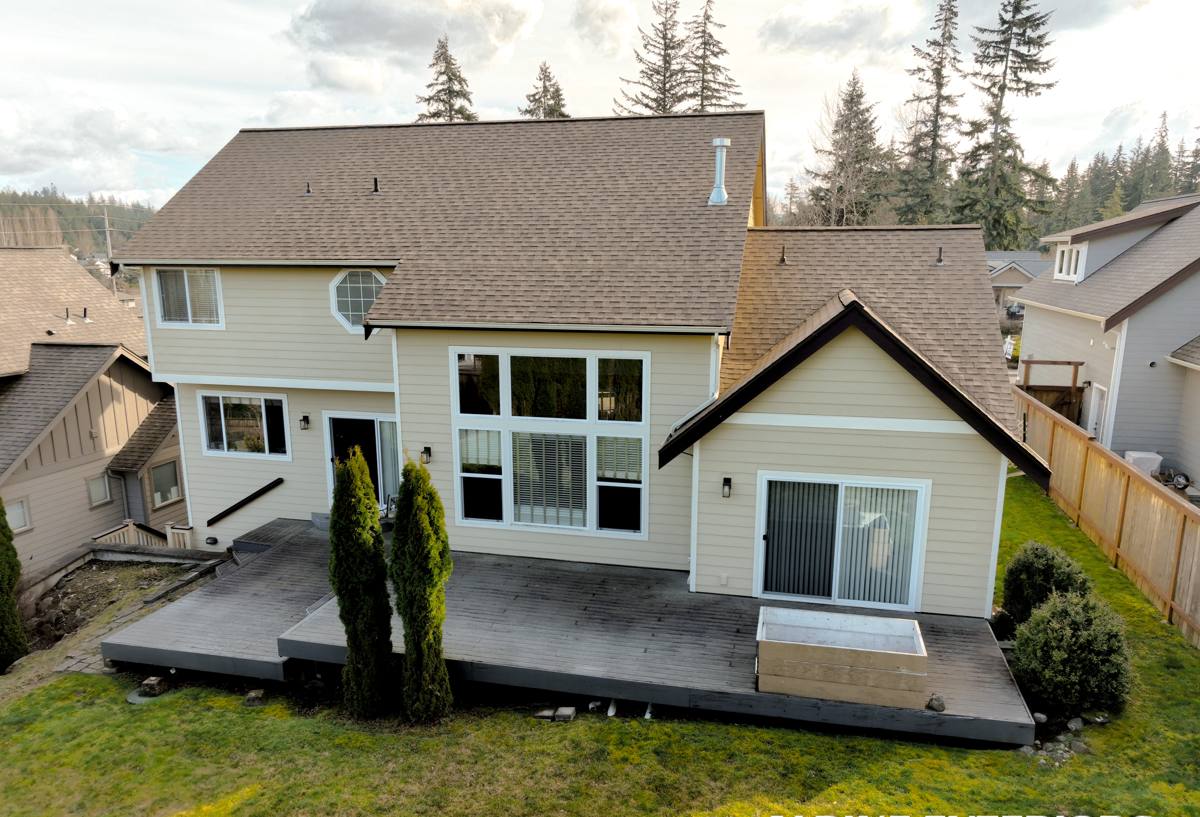
House Size and Wall Complexity
Square footage is the obvious starting point, but it's not the whole story. Two houses with the same total wall area can cost very differently to side depending on shape.
What adds complexity
- Multiple gables, dormers, and roof intersections that create extra cutting and flashing work
- Two-story and three-story walls that require staging, lifts, or extended ladder work
- Bump-outs, bay windows, and architectural details that break up flat wall runs
- A high window-and-door count, since each opening needs trim, flashing, and careful cutting
A simple single-story rectangular house is the cheapest shape to side, wall for wall. A multi-gable two-story with lots of window trim will cost more per square foot even with an identical total area, because more of the labor goes into detail work instead of covering open wall space quickly.
What's Underneath: Tear-Off vs. Repair Condition
Before any new siding goes up, the old siding comes off and the crew gets a look at the sheathing, house wrap, and framing underneath. This is where estimates can shift the most, because it's the one variable nobody can fully see from the outside before starting.
Common findings that affect cost
- Rotted or delaminated sheathing that needs to be cut out and replaced before new siding goes on
- Water-damaged framing around windows, doors, or roof-to-wall transitions
- Missing or failed house wrap that needs to be corrected for proper moisture management
- Old flashing details that don't meet current standards and need to be redone, not just covered
In Everett, where driving rain off Puget Sound and a long wet season put sustained moisture pressure on wall assemblies, sheathing damage behind old siding is a genuinely common find — especially on homes with older wood siding, house wrap installed incorrectly, or trim details that let water track behind the cladding for years. A contractor who tells you "it depends on what we find" isn't dodging the question; they're being honest about a real unknown. What separates a good estimate from a vague one is how clearly the contractor explains their per-unit repair pricing before the tear-off starts, so there are no surprises mid-project.
Material Choice
The siding material itself is usually the single biggest line item, and it's also where the long-term cost picture matters as much as the upfront number. We install James Hardie fiber cement exclusively, and part of our job as an educational resource is being straight about how it compares to the other products homeowners commonly consider.
| Material | Upfront Cost | Maintenance Over Time | Moisture Tolerance |
|---|---|---|---|
| Vinyl | Lowest | Low, but fades and can warp or crack | Not a moisture barrier itself; relies entirely on what's behind it |
| LP SmartSide (engineered wood) | Moderate | Needs repainting and edge sealing over its life | Wood-based; vulnerable at cut edges and joints if not maintained |
| Cedar / primed spruce | Moderate to high | Highest — regular refinishing, caulking, inspection | Natural wood; performs well only with disciplined upkeep |
| James Hardie fiber cement | Moderate to high | Low — factory ColorPlus finish, no regular repainting | Non-combustible, engineered for moisture and freeze-thaw performance |
Vinyl carries the lowest sticker price but performs worst in high wind and impact, and it doesn't hold paint or color the way fiber cement does since it isn't painted at all — its color is only as deep as the material itself, and it fades. Engineered wood products like LP SmartSide use a wood-strand substrate that, once the factory coating is compromised at a cut edge, joint, or fastener hole, is vulnerable to moisture wicking into the panel. Cedar and primed spruce look excellent when new and freshly maintained, but they demand an ongoing maintenance schedule most homeowners underestimate when they're comparing initial bids.
James Hardie fiber cement costs more upfront than vinyl and is comparable to or above engineered wood, but it's non-combustible, holds its factory-baked ColorPlus finish for years without repainting, and is engineered in specific HZ5 product lines for climates with sustained moisture exposure — which describes western Washington accurately. We standardized on Hardie because, installed correctly, it gives homeowners the best balance of upfront cost and total cost of ownership over a 20-30 year horizon, and because we're not willing to put our name on installations we know will need premature maintenance.
Trim, Accessories, and Detail Work
Siding is rarely just flat panels. The trim package is where a lot of the visual character of a house comes from, and it's also a real cost driver.
- Corner boards, window and door casing, and fascia trim — all typically also Hardie trim to match the field material
- Frieze boards and belly bands for architectural detailing
- Soffit and fascia work if it's being replaced or repaired alongside the siding
- Shutters, vents, and other accessories that need to be removed and reinstalled or replaced
A house with rich trim detailing costs more to side than a plain one of the same square footage, but that trim is also what makes fiber cement siding look like real architectural material rather than a flat wrap. It's worth discussing trim scope specifically in your estimate rather than assuming it's a minor add-on.
Labor and Installation Standards
Fiber cement siding is less forgiving of shortcuts than vinyl. Proper installation requires correct fastener spacing and depth, specific gapping at butt joints and trim, factory-caulked or properly flashed penetrations, and attention to manufacturer-specified clearances above grade, decks, and roof lines. Skipping these details doesn't always show up as a problem in year one — it shows up in year five or ten as premature paint failure, water intrusion, or warranty denial.
Labor cost reflects the time it takes to do this correctly: precise cutting (fiber cement requires proper dust-controlled cutting methods), careful fastening, and methodical flashing at every window, door, and roof intersection. A crew that's fast because they're skipping these steps will look cheaper on the quote and cost more in the long run.
Snohomish County Climate Factors
Local weather conditions genuinely change what a durable siding job requires in Everett, and they factor into both material choice and installation detail.
- Salt air: Everett's proximity to Puget Sound means airborne salt exposure on homes closer to the water, which accelerates corrosion on lower-grade fasteners and metal flashing over time.
- Driving rain: Wind-driven rain off the Sound pushes water sideways into wall assemblies far more aggressively than a straight-down rain, making proper flashing and water-resistive barrier detailing non-negotiable rather than optional.
- Long moss season: Snohomish County's extended damp season keeps north-facing and shaded wall sections wet for long stretches, which is exactly the condition that punishes materials and finishes that aren't built for sustained moisture contact.
These aren't abstract concerns — they're the specific reason we favor materials and installation details engineered for this kind of exposure rather than products designed primarily for drier climates.
Permits, Disposal, and Site Access
A few practical factors round out the total cost picture and are easy to overlook when comparing quotes:
- Building permits, which are typically required for full siding replacement in Everett and Snohomish County jurisdictions
- Dumpster or haul-away costs for tearing off and disposing of old siding material
- Site access — tight lot lines, fencing, landscaping, or limited driveway space can add time for staging and material handling
- Utility relocations, such as moving electrical meters, hose bibs, or light fixtures, if they interfere with proper siding installation
These items are usually smaller than the material and labor line items, but they should appear explicitly in a detailed estimate rather than being buried or omitted.
Getting an Estimate You Can Actually Compare
Because so many of these factors are specific to your house, the only way to get a real number is a walk-through. When you're comparing estimates from different contractors, use this checklist to make sure you're comparing the same scope:
- Does the quote specify the exact Hardie product line and profile, or just "fiber cement siding"?
- Is tear-off and disposal included, and is sheathing repair priced per unit or lumped as an unknown?
- Is trim scope (corners, casing, fascia, soffit) spelled out separately from the field siding?
- Does the estimate mention flashing and water-resistive barrier work explicitly, not just "siding installation"?
- Is the permit cost included or listed as the homeowner's responsibility?
- What warranty applies to labor versus what James Hardie's manufacturer warranty covers?
A vague, single-number quote is harder to evaluate than a detailed one, even if the detailed one looks more expensive at first glance — it usually means more of the real scope is accounted for up front instead of surfacing as change orders later.
If you're weighing a siding replacement on your Everett home and want a clear, itemized picture of what your specific project involves, we're happy to walk the house with you and put together a free, no-pressure estimate — no obligation, just an honest look at what your siding actually needs.