 Everett
 Mukilteo's Exterior Sits Between Two Weather Systems
Mukilteo occupies a unique spot in Snohomish County: close enough to Puget Sound to catch salt-laden air off the water, and squarely inside the Pacific Northwest's long wet season that runs from fall through spring. That combination is harder on a home's exterior than either factor alone. Salt air accelerates corrosion on fasteners, flashing, and anything metal on the building envelope. The driving rain that comes with Sound-facing exposure and winter storm systems pushes moisture sideways into siding joints and seams, not just straight down where gutters and overhangs can catch it. And the moss and mildew season that follows every wet PNW winter finds a foothold anywhere siding stays damp too long — north-facing walls, shaded elevations, and anything installed without proper drainage behind it.
None of this is unusual for western Washington. What matters is whether the exterior on a given home was built and installed to handle it. A lot of siding failures we get called out to inspect in the Mukilteo area aren't really material failures — they're installation or product-selection problems that took a few years of this specific climate to show up.
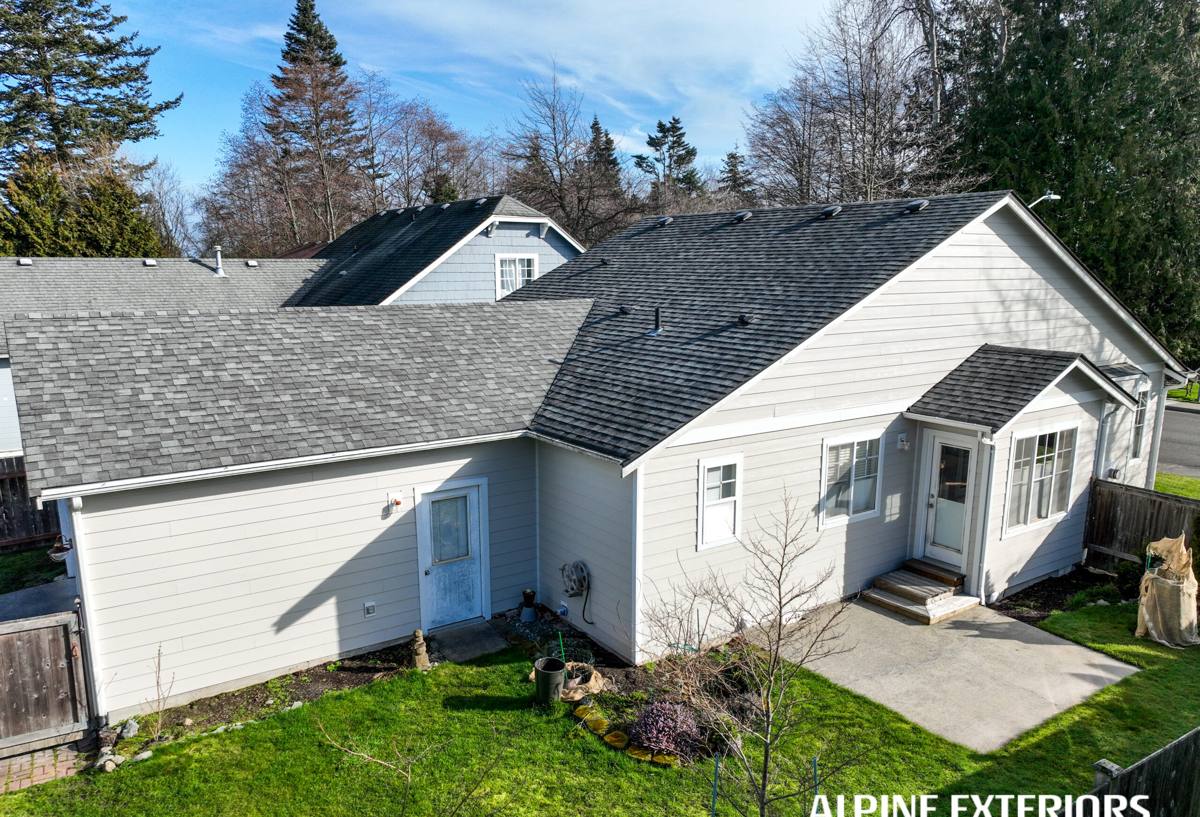
Why We Install Only James Hardie Fiber Cement
We made a deliberate decision as a company to install one siding system: James Hardie fiber cement. We don't install vinyl, LP SmartSide, Cemplank, Allura, primed spruce, or cedar. That's not a marketing position — it's a standard we hold because of what we've seen these products do over time in exactly this climate, and because we'd rather stand behind one system we trust completely than offer several and hope the homeowner picked the right one.
What Fiber Cement Does That Others Struggle With
James Hardie siding is non-combustible, which matters increasingly in Washington as wildfire smoke and ember exposure become a bigger part of the conversation even on the west side of the state. It doesn't absorb water the way wood-based composites and untreated wood products can, which is the single biggest reason it holds up better through repeated wet-dry cycles. And it comes from the factory with ColorPlus finish — a baked-on finish system that's far more consistent and durable than field-applied paint, which is where a lot of maintenance costs on other sidings come from over a 10-15 year window.
Climate-Engineered for the Northwest
Hardie's HZ product lines are engineered by climate zone, and the HZ5 line is built for the wetter, colder regions that include western Washington. That's a meaningful difference from a one-size-fits-all siding product — the formulation accounts for the freeze-thaw and moisture exposure that's normal here, not just in a lab test but in the field performance data Hardie has built over decades.
What "Trade-Offs" Actually Means With Other Products
We're not going to tell homeowners that vinyl or wood siding is garbage — plenty of it is still on the market and plenty of contractors install it well. But we've made a professional call that the trade-offs aren't worth it for the homes we build our reputation on:
| Material | Where It Struggles Locally | Long-Term Consideration |
|---|---|---|
| Vinyl siding | Can warp or become brittle with temperature swings; seams are a moisture entry point in driving rain | Lower upfront cost, but color fades and panels can't be spot-repaired invisibly |
| LP SmartSide / engineered wood | Edge and seam moisture absorption if caulking and flashing aren't maintained perfectly | Requires more diligent maintenance in a climate that doesn't forgive missed years |
| Cedar or primed spruce | Needs ongoing sealing/painting to resist the wet season; prone to moss and mildew without upkeep | Beautiful when new, but the maintenance schedule is demanding here |
| James Hardie fiber cement | Requires correct installation (gaps, flashing, fastening) to perform as designed | Factory finish and non-combustible core hold up with far less maintenance over decades |
The common thread with the products we don't install isn't that they're poorly made — it's that they ask more of the climate, the installer, or the homeowner's maintenance schedule than we think is reasonable to expect year after year in a place like Mukilteo.
Beyond Siding: Roofing, Windows, and Decks
Siding doesn't work in isolation. The roof, windows, and any deck attached to the house all interact with the same water and wind exposure, and a weak point in one system undermines the others. We handle all four so the building envelope gets treated as one connected system rather than four separate contractors pointing fingers at each other when something leaks.
How the Systems Connect
- Roof edges, valleys, and step flashing determine how much water ever reaches the siding in the first place
- Window flashing and trim details are common failure points where siding meets an opening — this is where a lot of hidden water damage starts
- Deck ledger boards attach directly to the house structure and need proper flashing to keep water out of the wall behind them
- Consistent detailing across all four trades means fewer transitions where two different contractors' work has to line up perfectly
What Correct Installation Actually Involves
Fiber cement siding performs the way it's rated to perform only when it's installed to the manufacturer's specifications — this is one of the most common places we see other installers cut corners, not because the material failed but because the install didn't follow the details that matter in a wet climate.
The Details That Matter Here
Proper installation includes a drainable weather-resistive barrier behind the siding, correct fastener spacing and depth so panels aren't over-driven or under-driven, minimum clearances at grade and at horizontal surfaces like decks and roofs, and properly sealed or capped joints at butt seams and corners. In a climate with regular driving rain off the Sound, these details are what keep water from getting behind the siding rather than running off the face of it. Skipping any one of them doesn't usually cause an immediate problem — it shows up two, five, or ten years later as rot in the sheathing that nobody sees until the siding comes off.
The Case for a Local Crew
Siding crews that work Snohomish County regularly build a feel for which elevations on a given lot take the worst of the weather, how local permitting and inspection processes run, and what the moss and algae growth pattern looks like on homes a few years after installation versus homes where drainage details were rushed. That's not something a crew based somewhere with a drier climate picks up quickly. A local crew has also usually already dealt with the specific mix of wind exposure, tree cover, and rain patterns that show up block to block in a community like Mukilteo, where waterfront-adjacent lots and more sheltered inland lots can have noticeably different exposure even a short distance apart.
Cost Factors Homeowners Should Understand
Every siding job is priced around a handful of variables, and understanding them helps a homeowner evaluate any quote, not just ours.
| Factor | Why It Moves the Price |
|---|---|
| Existing siding removal | Tear-off and disposal of old material adds labor and dump fees before new siding goes up |
| Sheathing and moisture damage | Rot found once old siding is off may need repair before new siding can be installed correctly |
| Home size and complexity | More corners, windows, and roof lines mean more cutting, flashing, and detail work |
| Siding profile and finish | Lap width, texture, and ColorPlus color selection affect material cost |
| Access and site conditions | Slopes, tight lot lines, and staging space affect labor time and equipment needs |
We don't quote a job without seeing the house — anyone who gives a firm number over the phone is guessing, and guesses tend to turn into change orders once the old siding comes off.
Maintenance Once Hardie Siding Is Installed
One of the practical benefits of switching to fiber cement is how little ongoing maintenance it asks for compared to wood or engineered wood products. That said, "low maintenance" isn't "no maintenance," especially in a climate that grows moss on almost anything left alone long enough.
- Rinse siding with a garden hose once or twice a year to clear salt residue, pollen, and general grime — avoid high-pressure washing directly into seams
- Keep gutters clear so overflow doesn't run down the siding face repeatedly during heavy rain
- Trim back vegetation and tree limbs that keep a wall shaded and damp, which is where moss and mildew take hold first
- Walk the exterior once a year and check caulking at trim, window, and corner joints for cracking or gaps
- Address any impact damage promptly — a chip or crack in the factory finish is a small repair now and a bigger one if moisture gets behind it
Signs Your Current Siding Needs Attention
Whether a home currently has vinyl, wood, engineered wood, or older fiber cement, there are warning signs worth acting on before they become structural issues:
- Visible warping, bubbling, or soft spots when pressed
- Persistent moss or algae growth that returns quickly after cleaning
- Paint that's peeling or blistering in a pattern, not just fading evenly
- Gaps opening up at seams, corners, or trim boards
- Musty smell or visible staining on interior walls that back up to exterior siding
- Siding that feels noticeably cooler or damp to the touch after dry weather
Any one of these is worth a professional look, especially on a home that's approaching or past the 15-20 year mark on its original siding.
Get a Straightforward Estimate
If you're weighing a siding replacement, dealing with a roof, window, or deck issue, or just want an honest read on what condition your exterior is really in, we're glad to come take a look. The estimate is free, there's no pressure attached to it, and you'll get a straight answer about what your home actually needs — use the form below to get started.