 Everett
 Silver Lake: A Neighborhood With Its Own Exterior Challenges
Silver Lake sits in southeast Everett, and homes here face a slightly different set of exterior pressures than houses closer to the waterfront or up on the bluffs. The lake itself keeps humidity higher at ground level than you'd find in a drier, more open part of Snohomish County. Add in the mature tree canopy that lines much of the shoreline and surrounding streets, and you get long stretches of shade on north- and east-facing walls that simply don't dry out between storms the way a sun-exposed wall would. Combine that with the driving rain and long, gray winters that define this whole corner of Western Washington, and you have a recipe for exterior materials that stay damp far more often than most homeowners realize.
This isn't unique to Silver Lake, but it's more pronounced here than in a lot of Everett neighborhoods. Salt-tinged air rolling in off Puget Sound reaches most of the city, and the driving rain and moss season everyone in Snohomish County deals with hits Silver Lake just as hard — often harder, because the tree cover slows evaporation and keeps siding wet longer after every system rolls through.
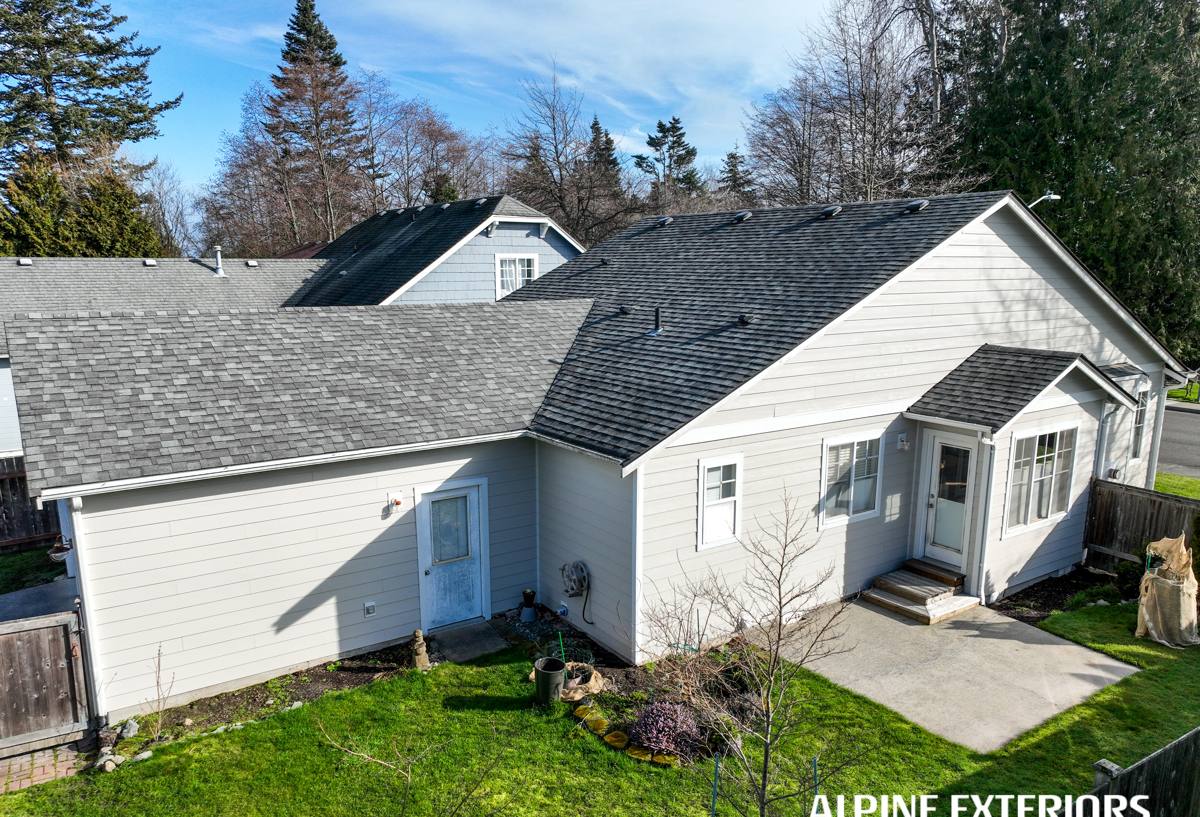
Why Siding Struggles Around the Lake
Moss, Mildew, and Prolonged Moisture Contact
Wood-based sidings — cedar, primed spruce, and engineered wood products like LP SmartSide — are all cellulose at their core. Cellulose absorbs water. When a wall stays shaded and damp for days at a stretch, which is common around Silver Lake from late fall through early spring, that moisture works its way into seams, fastener holes, and cut edges. Over years, that's what drives paint failure, soft spots, and eventually rot at the bottom courses and around window trim.
Moss Season Is Longer Here Than People Expect
Moss doesn't need standing water — it just needs shade and consistent dampness, and Silver Lake's tree-lined lots deliver both for most of the year. Moss holds moisture directly against a siding surface far longer than an open, sun-exposed wall would ever experience, which accelerates whatever moisture problem the material already has.
Vinyl's Limits in a Shaded, Humid Setting
Vinyl siding doesn't rot, but it isn't a moisture solution either — it's a rain screen that relies on a functioning weather barrier behind it, and it can warp, fade, or pull away from fastening points over time, especially in the temperature swings this area sees between damp mornings and any afternoon sun that does reach through the canopy. It also isn't fire-rated the way fiber cement is, which matters more every wildfire season, even on the west side of the state.
Why We Only Install James Hardie Fiber Cement
We made a decision as a company to install one siding system: James Hardie fiber cement. We don't offer LP SmartSide, vinyl, Cemplank, Allura, primed spruce, or cedar as options, and that's worth explaining honestly rather than just stating as policy.
Every one of those alternatives does something right — cedar looks beautiful, vinyl is inexpensive, engineered wood installs quickly. But in a climate like ours, with the moisture load Silver Lake homes carry for months at a time, the trade-offs stacked up against them for us:
- Cedar and primed spruce require ongoing refinishing and are the most vulnerable to the moss, rot, and moisture-driven paint failure this area produces.
- LP SmartSide is engineered wood with a resin-treated strand core — better moisture resistance than raw wood, but it's still wood-based and still depends on caulking, flashing, and paint staying intact at every cut edge.
- Vinyl is low-maintenance but thin, prone to impact damage, and offers no real fire resistance.
- Cemplank and Allura are also fiber cement, and reasonable products — but we standardized on one manufacturer's system so our crews install to one spec, every time, and so warranty claims never get tangled between a siding maker and a paint maker.
James Hardie fiber cement is non-combustible, engineered specifically for Pacific Northwest moisture with its HZ5 product line, and finished at the factory with ColorPlus technology — a baked-on finish that resists fading and chipping far better than field-applied paint, which matters enormously on shaded walls that take longer to dry after every rain.
Comparing Siding Materials for a Silver Lake Home
| Material | Moisture behavior | Maintenance | Fire resistance | Typical lifespan (installed to spec) |
|---|---|---|---|---|
| James Hardie fiber cement | Dimensionally stable, doesn't rot or swell | Occasional wash; ColorPlus finish resists fading | Non-combustible | 30+ years |
| Vinyl | Doesn't absorb water but traps moisture behind it if the barrier fails | Low, but cracks/warps and can't be spot-repaired invisibly | Low — melts/deforms under heat | 20-30 years |
| LP SmartSide | Resin-treated, but still wood-based; edge sealing is critical | Repainting cycle; edge inspection needed | Treated but combustible core | 20-30 years |
| Cedar / primed spruce | Absorbs and releases moisture readily; prone to cupping | Highest — regular refinishing required | Combustible | 15-25 years, shorter in shaded/damp settings |
How a Siding Project Runs in the Silver Lake Area
Every home is different, but the general sequence looks the same. We start with an inspection that includes looking behind existing siding wherever we can — around a corner, at a removed section, or at trim details — because Silver Lake's shaded lots mean we occasionally find moisture damage at the sheathing level that isn't visible from outside. From there:
- We assess the existing wall assembly, flashing, and any trim or window details that need attention before new siding goes on.
- We confirm the Hardie product line and profile that fits the home — lap siding, panel systems, or shingle-style, depending on the house's style and your preference.
- We install with manufacturer-specified fastening, clearances, and flashing details, which matters more in a wet climate than almost anything else about the job.
- We handle trim, caulking, and paint-line details so the finished wall sheds water the way it's designed to.
Because we also do roofing, windows, and decks, we can look at a Silver Lake home's whole exterior envelope at once — a leaking gutter or an aging roof edge often shows up as a siding problem years before anyone traces it back to its actual source.
A Practical Maintenance Checklist for Homes Near the Lake
- Check north- and east-facing walls each fall for moss buildup before it has all winter to sit against the siding.
- Keep gutters clear — overflow during heavy rain is one of the most common causes of localized siding and trim damage we see.
- Trim back branches and shrubs that keep a wall section shaded and slow to dry.
- Walk the exterior once a year looking for caulking gaps, especially around windows and trim, where water intrusion usually starts.
- Wash siding periodically — a simple rinse keeps organic growth from establishing a foothold, especially on shaded sides of the house.
Why a Local Crew Matters Here
A siding crew that mostly works drier, sunnier parts of the country will not instinctively flash a wall, seal a butt joint, or set clearances the way this climate demands. We work Everett and Snohomish County exteriors year-round, which means we've seen how differently a shaded Silver Lake lot ages a wall compared to an open, sun-exposed one a few miles away — and we build to the wetter, tougher case as the baseline, not the exception.
That local familiarity also shows up in smaller ways: knowing which details tend to fail first on homes of a certain age in this area, understanding how the lake's microclimate differs from the rest of the city, and being available for a warranty question or a follow-up visit without a long drive.
Beyond Siding: Roofing, Windows, and Decks
Siding doesn't work in isolation. A roof that's shedding water poorly, windows with failing seals, or a deck ledger board that's trapping moisture against the house all put extra load on the siding around them. Since we handle all four — siding, roofing, windows, and decks — we can flag issues in one system that are actually being caused by another, which is common on older Silver Lake homes that have had piecemeal work done over the years.
If you're weighing a siding project — or just want an honest read on how your home's exterior is holding up against Silver Lake's shade and moisture — we're glad to take a look. The estimate is free, there's no pressure, and you'll get a straight answer about what your home actually needs.