 Everett
 Pinehurst's Exterior Climate Reality
Pinehurst sits within the Everett area of Snohomish County, close enough to Puget Sound and its associated waterways that homes here deal with a specific combination of exterior stress most inland Washington neighborhoods don't see in the same intensity: salt-laden air, long stretches of driving rain off the Sound, and a moss and algae season that can run nine months out of the year under the region's tree cover and cloud ceiling. None of these factors alone is unusual for Western Washington. Together, and applied to a house year after year, they add up to real wear on whatever material is covering the walls.
Salt air is the piece homeowners tend to underestimate. It doesn't have to come from a beachfront lot — prevailing winds carry fine salt particulate well inland from the Sound, and it settles on siding, trim, fasteners, and window frames. Combined with near-constant moisture, it accelerates corrosion on exposed metal and speeds up the breakdown of paint films and less weather-resistant siding substrates.
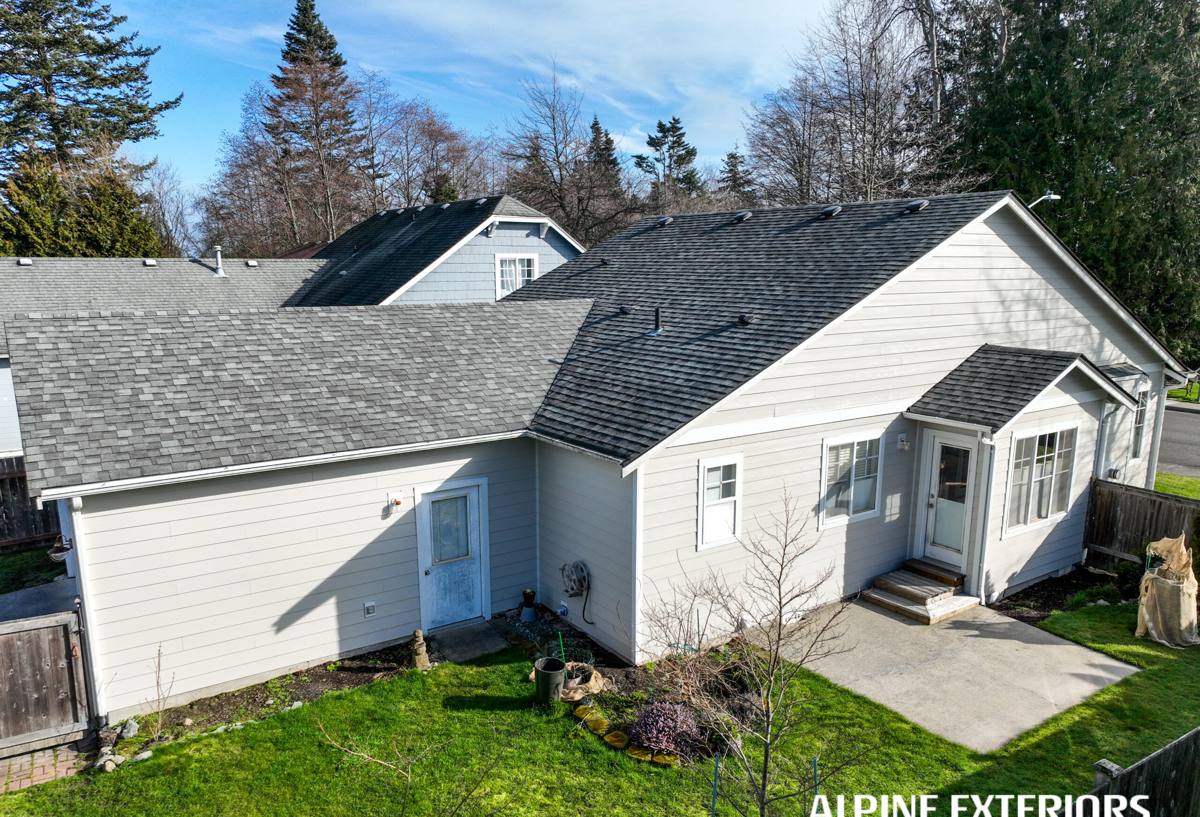
What This Does to Siding Over Time
Moisture Load
Everett's rain isn't just frequent — a lot of it arrives sideways during fall and winter storms, which means siding on the windward side of a Pinehurst home takes direct wind-driven water, not just rainfall from above. Any siding product with vulnerable seams, absorbent edges, or a coating that isn't built for constant wetting will show it first at the bottom courses, around window trim, and at butt joints.
Moss and Algae
Shade from mature trees, north-facing walls, and the sheer number of overcast, damp days mean moss and green algae staining are a near-permanent condition on siding here, not a seasonal nuisance. Porous or textured siding surfaces give moss more to grip onto, and once established, moss holds moisture against the wall assembly behind it — which is a bigger problem than the cosmetic staining itself.
UV and Salt Fading
Between summer UV exposure and the salt content in the air, factory or field-applied paint on siding tends to chalk, fade, and lose adhesion faster in this environment than manufacturers' generic warranty language usually assumes. Homeowners who repaint siding every 5-7 years in Pinehurst are not unusual — it's close to the norm for lower-grade products.
Why We Install Only James Hardie Fiber Cement
We made a deliberate decision to install one siding system: James Hardie fiber cement. We don't install vinyl, LP SmartSide, Cemplank, Allura, or unfinished wood siding like primed spruce or cedar. That's not a marketing position — it's a standard we hold because of what we've seen these products do, and not do, in exactly the kind of coastal Pacific Northwest conditions Pinehurst sits in.
Fiber cement is a cement, sand, and cellulose fiber composite. It doesn't absorb water the way wood-based products can, it doesn't soften or warp under sustained moisture exposure, and it's non-combustible — a meaningful factor as wildfire smoke and dry-season fire risk have become a bigger part of Western Washington summers. James Hardie also builds region-specific product lines engineered for climate zones, and the HZ5 formulation used across the Pacific Northwest is specifically designed for high-moisture, freeze-variable conditions like ours.
ColorPlus Finish
Most Hardie siding we install carries the ColorPlus factory finish — a baked-on, multi-coat finish applied in a controlled environment rather than a field-sprayed paint job. It holds color and resists the UV and salt-driven fading that shortens the life of site-applied paint, and it comes backed by its own finish warranty separate from the substrate warranty. For a Pinehurst home taking direct salt air and sun, that finish durability is the difference between repainting on a 6-year cycle and going 15 or more years before a repaint is even a conversation.
Warranty Structure
James Hardie backs its siding with a transferable limited warranty on the substrate, which matters at resale — a real consideration in an established, desirable Everett neighborhood like Pinehurst where homes turn over and buyers ask about exterior condition and age.
Why We Don't Install the Alternatives
Each of the products we've stepped away from does something well. Vinyl is inexpensive and low-maintenance in mild climates. LP SmartSide and Cemplank/Allura fiber cement are legitimate, engineered products used successfully across the country. Primed spruce and cedar offer a natural look many homeowners love. But standardizing on one system that we install correctly, every time, backed by manufacturer training and one clear warranty path, has served our customers better than juggling several product lines with different moisture tolerances, installation requirements, and long-term maintenance demands — especially in an environment as consistently wet and salt-exposed as ours.
| Factor | Vinyl | Wood (cedar/primed spruce) | James Hardie Fiber Cement |
|---|---|---|---|
| Moisture absorption | Low, but can trap moisture behind panels | High — prone to swelling, rot at joints | Very low; engineered for wet climates |
| Salt air resistance | Can chalk and become brittle over time | Accelerated weathering, finish failure | Factory finish built for UV/salt exposure |
| Moss/algae susceptibility | Moderate; smooth surface sheds some growth | High; porous surface holds moisture and growth | Lower; dense surface, proper install sheds water |
| Fire rating | Combustible | Combustible | Non-combustible |
| Typical repaint cycle | N/A (rarely painted) | 5-8 years | 15+ years with ColorPlus finish |
What Correct Installation Looks Like Here
Fiber cement performs the way it's engineered to only when it's installed to spec, and in a rain-driven environment like Pinehurst, the details behind the siding matter as much as the siding itself.
- Weather-resistant barrier (house wrap) installed and lapped correctly to shed water downward and outward
- Proper flashing at every window, door, and roof-to-wall intersection — the most common failure point in wind-driven rain
- Rainscreen gap where called for, to let incidental moisture drain and the wall assembly dry rather than trap water against the sheathing
- Correct fastener type and spacing per Hardie's installation guidelines — under- or over-driven nails are one of the most common causes of premature siding failure
- Caulked and sealed joints at trim and penetrations, using products rated for the coatings in use
- Proper clearance from grade, decks, and roof lines so siding isn't sitting in standing water or constant splash-back
We follow Hardie's installation specifications on every job, not as a checkbox but because skipping any one of these steps is how a well-made product still ends up failing early in a climate that gives it no room for error.
Siding Is One Piece of the Exterior
Siding doesn't perform in isolation. The same driving rain and moss conditions that affect wall cladding in Pinehurst also stress roofing, windows, and any exposed deck structure. We handle all four — siding, roofing, windows, and decks — because they share the same building envelope, and problems in one often show up as damage in another. A roof with a failing edge or poor flashing will send water down behind siding no matter how well that siding was installed. A window installed without proper flashing integration becomes a moisture entry point around otherwise sound Hardie panels. Looking at the exterior as one connected system, rather than a series of unrelated trades, is a big part of getting long-term performance out of any of it.
Why a Local Crew Matters
Pinehurst homes vary block to block in how exposed they are — proximity to open water, tree canopy, elevation, and which direction a house faces all change how much salt air, rain, and moss pressure a given wall assembly actually takes. A crew that works throughout Everett and Snohomish County day in and day out has a working sense of which details to prioritize on a shaded, moss-prone north wall versus a wind-exposed west-facing elevation, and understands local permitting requirements, typical siding tie-ins with older Everett-area construction, and how to sequence work around our wet season rather than fighting it.
Cost Factors on a Pinehurst Siding Project
| Factor | Why It Matters Locally |
|---|---|
| Existing wall condition | Moisture-damaged sheathing found during tear-off adds repair scope before new siding goes on |
| Home exposure | Wind- and rain-exposed elevations may need more flashing detail and labor time |
| Siding profile and finish | Lap width, texture, and ColorPlus color selection affect material cost |
| Trim and window count | More openings mean more flashing and trim labor |
| Access and site conditions | Tree cover, tight lots, and multi-story walls affect staging and labor time |
Maintaining Hardie Siding in a Pinehurst Climate
Fiber cement is low-maintenance compared to wood, but "low-maintenance" doesn't mean "no maintenance" in a climate this wet. A little seasonal attention protects the investment and keeps the ColorPlus finish looking the way it's supposed to for its full service life.
- Rinse siding gently once or twice a year to clear salt residue, pollen, and early moss growth before it takes hold
- Keep gutters clear so overflow doesn't run down and pool against siding at rooflines
- Trim back tree branches and shrubs touching the siding to reduce shade, trapped moisture, and moss pressure
- Check and re-caulk trim joints and penetrations every few years as part of routine upkeep
- Watch for staining or soft spots near grade, decks, and downspouts, which usually point to a drainage issue rather than a siding defect
- Have flashing and caulking inspected after major wind-driven storms, which are the most likely time for water intrusion to start
Get a Straight Answer for Your Home
Every Pinehurst property carries its own mix of sun exposure, tree cover, and wind direction, and that's exactly the kind of detail that should shape a siding plan rather than a generic estimate. If you're dealing with aging siding, visible moss and staining, or you're simply planning ahead, we're happy to take a look and walk you through what we're seeing and what it would take to do it right. Reach out for a free, no-pressure estimate — there's no obligation, just a clear look at where your home stands.