 Everett
 Siding in Port Gardner: Built for Everett's Waterfront Climate
Port Gardner sits close enough to the water that homes here take a different kind of beating than houses further inland in Snohomish County. Between the salt-tinged air off Possession Sound, the driving rain that comes sideways off the water in a winter storm, and a moss season that seems to start earlier and last longer every year, the exterior of a Port Gardner home works harder than most people realize. We've been doing exterior work in and around Everett long enough to know what that combination does to siding, trim, roofing, and decks — and what actually holds up against it.
This page is about what we see on homes in this part of Everett, how we approach siding replacement and repair for the area, and why having a crew that actually works this neighborhood matters more than picking the cheapest bid from someone who doesn't.
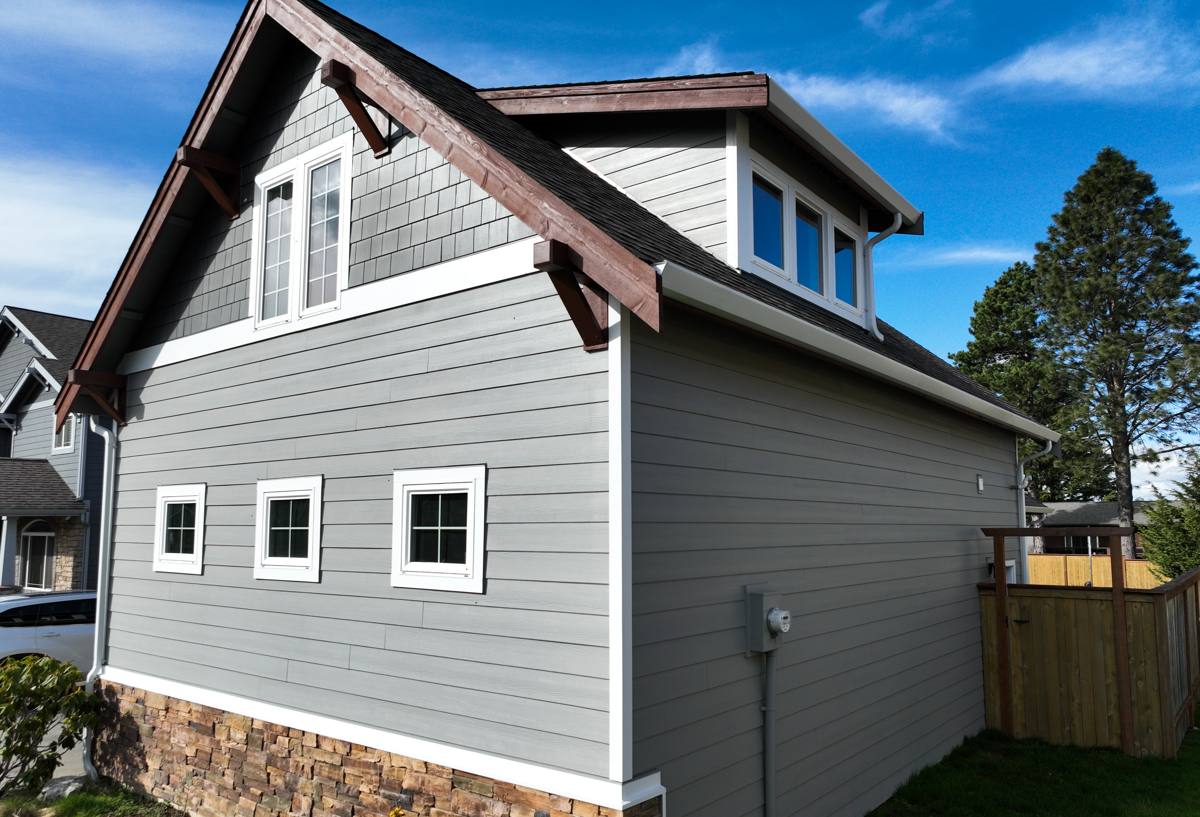
What Port Gardner's Climate Actually Does to a House
Salt Air and Moisture
Proximity to the water means a steady low-level exposure to salt-laden moisture in the air. It's not the same as a beachfront property getting direct spray, but it's enough over years to accelerate corrosion on fasteners, flashing, and any metal trim that isn't rated for it. It also means the air stays damper longer after a storm passes, which matters a lot for whatever siding material is on the wall.
Driving Rain
Everett gets wind-driven rain that doesn't just fall straight down — it gets pushed sideways into wall assemblies, especially on west- and south-facing elevations that catch the weather coming off the Sound. That kind of rain finds every gap in flashing, every failed caulk joint, and every seam that wasn't detailed correctly during the original install. Over time, water that gets behind the siding rather than running off of it is what causes real structural problems, not the rain itself.
Moss and Shade
A lot of Port Gardner's residential streets have mature tree cover, which is part of what makes the area pleasant to live in — but it also means less direct sun hitting roofs and north-facing walls, longer damp periods after rain, and a moss and algae season that can run most of the year in shaded spots. Moss on a roof holds moisture against the roofing material and can work its way under shingles at the edges. On siding, algae streaking and moss growth in corners and under eaves are usually the first visible sign that a wall isn't drying out the way it should between storms.
Signs Port Gardner Homeowners Should Watch For
- Soft or spongy spots when you press on siding near the bottom of walls or below windows
- Persistent moss or dark streaking on north-facing or shaded siding and roof sections
- Paint that's bubbling, peeling, or chalking faster than it should
- Rust staining running down from nail heads or metal trim
- Gaps opening up in caulking around windows, doors, or siding seams
- Visible sagging or moisture staining on decks, especially where boards meet the house
Why We Only Install James Hardie Fiber Cement in This Area
Given what this climate does to exterior materials, the siding choice matters more here than it would somewhere drier and less exposed. We made the decision years ago to install only James Hardie fiber cement siding, and a waterfront-adjacent area like Port Gardner is exactly the kind of place that decision pays off.
Fiber cement is non-combustible and dimensionally stable — it doesn't expand and contract with moisture the way wood-based products can, and it doesn't provide the organic material that moss and algae feed on the way wood or wood-composite sidings can. James Hardie's HZ5 product line in particular is engineered for climates with significant moisture exposure, which fits the Puget Sound region generally and a neighborhood like Port Gardner specifically.
We get asked why we don't install other common options, so here's the honest version rather than a sales pitch:
| Material | What It Gets Right | Why It's a Tougher Fit for This Climate |
|---|---|---|
| Vinyl siding | Low upfront cost, minimal maintenance in dry climates | Can warp or crack in temperature swings, seams give moisture an entry path, doesn't hold up as well against sustained wind-driven rain |
| LP SmartSide | Engineered wood, easier to install than fiber cement | Wood-based core is more vulnerable to prolonged moisture exposure than fiber cement if any seal point fails |
| Primed spruce / cedar | Natural look, traditional appeal | Requires ongoing repainting and sealing to keep moisture out; high-moisture climates shorten the maintenance interval significantly |
| James Hardie fiber cement | Non-combustible, factory-baked ColorPlus finish, engineered moisture resistance, strong transferable warranty | Higher material and install cost, requires correct installation to perform as designed |
That last point — correct installation — is worth being direct about. Fiber cement performs the way it's supposed to only when flashing, caulking, and clearances are done right the first time. A poorly installed Hardie job can still let water in around windows and at seams, which is exactly the failure point we watch for on inspections and why our installation process is as important as the material itself.
Siding Installation and Repair Process for Port Gardner Homes
Assessment
We start by actually looking at the house — not just the siding surface, but what's happening at the corners, under eaves, around windows, and at the base of walls where moisture problems tend to start. In a neighborhood like Port Gardner, we're specifically checking for the moisture and moss patterns described above, since they tell us whether we're dealing with a cosmetic issue or something that's already gotten behind the wall assembly.
Repair vs. Replace
Not every siding issue means a full replacement. Localized rot, damaged panels, or failed flashing in one section can sometimes be repaired without redoing the whole exterior — but if moisture has been getting behind the siding for a while, or if the existing material is a type that's reaching the end of its practical service life in this climate, replacement is usually the more honest recommendation, even if it's the bigger job.
Installation Detailing
For homes this close to the water, we pay particular attention to:
- Correct flashing at every window, door, and roof-to-wall intersection
- Proper clearance between siding and grade, decks, and roof lines to avoid wicking moisture
- Fastener spacing and type appropriate for both the Hardie product line and the wind exposure
- Caulking and sealant at seams that's rated for sustained damp conditions, not just occasional rain
Roofing, Windows, and Decks — the Rest of the Exterior
Siding doesn't work in isolation. On a house exposed to the kind of moisture and moss pressure common in Port Gardner, the roof, windows, and any deck structures are all part of the same system, and problems in one area often show up as symptoms in another.
Roofing
Roofs in shaded, moisture-heavy areas need moss management and attention to underlayment and flashing at valleys and penetrations. A roof that's shedding water properly protects the siding below it; a roof with moss buildup or failing flashing sends extra water down onto walls that then have to deal with it too.
Windows
Window flashing integration is one of the most common places we find water intrusion on older homes in this area. When we're doing siding work near existing windows, we check that flashing and use the opportunity to correct it if it's not tying into the new siding properly — an old, sound window paired with poor flashing detail can still let water into the wall.
Decks
Decks that meet the house directly need proper ledger board flashing to keep water from tracking back into the wall assembly, which is a common failure point we see on older Everett-area homes. Decking material and structural condition also matter more here given the sustained dampness and moss growth on shaded or covered decks.
Why a Local Everett Crew Matters
Anyone can look at a spec sheet for a siding product. What actually matters on a job in Port Gardner is knowing how this specific stretch of Snohomish County behaves — which elevations take the worst of the wind-driven rain, how much moss pressure to expect under mature tree cover, and what the salt air off the Sound does to fasteners and metal trim over time. That's knowledge that comes from doing the work here repeatedly, not from a general checklist.
A local crew is also more accountable. We're not passing through — this is the region we work in, and the reputation we build on one Port Gardner job follows us to the next street over. That's a real incentive to detail the flashing correctly and use materials that will still be performing well a decade from now, not just materials that look fine on install day.
Questions Worth Asking Any Contractor Before You Hire
- Do you carry current WA state contractor licensing and insurance, and can you provide proof?
- Who is actually on the crew doing the install — subcontractors or your own employees?
- What's your process for flashing at windows, doors, and roof lines?
- What warranty applies to the material, and what warranty applies to your labor separately?
- Can you walk me through why you recommend this material for a house in this specific location?
What to Expect From an Estimate
A useful estimate on a Port Gardner home isn't a drive-by number. It should include a real look at the current siding condition, an honest assessment of whether repair or replacement makes sense, and a clear explanation of what's included — surface prep, flashing and moisture barrier work, material, and finish — not just a total dollar figure. Costs vary based on the size of the home, the condition of what's underneath the existing siding, and how much trim and detail work is involved, so anyone quoting a firm number without inspecting the house first should be treated with some skepticism.
If your Port Gardner home is showing moss buildup, soft siding, paint failure, or you're just planning ahead for an exterior that can actually handle the waterfront weather here, we're happy to come take a look. There's a free, no-pressure estimate form below — no obligation, just an honest read on where your home stands.