 Everett
 South Everett's Exterior Climate Challenge
South Everett sits close enough to Puget Sound and the Snohomish River delta that homes here deal with a specific combination of exterior stress most inland Washington properties never see: salt-tinged marine air, long stretches of driving rain off the water, and shaded, moisture-holding conditions that keep moss and algae active for most of the year. None of these factors is dramatic on its own. Together, over years, they're what separates siding that looks good at year fifteen from siding that's already failing.
Snohomish County's climate is mild, which is part of the problem. There's rarely a hard freeze to dry things out, rarely a stretch of dry heat to bake moisture away. Instead, exterior surfaces stay damp for days at a time, especially on north- and west-facing walls that catch the weather off the Sound and don't get much afternoon sun. That's the environment your siding, trim, and roofline actually have to survive — not the brochure photo of a sunny Pacific Northwest afternoon.
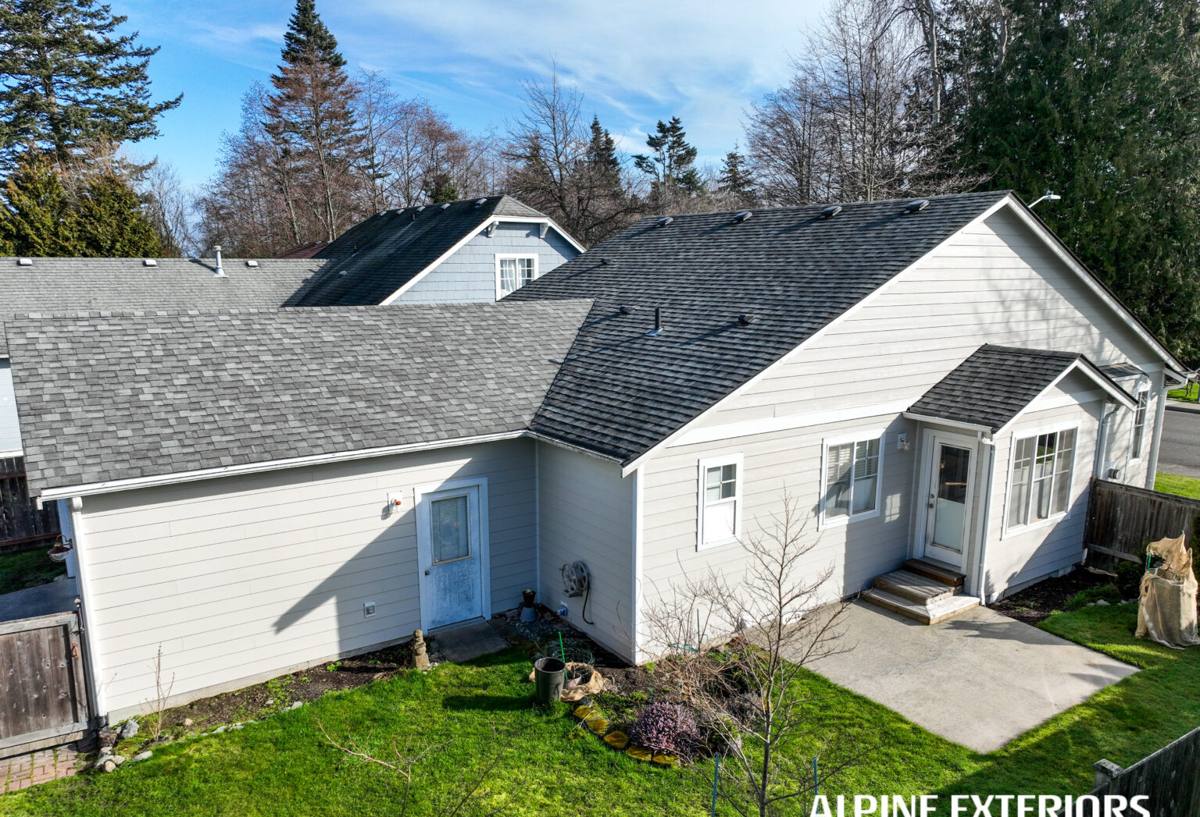
What Salt Air Actually Does to a House
Salt air doesn't have to come from oceanfront property to matter. South Everett's proximity to Puget Sound means airborne salt content is higher than it is further inland, even a few miles back from the water. Salt is hygroscopic — it pulls moisture out of the air and holds it against whatever surface it settles on. On metal, that means accelerated corrosion of fasteners, flashing, and hardware. On wood-based siding products, it means the material stays damp longer than it would in a drier climate, which speeds up rot at seams, butt joints, and anywhere water can find a way behind the surface.
It also affects paint and finish. Coatings that aren't formulated to resist salt exposure tend to chalk, fade, or lose adhesion faster near the water. This is one of the reasons factory-applied, baked-on finishes hold up better here than field-applied paint on site-primed materials — the factory process produces a harder, more uniform bond than anything applied with a brush or sprayer in a driveway.
Driving Rain and Wind-Driven Water
South Everett gets weather off the Sound that doesn't always fall straight down. Wind-driven rain pushes water sideways into wall assemblies, testing every seam, joint, and piece of flashing on a home's exterior. This is where installation quality matters as much as the material itself — house wrap, flashing details, and proper lap and fastening patterns are what keep wind-driven rain from getting behind the siding in the first place. A high-quality product installed with sloppy flashing will fail before a mid-grade product installed correctly.
Moss, Algae, and the Long Wet Season
Snohomish County's growing season for moss and algae is long, and shaded lots in South Everett — especially those with mature trees or homes packed close together — see it worst. Moss holds moisture against a surface, and where it takes hold on siding, trim, or roofing, it keeps that section of the house wetter than the surrounding area for longer stretches. On materials that are sensitive to sustained moisture, that's a slow path to swelling, delamination, or rot underneath the growth, even if the surface still looks intact from the street.
Moss and algae aren't just a siding issue. They show up on roofs, on deck boards, and in shaded corners of window trim — anywhere sun doesn't reach often enough to dry the surface out between rains. A homeowner dealing with moss on the siding is very often dealing with the same conditions on the roof and deck, which is one reason it makes sense to think about the whole exterior envelope rather than one component at a time.
Why We Only Install James Hardie Fiber Cement
We install James Hardie fiber cement siding exclusively. We don't install vinyl, LP SmartSide, Cemplank, Allura, primed spruce, or cedar. That's a deliberate standard, not a sales pitch, and it comes directly out of what we see happen to exterior materials in exactly the conditions South Everett homes face.
Fiber cement is made from sand, cement, and cellulose fiber — it doesn't rot, and it isn't a food source for moss or algae the way wood-based products can be. It's non-combustible, which matters more each year as wildfire smoke and ember exposure become a bigger part of Pacific Northwest summers. James Hardie's HZ5 product line is specifically engineered for climates like ours — freeze-thaw cycling, sustained moisture, and coastal-influenced weather — rather than a generic all-climate formulation.
Just as important is the ColorPlus finish. It's baked on in a factory process, not brushed or sprayed on site, and it's backed by a finish warranty separate from the substrate warranty. In a salt-air, high-moisture environment, that factory bond resists fading and chalking far better than field-applied paint, and it means repainting isn't a recurring maintenance item the way it is with many wood-based sidings.
Being Honest About the Trade-Offs
Fiber cement isn't the cheapest siding option up front, and it's heavier and less forgiving to install than vinyl — it has to be cut, fastened, and flashed correctly, which is exactly why installation quality is such a big part of how it performs long-term. We think that trade-off is worth it for a product that isn't fighting the moisture and organic growth that define this climate. But we'd rather tell a homeowner that up front than oversell it.
Comparing Materials Against South Everett's Conditions
| Factor | Vinyl | Wood-based (LP, cedar, primed spruce) | James Hardie Fiber Cement |
|---|---|---|---|
| Moisture/rot resistance | Doesn't rot, but can warp or crack in temperature swings | Vulnerable to swelling, delamination, rot at seams and cuts | Cement-based; doesn't rot or absorb moisture like wood fiber |
| Moss/algae resistance | Moderate; can trap moisture behind panels | Provides an organic surface moss and algae can take hold on | Non-organic surface; less hospitable to sustained growth |
| Salt air performance | Generally stable but can become brittle over decades | Finish and substrate both stressed by sustained salt moisture | Cement substrate largely indifferent to salt; factory finish holds up |
| Finish/maintenance | Color molded in, but fades and can look dated | Needs repainting/staining on a recurring cycle | Factory ColorPlus finish, warrantied, minimal recoating |
| Fire resistance | Melts/deforms under heat exposure | Combustible | Non-combustible |
Beyond Siding: Roofing, Windows, and Decks in the Same Climate
We handle siding, roofing, windows, and decks, and in South Everett those four systems are more connected than they look. A roof shedding water improperly, or a window with failed flashing, will feed moisture directly into the siding and trim below it — no siding material, fiber cement included, performs well if it's constantly being fed water from a failure above it. Decks in shaded, moss-prone yards face the same underlying pressure siding does: sustained moisture and organic growth wearing down materials that aren't built to resist it.
When we look at a home's exterior, we're looking at the whole envelope — how water moves off the roof, past the windows, down the wall, and away from the foundation. Fixing siding in isolation while ignoring a roofing or flashing problem just moves the failure point somewhere else.
What Correct Installation Looks Like Here
Given the amount of wind-driven rain South Everett sees, installation details matter more than the spec sheet. A correct James Hardie install includes:
- Proper weather-resistive barrier (house wrap) installed and lapped correctly before siding goes on
- Flashing at every window, door, and penetration, integrated with the house wrap rather than just caulked over
- Correct fastener type and placement per Hardie's engineering specs — not generic nails driven wherever's convenient
- Proper clearance at the bottom of the siding from grade, decks, and roofing to avoid wicking moisture
- Caulking and sealant only where Hardie's install guide calls for it — over-caulking can trap moisture rather than shed it
Skipping any of these doesn't show up as a problem on day one. It shows up in year five or ten, as a rot pocket behind a poorly flashed window or a swollen bottom course where water was never given anywhere to go.
Signs a South Everett Home Should Have Its Siding Looked At
- Moss or dark streaking concentrated on north- or west-facing walls
- Soft spots, especially near the bottom courses or around window trim
- Visible gaps, warping, or buckling at seams and butt joints
- Paint that's peeling, chalking heavily, or was last redone years ago
- Persistent musty smell along an exterior wall from the inside
- Rust staining running down from fasteners or flashing
Why a Local Crew Matters
A crew that works across Snohomish County sees these patterns repeatedly — which walls fail first, where moss actually causes damage versus where it's cosmetic, and what flashing details hold up against wind off the Sound versus what doesn't. That's different from a national installer working off a generic spec. It also means someone local is available if a warranty question or a maintenance concern comes up years down the road, not a phone number that's changed hands.
If you're weighing a siding, roofing, window, or deck project for a home in South Everett, we're happy to come take a look and talk through what we're seeing — no pressure, no obligation. A free estimate is a good place to start figuring out what your home actually needs.