 Everett
 South Everett sits close enough to Puget Sound that salt-laden air reaches homes well inland, and far enough into Snohomish County's tree cover that shade and moisture linger on rooflines for months at a time. Add the region's long, wet winters and the occasional wind event off the water, and a roof here is working harder than it looks. Metal roofing can be one of the best long-term answers to that combination, but only when the system, the details, and the installation are matched to this specific climate — not just dropped in from a spec sheet written for a drier part of the country.
Why South Everett's Climate Changes the Metal Roofing Equation
Metal roofing is often sold as a single product, but how it performs depends heavily on local conditions. In South Everett, three factors matter more than almost anywhere else in the state:
Salt Air
Proximity to Puget Sound means airborne salt is a real, if often underestimated, factor even for homes that aren't waterfront. Salt accelerates corrosion at fasteners, cut edges, and any point where a coating has been scratched or left exposed during installation. This is why fastener choice and edge treatment matter more here than in an inland climate.
Driving Rain
Wet-season storms in this part of Washington frequently bring rain at an angle, not just straight down. That changes how water behaves at seams, valleys, and penetrations, and it's part of why panel profile and underlayment choice deserve real attention rather than defaulting to whatever is cheapest or fastest to install.
Moss Season
South Everett's mix of mature trees and shaded lots means many roofs stay damp longer after a rain than roofs in more open areas. Moss and organic debris hold moisture against roofing materials for extended periods, which is a slow but steady stress on any roof surface, metal included, if the roof isn't detailed and maintained with that in mind.
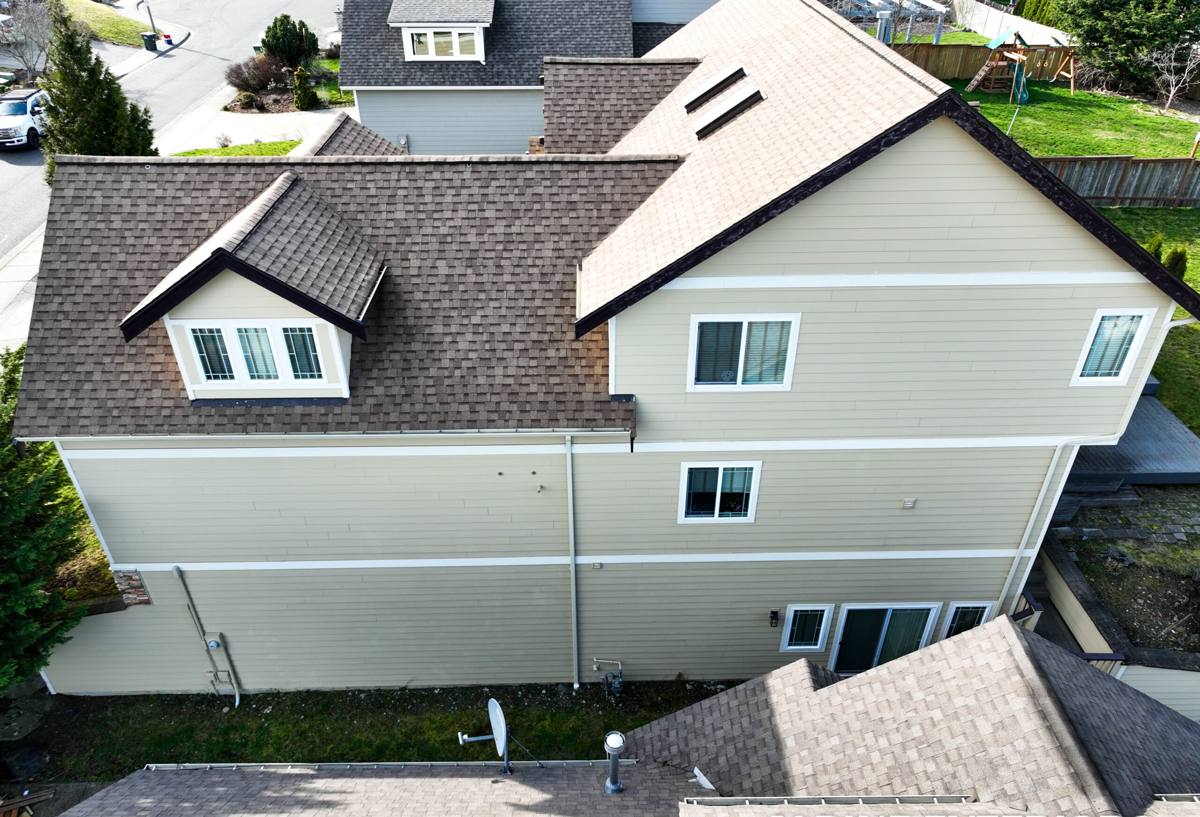
What Salt, Rain, and Moss Actually Do Over Time
None of these factors cause sudden failure. They cause slow, cumulative wear that shows up years later if it isn't planned for at installation:
- Corrosion creep starting at cut panel edges, exposed screw heads, or scratched coatings, gradually working outward.
- Fastener loosening from repeated wet-dry and temperature cycling, which is more pronounced with exposed-fastener panel systems.
- Moisture retention under moss and debris, which keeps panel surfaces and flashings damp far longer than open, sun-exposed sections of the same roof.
- Sealant fatigue at penetrations and transitions, since sealants in this climate are asked to move and flex more often than in drier regions.
A well-built metal roof handles all of this for decades. A roof where these details were rushed or generic will show problems in a fraction of that time — and the failures tend to show up first at the details, not across the whole roof surface.
Choosing the Right Metal Roofing System for This Area
Not all metal roofing is built the same way, and the differences matter more in a marine climate than a dry one. The table below compares the systems we most often discuss with South Everett homeowners.
| System | How It's Fastened | Best Fit For This Climate | Key Trade-Off |
|---|---|---|---|
| Standing Seam | Concealed clips, no exposed fasteners on the field | Strong choice near the Sound; fewer corrosion entry points | Higher material and labor cost |
| Exposed-Fastener Panel | Screws driven through the panel face | Workable inland or on outbuildings; needs disciplined fastener maintenance | Every fastener is a future maintenance point |
| Metal Shingles/Shakes | Interlocking panels, largely concealed fasteners | Good where a traditional roofline look is wanted | More seams and details than standing seam |
For most South Everett homes within a few miles of the water, we lean toward standing seam or another concealed-fastener system, simply because it removes the single biggest long-term maintenance item — exposed screws — from the equation. Exposed-fastener panels aren't a bad product; they're just a system that requires the homeowner to stay on top of fastener condition over the years, and we say so plainly rather than glossing over it.
Gauge and Coating
Panel gauge (thickness) affects dent resistance and rigidity, while the coating system affects how the panel holds up to UV, salt, and moisture over time. We don't push a single brand as the only option; we match gauge and coating to the specific roof, its exposure, and the homeowner's budget, and we explain the trade-offs rather than just quoting a number.
What a Correct Metal Roof Installation Involves
The panels get the attention, but a metal roof's performance is decided mostly by what's underneath and around them. On every South Everett project, this means:
Underlayment
A quality synthetic or self-adhered underlayment matters more here than in a dry climate, since it's the backup layer that protects the deck if wind-driven rain ever gets past a seam or flashing point.
Fastening and Clip Layout
Panel expansion and contraction with temperature swings has to be accounted for in how clips or fasteners are spaced and installed, or panels can oil-can, buckle, or work fasteners loose over time.
Flashing and Penetrations
Valleys, chimneys, vents, and wall transitions are where the large majority of roof leaks originate, metal or otherwise. These get custom-formed flashing and proper layering with the underlayment, not generic trim pieces caulked into place.
Ventilation
Proper intake and exhaust ventilation keeps moisture from building up in the attic space, which matters in our climate for both the roof deck's longevity and the home's overall moisture management.
Our Process on South Everett Projects
Every metal roofing job we run in this area follows the same basic sequence:
- On-site assessment of the existing roof, deck condition, ventilation, and any moss or moisture issues already present.
- System recommendation matched to the home's exposure — closer to the water versus more sheltered, tree-covered lots get different guidance.
- Tear-off or overlay decision, based on what the existing deck and roofing can support, not a default answer.
- Installation with attention to underlayment, flashing, and fastening details described above.
- Final walkthrough covering what was installed, what maintenance it needs, and what to watch for over the coming seasons.
Maintenance and Moss Prevention for This Climate
Metal roofing needs far less maintenance than shingles, but "less" isn't "none," especially under South Everett's tree cover. A simple annual routine goes a long way:
- Clear leaves, needles, and debris from valleys and gutters before the wet season sets in.
- Check for moss or algae buildup in shaded sections and address it promptly rather than letting it establish.
- Look at exposed fasteners (if that's your panel type) for early signs of loosening or corrosion.
- Confirm gutters and downspouts are flowing freely so water isn't backing up under panel edges.
- After any significant windstorm, do a visual check for lifted panels, flashing, or trim.
None of this requires climbing on the roof yourself — a lot of it can be checked from the ground or during a routine exterior inspection.
Why Local Experience in South Everett Matters
A metal roofing system that's correct for a dry, inland climate isn't automatically correct here. Crews that primarily work other regions can default to generic underlayment specs, standard fastener schedules, or panel choices that don't account for salt exposure or extended moss season. Working regularly in South Everett and the surrounding Snohomish County area means we're not guessing at how this climate treats a roof over ten or twenty years — we're building for the conditions we actually see, on homes with the same tree cover, wind exposure, and moisture patterns as yours.
Cost Factors to Understand Before You Get Quotes
Metal roofing costs more upfront than asphalt shingles, typically by a meaningful multiple depending on the system chosen. The table below breaks down what actually drives that number up or down, so you can compare quotes on an apples-to-apples basis rather than by the bottom line alone.
| Factor | Impact on Cost | Why It Matters Here |
|---|---|---|
| Panel system (standing seam vs. exposed-fastener) | High | Concealed-fastener systems cost more but reduce long-term maintenance near salt air |
| Roof complexity (valleys, dormers, penetrations) | High | More flashing detail work, which is where leaks originate |
| Tear-off vs. overlay | Moderate | Tear-off allows deck and ventilation inspection, which matters in a wet climate |
| Coating and finish grade | Moderate | Affects long-term corrosion and fade resistance |
| Access and roof pitch | Low to Moderate | Standard on most South Everett residential roofs, but steep or hard-to-access roofs add labor |
Is Metal Roofing the Right Call for Your Home?
Metal roofing isn't automatically the right choice for every South Everett home — it's a strong option when longevity, low maintenance, and resistance to this climate's specific wear patterns matter more to you than the lowest upfront cost. For some homes, especially those with unusual roof geometry or budget constraints, a different roofing material may make more sense, and we'll say so directly if that's what an honest assessment points to.
If you're weighing metal roofing for a South Everett home, we're happy to walk the roof, talk through what your specific exposure and tree cover mean for system choice, and give you a straightforward, no-pressure estimate. There's a form below if you'd like to get that conversation started.