 Everett
 Why Silver Lake Homes Take a Different Kind of Beating
Silver Lake sits in south Everett, surrounded by mature trees and, for many homes, close enough to the water that shade and humidity linger longer than they do in more open parts of Snohomish County. That combination — tree cover, lake moisture, and the marine air that moves through the whole Everett area off Puget Sound — creates siding conditions that are genuinely tougher than a typical suburban lot. Salt-laden air corrodes fasteners and trim faster than dry inland air does. Driving rain, especially in the fall and winter storm cycle, drives moisture sideways into laps, seams, and corner boards instead of just running down the face of the wall. And the shade from all that greenery means siding around Silver Lake often stays damp for days after a storm has passed, which is exactly the environment moss, algae, and mildew need to take hold.
None of that is a reason to panic about your siding. It's a reason to repair it correctly the first time, with materials and techniques built for this exact climate, instead of patching it with whatever's convenient. A repair that ignores how wet this neighborhood stays will fail again within a season or two.
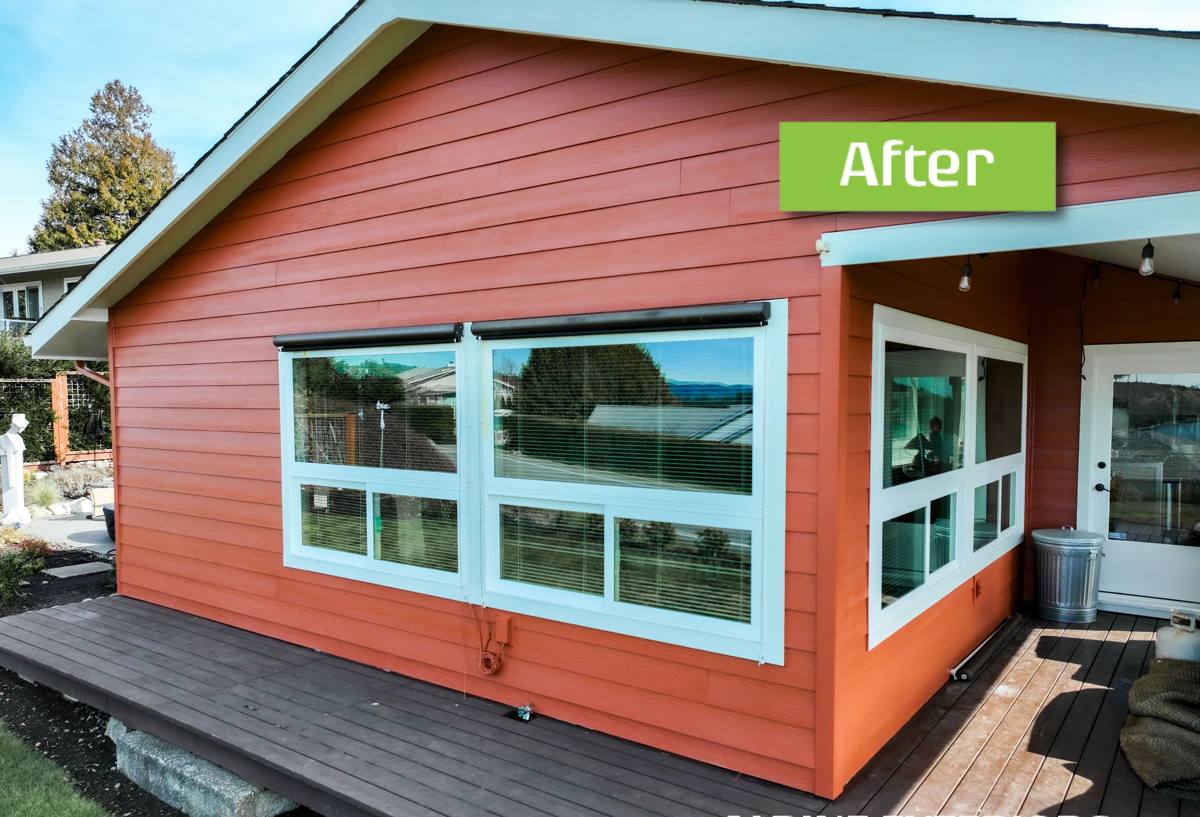
Signs Your Silver Lake Home Needs Siding Repair Now
Most siding problems in this neighborhood don't show up as a single dramatic failure — they show up as small, easy-to-ignore signs that get worse every wet season they're left alone. Worth checking for:
- Dark green or black staining, especially on the north or shaded side of the house, or anywhere close to tree cover
- Soft or spongy spots when you press on the siding, particularly near the bottom courses and around windows
- Paint that's peeling, bubbling, or chalking unevenly rather than uniformly across the wall
- Visible gaps at seams, corner boards, or trim where caulking has shrunk, cracked, or pulled away
- Rust streaks below nail heads or fasteners, a sign moisture and salt air are already working on the metal
- Warping, buckling, or panels that no longer sit flat against the wall
- Higher-than-normal moss or algae growth returning within months of a cleaning
Any one of these on its own might be minor. Several together, or any sign paired with soft or discolored wall sheathing underneath, usually means water has been getting behind the siding for a while, not just sitting on top of it.
What a Correct Siding Repair Actually Involves
A lot of "siding repair" in this region amounts to caulking a crack and repainting over it. That approach hides a problem instead of fixing it, and in a lake-adjacent, shaded neighborhood like Silver Lake it tends to buy you a single dry summer before the same spot fails again. A repair done right starts with figuring out why the siding failed in the first place, not just what it looks like on the surface.
That means pulling back damaged boards to check the water-resistive barrier and flashing underneath, not just the visible panel. It means confirming whether the original installation left proper clearance at the ground, deck, or roofline — a common source of repeat failures on older homes in wooded, moisture-heavy lots. It means matching replacement material, profile, and reveal so the repair is structurally sound and doesn't stand out as an obvious patch. And it means addressing the fastening and flashing details that let water in to begin with, so the same section isn't back on our schedule next winter.
Repair or Replace? How We Make the Call
Not every damaged section needs full replacement, and not every home benefits from a spot repair. The right call depends on how far the damage has spread and what's happening underneath the siding, not just what's visible from the yard.
| Situation | Usually Repair | Usually Replace |
|---|---|---|
| Isolated moss/algae staining, sheathing dry underneath | Yes — clean, treat, reseal | No |
| One or two damaged boards, rest of the wall sound | Yes — matched board replacement | No |
| Soft sheathing or rot found behind multiple sections | Sometimes, if contained | Often — repair won't hold long-term |
| Original siding is not fiber cement and failing broadly | Rarely | Usually — patching mismatched material rarely holds up |
| Repeated failure at the same spot after prior repairs | No | Yes — underlying cause needs a full fix |
We'll walk your home with you and explain what we find in plain terms, including when a full section replacement is genuinely the more cost-effective choice over repeated patch jobs.
Why We Repair Exclusively With James Hardie Fiber Cement
We don't install or repair with vinyl, LP SmartSide, primed spruce, cedar, or other fiber cement brands, and Silver Lake's climate is a big part of why. Vinyl expands and contracts with temperature swings and can warp or crack in cold snaps; wood-based products like LP SmartSide and cedar are organic material that stays vulnerable to moisture intrusion no matter how well they're sealed, which is a real liability in a shaded, damp, lake-adjacent setting. James Hardie fiber cement is engineered specifically to resist moisture, won't rot, and holds paint and its factory ColorPlus finish far longer in exactly these conditions — which matters when a home sits under tree cover and stays damp longer than average after a storm.
For repairs specifically, this matters twice over. First, because Hardie's HZ5 product line is engineered for the Pacific Northwest's wet climate, a proper Hardie repair holds up the way the original installation was designed to. Second, because Hardie's panel profiles and ColorPlus finishes are standardized, we can match new sections to existing siding with a seam line that blends in — something that's much harder to do cleanly with wood products that vary board to board, or with discontinued vinyl colors.
Our Silver Lake Siding Repair Process
Inspection and Moisture Check
We start by identifying every affected area, not just the spot that prompted the call. That includes checking moisture levels in the sheathing behind the siding, since visible damage on the surface often extends further underneath than it appears.
Diagnosing the Cause
Before any board comes off, we determine why that section failed — poor flashing, inadequate clearance, a caulk joint that opened up, or fastener corrosion from salt air. Repairing the symptom without fixing the cause just delays the next repair call.
Matched Repair
We replace only what needs replacing, using James Hardie fiber cement matched in profile, reveal, and finish to the surrounding siding, with flashing and water-resistive barrier details corrected as part of the repair, not skipped to save time.
Finish and Cleanup
Where the repair borders existing painted or ColorPlus-finished siding, we address the transition so it reads as a clean repair, not a patch. We also clean up moss, algae, or grime nearby so the whole section — not just the repaired board — looks and performs consistently.
Why a Crew That Already Works Silver Lake Matters
Siding repair in this neighborhood isn't quite the same job as siding repair in a drier, more open part of Snohomish County. A crew that regularly works lake-adjacent, tree-shaded properties around Everett already knows where moisture tends to collect on homes like yours, which original installation shortcuts tend to show up first in this climate, and how long a repair needs to be built to last given how slowly these lots dry out. That local pattern recognition is the difference between a repair that's still holding in five years and one that's back on the schedule next winter. It also means fewer surprises during the estimate — we've likely already seen your home's siding style, age range, and common failure points on other houses nearby.
Keeping Moss and Moisture From Coming Back After the Repair
A good repair buys you time, but Silver Lake's shade and humidity don't go away once the work is done. A few habits make a real difference in how long a repair — or the rest of your siding — stays in good shape: keep tree branches and shrubs trimped back from exterior walls so air can circulate and siding can dry out between storms; rinse off moss and algae buildup before it has a chance to spread, rather than waiting for a deep clean; and have gutters and downspouts checked each fall so overflow isn't adding extra water at the base of the wall right where repairs are most vulnerable. None of this replaces a correct repair, but it extends the life of the work significantly.
If you're seeing staining, soft spots, or repeat problem areas on your Silver Lake home's siding, we're happy to take a look and give you a straightforward assessment of what's actually going on and what it will take to fix it right. Reach out for a free, no-pressure estimate — there's a short form below to get started.