 Everett
 Roof Replacement Built for Bayside's Waterfront Conditions
Homes in Bayside sit close enough to the water that the roof takes a different kind of beating than a roof ten miles inland. Salt-laden air corrodes exposed metal faster, wind-driven rain gets pushed sideways into laps and flashing that a calmer climate would never test, and the shade and moisture that come with proximity to Puget Sound keep moss and algae active for most of the year. A roof replacement done right in this neighborhood accounts for all three of those factors from the start — not as an afterthought once shingles are already curling or fasteners are already rusting.
This page covers what that actually means: the conditions Bayside roofs face, what a correct replacement involves, how we run the job, and what to expect for cost and timeline. It's written for homeowners trying to figure out whether they need a repair, a replacement, or just a few more years — and what questions to ask whoever ends up doing the work.
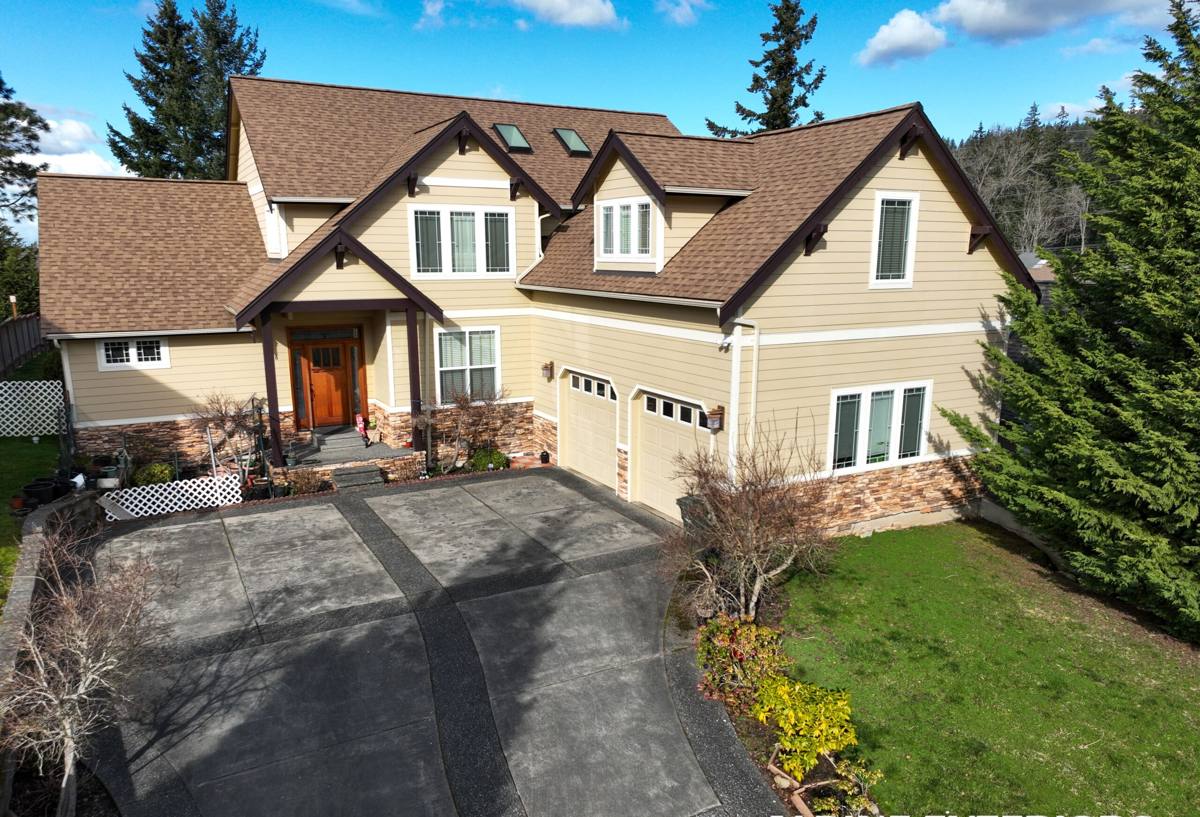
Why Bayside's Climate Is Harder on Roofs Than Most of Everett
Salt Air and Corrosion
Even a few blocks from open water, airborne salt settles on exposed metal — flashing, drip edge, nail heads, roof vents, gutter fasteners — and accelerates corrosion well beyond what you'd see on a roof further inland in Snohomish County. Standard galvanized fasteners and thin-gauge flashing hold up fine for years in a low-exposure setting, but near the shoreline they can start showing rust streaks and pitting long before the shingles themselves are worn out. That's a maintenance issue more than a failure of any one product, but it's one we plan around specifically for Bayside homes.
Driving Rain and Wind
Everett's storms don't just fall straight down — open water nearby means wind-driven rain that hits roof planes at an angle and pushes water up under laps, around penetrations, and into valleys that would shed a vertical rain just fine. This is where underlayment choice, flashing detail, and fastening pattern matter more than the shingle brand printed on the wrapper. A roof that looks identical to one built for a sheltered inland lot can perform very differently once a real wind-driven storm off the Sound rolls through.
Moss and Algae Season
Shade, moisture, and moderate temperatures are exactly what moss wants, and Bayside's tree cover and proximity to the water keep conditions favorable for most of the year rather than just a few wet months. Moss holds moisture against the roof surface, works its way under shingle edges, and can lift tabs enough to let water in — long before the shingle itself has reached the end of its service life. A roof replacement here should include a real plan for moss going forward, not just a clean surface on install day.
What a Correct Roof Replacement Actually Involves
"Roof replacement" gets used loosely. A correct one is a full system replacement, not just new shingles laid over old problems. The components below are where jobs succeed or fail over time — and they matter more in a coastal-influenced climate like Bayside's than almost anywhere else in the county.
Tear-Off, Not Overlay
We remove the existing roofing down to the deck rather than layering new shingles over old. Overlaying hides deck damage, traps moisture, and voids most manufacturer warranties outright. It's also the only way to actually inspect and correct what's underneath — which matters given how much moisture Bayside roofs are exposed to over their lifespan.
Deck Inspection and Repair
Once the old roofing is off, we check the sheathing for soft spots, delamination, and rot — most commonly found around old leak points, valleys, and roof penetrations. Any damaged sections get replaced before anything new goes down. Skipping this step is one of the most common ways a "new roof" fails early.
Underlayment and Ice-and-Water Shield
A synthetic underlayment goes down across the full deck, with self-adhering ice-and-water membrane at eaves, valleys, and around penetrations — the spots most vulnerable to wind-driven rain forcing its way backward under the shingle field. This is not optional extra protection for a home in Bayside's exposure; it's a baseline requirement for the roof to perform the way it's supposed to.
Flashing and Fasteners
Given the corrosion risk from salt air, we pay close attention to flashing material and fastener choice around chimneys, sidewalls, and roof-to-wall transitions — the details that hold up a roof's water resistance far more than the field shingles do. Corroded or improperly lapped flashing is one of the most common causes of a leak on an otherwise sound roof.
Ventilation
Balanced intake and exhaust ventilation keeps the attic dry and temperature-regulated, which protects the deck from the inside and helps prevent the condensation that shows up in humid, marine-influenced climates. A roof can be installed perfectly and still fail early if the attic underneath it isn't ventilated correctly.
Choosing a Roofing Material for a Waterfront-Adjacent Home
There's no single "best" material — the right choice depends on your roof's exposure, your home's style, and how much long-term maintenance you're willing to take on. Here's how the common options compare for a Bayside setting specifically:
| Material | Salt-Air Durability | Moss Resistance | Typical Lifespan | Maintenance |
|---|---|---|---|---|
| Architectural asphalt shingle | Good, with corrosion-resistant flashing/fasteners | Better with algae-resistant granules; still needs periodic cleaning | 25–30 years | Moderate — periodic moss treatment recommended |
| Standard 3-tab shingle | Fair — thinner profile, shorter service life in exposed settings | Lower resistance without AR granules | 15–20 years | Higher relative to lifespan |
| Standing-seam metal | Very good with the right coating and fastener spec | Excellent — sheds moss more effectively | 40–50+ years | Low, but higher upfront cost |
| Synthetic/composite shingle | Good | Good, varies by product | 30–50 years | Low to moderate |
For most Bayside homes, a quality architectural shingle with algae-resistant granules and corrosion-rated flashing hits the right balance of cost and performance. Homeowners planning to stay long-term, or who are tired of moss maintenance, often look seriously at metal for its combined moss and salt-air advantages — it costs more up front but asks less of you over the following decades.
Our Roof Replacement Process
- On-site assessment — we inspect the existing roof, deck condition, ventilation, and flashing details, and talk through what your home's specific exposure calls for.
- Written estimate — a clear scope and price before any work starts, including material options and what's driving the cost differences.
- Site protection — landscaping, siding, and gutters get protected before tear-off begins.
- Tear-off and deck inspection — full removal down to the sheathing, with any deck repairs identified and priced before proceeding.
- Underlayment, flashing, and material installation — installed to the spec appropriate for a wind- and rain-exposed roof, not a generic inland install.
- Ventilation check — intake and exhaust confirmed balanced for the attic.
- Cleanup and magnetic sweep — full site cleanup, including a check for stray fasteners in the yard and driveway.
- Final walkthrough — we review the finished roof with you before calling the job done.
Signs a Bayside Roof Needs Replacing, Not Just Repair
- Granule loss heavy enough that shingles look bald or the color has gone patchy
- Curling, cupping, or cracked shingles across multiple roof planes
- Moss buildup that keeps returning within a season or two of cleaning
- Rust staining or visible corrosion around flashing, vents, or fasteners
- Daylight visible through the attic sheathing, or damp insulation after storms
- Leaks that show up in different spots after each heavy, wind-driven rain
- A roof approaching or past 20–25 years old with no major work done
One or two of these on their own might mean a targeted repair is enough. Several at once, especially combined with an aging roof, usually means repair costs start adding up faster than a replacement would.
What Affects the Cost of a Roof Replacement
| Factor | Why It Matters |
|---|---|
| Roof size and pitch | Steeper roofs take longer, need more safety setup, and use more material per square foot of coverage |
| Number of layers to remove | Tear-off of multiple existing layers adds labor and disposal cost |
| Deck condition | Rotted or delaminated sheathing found during tear-off adds repair cost not visible from the ground |
| Material selection | Asphalt, synthetic, and metal carry different material and labor costs |
| Flashing and penetration count | Chimneys, skylights, and multiple roof-wall intersections add detail work |
| Access and site conditions | Tree cover, tight lot lines, or difficult staging affect labor time |
We won't quote a price without seeing the roof — anyone who does is either guessing or leaving room to add costs later. What we can say honestly is that deck repair and layer count are the two factors most likely to move a number after tear-off begins, which is why we call those out clearly in the estimate before we start.
Permits and Local Requirements
Most full roof replacements in Everett and elsewhere in Snohomish County require a building permit, since it's a full system replacement rather than a cosmetic repair. We handle that paperwork as part of the job so you're not the one tracking it down mid-project. If your property has an HOA with roofing material or color guidelines, that's worth checking before you settle on a product — it's easier to confirm up front than to change course after ordering material.
Why Local Experience in Bayside Matters
A crew that only works inland roofs can still install a technically correct roof — but "technically correct for average conditions" and "correct for a wind- and salt-exposed roof near the water" aren't always the same spec. Knowing to upsize the ice-and-water coverage, choose corrosion-resistant fasteners without being asked, and plan for a longer moss season isn't guesswork when you've done the work on roofs in this neighborhood before. It's the difference between a roof that looks right on install day and one that's still performing the way it should ten years in.
We're not asking you to take that on faith. Ask any roofer bidding your job directly what they do differently for a home this close to the water — the answer will tell you a lot about how the rest of the job will go.
Get a Free, No-Pressure Estimate
If your roof is showing its age, dealing with recurring moss, or you're just trying to plan ahead before a leak forces the decision, we're happy to take a look and give you a straight answer — replacement, repair, or a few more years. Use the form below to schedule a free estimate for your Bayside home, no pressure and no obligation.