 Everett
 Two Fiber Cement Products, Different Manufacturing Standards
If you've gotten more than one siding quote in Everett, you've probably seen two different fiber cement brand names show up: James Hardie and Cemplank. That surprises some homeowners, because most of the siding conversation in this region is Hardie vs. vinyl or Hardie vs. cedar. Cemplank is a different animal entirely — it's also a real fiber cement product, made from the same basic recipe of Portland cement, sand, and cellulose fiber, and it's a legitimate step up from vinyl or wood in terms of fire resistance and durability.
So this isn't a "fiber cement is good, this other thing is bad" comparison. It's closer to comparing two manufacturers of the same category of product, where the differences show up in the details — the factory finish, the warranty terms, the consistency from batch to batch, and how well the product is supported by installers and suppliers in Western Washington. Those details matter more here than in a dry climate, because Everett siding spends its life dealing with salt air off Puget Sound, driving rain off the Sound and the foothills, and a moss season that can run eight months of the year in shaded, north-facing exposures.
We made a decision years ago to install only James Hardie fiber cement siding, on every job, for every homeowner. This page explains what Cemplank does well, where the two products diverge, and why we landed where we did.
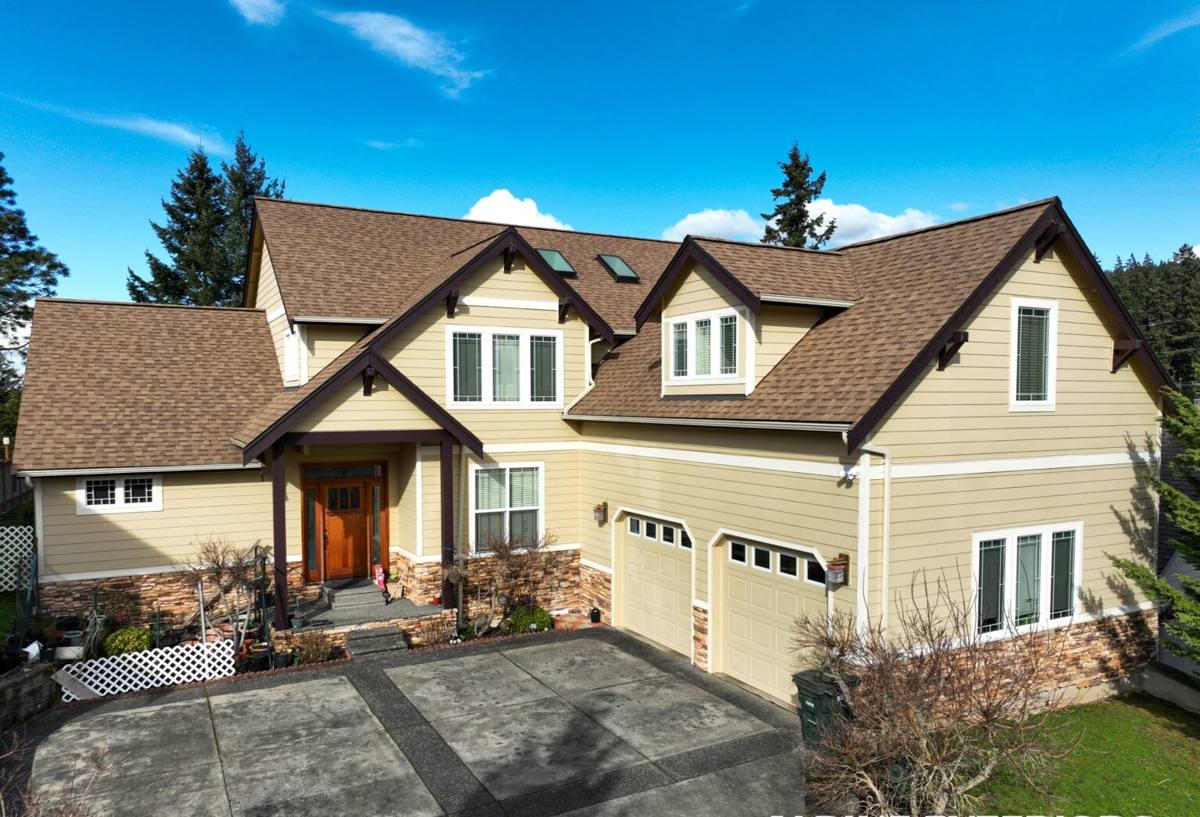
What Cemplank Gets Right
Credit where it's due: Cemplank fiber cement is non-combustible, resists rot and insect damage far better than wood, and holds paint or factory finish longer than vinyl. It's manufactured to a fiber cement industry standard and installed using largely the same techniques as Hardie — lap siding, panels, and trim boards nailed to sheathing with proper flashing and clearances. For a homeowner comparing fiber cement to vinyl or engineered wood, choosing Cemplank over those products is still a reasonable upgrade in durability.
Where it starts to separate from Hardie is in the specifics: how the product is engineered for climate, how the factory finish is formulated and warrantied, and how consistently it performs once it's on a house exposed to Snohomish County weather for fifteen or twenty years.
Where the Overlap Ends
Fiber cement as a category solves the big problems — it won't burn, it won't rot, and it doesn't attract woodpeckers or carpenter ants the way cedar can. But not all fiber cement is engineered the same way for the same climate, and not all factory finishes are backed by the same warranty language. That's the level this comparison actually needs to happen at.
Where the Differences Show Up in Everett's Climate
Everett and the rest of Snohomish County sit in a specific weather pattern: salt-laden air moving off Puget Sound and Possession Sound, wind-driven rain that hits siding at an angle rather than falling straight down, and long stretches of overcast, humid weather that keep north and west-facing walls damp for days at a time. Add tree cover — common in neighborhoods from Silver Lake to the Bayside area — and you get moss and algae growth that can persist from fall through spring.
That combination is a genuine stress test for any exterior cladding. It's not extreme heat or hard freeze-thaw cycling that wears siding down here — it's sustained moisture exposure and salt air attacking fasteners, seams, and finish coatings over a long, slow timeline. Products that are engineered generically, rather than for specific climate zones, tend to show their weaknesses in exactly this kind of environment: chalking or fading finish, moisture wicking at cut edges, and fastener corrosion that isn't visible until a plank starts to loosen.
James Hardie engineers its lap siding in HZ5 and HZ10 formulations specifically for climate zones like ours — colder, wetter, and more moisture-exposed than the HZ formulations sold in the Southwest or Southeast. Cemplank does not offer that same level of climate-zone-specific engineering, which means the product installed on a house in Everett is closer to the same formulation sold in a dry inland climate.
Factory Finish: ColorPlus vs. Standard Coatings
The factory finish is where a lot of the long-term performance difference actually lives, because it's the finish — not the substrate — that takes the daily beating from UV, salt air, and moisture.
| Factor | James Hardie ColorPlus | Cemplank Standard Finish |
|---|---|---|
| Application | Baked-on, multi-coat finish applied and cured in a controlled factory environment | Factory-applied, but typically fewer cure stages and less climate-specific formulation |
| Fade/chip resistance | Engineered specifically to resist fading and chipping; backed by a dedicated finish warranty | Standard fiber cement coating; performance varies by product line |
| Touch-up matching | Factory-matched touch-up available through the ColorPlus system | Touch-up generally relies on field-mixed or generic exterior paint |
| Salt air / coastal exposure | Formulated with coastal and marine-influenced climates in mind | Not marketed as coastal-specific |
In practice, this means a Hardie ColorPlus finish is more likely to still look uniform in year twelve or fifteen than a standard fiber cement coating exposed to the same salt air and moss-friendly shade. It's a slower, quieter kind of wear, which is exactly why it's easy to overlook when you're comparing two bids side by side.
Warranty Structure and What It Actually Covers
Every fiber cement manufacturer offers a warranty, but the terms matter more than the existence of a warranty at all. Homeowners should look closely at three things: how long the substrate is covered, how long the finish is covered separately, and whether the warranty is transferable if the home sells.
- James Hardie backs its fiber cement substrate with a 30-year non-prorated limited warranty, and ColorPlus finishes carry their own separate finish warranty covering fade and chipping.
- Hardie's warranty is transferable to a subsequent homeowner, which matters for resale — buyers and their agents increasingly recognize the Hardie name and ask about it directly.
- Cemplank's warranty coverage exists but is structured differently and doesn't carry the same brand recognition in resale conversations, for better or worse.
None of this means a Cemplank warranty is worthless — it's a real warranty from a real manufacturer. But warranty length and transferability are exactly the kind of detail that gets glossed over in a sales pitch and then matters enormously ten years later when a homeowner is trying to sell a house or file a claim.
Installation Sensitivity and Edge Sealing
Fiber cement siding, regardless of brand, is only as good as its installation. Cut edges have to be sealed, fasteners have to be placed correctly, and clearances from grade, roofing, and decks have to follow manufacturer specs — otherwise moisture finds a way in, and no factory finish can compensate for a bad install.
Where this becomes brand-relevant is that James Hardie publishes detailed, climate-zone-specific installation requirements and runs a certification program for installers, which gives us — and the homeowner — a documented standard to install to and be held accountable against. It also means when something does need to be addressed under warranty, there's a clear, well-established process with a manufacturer that has decades of installation data behind it. That matters in a wet climate where correct edge-sealing and flashing detail is the difference between siding that lasts three decades and siding that starts wicking moisture at year eight.
Local Supply, Support, and Batch Consistency
James Hardie has long-standing manufacturing presence in the Pacific Northwest, which keeps supply steady and reduces the lag between ordering and installing — useful when a job needs a specific color-matched batch for a repair or an addition years after the original install. Distributor support, product training, and installer certification programs are also more deeply established for Hardie in this region, simply because it's been the dominant fiber cement brand here for a long time.
That translates into fewer surprises: consistent batch coloring, predictable lead times, and a supply chain that's used to serving Western Washington's wet-climate installation requirements. It's a less glamorous reason than finish or warranty, but it's a real, practical factor in how a siding job actually gets built and maintained.
A Homeowner's Checklist for Comparing Fiber Cement Bids
Whether you're comparing Hardie to Cemplank or evaluating any two fiber cement bids side by side, ask these questions before signing anything:
- Is the product's finish factory-applied and cured, or field-painted after installation?
- What's the substrate warranty length, and is it prorated or non-prorated?
- Is there a separate finish warranty covering fade and chipping, and how long does it run?
- Is the warranty transferable to a future homeowner?
- Is the product engineered for a specific climate zone, or sold as one generic formulation nationwide?
- Is the installer certified or trained by the manufacturer for that specific product?
- How are cut edges and butt joints being sealed, and does that match the manufacturer's written spec?
- What's the realistic lead time for matching replacement pieces five or ten years from now?
A contractor who can answer all of these clearly, without hedging, is one worth trusting with a siding job.
Why We Standardized on James Hardie
We don't install Cemplank, LP SmartSide, vinyl, primed spruce, or cedar. Not because those products can't be installed correctly by someone, but because after years of doing exterior work on homes across Snohomish County — homes dealing with salt air, wind-driven rain, and shaded moss-prone walls — the products we've seen hold their finish, resist moisture at seams and cut edges, and back it up with a warranty homeowners can actually rely on have consistently been James Hardie's climate-engineered lines with ColorPlus factory finish.
Standardizing on one product also means our crews install it constantly, know its installation spec cold, and don't have to relearn a different manufacturer's fastening pattern, clearance rules, or finish touch-up process on every job. That consistency is part of what keeps installation errors — the real cause of most siding failures — out of the picture.
If you're weighing fiber cement options for a home in Everett or anywhere else in Snohomish County, we're happy to walk through what we see James Hardie do differently on houses in this exact climate. Reach out for a free, no-pressure estimate — we'll look at your home's exposure, existing siding condition, and give you a straight answer, not a sales pitch.