 Everett
 Lake Stevens Homes Face a Specific Kind of Weather Wear
Lake Stevens sits inland from Puget Sound, but it doesn't escape the marine weather patterns that define exterior wear across Snohomish County. Wind off the Sound still carries salt-tinged moisture into the area, and the lake itself adds its own layer of humidity — morning fog, damp air that lingers in low-lying yards, and long stretches where siding simply doesn't get a chance to fully dry out between rain events. Add in the driving, sideways rain that this region gets several months a year, and you have conditions that push exterior materials harder than most homeowners realize until they see the results up close.
The other factor that's easy to underestimate is moss and algae season, which in this part of Washington can run nearly half the year on shaded, north-facing, or tree-covered walls. Combine that with tree cover common around the lake and surrounding neighborhoods, and you get siding that stays damp longer, grows moss and mildew faster, and needs a material that can handle sustained moisture exposure without breaking down.
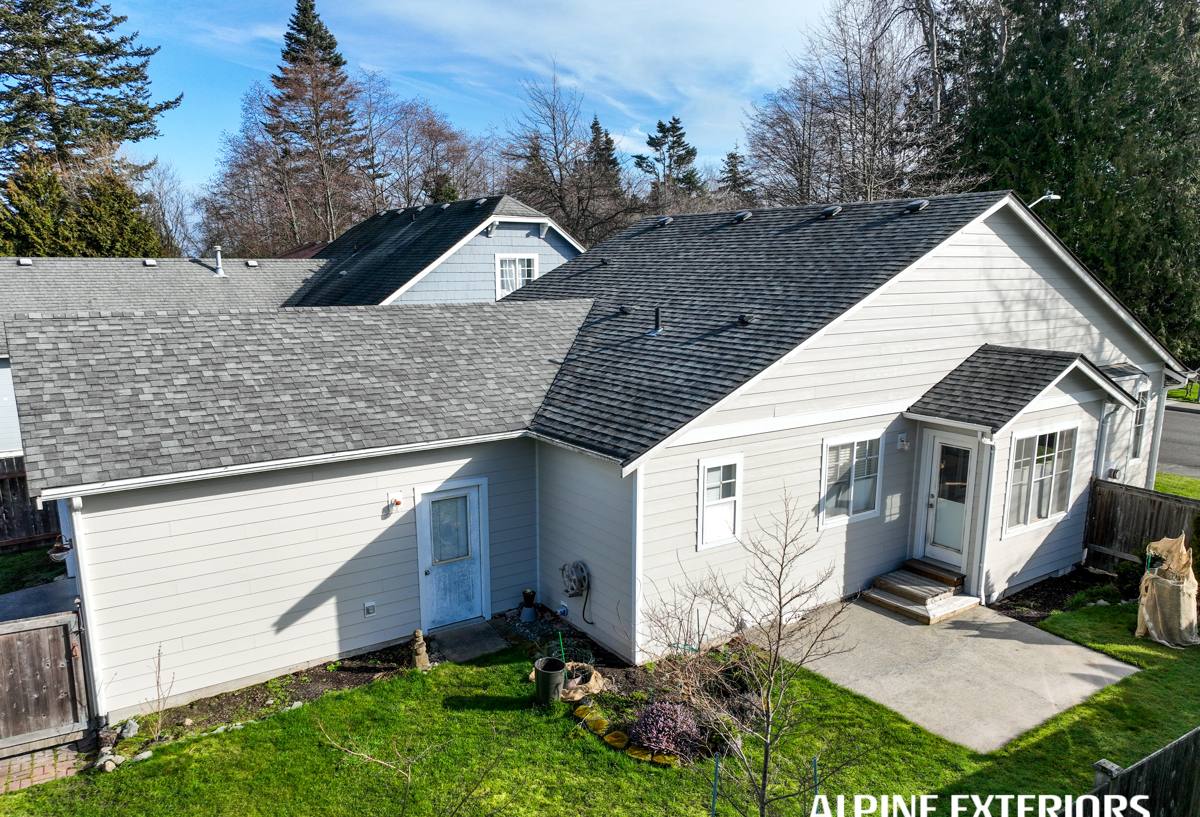
What Constant Moisture Does to the Wrong Siding Material
Not every siding product handles this climate the same way. Materials that perform fine in drier regions often struggle here, and the failure points are predictable:
- Wood-based products (primed spruce, cedar, and engineered wood siding like LP SmartSide) rely on an intact factory coating and careful edge-sealing to keep water out. Once water gets into a cut edge, seam, or fastener hole, the wood substrate can swell, delaminate, or rot from the inside — often before it's visible from the ground.
- Vinyl siding doesn't rot, but it flexes and contracts with temperature swings, and its seams and butt joints give moss and mildew a place to take hold. It also tends to fade and become brittle over the decades, especially on sun-exposed walls.
- Some fiber cement competitors (Cemplank, Allura) are made from a similar base material to what we install, but the finish system, warranty structure, and manufacturing consistency vary by brand — and those differences show up over time, particularly in a wet climate.
This is exactly why, as a company, we made a decision that some homeowners find unusual for a full-service exterior contractor: we install one siding product. Not because it's the only thing on the market, but because after years of doing tear-offs and warranty calls across Snohomish County, it's the one we trust to hold up here.
Why We Install Only James Hardie Fiber Cement
James Hardie fiber cement is a cement, sand, and cellulose fiber composite, not wood and not plastic. It doesn't rot, it doesn't feed insects, and it's non-combustible — a real advantage during wildfire smoke season, which is now a regular part of Pacific Northwest summers even when the fire itself is miles away. It's also engineered specifically for climate: Hardie's HZ5 product line is formulated for regions like ours that see extended wet seasons, and it resists moisture-driven damage in a way that untreated or lightly sealed wood products simply can't match long-term.
To be fair to the alternatives: vinyl is less expensive up front, and quality wood siding can look excellent when it's new. Those are real trade-offs, and we're upfront about them. But between the maintenance burden, the moisture sensitivity, and the shorter realistic lifespan we've seen on wood and vinyl jobs in this climate, we stopped installing them. James Hardie, installed to manufacturer spec, is what we're willing to warranty and put our name on.
What You Get With the ColorPlus Finish System
Most Hardie siding we install uses the factory-applied ColorPlus finish rather than field paint. That finish is baked on and cured under controlled conditions, which gives it better color consistency and fade resistance than siding painted on-site after installation. It also comes with its own finish warranty separate from the substrate warranty, which matters in a region where UV exposure and rain cycles both take a toll on paint over time.
Matching the Right Hardie Product to Your Home
James Hardie makes several distinct product lines, and picking the right one depends on your home's style, exposure, and what look you're going for:
| Product | Best Use | Look |
|---|---|---|
| HardiePlank lap siding | Most common choice for full re-sides | Traditional horizontal lap, several width and texture options |
| HardieShingle | Accent areas, gables, whole-home craftsman looks | Staggered or straight-edge shingle profile |
| HardiePanel | Modern builds, board-and-batten style | Vertical panel siding |
| HardieTrim | Corners, window/door surrounds, fascia | Clean, paintable trim that matches the siding system |
For a lake-adjacent property with significant tree cover or a north-facing exposure that stays shaded most of the day, we'll often talk through drainage plane details and rainscreen options as part of the plan — small details in the install that make a real difference in how long the siding performs before it needs attention.
Beyond Siding: The Full Exterior Envelope
Siding doesn't work in isolation. It's one part of a system that includes the roof, windows, and any attached structures like decks — and in a climate this wet, weak points anywhere in that system eventually show up as water problems somewhere else. We handle all four:
- Roofing — the first line of defense against the same driving rain and moss growth that affects siding; roof condition also directly affects how water sheds off the house and onto (or away from) your siding and trim.
- Windows — proper flashing and integration between windows and siding is one of the most common places we find water intrusion on older homes; replacing windows and siding together lets us get that integration right.
- Decks — exposed to the same rain and moss conditions as your siding, and often built with materials that need the same kind of climate-appropriate thinking.
If you're planning a siding project, it's worth having a conversation about the rest of the exterior at the same time — not because you need to do it all at once, but because a full picture helps you sequence the work sensibly and avoid redoing trim or flashing twice.
What Correct Installation Actually Involves
James Hardie siding is only as good as the installation behind it. The manufacturer publishes detailed installation requirements, and shortcuts here are exactly what turn a 40-plus-year product into one with problems in five years. On every job, that means:
- Proper fastener placement and spacing, sized and driven correctly — over-driven or under-driven nails are one of the most common defects we find on other contractors' work.
- Correct clearances from grade, roof lines, decks, and other siding-to-surface transitions, so water has somewhere to go instead of wicking into the bottom edge of the panel.
- A functioning drainage plane behind the siding, particularly important on shaded or moisture-prone walls common around Lake Stevens.
- Properly flashed and sealed penetrations at windows, doors, and utility fixtures.
- Factory-cut or properly sealed field cuts, so exposed edges aren't left to absorb water.
Skipping any of these doesn't usually cause an obvious problem on day one. It shows up two, five, or ten years later — which is exactly why installation quality matters as much as the product choice itself.
What Drives the Cost of a Siding Project
Every home is different, and we'll only give you real numbers after walking your property, but these are the factors that generally move a quote up or down:
| Factor | Impact on Cost |
|---|---|
| Home size and number of stories | Higher — more material and more complex access/staging |
| Removal of existing siding vs. new construction | Higher — tear-off, disposal, and substrate repair add time |
| Underlying sheathing or framing damage | Higher — often not visible until old siding comes off |
| Trim complexity and architectural detail | Moderate to higher — more cuts, corners, and custom trim work |
| Standard vs. ColorPlus factory finish | Moderate — ColorPlus costs more upfront, less to maintain long-term |
| Product line (lap, shingle, panel, mixed) | Moderate — mixed profiles add labor and material variety |
Choosing a Local Contractor for the Job
A Snohomish County crew that works this area regularly knows what shaded, lake-adjacent, and rain-exposed walls typically look like when they come off, and that experience shows up in how a job is bid and sequenced. When you're vetting a contractor for a siding, roofing, window, or deck project, a few things are worth checking:
- Are they licensed and insured in Washington, and will they show you proof without you having to ask twice?
- Do they install to the manufacturer's written specifications, not just "how we've always done it"?
- Will they put the warranty terms — both product and workmanship — in writing before you sign anything?
- Do they explain trade-offs honestly, including when a cheaper option might be reasonable for your situation?
- Can they speak specifically to how your home's exposure (shade, tree cover, wind direction) affects the plan?
If a contractor can't answer those clearly, that's worth noticing before you commit to anything.
If you're weighing a siding project in Lake Stevens or anywhere else in the Everett area, we're glad to take a look and walk you through what we're seeing and why — no pressure, no obligation. Use the form below to request a free estimate.