 Everett
 What Primed Wood Siding Actually Is
Primed spruce siding (sometimes sold as primed pine or fir lap siding) is solid-sawn wood milled into lap boards or panels, then coated with a factory primer before it ever reaches the job site. It has been a staple of Pacific Northwest construction for generations, and there's a reason for that: it's real wood, it takes stain and paint beautifully, and it has a warmth and grain pattern that manufactured products spend a lot of R&D money trying to imitate. Nobody on our crew will tell a homeowner that wood siding is a bad material. It isn't. It's a material with a specific set of demands, and those demands don't line up well with what a house in Everett has to put up with every year.
Our company installs James Hardie fiber cement exclusively. We don't install primed wood, LP SmartSide, vinyl, Cemplank, Allura, or cedar. This page explains our reasoning on primed wood specifically — not to talk down the product, but so you understand the trade-off before you commit fifteen or twenty years of maintenance to it.
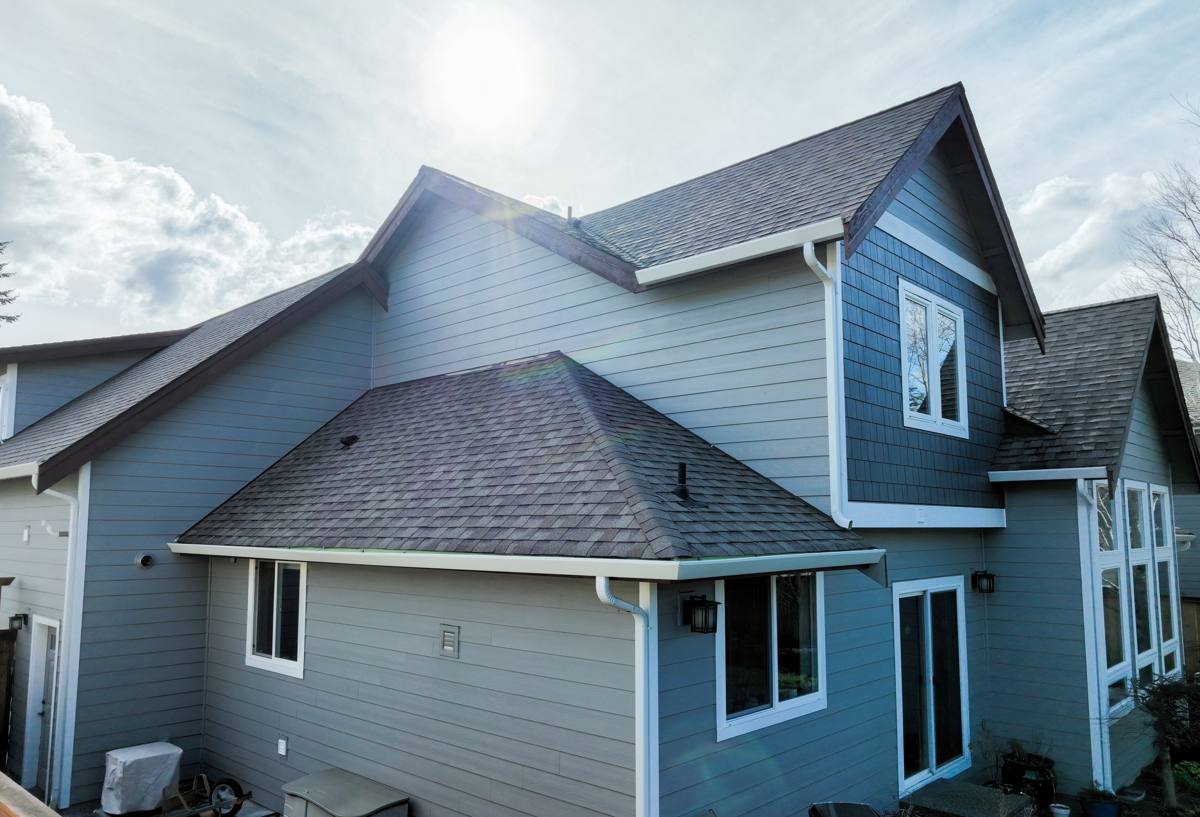
Where Primed Wood Siding Earns Its Reputation
- Authentic material. It's wood, not a composite or a manufactured stand-in — the grain, the way it takes a brush, the way it ages, all of it is real.
- Repairable in sections. A damaged board can be cut out and replaced without much fuss, assuming you can source a matching profile.
- Paint-ready. Primed boards give a painter a clean, even surface to work from, which is part of why the product exists in the first place.
- Familiar to trades. Nearly every carpenter and painter in Snohomish County has worked with it and knows how to handle it.
Those are real strengths. The problem isn't the day it goes up — it's every year after that, especially in a climate like ours.
The Everett Climate Problem
Everett sits right on Port Gardner Bay, and that proximity to Puget Sound means salt-laden air moving across every exterior surface on the house, year-round. Add in Snohomish County's driving winter rain — often blown sideways by wind off the water — and a moss and algae season that can stretch from October through May on shaded elevations, and you have a climate that is, frankly, one of the tougher ones in the country for a wood-based cladding to survive long-term without heavy upkeep.
Primed wood siding is wood first and primer second. The primer is a thin protective layer, not a permanent barrier. Once the finish coat (paint or solid-body stain) starts to fail — and it will, usually well before most homeowners expect — the wood underneath is exposed to exactly the conditions Everett throws at it: moisture cycling, salt exposure, and the constant damp shade that feeds moss and mildew growth on north- and west-facing walls.
What That Looks Like Over Time
- Paint film failure (chalking, peeling, alligatoring) typically starts showing within 5-8 years on sun-exposed elevations, sooner in shaded, damp corners
- Butt joints and lap seams are the first place moisture finds a way behind the board
- Swelling and cupping at board ends where end-grain soaks up water fastest
- Soft or spongy spots developing at the bottom courses, near grade, and around window trim
- Moss and algae staining on shaded walls, requiring regular cleaning to keep from holding moisture against the wood
The Maintenance Reality
This is the part of the conversation that matters most, because it's the part that shows up on your calendar every few years, not just at install time. Wood siding — primed or not — is a maintained product. It is not a "install and forget" cladding. That's not a knock on the material; it's simply what wood requires to hold up.
| Maintenance Task | Typical Frequency in a Marine/Wet Climate |
|---|---|
| Repaint or refinish full exterior | Every 5-8 years, sooner on sun/rain-exposed walls |
| Caulk inspection and touch-up at joints/trim | Annually |
| Moss/algae wash on shaded elevations | Every 1-2 years |
| Spot repair of soft or rotted boards | As needed, often first noticed at 8-12 years |
| Full board replacement in high-wear areas | Variable, but common by year 15-20 without diligent upkeep |
None of that is unusual for wood. It's the nature of the material. But it's a real, recurring cost that a homeowner should weigh honestly against the upfront savings of choosing primed wood over a factory-finished fiber cement product.
Installation Sensitivity
Primed wood siding is also less forgiving during installation than most homeowners assume. The factory primer protects the face of the board, but every cut end exposes raw, unprimed wood — and every one of those cut ends needs to be field-primed or sealed before installation, at every miter, every butt joint, every outlet penetration. Skip that step, or rush it, and you've built a wick for moisture directly into the wall assembly. It's a detail that's easy to shortcut on a big job and very expensive to fix once the siding is up and painted.
Proper installation also calls for consistent gapping at butt joints, correct flashing behind every joint and penetration, and back-priming (coating the backside of the board, not just the face) before it ever goes on the wall. Done right, it's slow, careful work. Done fast, it's a callback waiting to happen — and in our experience, "done fast" is far more common in this trade than it should be.
Cost Over Time, Not Just Cost at Install
Primed wood siding is often the cheaper option on install day, and we won't pretend otherwise. But the honest comparison isn't install cost — it's cost over the life of the siding, including paint jobs, caulking, spot repairs, and eventual board replacement.
- Primed wood: Lower material cost upfront, but repainting every 5-8 years plus ongoing repair and moss cleaning adds up over a 20-year window.
- James Hardie fiber cement: Higher material cost upfront, factory-baked ColorPlus finish that's warrantied against fading and peeling for years, no repainting cycle required to maintain appearance, and no wood to rot.
When you run the numbers across two decades rather than two years, the gap narrows a lot — and for many homeowners, it closes entirely once you factor in the hassle of scheduling and paying for repeated repaint jobs.
Why We Standardized on James Hardie Instead
We made the decision years ago to install only James Hardie fiber cement siding, and this climate is a big part of why. Hardie's HZ5 product line is engineered specifically for climates with heavy moisture exposure — which describes Snohomish County about as well as any region in the country. It's non-combustible, it doesn't rot, it doesn't feed moss and mildew the way bare or failing-primer wood does, and the ColorPlus factory finish is baked on under controlled conditions rather than brushed on in the field, which is exactly the step that's hardest to get right with wood siding.
Hardie also carries a strong transferable limited warranty on both the substrate and the ColorPlus finish — the kind of coverage that reflects a product designed to be installed once and largely left alone, not repainted on a recurring schedule. For a house exposed to salt air off the Sound and the long wet season that follows it, that's the difference that matters most to us.
A Straightforward Comparison
| Factor | Primed Wood Siding | James Hardie Fiber Cement |
|---|---|---|
| Moisture/rot resistance | Vulnerable once finish fails | Does not rot; engineered for wet climates (HZ5) |
| Repainting cycle | Every 5-8 years | Factory ColorPlus finish, no repaint cycle needed |
| Fire resistance | Combustible | Non-combustible |
| Installation sensitivity | High — every cut must be sealed | Moderate — standard Hardie install practices |
| Warranty structure | Typically limited to material defect, if any | Strong transferable limited warranty |
| Upfront cost | Lower | Higher |
What We'd Tell a Homeowner Considering Primed Wood
If you love the specific look of real wood grain and you're prepared to stay on top of repainting and repair on a real schedule, primed wood siding isn't a foolish choice — it's a maintained one, and some homeowners genuinely want that hands-on relationship with their home's exterior. What we won't do is install it and let a customer believe it's a "paint it once and move on" product in this climate, because in Everett, with salt air coming off the bay and a rainy season that runs half the year, it simply isn't.
That's the honest trade-off, and it's why our crews put James Hardie on every home we side: a product engineered for exactly the conditions Snohomish County produces, with a finish and warranty built around not having to revisit it every few years.
If you're weighing primed wood against fiber cement for an upcoming project, we're happy to walk your specific house with you and talk through what each option really means over time. Reach out for a free, no-pressure estimate — there's a form right below this page to get started.