 Everett
 Edmonds Homes Face a Specific Kind of Weather
Edmonds sits close enough to Puget Sound that salt-tinged air is a regular part of the environment, not an occasional visitor. Combine that with the wind-driven rain that rolls in off the water during fall and winter storms, and you have a climate that is genuinely tough on exterior building materials. Add Snohomish County's long, damp shoulder seasons — where surfaces stay wet for days at a time and never fully dry before the next system arrives — and you get conditions that favor moss, algae, and slow moisture intrusion over almost anything else in the Pacific Northwest.
Homes in this area don't fail because of one big storm. They fail slowly, from siding that absorbs moisture at the seams, paint that can't keep up with UV and damp cycles, and trim details that were never sealed correctly in the first place. A siding system that isn't built for this specific combination of salt exposure, driving rain, and extended moss season will show it within a few years, usually starting at the bottom courses, around window trim, and anywhere water is allowed to sit.
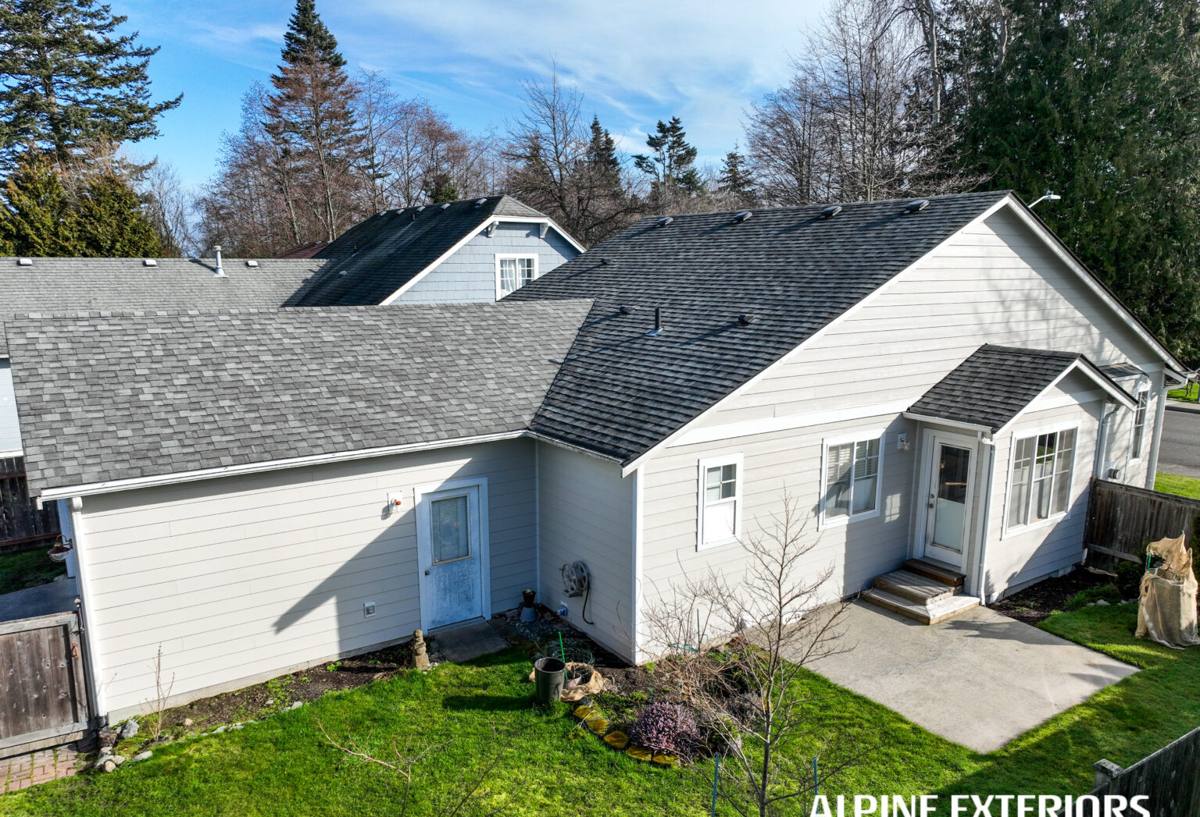
Why We Only Install James Hardie Fiber Cement
We made a decision as a company to install one siding system: James Hardie fiber cement. We don't install vinyl, LP SmartSide, Cemplank, Allura, primed spruce, or cedar. That's not a marketing position — it's a standard we hold because of what we've seen happen to homes in this exact climate over time.
Fiber cement is non-combustible and dimensionally stable, meaning it doesn't expand and contract with moisture the way wood-based products do. That matters enormously in an area where the siding is wet more often than it's dry for half the year. James Hardie's ColorPlus factory-applied finish is baked on under controlled conditions, which gives it better adhesion and UV resistance than field-applied paint — a real advantage against the coastal sun-and-rain cycle that beats down painted trim year after year.
What We're Comparing Against
To be fair to the alternatives: vinyl siding is inexpensive and low-maintenance in dry climates, LP SmartSide has genuinely improved its engineered-wood formulations, and cedar has real aesthetic appeal that some homeowners specifically want. Each of those products has a legitimate place in the market. We simply don't think any of them hold up to Edmonds-area conditions as reliably as Hardie does over a 20-30 year ownership horizon, and we'd rather turn down installing a product than install something we don't stand behind.
The HZ5 Engineering Advantage
James Hardie engineers its products by climate zone, and the HZ5 line is built for the wetter, harsher weather patterns found in the Pacific Northwest. This isn't a marketing label — it reflects differences in the substrate formulation aimed at better performance in high-moisture, freeze-thaw-adjacent regions. For a coastal Snohomish County home, that engineering match matters more than it does somewhere dry and mild.
| Factor | James Hardie HZ5 | Typical Vinyl | Engineered Wood (LP-type) |
|---|---|---|---|
| Combustibility | Non-combustible | Melts/deforms under heat | Combustible |
| Moisture behavior | Dimensionally stable, moisture-resistant core | Doesn't absorb, but can warp/crack in cold | Can swell or delaminate if seams fail |
| Finish life | Factory ColorPlus finish, long fade resistance | Color molded in, can fade/chalk | Field or factory paint, needs repainting cycle |
| Typical lifespan (installed to spec) | 30+ years | 20-30 years | 15-25 years |
| Warranty structure | Strong transferable manufacturer warranty | Varies widely by manufacturer | Varies, often shorter on finish |
These are general performance patterns, not guarantees for every product on the market — but they're consistent enough with what we've observed locally that they shaped how we built our company around a single material.
How We Approach a Siding Project in Edmonds
Every project starts with an honest look at the existing exterior. In this area, that means checking for hidden moisture damage behind old siding, especially around windows, roof-to-wall transitions, and lower wall sections where splash-back and standing water are most common. We don't cover over problems — if there's rot or compromised sheathing, it needs to be addressed before new siding goes on, or the new material is just hiding the same issue.
Installation Details That Actually Matter Here
- Correct rain-screen or drainage plane behind the siding so incidental moisture can escape rather than sit against the wall
- Proper flashing at windows, doors, and any roof intersections — the majority of moisture failures we see start at these transitions, not in the field of the siding itself
- Manufacturer-specified fastener patterns and clearances, including gaps at the bottom edge and around penetrations
- Caulking and sealant used only where Hardie's installation guidelines call for it — over-sealing can trap moisture just as easily as under-sealing
- Trim and corner details built to shed water outward rather than channel it into seams
None of this is exotic. It's disciplined, by-the-book installation, done the same way every time. The material only performs as well as its installation, and that's true of every siding system on the market — it's just especially true in a climate that gives you no room for shortcuts.
Beyond Siding: The Rest of the Exterior Envelope
Siding doesn't work in isolation. We also handle roofing, windows, and decks because a home's exterior is one connected system — water that gets past a bad roof valley or a poorly flashed window will find its way behind even well-installed siding. When we're on-site for a siding project, we're looking at the whole envelope, not just the wall cladding.
Roofing
A roof in poor condition sends water down onto the siding below it, often concentrated at valleys and downspout areas. If we see roofing issues while assessing a siding job, we'll tell you plainly rather than install new siding under a roof that's going to undermine it.
Windows
Window flashing failures are one of the most common sources of hidden water damage we find when we open up old siding. Replacing siding is a natural time to address aging window flashing or failing units before they cause damage to the new wall assembly.
Decks
Decks attached to the house create their own set of moisture and structural connection points at the ledger board. Getting that intersection right protects both the deck and the wall behind it.
Why a Local Crew Matters
Anyone can install siding from a set of generic instructions. What's harder to fake is judgment built from actually working on homes in this specific area — knowing which orientations catch the worst wind-driven rain, which older neighborhoods tend to have particular sheathing or moisture issues, and how much moss growth is normal versus a sign of a bigger drainage problem. A crew that works Snohomish County regularly recognizes these patterns faster and adjusts the install accordingly, rather than treating every job like a generic textbook case.
Local presence also matters for warranty support and follow-up. If a question comes up two years after installation, you're dealing with a crew that's still working in the area and can come look at it, not a name that disappeared after the invoice was paid.
What Drives the Cost of a Siding Project
Every home is different, but the same handful of factors drive most of the cost variation we see on Edmonds-area projects.
| Cost Factor | Why It Matters |
|---|---|
| Home size and wall complexity | More square footage, corners, and roof lines mean more material and labor time |
| Existing wall condition | Rot repair or sheathing replacement adds cost but is essential if damage is present |
| Siding profile and accessories | Lap width, trim style, and shakes/panels for accent areas affect material cost |
| Access and site conditions | Steep lots, tight side yards, or multi-story sections affect labor and equipment needs |
| Color and finish selection | Standard ColorPlus colors versus premium or custom options can shift pricing |
We won't quote a number without seeing the home, but we're always upfront about the broad range a project falls into once we understand the scope.
Signs Your Current Siding May Be Struggling
- Persistent moss or algae staining that returns quickly after cleaning
- Soft spots, bubbling, or visible warping, especially near the bottom of walls
- Paint that's peeling, chalking heavily, or needing repainting more often than it used to
- Gaps or separation at seams, corners, or trim joints
- Visible water staining on interior walls near exterior corners or windows
Any one of these on its own isn't necessarily an emergency, but they're worth having looked at before the underlying wall assembly is affected.
Get an Honest Look at Your Home
If you're in Edmonds and dealing with aging siding, moss buildup that won't quit, or you're just planning ahead for a home that can handle what this climate throws at it, we're happy to come take a look. There's no pressure and no obligation — just a straightforward assessment and, if it makes sense, a clear estimate for doing the job right the first time.