 Everett
 Two Very Different Materials, One Big Decision
If you're pricing out new siding in Everett, you've probably gotten quotes for both vinyl and fiber cement, and they can look shockingly far apart on the bottom line. That gap isn't random — the two products are built from completely different raw materials, age in completely different ways, and hold up to our Pacific Northwest weather completely differently. This page lays out the honest trade-offs so you can make the call with your eyes open, not just chase the lowest number on a quote.
We'll say up front: our company installs only James Hardie fiber cement. We don't install vinyl. That's a real bias, and we want to be transparent about it rather than pretend we're neutral. What follows is our best attempt to explain why we made that call, using facts you can verify rather than vague marketing claims.
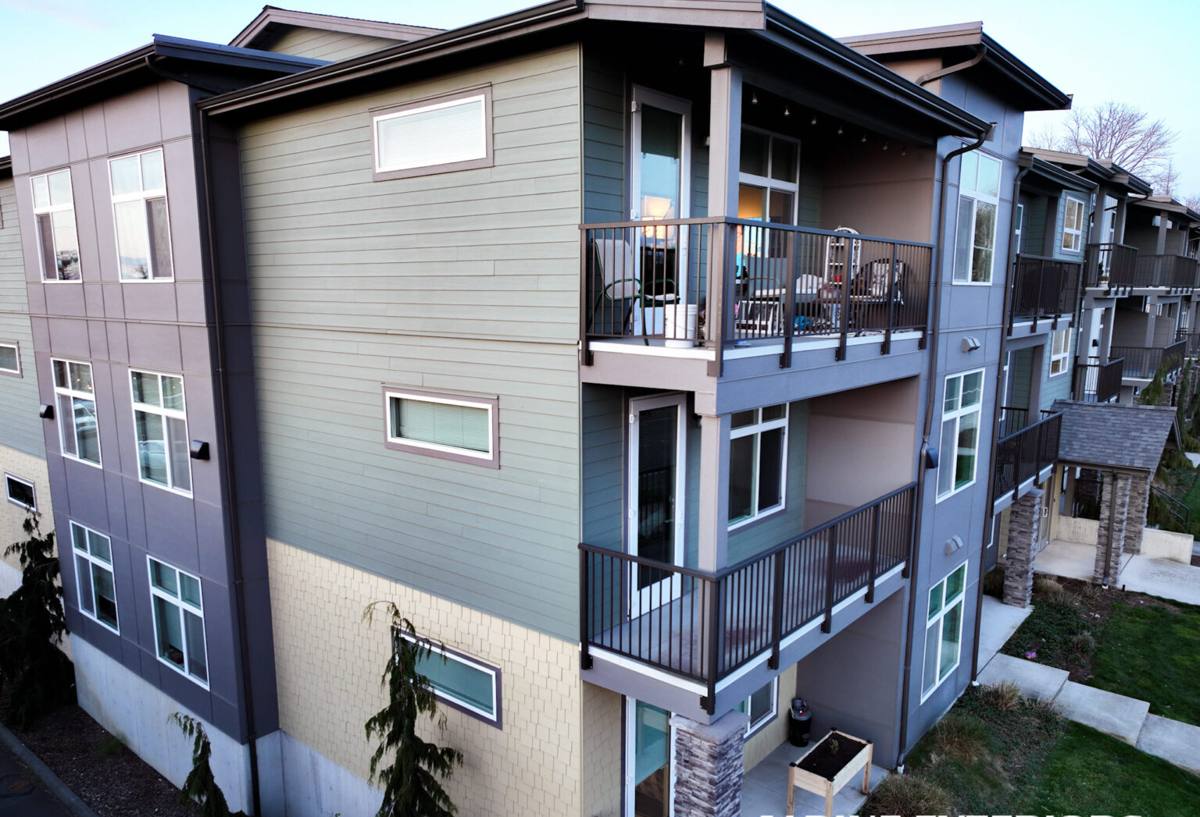
What Each Product Actually Is
Vinyl siding
Vinyl is an extruded PVC (polyvinyl chloride) plastic panel, usually formed to look like horizontal lap boards. It's manufactured with color mixed all the way through the material, it's lightweight, and it's been the volume leader in American residential siding for decades because it's inexpensive to produce and quick to install.
Fiber cement
Fiber cement is a composite of Portland cement, sand, and cellulose fiber, cured into rigid boards or panels and then factory-finished with a baked-on acrylic topcoat. James Hardie, the manufacturer we install exclusively, also engineers regional formulations — their HZ5 product line is specifically formulated for wetter, more variable climates like ours in Western Washington.
How Each One Handles Our Climate
Everett sits right on Puget Sound, which means homes here deal with a specific combination of stresses: salt-laden marine air, long stretches of driving, wind-blown rain, and a moss and algae season that can run eight or nine months out of the year on north-facing or shaded elevations.
Salt air and moisture
Vinyl itself doesn't corrode, but it isn't a rigid, sealed skin — it's installed with expansion room and overlapping panels, and wind-driven rain in a marine climate can work its way behind panels over time, especially at corners, J-channels, and butt joints. Fiber cement is dense and doesn't wick moisture the way wood-based products do, and correctly caulked and flashed Hardie assemblies are designed to shed the kind of sideways rain Snohomish County sees off the Sound.
Temperature swings
Vinyl expands and contracts noticeably with temperature — more than most homeowners expect. On a cold, clear winter morning after a warm fall, you can sometimes hear vinyl siding pop or creak as it moves. Over many cycles, that movement can loosen fasteners or distort panels, particularly on south or west-facing walls that see the most direct sun. Fiber cement has a much lower rate of expansion and contraction, so it stays flatter and tighter against the wall over the life of the install.
Moss and algae
Neither product is moss-proof — moss grows on the grime and organic film that collects on any exterior surface in our climate, not on the material itself. But vinyl's textured, slightly porous surface can hold onto that film more stubbornly than Hardie's factory-baked ColorPlus finish, which is smoother and more resistant to the kind of buildup that gives moss something to grip.
Durability and Lifespan
| Factor | Vinyl Siding | James Hardie Fiber Cement |
|---|---|---|
| Typical lifespan | 15–25 years before warping, fading, or cracking becomes common | 30–50+ years when installed to manufacturer spec |
| Impact resistance | Cracks or punctures from hail, debris, or a stray baseball | Rigid and resists impact damage far better |
| Heat/sun exposure | Can warp or sag on south/west walls, especially darker colors | Stable; color is baked in, not just surface-dyed |
| Fire performance | Combustible plastic; can melt or ignite near a heat source | Non-combustible cement-based material |
| Moisture behavior | Can trap water behind panels if flashing/laps fail | Dense material with engineered rain-screen detailing |
The lifespan gap is the single biggest reason we standardized on Hardie. A vinyl re-side that needs to happen again in 18-20 years isn't a disaster, but it's a real cost most homeowners don't budget for when they're comparing sticker prices at the estimate stage.
Maintenance Reality
Vinyl is often sold as "maintenance-free," and in the sense that it doesn't need repainting, that's true. But it does need periodic soft-washing to keep algae and grime from building up, and once a panel cracks or a section fades unevenly, matching an exact discontinued color years later can be difficult or impossible.
Fiber cement with a factory ColorPlus finish also needs occasional washing, but the finish is more UV-stable and resists fading better over time, so color-matching a repair years down the road is less of a gamble. Field-painted fiber cement (as opposed to factory-finished) will eventually need repainting like any painted surface — one more reason we specifically install ColorPlus products rather than primed boards that require field paint.
Fire Performance
This is a factor more Everett homeowners are asking about, especially with wildfire smoke seasons becoming a more regular summer reality in Washington. Vinyl is a petroleum-based plastic and is combustible — it can soften, melt, or ignite when exposed to enough heat, including from a nearby grill, fire pit, or exterior heat source, not just a full structure fire. Fiber cement is non-combustible by composition. That's not a marketing point, it's a material fact, and it's part of why some jurisdictions and insurers treat the two products differently in wildfire-adjacent zones.
Appearance and Resale
Modern vinyl has come a long way from the wavy, obviously-plastic panels of decades past, and quality insulated vinyl can look reasonably good from the curb. But up close, especially around windows, corners, and trim, it still generally reads as a synthetic product with a limited range of authentic profiles and trim options.
Fiber cement can be manufactured with a true wood-grain or smooth-finish texture, cut and detailed like real wood trim, and it holds crisp lines at corners and around openings. For resale, appraisers and real estate agents in this region generally treat fiber cement as a premium, durability-driven upgrade — it tends to be viewed as closer to the "improved" end of the siding spectrum rather than a budget replacement.
Cost Comparison — The Honest Picture
| Vinyl | Fiber Cement (Hardie) | |
|---|---|---|
| Upfront installed cost | Generally lower | Generally 20-50% higher upfront |
| Cost per year of service life | Comparable or higher once you account for shorter lifespan | Often lower over a 30+ year horizon |
| Repair/replacement cycle | More likely to need a full re-side within one ownership period | Designed to last through multiple ownership periods |
| Warranty structure | Varies widely by manufacturer and grade | Strong, transferable, well-documented manufacturer warranty |
We won't pretend fiber cement is the cheap option — it isn't, and anyone telling you otherwise isn't being straight with you. What we will say is that the upfront gap narrows considerably when you look at cost-per-year rather than cost-on-installation-day, especially in a climate that's hard on building exteriors.
Why We Only Install Hardie
We used to get asked why we don't offer vinyl as a budget option alongside fiber cement. The honest answer is that we'd rather stand behind one product system we trust completely than offer a cheaper option we'd be less confident recommending for this climate. James Hardie's HZ5 line was engineered specifically for wetter regions like ours, the ColorPlus factory finish holds up to UV and salt air better than field paint, and the warranty is one of the strongest and most transferable in the industry. When we're on a roof or a ladder putting siding on a home in Everett, Mukilteo, or anywhere else in Snohomish County, we want it to be a product we know will still look right in twenty years.
Questions worth asking before you decide
- What's the manufacturer's actual written warranty term, and is it transferable to a future buyer?
- Is the color factory-baked (like ColorPlus) or will it need field painting and eventual repainting?
- How does the product handle wind-driven rain and salt air specifically — not just "weather resistance" in general?
- What's the realistic lifespan before the product needs full replacement, not just spot repair?
- Is the product rated non-combustible, and does that matter for your insurance or local code?
- What does correct installation require — house wrap, flashing details, fastener spacing — and will the contractor follow the manufacturer's install spec exactly?
If you're weighing vinyl against fiber cement for a home in Everett or anywhere else in Snohomish County, we're happy to walk your property, look at your exposure to sun, rain, and salt air, and give you a straight, no-pressure estimate for a Hardie installation done to spec.