 Everett
 Siding in Glenhaven: Built for the Weather This Neighborhood Actually Gets
Glenhaven sits within Everett, in the part of Snohomish County where Puget Sound weather shows up on every wall of every house, whether the owner notices it or not. That means salt-tinged marine air, long stretches of driving rain off the Sound, and a moss and mildew season that can run from October clear into May. None of that is unusual for this part of Washington — but it does mean exterior materials that work fine somewhere drier or inland tend to age faster here. When we talk with Glenhaven homeowners about siding, roofing, windows, or decks, the conversation almost always comes back to the same question: how does this material hold up to years of wet-dry cycling, not just how does it look on install day.
We're a local crew, not a regional call center dispatching whoever's closest. That matters more in a neighborhood like Glenhaven than people expect. Lot sizes, tree cover, drainage patterns, and sun exposure vary block to block even within a few miles of the water, and a contractor who works this area regularly can spot the moisture traps and problem details before they become a callback.
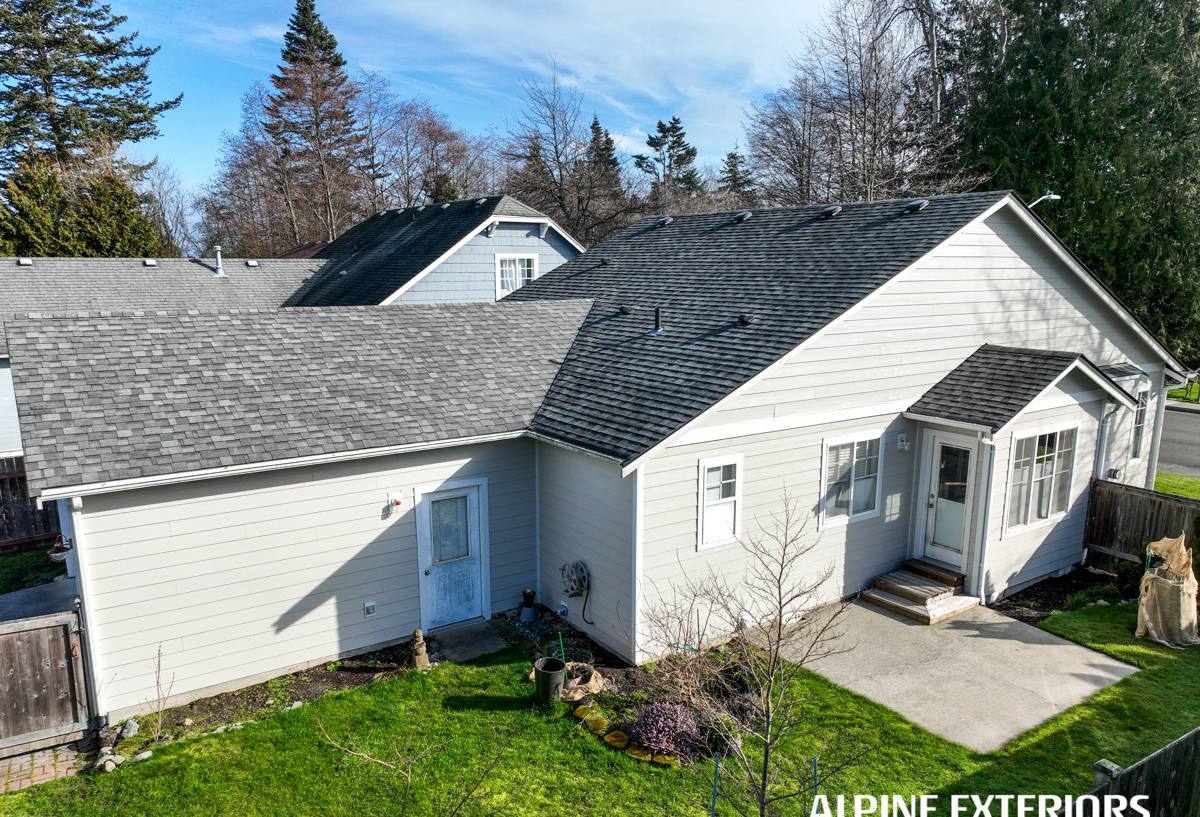
What Glenhaven Homes Are Actually Up Against
Salt Air and Coastal Moisture
Everett's proximity to Puget Sound means airborne salt and moisture are part of daily life for exterior surfaces, even a few miles inland. Salt-laden air accelerates corrosion on fasteners and metal trim, and it degrades paint and coatings faster than drier climates would. Siding, flashing, and trim that aren't rated for this kind of exposure show it early — chalking, fading, and fastener bleed-through are common complaints we hear from homeowners who installed the wrong product for this environment.
Driving Rain
Rain here doesn't just fall straight down — wind off the Sound regularly pushes it sideways into wall assemblies, which is a very different stress than a dry climate's occasional downpour. That means house wrap, flashing details, and siding laps have to actually work as a system, not just look right from the curb. Gaps, poor caulking, or siding that swells and shrinks with moisture create entry points that driving rain will eventually find.
The Long Moss Season
Shade, moisture, and mild temperatures are a perfect combination for moss, algae, and mildew growth on north-facing walls, under eaves, and anywhere airflow is limited. Some siding materials resist this better than others; some absorb enough moisture to actively feed the growth. A siding system that sheds water cleanly and doesn't wick moisture into its core is doing half the work of keeping a home's exterior clean between washes.
Why We Only Install James Hardie Fiber Cement
We made a deliberate decision as a company: we install James Hardie fiber cement siding, and we don't install vinyl, LP SmartSide, Cemplank, Allura, or bare cedar or primed spruce. That's not a marketing angle — it's a standard we hold because of what we've seen these products do over a full Pacific Northwest weather cycle, not just year one.
What Other Products Get Right
- Vinyl siding is inexpensive and installs quickly, and it never needs painting.
- LP SmartSide and other engineered wood products offer a wood-grain look at a lower material cost than fiber cement.
- Cedar and other natural wood sidings have a warmth and authenticity that manufactured products try to replicate.
- Cemplank and Allura are also fiber cement, and structurally they compete with Hardie on paper.
The Trade-Offs We Weren't Willing to Build Around
Vinyl expands and contracts significantly with temperature swings, which stresses seams and fasteners over time, and it can warp or become brittle with UV exposure — a real concern given how much rain-then-sun cycling this region sees. It's also not a fire-resistant material, and it's difficult to repair invisibly if a section is damaged.
Engineered wood products depend heavily on an intact factory coating to keep moisture out. Once that surface is compromised — at a cut edge, a fastener hole, or a scratch during install — the wood-based core can absorb water and swell. In a climate where wall assemblies see driving rain for months at a stretch, that's a meaningful maintenance liability, not a hypothetical one.
Cedar and primed spruce require real, recurring upkeep: refinishing, caulking, and vigilance about moisture and insects. It's a beautiful material when maintained, but "maintained" is the operative word, and it's a heavier ongoing commitment than most homeowners want to sign up for.
Other fiber cement brands are chemically similar to Hardie, but we standardized on one manufacturer so we can guarantee consistent factory finish quality, a warranty structure we trust, and product lines engineered specifically for regional climate conditions — which not every fiber cement maker offers.
Why Hardie Is What We Put on Homes
James Hardie fiber cement is non-combustible, dimensionally stable across temperature and moisture swings, and finished at the factory with ColorPlus technology — a baked-on coating that resists fading and chipping far better than field-applied paint. Hardie also engineers specific product lines (their HZ5 line, for example) for harsher climate zones, which is directly relevant to a coastal, high-rainfall area like Everett. The warranty is transferable to a future homeowner, which matters for resale, and the track record on Pacific Northwest homes when installed to spec is strong.
How a Glenhaven Siding Project Actually Runs
Assessment
We start by walking the exterior and looking specifically for the failure points this climate creates: moisture staining, soft trim, moss buildup in shaded areas, gaps at penetrations, and any signs the existing wall assembly has been letting water in behind the cladding. This tells us whether we're dealing with a straightforward re-side or whether there's sheathing or framing repair to address first.
Water Management First
Before a single piece of siding goes up, we address the house wrap, flashing at windows and doors, and drainage behind the cladding. In a driving-rain climate, the water management layer is doing more work than the siding itself — Hardie board is only as good as what's behind it.
Installation to Manufacturer Spec
Fiber cement is unforgiving of shortcuts: correct fastener placement, proper clearances at grade and roof lines, and correctly lapped and caulked joints all affect long-term performance. We install to James Hardie's published specifications, which is also what keeps the manufacturer's warranty intact.
Finish Details
Trim, corners, and color selection get finalized with the homeowner, using ColorPlus factory-finished boards and trim wherever possible to avoid the fade mismatch that comes with field-painted touch-ups down the road.
Comparing Siding Options for a Coastal Everett Climate
| Material | Moisture Resistance | Fire Resistance | Typical Maintenance | Factory Finish |
|---|---|---|---|---|
| James Hardie Fiber Cement | Strong; won't swell or rot | Non-combustible | Occasional wash; repaint not required with ColorPlus | Yes (ColorPlus) |
| Vinyl | Moderate; seams can allow water intrusion | Combustible | Low, but can warp/fade with UV and heat | Color molded through, prone to fading |
| LP SmartSide / Engineered Wood | Depends on coating integrity; core can swell if breached | Combustible | Coating inspection, edge sealing | Factory primed/finished |
| Cedar / Primed Spruce | Absorbs water without regular sealing | Combustible | Refinishing every few years | None; site-finished |
| Cemplank / Allura | Comparable material properties to Hardie | Non-combustible | Similar to Hardie | Varies by manufacturer |
Roofing, Windows, and Decks in the Same Climate
Siding rarely fails in isolation — a roof that's shedding granules or has failing flashing sends water straight down onto the wall system below, and windows with degraded seals let moisture into the same wall cavity siding is trying to protect. Because we handle roofing, windows, and decks in addition to siding, we can look at a Glenhaven home's exterior as one connected system rather than four separate trades pointing fingers at each other. A deck built without proper ledger flashing, for instance, is one of the more common hidden water-intrusion points we find on homes in wetter climates — worth checking even if siding is the only thing on the immediate to-do list.
What to Ask Before Hiring a Siding Contractor Here
- Do they carry current Washington contractor licensing and insurance, and will they provide proof without being asked twice?
- Are they a certified or experienced installer of whatever specific product they're proposing?
- Will they walk you through the water management details — house wrap, flashing, clearances — not just the visible siding?
- Do they have local references from projects in similar coastal or high-rainfall conditions?
- Is the warranty they're describing from the manufacturer, the installer, or both, and is it in writing?
- Do they explain trade-offs honestly, or does every product they mention sound perfect?
Signs a Glenhaven Home May Need Siding Attention Soon
A few things worth checking, especially heading into another wet season: soft spots when you press on siding near the bottom courses or below windows, visible gaps or separated caulk joints at trim and corners, persistent moss or dark streaking that comes back within weeks of washing, and paint that's peeling rather than just fading. Any of these can indicate the siding is no longer doing its job as a water barrier, even if it still looks acceptable from the street.
Cost Factors for a Glenhaven Siding Project
Every home is different, but the main drivers of cost are consistent: total square footage of exterior wall, the number of stories and roof pitch affecting access, how much trim and architectural detail is involved, whether there's sheathing repair needed underneath old siding, and the specific Hardie product line and color selected. We won't throw out a number without seeing the house, but we're happy to walk through these factors honestly during an estimate so there are no surprises.
If you're weighing siding, roofing, window, or deck work on a Glenhaven home, we're glad to come take a look and talk through what your house specifically needs — no pressure, no generic sales pitch. Use the form below to request a free estimate.