 Everett
 Siding Built for Lynnwood's Weather, Not Just Its Looks
Lynnwood sits in a part of Snohomish County that takes a steady beating from the marine climate rolling in off Puget Sound. It's not dramatic weather — no hurricanes, no wildfires knocking on the door — but it is relentless. Homes here deal with driving rain that comes in sideways during winter storms, salt-tinged air carried inland from the Sound, and a moss and algae season that can stretch for eight months out of the year if a home's siding and trim aren't holding up their end of the job. We work throughout Lynnwood and the surrounding Everett area, and we see the same failure patterns on house after house: siding that looked fine for a few years and then started failing from the inside out.
The problem with most siding damage in this region is that it doesn't announce itself. Moisture gets behind a panel or under a piece of trim, and by the time you see a stain, a soft spot, or paint that won't stop peeling, the water's already been working on the wall assembly for months or years. That's the core challenge for any exterior contractor working in Lynnwood: it's not enough to make a house look good on install day. The materials and the workmanship both have to hold up to years of wet-dry cycling without ever fully drying out in between.
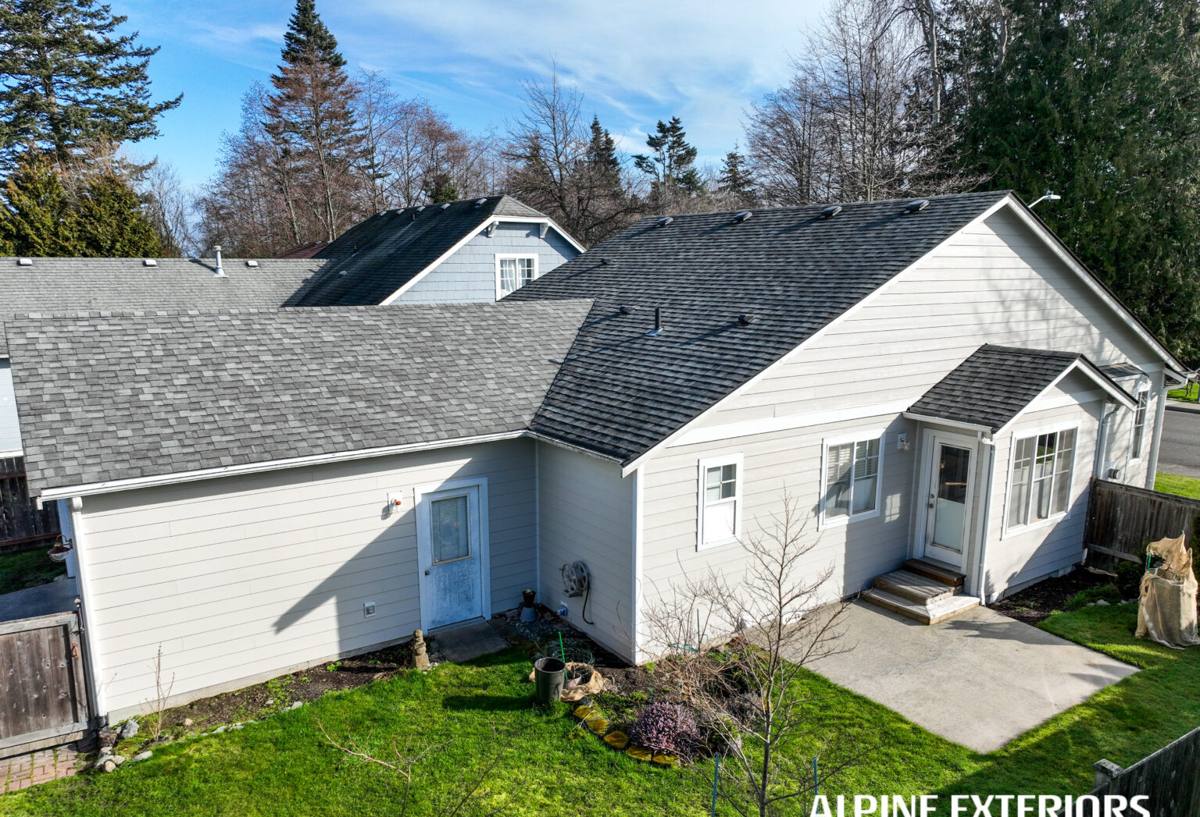
What Snohomish County Weather Actually Does to a House
Driving Rain and Wind-Driven Moisture
Lynnwood doesn't get the heaviest rainfall totals in the state, but it gets a lot of wind-driven rain — storms that push moisture horizontally into wall surfaces rather than just falling straight down. That matters because a lot of siding products and installation details are only tested against vertical rain exposure. Butt joints, corner trim, and window flashing are the first places wind-driven rain finds a way in. Over time, repeated wetting at these transition points is what causes rot in the sheathing behind the siding, not the siding material itself failing outright.
Salt Air Corrosion
Being close to Puget Sound means airborne salt is a real factor for exterior materials, especially fasteners, flashing, and any exposed metal trim. Salt-laden air accelerates corrosion on standard steel fasteners and can degrade certain paint and coating systems faster than they'd wear in a drier inland climate. This is one of the quieter reasons a lot of older Lynnwood homes show rust streaking below nail heads or corroded J-channel around windows well before the siding itself is due for replacement.
Moss, Algae, and the Long Wet Season
Western Washington's moss season is long because the conditions that grow it — shade, moisture, and moderate temperatures — persist for most of the year here. Moss and algae growth on siding isn't just cosmetic. Moss holds moisture directly against the surface it's growing on, which is exactly the opposite of what you want for a wall system that's supposed to dry out between rain events. Siding with a porous surface, or a finish that traps water instead of shedding it, tends to grow moss faster and hold onto that moisture longer.
Why Material Choice Matters More Here Than in Drier Climates
In a hot, dry climate, a lot of siding materials perform reasonably well because they simply don't stay wet long enough to fail. That's not the case in Lynnwood. Here, material choice is one of the biggest variables in how long an exterior actually lasts, because everything gets tested by repeated moisture exposure year after year.
We install James Hardie fiber cement siding exclusively. We don't install vinyl, LP SmartSide, Cemplank, Allura, primed spruce, or cedar, and that's a deliberate decision based on what we've seen hold up — and what hasn't — on homes in this exact climate.
Wood and Engineered Wood Products
Cedar and primed spruce siding can look excellent when they're new, and there are homeowners who genuinely prefer the appearance of real wood. But wood siding is organic material, and organic material in a climate that stays damp for most of the year is fighting an uphill battle against rot, swelling, and the moss and algae growth we already covered. Engineered wood products like LP SmartSide use resin-treated strand board to resist moisture better than raw wood, and the treatment does help — but the product is still wood-based at its core, and edge and seam moisture intrusion remains the failure point to watch, especially if caulking and paint maintenance lapse for even a season or two.
Vinyl Siding
Vinyl is inexpensive and low-maintenance in the sense that it doesn't need painting, but it's a thin plastic product that isn't fastened rigidly to the wall — it's designed to expand and contract with temperature, which means it's never a fully sealed water barrier at the seams. In a climate with this much wind-driven rain, that matters. Vinyl also fades and becomes brittle with UV and temperature cycling over the years, and it's not repairable in the way fiber cement is — a damaged panel usually just gets replaced.
Other Fiber Cement Brands
Products like Cemplank and Allura are also fiber cement, and fiber cement as a category is a sound choice for this climate — that's exactly why we build our business around it. Where we've drawn the line is on the specific manufacturer. James Hardie has the longest track record in the Pacific Northwest, engineers products specifically for regional climate zones, and backs the product with a factory finish warranty that we think is the strongest in the category. That's a business decision we're glad to explain in more detail if you're comparing options.
| Material | Moisture Resistance in This Climate | Ongoing Maintenance |
|---|---|---|
| James Hardie Fiber Cement | Excellent — non-combustible, engineered for wet climates | Repaint on a normal cycle; ColorPlus finish reduces this significantly |
| Cedar / Primed Spruce | Fair — vulnerable to rot without diligent upkeep | Regular painting/sealing, moss treatment, edge caulking |
| LP SmartSide (engineered wood) | Good, but seam/edge sensitive | Repaint on schedule; caulking maintenance is critical |
| Vinyl | Fair — seams aren't a true water seal | Low, but panels aren't repairable if damaged |
Why We Standardized on James Hardie
Fiber cement as a material category resists moisture, doesn't feed mold or moss growth the way wood does, and holds paint and factory finishes far longer than wood-based products. James Hardie's HZ product lines are specifically engineered around regional climate zones — HZ5, which is what we typically spec for Snohomish County installs, is built for the freeze-thaw and wet-climate conditions the Pacific Northwest sees. The ColorPlus factory finish is baked on under controlled conditions rather than field-painted, which gives it better adhesion and UV resistance than a job-site paint job, and it comes with its own finish warranty separate from the product warranty. It's also non-combustible, which matters for wildfire-adjacent insurance considerations even in a wetter region like ours, and it holds up structurally to the impact of hail and debris better than vinyl or wood.
None of this means other products are unusable — plenty of homes around the country are sided in cedar, vinyl, or other fiber cement brands and do fine. It means that for the specific combination of driving rain, salt air, and extended moss season that Lynnwood and the broader Everett area deal with, we've made a professional judgment call about what we're willing to put our name behind.
How We Approach a Siding Job in Lynnwood
Inspection Before Anything Else
Before we talk about new siding, we look at what's underneath the old siding. Wind-driven rain and long moss seasons mean hidden rot at window flashing, corner boards, and butt joints is common on homes that are 15-20+ years old. We check for soft sheathing, evidence of past moisture intrusion, and whether the water-resistive barrier behind the existing siding is still doing its job. Replacing siding over compromised sheathing just locks the problem in for another decade.
Flashing and Water Management Details
Given how much of the damage we see traces back to flashing and joint failures rather than the siding material itself, we pay close attention to window and door flashing, kick-out flashing at roof-wall intersections, and proper lap and joint sequencing so water is directed out and down rather than trapped. This is the part of a siding job that doesn't show up in a walkthrough but determines whether the install lasts 10 years or 40.
Fastening for Salt Air Conditions
We use corrosion-resistant fasteners appropriate for coastal-influenced air, since standard fasteners are one of the first things to show wear in this environment.
Beyond Siding: Roofing, Windows, and Decks in Lynnwood
The same weather that stresses siding stresses the rest of a home's exterior, which is why we handle roofing, windows, and decks as well rather than treating siding as an isolated project. A roof with aging or failing flashing will feed moisture down into wall assemblies no matter how good the siding is. Windows with worn seals let wind-driven rain track in at exactly the joints where siding is already vulnerable. And decks in this climate deal with their own version of the moss-and-moisture problem, especially on shaded, north-facing lots that are common throughout the area. When we're on-site for a siding project, we're looking at the whole exterior envelope, because these systems all depend on each other to keep water out.
What Homeowners Should Check Before Hiring
- Ask whether the crew doing the physical installation is direct employees or subcontracted out, and how much Hardie-specific installation experience they have
- Confirm they're following James Hardie's published installation instructions — proper clearances, fastening patterns, and joint treatment are what the warranty is contingent on
- Ask what HZ zone product they're specifying and why, given your home's exposure
- Get clarity on how they handle flashing at windows, doors, and roof intersections, not just the field siding installation
- Check that any manufacturer warranty is being registered properly on your behalf after the job
- Ask how they handle sheathing repair or replacement if rot is found once old siding comes off
Cost Factors to Expect
Every home is different, but a few factors consistently drive cost on Lynnwood-area siding projects: the condition of the sheathing underneath the existing siding (repairs add cost but are far cheaper to do now than after new siding is installed over hidden rot), the complexity of the home's trim and architectural detail, the amount of window and door flashing work involved, and the specific Hardie product line and finish chosen. We're glad to walk through actual numbers for your home rather than quote broad ranges that don't mean much until someone's looked at the house.
Why a Local Crew Matters
A lot of what separates a siding job that lasts from one that doesn't comes down to details that only make sense if you understand the specific climate a house sits in. A crew that mostly works in drier regions may not instinctively over-build flashing details the way this weather demands, or may not think twice about fastener corrosion resistance because it's never been a problem where they usually work. Working consistently in Snohomish County and the Everett area means we're not guessing at how a wall assembly needs to perform here — we're building to what we've seen actually hold up, and what's actually failed, on homes just like the ones in Lynnwood.
If you're weighing a siding, roofing, window, or deck project on a Lynnwood home, we're happy to take a look and give you an honest, no-pressure estimate — just fill out the form below.