 Everett
 Board & Batten Siding Built for Lynnwood's Climate
Board and batten has become one of the most requested looks in the Lynnwood area, and it's easy to see why. The vertical lines read as modern farmhouse on a new build and as a clean, tailored accent on a remodel, whether it's covering a full elevation or dressing up a gable and entry. But in this part of Snohomish County, how that siding is installed matters just as much as how it looks. Lynnwood sits close enough to Puget Sound and Possession Sound to pick up salt-laden air, it gets pounded by driving, wind-pushed rain off the Pacific through the fall and winter, and the tree cover and persistent damp shade on much of the property stock here mean a long moss and algae season that never fully lets up. Siding that isn't detailed correctly for those conditions will show it within a few years — streaking, soft trim, moss creeping up from the base, or paint failing at the seams.
This page is specifically about board and batten siding for Lynnwood homes: what the local climate demands from it, what a correct installation actually involves, and why we install it in James Hardie fiber cement only.
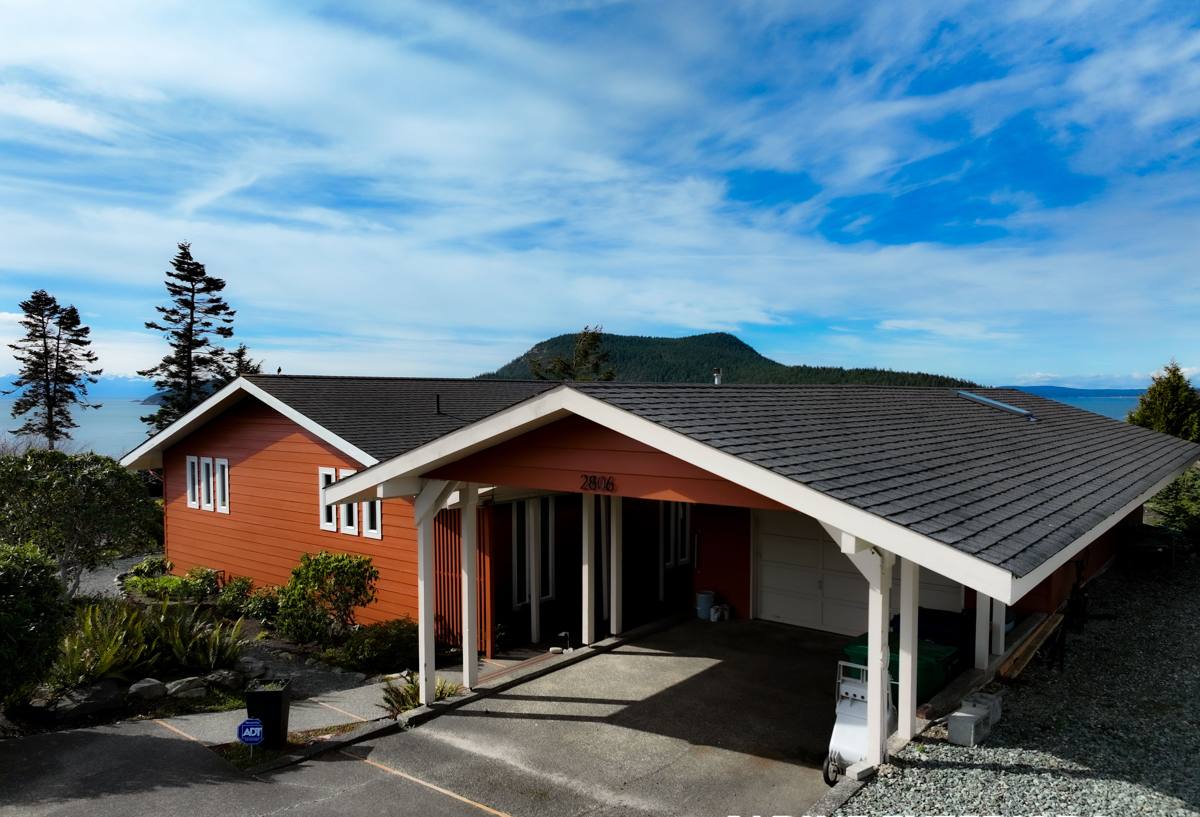
What Lynnwood's Climate Does to Vertical Siding
Salt Air
Homes closer to the water deal with airborne salt that accelerates corrosion on fasteners, flashing, and any metal trim details that are part of a board and batten system. Untreated or mismatched hardware is often the first thing to fail, long before the siding material itself shows wear.
Driving Rain
Board and batten relies on vertical seams and butt joints that, if not flashed and gapped correctly, can funnel wind-driven rain straight into the wall assembly instead of shedding it. This is the single biggest failure point we see on vertical siding jobs that weren't detailed for a wet coastal climate.
Moss and Algae
Shaded, north-facing walls and anything tucked under overhangs or tree canopy in Lynnwood stay damp for extended stretches. That moisture holds onto surface grime and gives moss and algae a place to establish, especially where battens create narrow ledges and shadow lines that trap debris and stay wet longer than a flat wall would.
What a Correct Board & Batten Installation Actually Involves
Board and batten looks simple from the street — vertical panels, battens over the seams — but the assembly behind that look is what determines whether it holds up in this climate. A correct install includes:
- A weather-resistive barrier installed and lapped correctly behind the siding, with all penetrations properly flashed
- A rainscreen air gap between the barrier and the siding so any moisture that does get past the surface can drain and dry instead of sitting against the sheathing
- Correct fastener spacing and type for both the vertical panels and the battens, matched to the substrate
- Flashing and proper clearance at the base of the wall, around windows and doors, and at any roof-to-wall transitions
- Sealed, factory-finished panel edges rather than field-cut edges left exposed to weather
- Adequate clearance from grade, decks, and roof lines to keep the lowest courses out of standing moisture and splash-back
Skip any one of these and the visible siding can still look fine on install day while the wall behind it is already set up to fail. This is where a lot of vertical siding jobs go wrong — not in the material choice, but in the details nobody sees once the battens go on.
Why We Install James Hardie — and Not Vinyl, LP, or Cedar
Board and batten is available in several materials, and each one gets marketed as an easy way to get the look. In our experience working on homes in this climate, most of them create long-term problems that outweigh the upfront savings.
Vinyl Board & Batten
Vinyl is inexpensive and installs quickly, but it's a thin material that expands and contracts significantly with temperature swings, which stresses the fastening and seams over time. In a driving-rain climate, vinyl's overlapping panel system is also more prone to wind-driven moisture intrusion than a properly flashed flat-panel system, and it can crack or become brittle in colder snaps.
LP SmartSide and Primed Wood Products
Engineered wood and primed spruce board and batten can look great initially, but they're wood-based products that depend heavily on an intact factory or field-applied coating to keep moisture out. Any gap in that coating — a fastener head, a cut edge, a caulk joint that fails — gives moisture a path into the wood substrate, and in a wet, moss-prone climate like Lynnwood's, that's a real risk over the life of the siding.
Cedar Board & Batten
Real cedar is a beautiful, traditional choice for this look, but it's a maintenance-intensive one. It needs regular refinishing, is a food source for the same moss and algae that thrive in our damp shade, and is combustible — a real consideration given wildfire smoke seasons and general fire-safety trends in the region.
Why James Hardie
James Hardie fiber cement is non-combustible, engineered specifically for wet regional climates through its HZ5 product line, and finished with ColorPlus technology — a factory-baked finish that resists fading and doesn't rely on a field-applied coat to keep the material protected. It holds its shape and edges cleanly for the crisp reveal lines that make board and batten look sharp, and it carries a strong transferable warranty. It's the one material we've found consistently earns its keep on homes in this climate, which is why it's the only siding we install.
Comparing Board & Batten Material Options
| Material | Moisture Performance Here | Maintenance | Fire Resistance |
|---|---|---|---|
| James Hardie Fiber Cement | Engineered for wet coastal climates (HZ5) | Low — factory finish, no refinishing needed | Non-combustible |
| Vinyl | Prone to wind-driven rain intrusion at seams | Low, but prone to cracking/warping over time | Combustible, can melt/deform |
| LP SmartSide / Primed Wood | Depends on intact coating; vulnerable at cuts and fasteners | Moderate — coating maintenance required | Combustible |
| Cedar | Absorbs moisture, prone to moss/algae without upkeep | High — regular refinishing/treatment | Combustible |
Our Process for a Lynnwood Board & Batten Project
Assessment and Detailing
We start by walking the home and identifying the trouble spots specific to that property — shaded north walls, low clearance areas, roof-to-wall transitions, anything near mature trees or closer to the water. The flashing and rainscreen plan gets built around what that specific home actually faces, not a generic spec.
Prep and Weather Barrier Installation
Old siding comes off, the sheathing gets inspected for hidden moisture damage before anything new goes on, and the weather-resistive barrier and rainscreen system go in with proper lapping and flashing at every penetration.
Installation
Panels and battens go up per James Hardie's fastening and spacing specifications, with attention to consistent reveal lines, sealed edges, and correct clearance at grade, decks, and trim.
Final Detailing and Walkthrough
We finish with caulking at the joints that require it, confirm flashing and clearances one more time, and walk the finished work with the homeowner before we call it done.
Cost Factors for Board & Batten in This Area
| Factor | Why It Affects Cost |
|---|---|
| Wall complexity | Gables, dormers, and multiple transitions require more flashing and cutting |
| Existing wall condition | Sheathing repair or moisture damage found during tear-off adds scope |
| Extent of coverage | Full-elevation board and batten costs more than accent areas like gables or entries |
| Trim and reveal detailing | Custom batten spacing and trim work adds labor time |
| Access | Tree cover, tight lot lines, or steep grade common in Lynnwood neighborhoods can affect staging and labor |
We give specific numbers only after seeing the actual walls in person — anything else is a guess.
Living With Board & Batten Siding in Lynnwood
Even correctly installed siding benefits from a little seasonal attention in this climate. A yearly rinse-down helps keep moss and algae from establishing, especially on shaded elevations, and it's worth periodically checking that gutters and downspouts are clear so runoff isn't sheeting down the wall. Because James Hardie's ColorPlus finish is factory-applied, you're not on the hook for repainting on a schedule the way you would be with cedar or a field-finished wood product — that alone removes one of the biggest recurring maintenance burdens homeowners deal with here.
What to Look for in a Board & Batten Contractor
- Experience with James Hardie's specific fastening, spacing, and flashing requirements — not general contracting experience alone
- A clear explanation of how they'll handle the rainscreen gap and weather barrier, not just the visible panel work
- Familiarity with wet, coastal climate conditions and how they affect flashing and clearance details
- Willingness to walk the home with you and point out property-specific risk areas before work starts
- A written scope that specifies material, fastening method, and warranty coverage
A crew that already works regularly in Lynnwood and the surrounding Everett area has usually seen the moss patterns, water tables, and wall exposures common to these neighborhoods, and details the job accordingly instead of applying a one-size-fits-all approach.
Get a Free Estimate
If you're considering board and batten siding for a home in Lynnwood, we're happy to take a look, walk you through what correct installation involves for your specific walls, and give you a straightforward, no-pressure estimate using James Hardie fiber cement siding — the only material we install.