 Everett
 Pinehurst's Siding Problem Isn't Like Everywhere Else
Pinehurst sits close enough to Puget Sound and Possession Sound that salt-laden air is a real factor on siding, trim, and fasteners — not a theoretical one. Add in Snohomish County's long wet season, driving rain that comes in sideways off the water more often than people expect, and the heavy tree canopy that shades a lot of Pinehurst lots, and you get a climate that's genuinely hard on exterior materials. Homes here don't fail because owners neglected them. They fail because the siding, the flashing details, or the installation weren't matched to what this specific stretch of Everett actually throws at a house year-round.
That combination — salt air, driving rain, and a moss season that can run from October through May — is why we treat Pinehurst siding work differently than a generic install. It's also why we only install James Hardie fiber cement siding. This page covers what that means for a Pinehurst home specifically: what the climate demands, what a correct installation looks like, and how our process works when we're on your street.
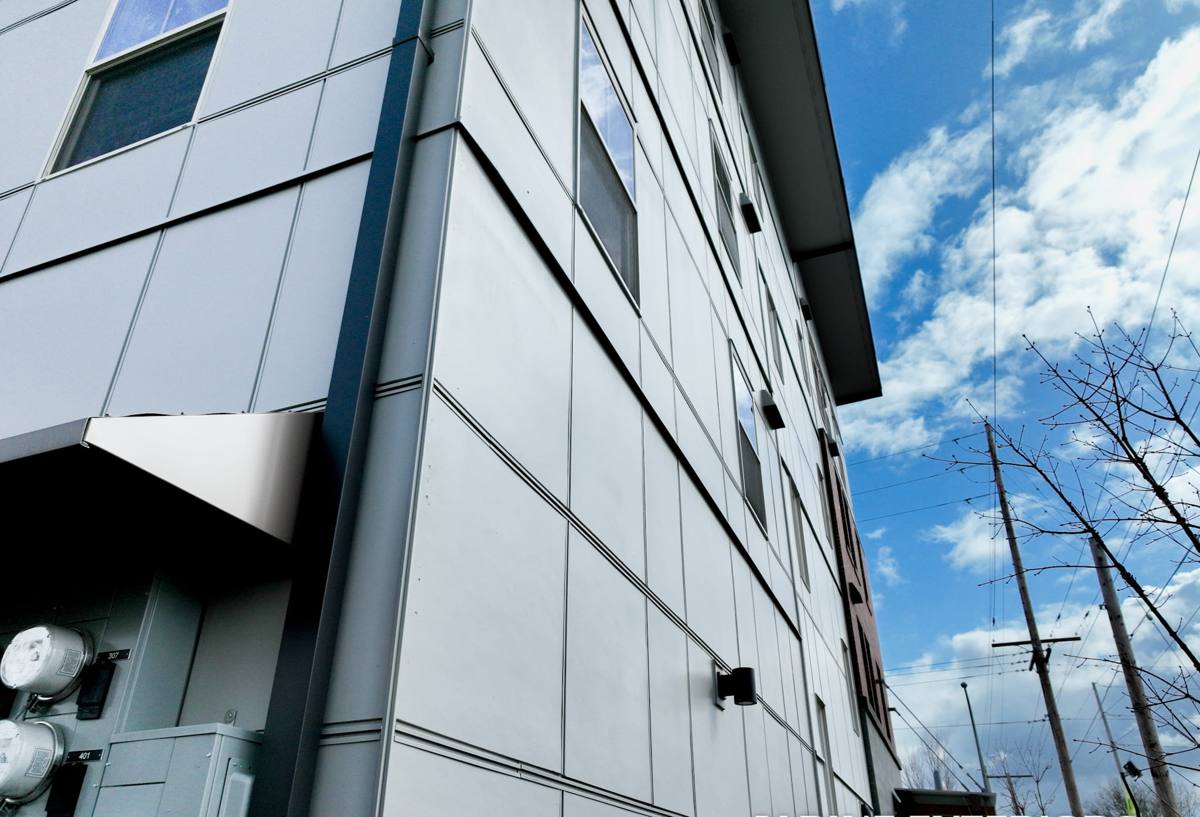
What Salt Air, Rain, and Moss Actually Do to Siding
Salt Air
Airborne salt doesn't just sit on a surface — it works into seams, fastener heads, and any spot where a coating is thin or compromised. Over years, it accelerates corrosion on exposed metal fasteners and trim, and it can degrade paint finishes faster than an inland home would experience. Materials and finishes that aren't engineered for coastal exposure tend to show wear years ahead of schedule.
Driving Rain
Everett's rain isn't always gentle straight-down rain. Wind off the water pushes water sideways into wall assemblies, which means every seam, joint, and penetration is a potential entry point if it isn't detailed correctly. This is a water-management problem as much as a material problem — even the best siding fails early if the flashing and drainage plane behind it are wrong.
Moss and Sustained Moisture
Shaded, tree-covered lots — common throughout Pinehurst — stay damp longer after every rain event. That extended moisture window is exactly what moss, mildew, and algae need to establish themselves on siding surfaces, especially on north-facing walls and anywhere airflow is limited. Materials that absorb moisture or swell when wet give moss and mildew something to hold onto; materials that shed water and resist swelling don't.
Why Fiber Cement Handles This Climate Better Than the Alternatives
Fiber cement is a mix of cement, sand, and cellulose fibers, formed under pressure and cured. That composition matters directly here:
- It doesn't rot, and it doesn't provide the organic food source that wood-based products do for moss and fungal growth.
- It's dimensionally stable — it doesn't swell and shrink with moisture cycles the way wood or wood-composite products can, which keeps joints and paint film intact longer.
- It's non-combustible, which matters for insurance considerations in Washington regardless of coastal exposure.
- A factory-applied finish (as opposed to field-applied paint) gives more consistent, durable coverage against the freeze-thaw and wet-dry cycling this region produces.
None of that means fiber cement is maintenance-free. It means it starts from a much better baseline for a neighborhood like Pinehurst, and holds that baseline longer than the materials it's usually compared against.
The James Hardie HZ5 System — Built for This Region
James Hardie engineers its siding in climate-specific formulations called HZ (Hardie Zone) products. The Pacific Northwest, including Snohomish County, falls into the HZ5 zone, which is formulated for sustained moisture exposure and cooler, wetter conditions rather than the arid-climate formulation sold in other parts of the country. That distinction matters — it's the difference between siding formulated for this exact weather pattern and siding that's just "fiber cement" in a general sense.
On top of the HZ5 substrate, Hardie's ColorPlus finish is baked on in a controlled factory environment through multiple coats, rather than sprayed or brushed on site. That process produces a more uniform, better-adhered finish that resists fading and holds up to UV and moisture cycling better than field-applied paint — which is a real advantage on a home that's going to see this much rain over its lifetime.
What a Correct Installation Actually Involves
Fiber cement siding is only as good as the installation behind it. This is where a lot of the real-world performance gap shows up — two homes with identical siding can perform very differently depending on how the crew handled the details. On a Pinehurst home, the details we pay closest attention to are:
- Drainage plane and weather-resistive barrier: a correctly lapped, sealed barrier behind the siding so any water that gets past the cladding has somewhere to go besides your sheathing.
- Proper gapping: Hardie specifies gaps at butt joints and around penetrations (windows, doors, outlets) so the material can move slightly without cracking the finish or trapping water.
- Flashing at every horizontal transition: window heads, deck ledgers, roof-to-wall intersections, and trim boards all need flashing detailed to shed water outward, not into the wall.
- Fastener pattern and type: corrosion-resistant fasteners, placed per Hardie's nailing schedule, matter more in a salt-air environment than in most inland installations.
- Caulking discipline: sealing only where Hardie specifies, and leaving drainage gaps where they're supposed to stay open — over-caulking is a common mistake that traps moisture instead of shedding it.
Get any one of these wrong and you can end up with moisture problems behind siding that looks fine from the curb for a year or two before issues surface.
Fiber Cement vs. the Alternatives, for a Pinehurst Home
| Material | Moisture Behavior | Salt Air Durability | Moss/Algae Resistance | Long-Term Upkeep |
|---|---|---|---|---|
| James Hardie Fiber Cement (HZ5) | Dimensionally stable, doesn't rot | Formulated for coastal/wet climates | No organic material for growth to feed on | Periodic cleaning; factory finish holds color |
| Vinyl Siding | Doesn't rot, but can warp under heat/cold cycling | Fasteners and trim can corrode over time | Growth sits on surface, can be visible in shaded areas | Low, but color fades and can't be repainted easily |
| Cedar / Wood Siding | Absorbs moisture, prone to rot without diligent upkeep | Finish breaks down faster in salt exposure | Organic material — prime target for moss and fungus | High — regular refinishing and repair |
| LP SmartSide (engineered wood) | Better than raw wood, but still wood-based and moisture-sensitive at cut edges/seams | Coating can degrade faster than fiber cement in salt exposure | Wood-based core still vulnerable if the coating is compromised | Moderate — edge sealing and seam maintenance matter |
This table reflects general material behavior, not brand-bashing — every one of these products has a legitimate use case somewhere. For Pinehurst's specific mix of salt air, driving rain, and moss exposure, fiber cement's non-organic, dimensionally stable composition is simply the better match, which is why it's the only siding we install.
Our Process on a Pinehurst Project
Estimate and Assessment
We walk the exterior, check for existing moisture damage, look at how the roofline and drainage currently handle water around the home, and talk through your goals — full replacement, partial repair, or a specific problem area. This is also where we flag anything that needs to be addressed before new siding goes up, like damaged sheathing.
Tear-Off and Prep
For most re-sides, we remove the existing siding down to the sheathing so we can inspect and correct the drainage plane rather than build over unknown conditions — this matters more in a wet, tree-covered area like Pinehurst than it would in a drier climate.
Weather-Resistive Barrier and Flashing
Before a single piece of siding goes up, the house gets a correctly lapped barrier and properly detailed flashing at every window, door, and horizontal transition.
Installation and Finish
Siding goes up per Hardie's fastening and gapping specifications, with trim, corners, and caulking handled last. We sequence work around weather where we can, since fiber cement installation goes best in dry conditions.
Final Walkthrough
We walk the finished job with you, point out anything you should know for future maintenance, and make sure everything matches what was discussed at the estimate.
Maintaining Fiber Cement Siding in a Moss-Prone Neighborhood
Fiber cement is low-maintenance, not no-maintenance — especially under Pinehurst's tree cover. A little routine attention keeps it performing the way it's designed to:
- Rinse siding annually with a garden hose (avoid high-pressure washing, which can force water behind panels or damage the finish).
- Keep gutters and downspouts clear so water isn't overflowing directly onto siding runs below.
- Trim back branches and shrubs that keep siding shaded and damp for extended periods.
- Inspect caulking at trim and penetrations every year or two, and re-caulk where it's cracked or pulled away.
- Address any moss or algae growth early with a gentle cleaning rather than letting it establish and spread.
- Watch for any soft spots, staining, or gaps at seams — early signs are much cheaper to fix than deferred ones.
Why It Matters That We Already Work in Pinehurst
A crew that's worked this specific area understands the drainage patterns, the tree-cover moisture load, and the salt-air exposure without having to relearn it on your home. That translates into fewer surprises during tear-off, flashing details that are already dialed in for this climate, and a realistic sense of how your project should be sequenced around Everett's weather. It also means we're not guessing at what performs here — we're building on what we already know holds up in this specific stretch of Snohomish County.
If you're weighing a siding replacement or repair in Pinehurst, we're happy to take a look and give you a straightforward, no-pressure estimate — no obligation, just an honest read on what your home needs.