 Everett
 Deck Repair Built for South Everett's Weather
South Everett decks work harder than decks in drier parts of the country. Between the marine air rolling in off Puget Sound, the long stretch of driving rain that runs from fall through spring, and the shaded, damp conditions that let moss and algae take hold on north-facing and low-clearance decks, wood and composite structures here take on moisture almost year-round. A deck that would last decades in a dry climate can develop soft framing, failing fasteners, or a slick, moss-covered surface in a fraction of that time if it isn't built and maintained with this climate in mind.
We repair decks throughout South Everett and the surrounding Snohomish County area, and the patterns we see are consistent: water finds its way into ledger connections, joists sit in standing moisture longer than they should, and surfaces that never fully dry out grow moss that traps even more water against the wood. Repair work here isn't just about replacing a rotten board — it's about understanding why that board failed in the first place and making sure the fix doesn't just buy you another season or two.
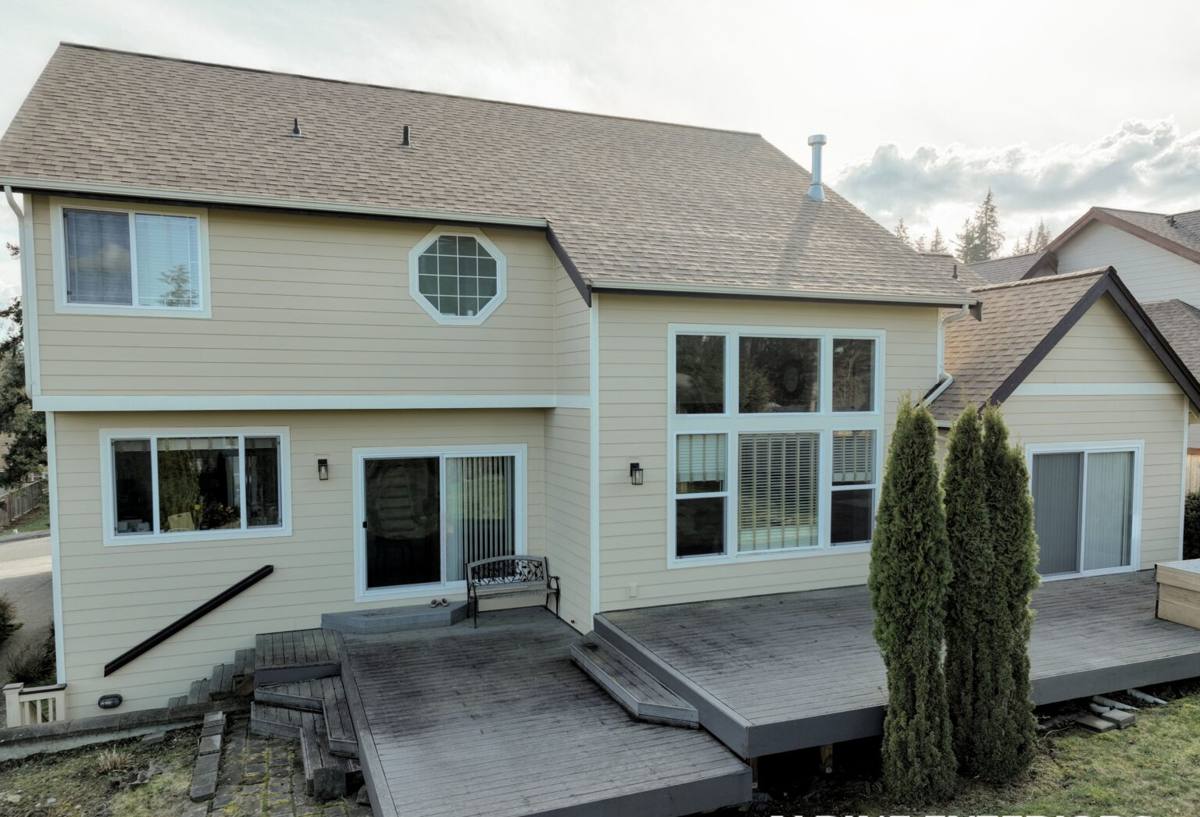
Signs Your Deck Needs Repair
Structural Warning Signs
- Deck feels springy, bouncy, or unstable when you walk across it
- Railings or guardrail posts wiggle or flex under light pressure
- Visible gaps, rust streaks, or corrosion at joist hangers and connectors
- Soft or spongy spots in decking boards, stairs, or the ledger board where the deck meets the house
- Stair stringers that feel uneven or have visible cracking
Surface and Cosmetic Warning Signs
Not every issue is structural. Graying, cupping, or splintering boards, persistent moss or algae growth that keeps coming back after cleaning, and fasteners that have popped up or rusted through are all common in this climate and don't necessarily mean the deck needs to be torn out — but they do mean water is getting in somewhere, and it's worth having someone look before it spreads to the framing underneath.
What a Proper Deck Repair Actually Involves
A repair that only addresses what's visible on the surface tends to fail again within a year or two here. A repair that holds up needs to account for what's happening underneath and behind the decking, not just on top of it.
Framing and Substructure
Joists, beams, and posts are the part of the deck most homeowners never see — and the part most likely to be quietly failing. We check for rot at joist ends, deteriorated post bases where wood sits closest to grade or moisture, and connections that have corroded from years of damp exposure. Framing repairs are non-negotiable before any decking goes back down; replacing boards over compromised framing just hides the problem.
Ledger Board and Flashing
The ledger board — where the deck attaches to the house — is one of the most common failure points we find in this region. Without proper flashing, water runs behind the ledger and into the house's structure, not just the deck. Any repair near the ledger is a chance to check and correct the flashing, not just patch the wood.
Decking Boards and Fasteners
Individual board replacement is straightforward when the framing underneath is sound. We match spacing and fastening to allow for proper drainage and airflow, since boards installed too tight or fastened incorrectly are part of why moss and standing moisture become a problem in the first place.
Railings and Guardrails
Loose or rotted railing posts are a safety issue, not just a cosmetic one. Repairs here need to meet current guardrail height and spacing requirements, especially on older decks that may have been built to an earlier code.
Repair or Replace? How to Think About It
This is the question almost every homeowner asks, and the honest answer depends on a handful of factors rather than the age of the deck alone. A well-built deck with isolated damage is often a good repair candidate; a deck with widespread framing rot or one that was undersized or poorly flashed to begin with may cost more to keep patching than to rebuild correctly.
| Factor | Repair Usually Makes Sense | Replacement Usually Makes Sense |
|---|---|---|
| Extent of damage | Isolated boards, one section of railing, or a single joist | Rot or corrosion spread across multiple framing members |
| Ledger and flashing condition | Ledger is sound, flashing just needs correction | Ledger itself is rotted or was never flashed properly |
| Age and original construction | Deck was well-built and code-compliant when new | Deck was undersized, poorly fastened, or built without permits |
| Frequency of past repairs | First real repair after years of normal use | Recurring issues in the same areas year after year |
| Budget goals | Extending usable life a number of years affordably | Long-term investment with updated materials and layout |
We'll always tell you honestly which category your deck falls into. A repair that's likely to fail again within a season or two isn't a good use of your money, and we won't recommend one just to make a sale.
Our Deck Repair Process
1. On-Site Inspection
We walk the deck, probe framing for soft spots, check the ledger and flashing, and look at drainage and grading underneath. This tells us whether we're dealing with a surface issue or something structural.
2. Straightforward Assessment
You get a clear explanation of what's failing, why it's failing, and what a proper fix requires — including if a repair isn't the right call and a rebuild would serve you better long term.
3. Framing and Structural Repairs First
Any compromised joists, posts, beams, or ledger flashing get addressed before cosmetic work begins. This is the step that determines whether the repair actually lasts.
4. Decking, Railing, and Finish Work
Boards, railings, and hardware are replaced or repaired to match the rest of the deck as closely as possible, with attention to spacing and drainage so water doesn't just pool in the same spots again.
5. Cleanup and Walkthrough
We clean up the work area and walk the finished repair with you so you know exactly what was done and what, if anything, to keep an eye on going forward.
Materials for Deck Repairs in a Wet Climate
Material choice matters more here than in drier regions, particularly for framing and any wood that stays in near-constant contact with moisture.
Pressure-Treated Lumber for Framing
For structural repairs — joists, posts, beams — pressure-treated lumber rated for ground contact or moisture exposure is the standard we hold to. It's not the most attractive wood, but it's not meant to be seen; it's meant to resist the rot that untreated lumber succumbs to quickly under this region's rainfall.
Decking Surface Options
For the visible decking surface, homeowners generally choose between wood species like cedar, which has natural moisture resistance and a traditional look but needs regular sealing and maintenance, and composite or capped-composite boards, which resist rot and moss adhesion better but come at a higher upfront cost and have their own care requirements around cleaning and gap spacing. Neither is universally "better" — it depends on how much upkeep you want to do and what look you're after. We'll walk you through the real trade-offs for your specific deck rather than pushing one option.
Fasteners and Hardware
Corrosion-resistant, coated fasteners and connectors are worth the modest added cost in this climate. Standard hardware corrodes faster near Puget Sound's salt-influenced air, and failed fasteners are one of the most common repeat-repair issues we see.
Moss, Algae, and Standing Moisture: The South Everett Reality
Long moss season isn't just a nuisance here — it's a maintenance issue that directly shortens a deck's life. Moss holds moisture against the board surface, blocks it from drying between rains, and accelerates rot in ways that plain rainfall alone doesn't. Shaded decks, north-facing decks, and decks close to grade tend to see this the worst.
Practical Maintenance Checklist
- Sweep leaves, needles, and debris off the deck regularly, especially in fall
- Keep gutters and downspouts clear so runoff isn't draining directly onto or under the deck
- Clean moss and algae off boards before it builds up a thick layer — the longer it sits, the more moisture it traps
- Check that boards have slight gaps for drainage and aren't sitting flush against each other
- Reseal or refinish wood decking on the manufacturer's recommended schedule, not just when it looks worn
- Look underneath the deck occasionally for standing water, soft framing, or grading that's changed over time
None of this eliminates the need for repairs eventually, but it slows the clock significantly and helps you catch problems while they're still small.
Permits and Code Considerations
Deck repairs that involve structural framing, guardrails, or stairs often fall under permitting requirements through the local building department, particularly if the scope goes beyond simple board replacement. Guardrail height, baluster spacing, and stair rail requirements are areas where older decks commonly fall short of current code, and a repair is a natural point to bring those elements up to standard. We handle the permitting conversation as part of the process so you're not left figuring out what's required on your own.
Why Hire a Crew That Already Works South Everett
Deck repair looks different in a marine climate than it does in most of the country, and a crew that hasn't worked this specific mix of conditions — salt-influenced air, prolonged wet seasons, heavy moss growth, and Snohomish County's building requirements — can miss the underlying cause of a failure and leave you with a repair that doesn't hold. We work on decks in South Everett regularly, so we're not guessing at how this climate behaves; we're accounting for it in every repair, from the fasteners we choose to how we handle drainage and flashing.
If your deck has soft spots, loose railings, recurring moss problems, or you're just not sure whether it needs a repair or something more, we're glad to take a look. Reach out for a free, no-pressure estimate using the form below, and we'll give you an honest read on what your deck actually needs.