 Everett
 South Everett's Climate Is Harder on Siding Than It Looks
South Everett sits close enough to Puget Sound that salt-laden air is a real factor, even on days that don't feel particularly "coastal." Add in Snohomish County's long wet season, where driving rain comes sideways off the water for weeks at a stretch, and siding here is working harder than it does in drier parts of the state. Then there's the moss and algae season, which in this part of Western Washington can run eight months or more out of the year on shaded, north-facing walls and anywhere tree cover keeps a wall from drying out between storms.
None of this is dramatic on its own. It's cumulative. Siding that's marginal on materials, marginal on installation detail, or both, doesn't fail all at once in South Everett — it fails slowly, wall by wall, usually starting on the north and west exposures where sun never gets a chance to dry things out. By the time a homeowner notices soft trim, staining, or paint that won't hold, the damage is usually already behind the cladding.
Why We Install James Hardie and Nothing Else Here
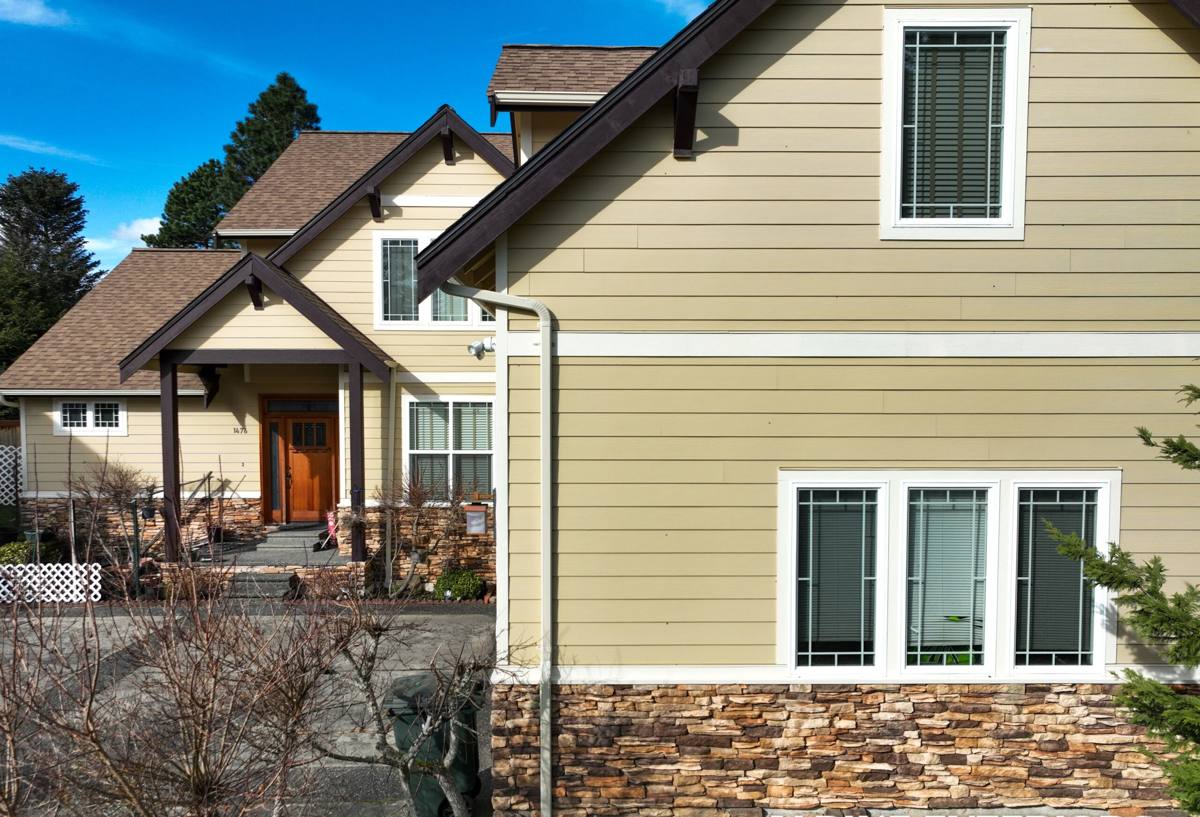
We standardized on James Hardie fiber cement siding company-wide, and South Everett's climate is a big part of why. Hardie's HZ5 product line is engineered specifically for climates like ours — the Pacific Northwest's combination of moisture, moderate temperatures, and long damp stretches. It's non-combustible, doesn't absorb water the way wood-based products do, and holds paint and factory finish far longer than the alternatives we used to install.
We don't install LP SmartSide, vinyl, Cemplank, Allura, primed spruce, or cedar anymore. Each of those products has legitimate uses somewhere, but for South Everett's moisture load and moss exposure, we found the long-term maintenance burden, moisture behavior, or installation sensitivity didn't hold up the way we wanted for the homes we put our name on. Fiber cement from Hardie, installed correctly, is what we're willing to warranty and stand behind here.
What ColorPlus Finish Actually Buys You
James Hardie's ColorPlus factory finish is baked on and cured under controlled conditions before the boards ever reach the jobsite, rather than field-painted after installation. That matters more in a climate like South Everett's than it would somewhere dry, because field-applied paint needs a real drying window to cure properly, and our weather doesn't always give contractors one. A factory finish sidesteps that problem entirely and comes with its own finish warranty separate from the substrate warranty.
What a Correct Installation Involves
Fiber cement siding is only as good as the details underneath it. A lot of the moisture problems we get called out to fix on other contractors' work trace back to a handful of recurring shortcuts, not to the siding material itself.
- Proper weather-resistive barrier (house wrap) installed and lapped correctly before any siding goes up
- Rigid or engineered flashing at every window, door, and roof-to-wall intersection — not just caulk
- Correct minimum clearance between siding and grade, decks, patios, and roof lines so water has somewhere to go
- Fastener placement and spacing that follows Hardie's published installation instructions, not just "what's worked before"
- Field-cut edges sealed per manufacturer spec, since raw cut edges are the most common place moisture gets in
- Proper joint treatment at butt joints and corners, sized and caulked to allow for expansion without gapping
Every one of these is checked against James Hardie's published installation requirements, since installing outside spec is one of the fastest ways to void a warranty that's otherwise transferable and long-term.
Moss and Algae: Prevention Starts Before the Siding Goes Up
You can't caulk your way out of a moss problem. What actually helps is drainage — a rainscreen gap or proper furring where the wall assembly calls for it, roof and gutter details that keep water off the wall face to begin with, and keeping vegetation and grade clearances where they belong so walls get a chance to dry between the rainy stretches South Everett is known for. We address this at the assessment stage, not as an afterthought once siding is already on the wall.
Our Process for South Everett Projects
We walk every project through the same sequence, whether it's a full re-side or a single elevation.
- On-site assessment — we look at existing siding, trim, flashing, and any signs of moisture damage before quoting anything
- Scope and product selection — plank profile, panel or shingle areas, and ColorPlus color are finalized based on the home's exposure and your preference
- Tear-off and substrate check — old siding comes off and sheathing gets inspected; anything soft or damaged gets addressed before new material goes up, not covered over
- Weather barrier and flashing — house wrap, flashing, and drainage details go in first, since this is the layer that actually keeps a house dry
- Hardie installation — installed to manufacturer spec for fastening, clearances, and joint treatment
- Final inspection and cleanup — walk-through against the original scope before we call it done
Choosing the Right Hardie Product for Your Home
James Hardie makes several distinct product lines, and the right choice depends on your home's architecture and how much of a role you want siding to play in its look.
| Product | Best Suited For | Look |
|---|---|---|
| HardiePlank lap siding | Most South Everett homes; the default choice for full re-sides | Traditional horizontal lap, several width and texture options |
| HardiePanel vertical siding | Accent walls, gables, modern or craftsman styling | Clean vertical lines, often paired with battens |
| HardieShingle siding | Accent areas, dormers, or homes going for a shingle-style look | Staggered or straight-edge shingle profile |
| HardieTrim boards | Corners, window and door trim, fascia | Smooth or textured trim to match the field siding |
Color is worth thinking through carefully here, too. Darker ColorPlus tones show less staining between cleanings on shaded, moss-prone walls, while lighter tones can show green streaking sooner in the areas that stay damp longest — usually north- and west-facing walls under tree cover. Neither is wrong, but it's a real trade-off worth discussing before you commit to a color.
What Drives Cost
Every home is different, but the same handful of factors move the price on most South Everett projects.
| Factor | Why It Matters |
|---|---|
| Existing siding removal | Tear-off, disposal, and any sheathing repair add labor before new siding even starts |
| Home size and wall complexity | More corners, gables, and dormers mean more cutting, trim, and labor time |
| Product mix | Straight lap siding throughout costs less than combining plank, panel, and shingle accents |
| Trim and detail work | Full trim replacement adds cost but keeps the whole system consistent and easier to maintain |
| Access and site conditions | Steep lots, tight setbacks, or limited equipment access can add time |
We give a firm, itemized quote after the on-site assessment rather than a rough estimate over the phone, since so much of the cost depends on what we find once the old siding comes off.
Why Hiring a Crew That Already Works South Everett Matters
Installation instructions are the same everywhere Hardie sells its product, but judgment calls on the ground aren't. A crew that regularly works South Everett and greater Snohomish County has already seen how the local moisture and moss pattern plays out on different lot orientations, tree cover, and home styles common to the area. That experience shows up in small decisions — where to add extra drainage detail, which walls need extra attention at flashing and joints, how much clearance to leave at grade given how wet the ground stays here — that a crew unfamiliar with the region might not think to make.
It also matters for permitting and inspection. Local jurisdictions have their own permitting requirements for exterior work, and a crew that pulls permits in this area regularly knows what inspectors are looking for before the job starts, not after a failed inspection stalls the project.
A Homeowner's Pre-Project Checklist
Before signing with any contractor for James Hardie siding, it's worth confirming the following:
- Are they a certified or experienced James Hardie installer with references specific to fiber cement work?
- Does the written quote specify house wrap, flashing details, and clearances — or just "install siding"?
- Will they pull the required local permit, or expect you to?
- Is the ColorPlus finish warranty and the substrate warranty both explained clearly and in writing?
- Do they inspect and address sheathing condition before installing new siding, not after problems reappear?
A contractor who answers these clearly and specifically, without vague reassurances, is usually one who's done this enough times to know exactly what South Everett's climate requires.
If you're weighing a siding replacement or repair in South Everett, we're happy to walk the property, look at what's there now, and give you a straight answer on what it needs. Use the form below to request a free, no-pressure estimate.