 Everett
 Why South Everett Roofs Wear Out Differently
South Everett sits close enough to Puget Sound and Port Gardner Bay that salt-laden air is a real factor on roofing materials, not a marketing talking point. Combine that with Snohomish County's long, wet fall-through-spring stretch of driving rain off the water, and you get a roofing environment that's harder on materials than most manufacturers' national warranty language assumes. Metal fasteners corrode faster near the coast. Asphalt granules lose adhesion sooner under near-constant damp. And the tree cover common in South Everett's older residential streets means shade, debris, and moisture sit on a roof far longer after a storm than they would on an open lot.
None of this means South Everett homes need exotic roofing. It means the replacement has to be specified and installed with this specific climate in mind — the right underlayment, the right ventilation balance, and material choices that actually hold up to repeated wet-dry cycling instead of just looking good on the day they're installed.
The Moss Season Problem
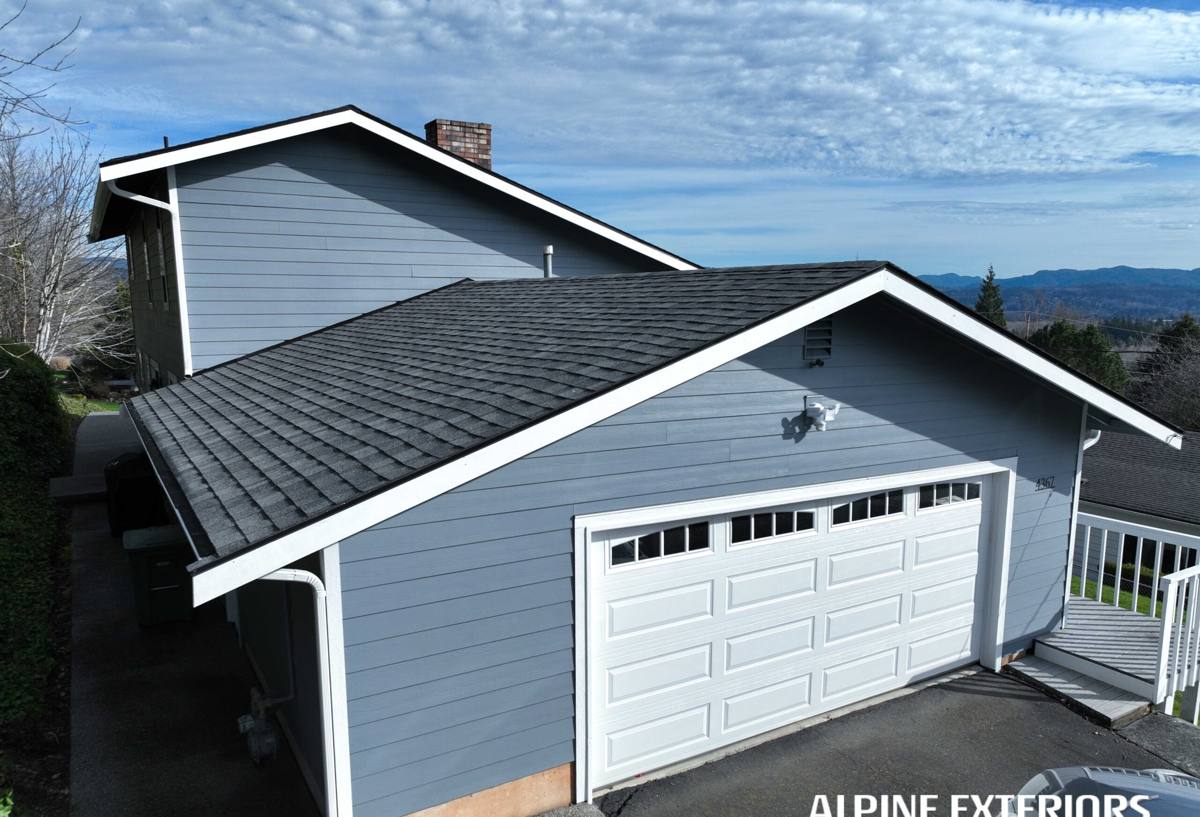
Western Washington's moss season isn't a two-week nuisance — for a shaded South Everett roof it can run eight or nine months out of the year. Moss doesn't just sit on top of shingles; it works into the granule surface, holds moisture against the mat, and over several seasons lifts shingle edges enough to let wind-driven rain underneath. By the time moss is visibly thick, it's usually already done damage you can't see from the ground.
A roof replacement done right in this area accounts for moss from day one — not with a bolt-on treatment, but with material and design choices that make the roof inherently less hospitable to it, plus a maintenance conversation with the homeowner about what keeps it that way long-term.
Signs a South Everett Roof Needs Replacement, Not Another Repair
Homeowners often call us for a repair and find out the roof is past the point where patching makes sense. Some of the most reliable signs:
- Granule loss heavy enough that you can see bare, shiny patches on multiple slopes, not just one weathered spot
- Moss or algae staining that returns within a season or two of being cleaned off
- Soft spots or visible sagging in the roof deck when viewed from the attic or from a ladder
- Daylight visible through the roof deck in the attic, or damp insulation after a storm
- Shingles that are curling, cupping, or cracking — a sign the asphalt has dried out and lost flexibility
- Flashing around chimneys, vents, or skylights that's rusted, lifted, or was never properly step-flashed to begin with
- A roof that's 20+ years old with more than one layer of shingles already on it
Any one of these on its own might still be repairable. Two or three together, especially on a roof already past its expected service life, usually means a full replacement is the more honest recommendation — and the more cost-effective one over a five-year horizon.
What a Correct Roof Replacement Actually Involves
A roof replacement is more than stripping old shingles and nailing down new ones. Done properly, it's a system, and every layer matters for a coastal Snohomish County home:
Tear-off and deck inspection
Full tear-off to the deck lets us actually see the plywood or plank sheathing underneath. Any wood that's soft, delaminated, or water-stained gets replaced before anything new goes down — covering over a compromised deck is the single most common shortcut that causes early roof failure.
Underlayment built for wet climates
Standard felt underlayment is not what we spec for this area. A synthetic or self-adhered underlayment with strong water resistance handles the wind-driven rain that comes off the Sound far better, and we pay particular attention to ice-and-water shield at eaves, valleys, and any low-slope transitions where water tends to back up.
Balanced attic ventilation
Intake at the soffits and exhaust at the ridge have to work together. Get this wrong and you trap moisture in the attic year-round — which, combined with our humidity, accelerates deck rot and can void shingle warranties outright, regardless of how good the shingle itself is.
Flashing done as sheet metal work, not an afterthought
Chimneys, sidewalls, valleys, and vent penetrations fail more roofs than the field shingles ever do. Correct step flashing, counter-flashing, and valley metal — sized and lapped properly — is where a lot of the actual craftsmanship in a roof replacement lives.
Material selection matched to the site
Sun exposure, tree cover, roof pitch, and how close the home sits to the water all factor into what we recommend — covered in more detail below.
Comparing Roofing Materials for a South Everett Home
There's no single "best" roofing material — the right choice depends on the home's exposure, budget, and how the owner wants to handle long-term maintenance. Here's how the common options stack up specifically against South Everett's salt air, rain, and moss conditions:
| Material | Moss/Algae Resistance | Coastal Air Durability | Typical Lifespan Here | Maintenance Burden |
|---|---|---|---|---|
| Standard 3-tab asphalt | Low — no algae-resistant granules | Fair | 15–18 years | Higher; needs regular moss removal |
| Algae-resistant architectural asphalt | Good — copper/ceramic granules deter growth | Good | 25–30 years | Moderate |
| Standing seam metal | Excellent — sheds moss naturally | Very good with coated/coastal-rated finishes | 40–50+ years | Low |
| Cedar shake | Poor without diligent upkeep | Fair — needs regular treatment near salt air | 20–25 years with maintenance | High |
For most South Everett homes, algae-resistant architectural asphalt is the practical middle ground — meaningfully better moss resistance than basic 3-tab, without the upfront cost jump of metal. Where a roof has heavy tree shade or the homeowner wants to minimize long-term upkeep, metal earns its higher price over the life of the roof. We generally steer homeowners away from untreated cedar shake in this specific climate — not because it's a bad product everywhere, but because the moisture cycling and moss pressure here demand a maintenance commitment most homeowners underestimate.
Our Replacement Process, Start to Finish
We keep this process consistent so homeowners know what to expect and when:
- On-site assessment — we walk the roof and the attic, not just look from the driveway, and document deck condition, ventilation, and flashing issues
- Written estimate — clear scope, material options, and pricing, no pressure to decide on the spot
- Permitting — we handle the City of Everett or Snohomish County permit as required for the scope of work
- Material delivery and site prep — landscaping, siding, and windows protected before tear-off begins
- Tear-off and deck repair — old roofing removed, deck inspected, any compromised sheathing replaced
- Underlayment, flashing, and field installation — installed in the sequence and to the specs above
- Ventilation check — intake and exhaust balanced before the job is called complete
- Cleanup and magnetic nail sweep — full site cleanup, including a pass for stray fasteners
- Final walkthrough — with the homeowner, before we consider the job done
Protecting a New Roof Through Moss Season
A properly installed roof with the right materials will resist moss far better than an old one — but "resist" isn't "immune." A short list of what actually keeps a South Everett roof performing over its full service life:
- Keep overhanging branches trimmed back so roof surfaces get sunlight and airflow, especially on north-facing slopes
- Clear gutters at least twice a year — clogged gutters back water up under the eave edge
- Have moss growth removed gently (soft wash, not pressure washing) before it establishes rather than after
- Check attic ventilation isn't blocked by insulation that's shifted or been added over the years
- Schedule a roof inspection after any major windstorm, not just on a fixed annual schedule
Timeline and What Homeowners Should Expect
Most South Everett roof replacements on a typical single-family home take one to three days of active work, weather permitting — steep or complex rooflines with multiple valleys and dormers take longer. We watch the weather closely and won't tear off more roof than we can dry-in the same day; in a climate where an unexpected shower is always possible, that's a basic precaution, not an excuse for delay. Noise and foot traffic around the house are unavoidable during tear-off, but we keep the work area contained and cleaned up daily.
What Drives Cost on a South Everett Roof
| Factor | Why It Matters Here |
|---|---|
| Roof size and pitch | Steeper roofs require more safety setup and labor time |
| Number of layers to remove | Older homes with multiple shingle layers cost more to tear off |
| Deck condition | Rot from long-term moss or leaks means sheathing replacement, found once tear-off starts |
| Material choice | Algae-resistant asphalt and metal cost more upfront but less over the roof's life |
| Roof complexity | Valleys, chimneys, skylights, and dormers all add flashing work |
| Ventilation upgrades | Adding proper intake/exhaust where none existed is often necessary, not optional |
We give homeowners a broad, honest range up front and firm numbers once the deck is exposed and we know exactly what we're working with — no surprise change orders for things we could have caught during the initial walkthrough.
Why Local South Everett Experience Matters
A roofing crew that works this specific part of Everett regularly knows things a generalist doesn't — which streets sit in enough shade that moss pressure is heavier, which older subdivisions tend to have deck material that needs extra attention, and which local permitting steps to plan for before a job starts. That local pattern recognition doesn't replace a proper inspection of your specific roof, but it means fewer surprises and a crew that isn't learning Snohomish County's climate quirks on your project.
If your South Everett roof is showing its age, we're happy to take a look and give you a straightforward assessment — no pressure, no hard sell, just an honest read on what your roof actually needs. Use the form below to request a free estimate.