 Everett
 Why Metal Roofing Makes Sense in Mukilteo
Mukilteo sits right on the water, and that changes what a roof has to deal with compared to homes further inland in Snohomish County. Salt-laden air off Possession Sound accelerates corrosion on anything with exposed steel fasteners or thin coatings. Wind-driven rain off the Sound doesn't just fall straight down — it gets pushed sideways under poorly lapped flashing and around vent penetrations that would be fine in a calmer microclimate. And the long gray stretch from fall through spring means moss and moisture sit on a roof surface for months at a time, not weeks.
Metal roofing, installed correctly for this environment, handles all three of those problems better than most alternatives. It sheds water fast, gives moss very little to hold onto, and — when the right alloy and coating are specified for a coastal setting — resists the corrosion that shortens the life of cheaper systems near saltwater. The key phrase there is "installed correctly for this environment." A metal roof spec'd for a dry inland town and one spec'd for a waterfront Mukilteo home are not the same job.
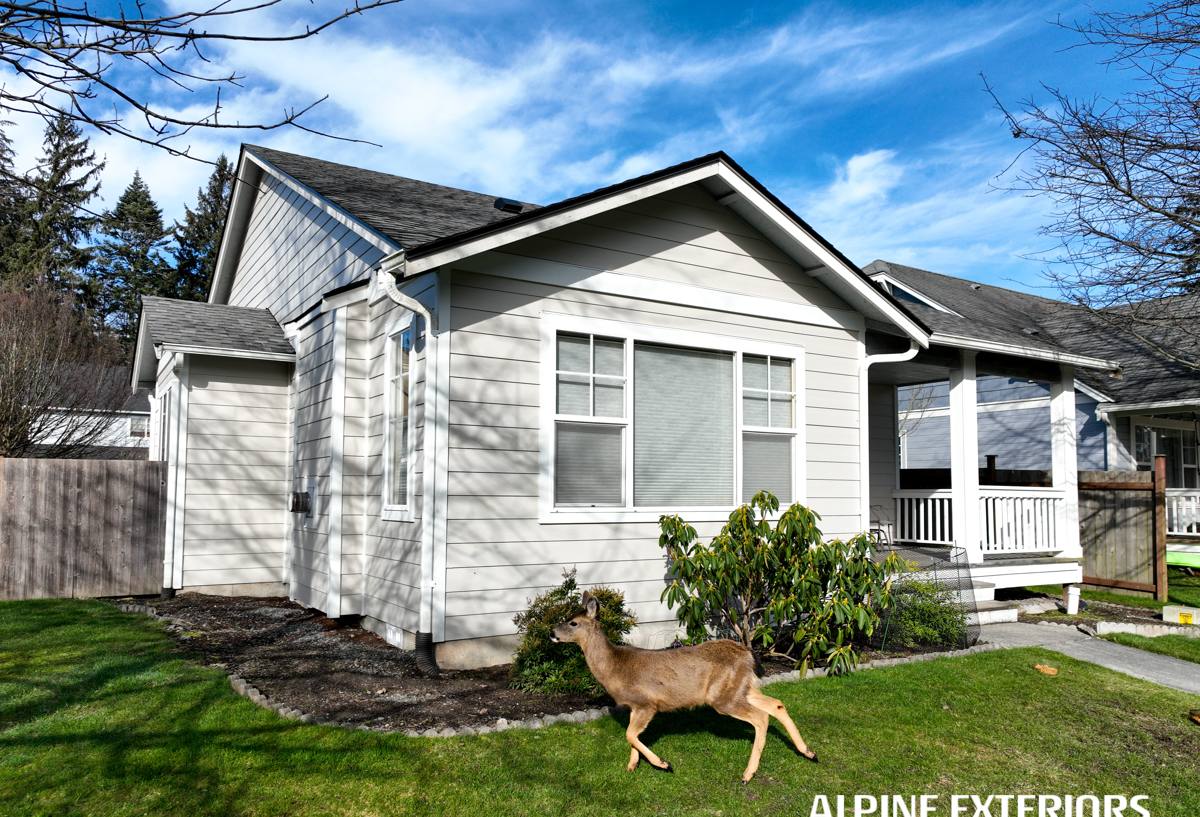
What Mukilteo's Climate Actually Does to a Roof
Salt Air and Corrosion
Proximity to Puget Sound means airborne salt settles on every exterior surface, including the roof. Over years, that salt attacks unprotected steel edges, cheap fasteners, and coatings that weren't designed for a marine environment. This shows up first at cut edges, fastener heads, and any spot where the protective coating was scratched or compromised during installation — which is exactly why installation quality matters as much as the material itself.
Wind-Driven Rain
Storms coming off the water tend to drive rain at an angle rather than straight down. That stresses every seam, flashing detail, and penetration on the roof. A metal roof with proper panel overlap, sealed seams, and correctly lapped flashing at valleys, chimneys, and vents will shrug this off. One with shortcuts at those details will leak — often not right away, but after a season or two of repeated wind events.
Moss and Sustained Moisture
Snohomish County's wet season is long, and Mukilteo's marine-influenced climate keeps humidity and moisture on roof surfaces for extended stretches. Moss and algae need that sustained dampness to establish. Metal's smooth, non-porous surface and steep water-shedding profile give organic growth far less to grip onto than shingles or shake, though metal isn't automatically moss-proof — low-slope sections, shaded north faces, and areas where debris collects can still grow moss over time without basic upkeep.
What a Correct Metal Roof Installation Involves
A metal roof is only as good as the details underneath it and around its edges. For a Mukilteo home, we treat the following as non-negotiable:
- Underlayment rated for the panel type and climate — not a generic felt that degrades under sustained moisture exposure
- Corrosion-resistant fasteners and flashing matched to the panel material, so dissimilar metals don't create galvanic corrosion at contact points
- Proper panel overlap and sealed seams sized for wind-driven rain, not just standard-condition rainfall
- Ice-and-water shield or equivalent protection at eaves, valleys, and penetrations — the spots where water backs up or concentrates
- Ventilation that keeps the roof deck dry from underneath, since trapped moisture under a metal roof causes deck rot regardless of how good the surface material is
- Coating and alloy selection appropriate for a marine-influenced environment, not the cheapest option that happens to look similar on a sample chip
Skip any one of those and you get a roof that looks right for a few years and then starts failing at the details — which is where almost all metal roof problems actually originate, not in the panels themselves.
Comparing Metal Roofing Options for a Coastal Setting
Not all metal roofing is built the same way, and the differences matter more here than in a drier inland climate. Here's how the common options stack up for a Mukilteo home:
| System | Corrosion Resistance | Moss Resistance | Best Fit |
|---|---|---|---|
| Standing seam steel (quality coating) | Strong when properly coated and detailed | Very good — smooth, steep-shedding surface | Full roof replacements, waterfront and view-lot homes |
| Metal shingle/shake panels | Good, depends on coating and fastener exposure | Good | Homeowners wanting a traditional look with metal's durability |
| Exposed-fastener panel systems | Fair — fastener heads are the weak point over time | Good | Budget-conscious projects, outbuildings, secondary structures |
| Uncoated or low-grade steel | Poor near saltwater | Good short-term, degrades as coating fails | Not something we recommend for this area |
We don't install that bottom-row option on Mukilteo homes. It's not that the material is inherently bad everywhere — it's that the combination of salt air and driving rain here exposes its weak points faster than the warranty timeline accounts for, and we'd rather set that expectation up front than have a homeowner deal with premature corrosion five years in.
Our Process for a Mukilteo Metal Roof
1. On-Site Assessment
We look at the existing roof deck, current flashing conditions, ventilation setup, and any moss or moisture staining already present. We also factor in the specific exposure of the home — how directly it faces the water, how much wind-driven rain it typically takes, and whether there's tree cover contributing to debris and shade.
2. System and Material Selection
Based on that assessment, we recommend a panel type, gauge, and coating suited to the home's exposure — not a one-size-fits-all package. A home tucked back from the water with more tree cover has different priorities than one sitting exposed on a bluff.
3. Tear-Off and Deck Prep
We remove the old roofing down to the deck, check for rot or soft spots caused by prior moisture intrusion, and repair or replace damaged sheathing before anything new goes down. Installing new roofing over a compromised deck just hides a problem that will resurface.
4. Underlayment, Flashing, and Panel Installation
This is where the details from the section above get executed — proper underlayment, correctly lapped flashing at every penetration and valley, corrosion-resistant fasteners, and panels installed to the manufacturer's spec for wind and water resistance.
5. Final Walkthrough
We walk the completed roof with the homeowner, review what was done, and go over any basic maintenance recommendations specific to the home's exposure and surroundings.
Cost Factors for Metal Roofing in Mukilteo
Metal roofing costs more upfront than asphalt shingles, and the total depends on several factors specific to each home rather than a flat per-square-foot number we'd feel comfortable quoting sight unseen. The main variables:
- Roof size, pitch, and complexity (number of valleys, dormers, and penetrations)
- Panel system chosen — standing seam typically costs more than exposed-fastener panels
- Condition of the existing deck and whether repairs are needed before installation
- Coating and gauge upgrades appropriate for waterfront or high-exposure sites
- Ventilation or underlayment upgrades needed to bring an older roof system up to current standards
What we can say generally: metal roofing is a long-lifespan investment, and for homes with direct exposure to Puget Sound weather, spending a bit more on the right coating and detailing up front is usually cheaper over the life of the roof than repeated repairs on a system that wasn't specified for coastal conditions.
Maintenance: What Actually Keeps a Metal Roof Performing Here
Metal roofing is lower-maintenance than most systems, but "low-maintenance" doesn't mean "no-maintenance" in a climate like this one. A few habits go a long way:
- Clear debris (needles, leaves, branches) from valleys and low-slope sections a couple times a year — buildup is what gives moss a foothold even on metal
- Check gutters and downspouts for clogs, since backed-up water at the eaves is one of the more common sources of hidden damage
- Have flashing and seams visually inspected periodically, especially after major windstorms off the Sound
- Address any coating scratches or dents promptly — exposed bare metal is where corrosion starts near saltwater
Why a Locally Experienced Crew Matters for This Job
Metal roofing is unforgiving of shortcuts in a way that shingle roofing sometimes isn't — a slightly off flashing detail on an asphalt roof might not show up for years, but the same mistake under Mukilteo's wind-driven rain conditions can show up in a single bad storm season. A crew that already works Snohomish County's coastal communities knows which details need extra attention here that wouldn't matter on an inland job: fastener selection for salt exposure, flashing overlap sized for driving rain, and ventilation choices that account for sustained damp conditions rather than occasional rain.
That local experience isn't about a sales pitch — it's about not learning these lessons on your roof. We'd rather bring what we already know about how coastal Snohomish County weather treats a roof than treat every job like it's the first one we've done near saltwater.
Get a Straight Answer for Your Roof
If you're weighing metal roofing for a home in Mukilteo, we're glad to take a look and give you an honest read on what your specific roof needs — no pressure, no inflated claims. Fill out the form below for a free estimate and we'll walk you through your options in plain terms.