 Everett
 Windows Built for South Everett's Marine Climate
South Everett homes sit close enough to Puget Sound that salt-laden air, wind-driven rain, and long stretches of gray, damp weather are simply part of owning a house here. Windows take the brunt of that exposure more than almost any other part of the exterior. They're penetrations in the wall, they have moving parts and hardware, and they're the first thing to show wear when moisture finds a way in. A window that's a great fit in a drier inland climate can underperform fast once it's dealing with a Snohomish County winter.
That's not a reason to over-engineer a simple job. It's a reason to get the basics right: the correct product for coastal exposure, correct flashing and sealing at the rough opening, and installation that accounts for how water actually moves around a house in this region. Most window problems we get called out to fix in South Everett aren't product failures — they're installation shortcuts that didn't matter for a few years and then did.
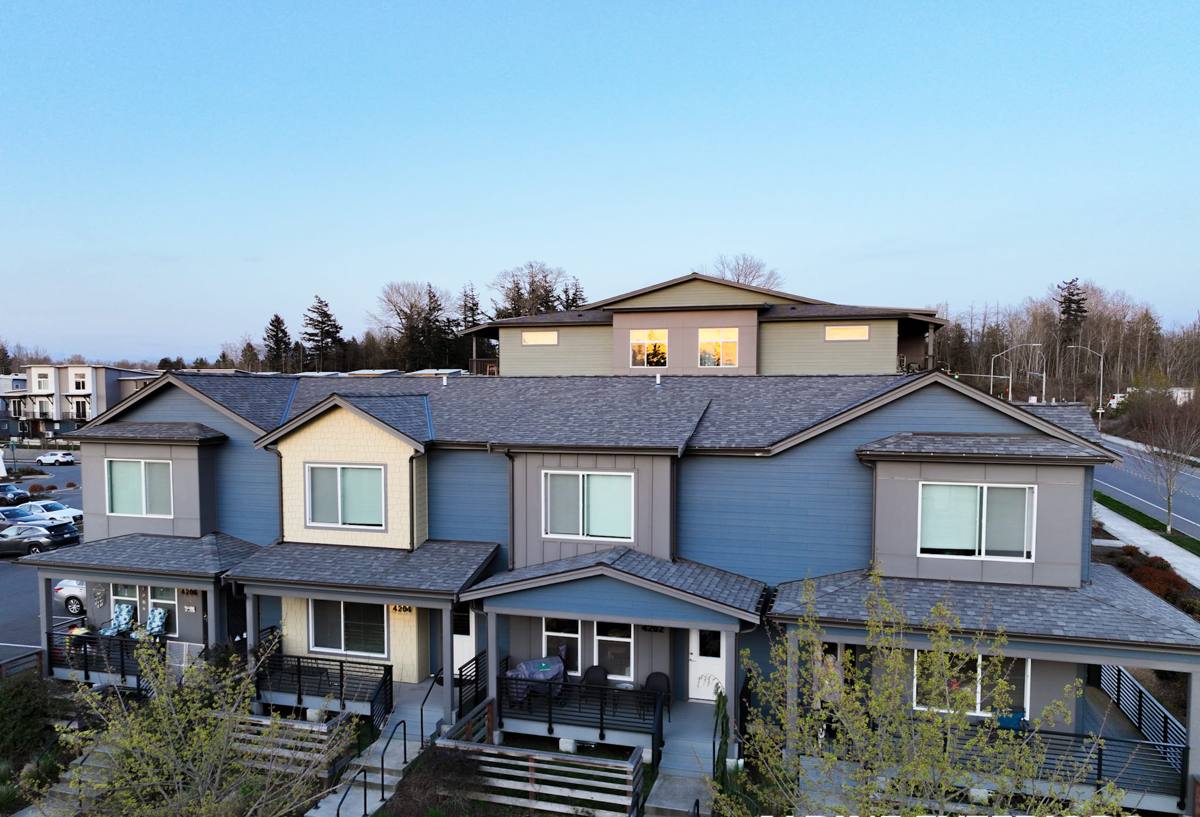
What Driving Rain, Salt Air, and Moss Season Do to Windows
Driving Rain
Storms coming off the Sound don't just fall straight down — wind pushes rain sideways into south- and west-facing walls. That means water is testing the seal around every window, not just sitting on the sill. If the flashing sequence behind the trim isn't layered correctly (each piece overlapping the one below it, shingle-style), wind-driven rain can work its way behind the siding and into the wall cavity long before you'd ever see a stain on drywall.
Salt Air
Proximity to Puget Sound means airborne salt settles on exterior surfaces, including window hardware. Over years, that accelerates corrosion on lower-grade metal components — hinges, cranks, locks, and uncoated fasteners — and can degrade certain finishes faster than a manufacturer's inland warranty testing would predict. This is one of the biggest reasons frame material and hardware quality matter more here than in a dry climate.
Moss and Prolonged Dampness
Snohomish County's long wet season keeps north-facing and shaded exterior surfaces damp for months at a time, which is exactly what moss and algae need to establish. On windows, that shows up as green or black staining below sills, on horizontal trim, and in corners where water sits instead of draining. It's mostly cosmetic on the glass and frame itself, but it's a useful early warning sign — if moss is thriving on your sills, that same moisture is sitting against your caulk lines and flashing, and prolonged dampness is what eventually breaks down sealants and lets rot start in wood trim.
Signs Your South Everett Windows Need Attention
- Fog or a cloudy haze between panes of double- or triple-pane glass (a sign the seal has failed and the gas fill is gone)
- Noticeable drafts near the frame even when the window is fully latched
- Soft, spongy, or discolored wood at the sill or bottom corners of the frame
- Windows that are hard to open, close, or lock, or that have started to stick
- Visible daylight or gaps around the frame from outside
- A jump in heating costs without any other obvious cause
- Moss, algae, or black streaking building up below sills or on horizontal trim
- Paint or finish peeling on interior or exterior trim near the window
Any one of these on its own might just need caulking or minor repair. Several at once, especially on an older window, usually means it's time to talk about replacement rather than another patch.
What a Correct Window Installation Actually Involves
The window itself is only part of the job. In a climate that gets as much wind-driven rain as this one, the installation details around the window are what actually keep water out over the long run.
The Rough Opening and Sill Pan
Before a new window goes in, the rough opening needs to be checked for square, level, and soundness, and any existing water damage needs to be dealt with — not covered over. A sloped sill pan at the bottom of the opening gives any water that does get past the window a path to drain back out instead of pooling against wood framing.
Flashing Sequence
Flashing tape and building paper or house wrap need to be layered in the correct order — sill, then sides, then head flashing — so each layer sheds water onto the one below it, the same way roof shingles work. Getting this sequence backwards is one of the most common causes of hidden leaks, and it's invisible once the trim goes back on.
Air Sealing and Insulation
The gap between the window frame and the rough opening should be filled with a low-expansion foam or backer rod and sealant, not stuffed with fiberglass insulation alone, which doesn't stop air movement. Proper sealing here affects both drafts and energy bills.
Exterior Sealant and Trim
The right sealant, applied at the right joints (not every seam — some are intentionally left open to let trapped moisture escape), finishes the job. Sealing every gap solid can actually trap moisture inside the wall assembly rather than letting it drain and dry.
Choosing a Frame Material for This Climate
There's no single "best" window material for every house — it depends on your home's exposure, your budget, and how much upkeep you want to take on. Here's how the common options hold up specifically against salt air and sustained coastal moisture:
| Frame Material | Moisture & Salt Air Resistance | Maintenance | Typical Lifespan |
|---|---|---|---|
| Vinyl | Good — won't rot or corrode; UV exposure can cause slow fading over decades | Low — occasional cleaning | 20–30+ years |
| Fiberglass | Very good — dimensionally stable, resists moisture and salt exposure well | Low | 30–40+ years |
| Wood-clad | Good on the exterior cladding; exposed wood needs protection from prolonged dampness | Moderate to high — periodic finish upkeep on any exposed wood | 20–30 years with maintenance |
| Aluminum | Fair — prone to corrosion in salt air unless properly coated; conducts cold, so more condensation risk | Moderate | 15–25 years |
For most South Everett homes, especially anything with direct west or south exposure toward weather coming off the Sound, we lean toward vinyl or fiberglass for the frame and always spec corrosion-resistant hardware. Wood-clad windows can look great and perform well, but we're upfront that they ask more of a homeowner in terms of ongoing maintenance in a climate this wet.
Our Window Installation Process
- On-site assessment: We look at each window's exposure, current condition, and any existing moisture or rot issues before recommending anything.
- Product selection: We walk through frame material, glass package, and hardware options suited to your home's exposure and budget — no upselling to premium options you don't need.
- Opening prep: Old windows come out, the rough opening gets inspected, and any damaged framing or sheathing is repaired before a new window goes in.
- Sill pan and flashing: We install a sloped sill pan and a correctly shingled flashing sequence — the part of the job you won't see once it's finished, and the part that matters most.
- Installation and air sealing: The window is set, shimmed square and plumb, fastened per manufacturer specs, and the gap is sealed with appropriate foam and sealant.
- Exterior finish: Trim, sealant beads, and touch-up paint or caulking are finished to match the rest of the home's exterior.
- Final walkthrough: We check operation, seals, and cleanup with you before calling the job done.
What Drives the Cost of Window Installation
We don't publish flat pricing because every job is different, but these are the main factors that move the number up or down:
| Factor | Why It Matters |
|---|---|
| Number and size of windows | More openings and larger units mean more material and labor |
| Frame material and glass package | Vinyl, fiberglass, and wood-clad are priced differently, as are double- vs. triple-pane and coated glass options |
| Condition of the existing opening | Rot or water damage found during removal adds repair work before the new window can go in |
| Access and building height | Second-story or hard-to-reach windows take more time and sometimes equipment |
| Trim and finish work | Matching existing exterior trim, especially on older homes, can add labor |
We give a written estimate after seeing the actual windows and openings, not a phone quote, because the condition behind the trim is usually what makes the biggest difference.
Why It Matters to Hire a Crew That Already Works South Everett
Window installation isn't unique to this neighborhood — the physics of flashing and sealing are the same everywhere. What's different is knowing, from repeated experience, which exposures in this specific pocket of Snohomish County take the worst of the wind-driven rain, how quickly moss and algae establish on shaded siding here, and which older South Everett homes are more likely to have outdated or under-flashed window installations from previous work. A crew that regularly works this area isn't guessing at how the local climate behaves — they've seen the callbacks and know what to do differently the first time.
We also stand behind the installation itself, not just the manufacturer's product warranty. If something about the fit or sealing isn't right, that's on us to correct.
Ready for a Straight Answer on Your Windows?
If your windows are drafty, fogged, hard to operate, or just showing their age, we're happy to take a look and give you an honest assessment — replacement isn't always the answer, and we'll tell you if a repair makes more sense. Use the form below to request a free, no-pressure estimate for your South Everett home.