 Everett
 South Everett's Weather Doesn't Go Easy on a Roof
South Everett sits close enough to Port Gardner Bay and the greater Puget Sound that salt-laden marine air is part of daily life, even blocks away from the water. Add in Western Washington's long stretch of driving rain, and an asphalt shingle roof here works harder than the same roof would in a drier inland climate. Wind-driven rain doesn't just fall straight down — it gets pushed sideways and upward under shingle edges, valleys, and flashing, which is exactly where a lot of cut-rate roofing work fails first.
Then there's moss. Snohomish County's mild, wet winters and shaded, tree-heavy lots are close to ideal growing conditions for moss and algae on north-facing and shaded roof slopes. A roof that looks fine from the driveway can be holding moisture under a mat of moss for months, slowly lifting shingle edges and shortening the life of the roof underneath. None of this means asphalt shingles are a bad choice for South Everett — they're still the most practical, cost-effective option for the vast majority of homes here. It means the installation has to be done with this specific climate in mind, not treated like a generic roof job dropped into any zip code.
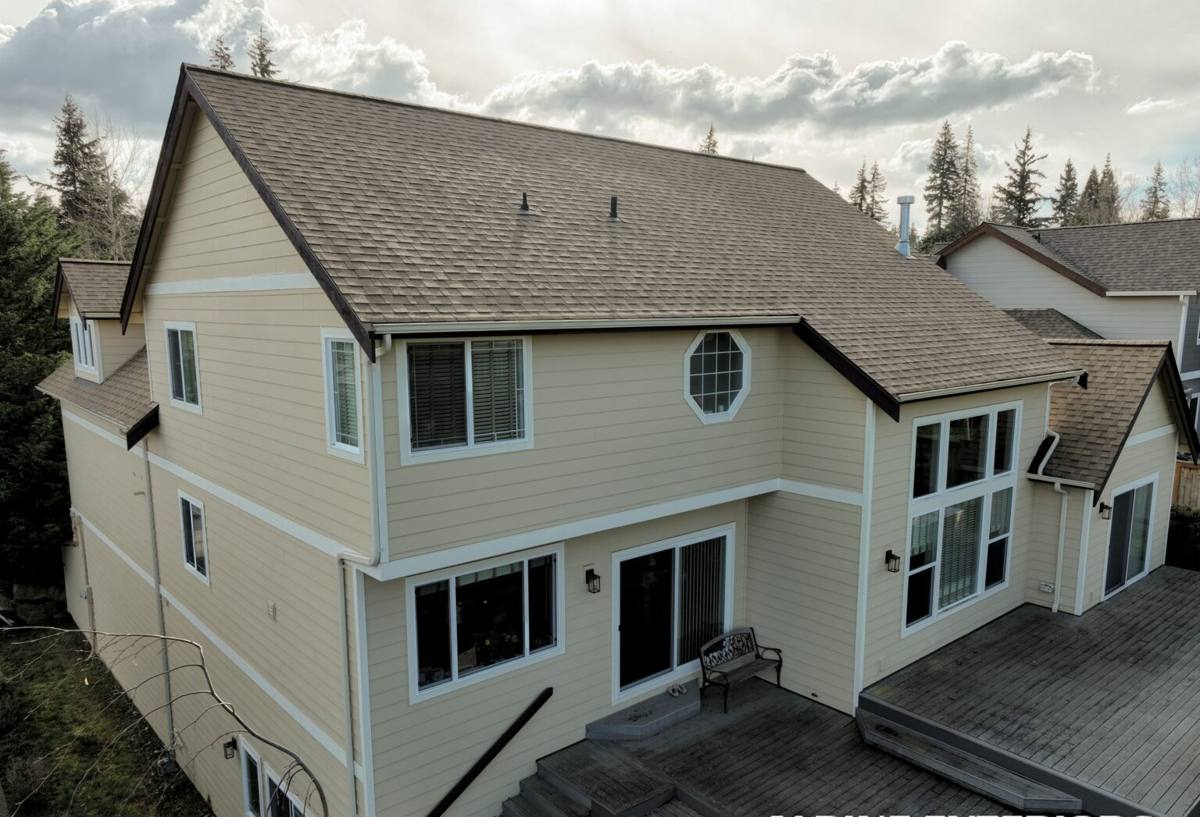
What a Correctly Installed Shingle Roof Actually Involves
A shingle roof is a system, not a single layer of material. Skipping or shortcutting any one part of that system is where premature leaks and shortened roof life come from, especially in a wet climate like ours. A correct installation includes:
- Full tear-off and deck inspection — removing old roofing down to the sheathing so hidden rot, soft spots, and old damage from trapped moisture can actually be found and fixed, not covered up.
- Ice-and-water shield at vulnerable areas — self-adhering waterproof membrane at eaves, valleys, and around penetrations, which matters more here than in drier climates because of how much sustained rain the roof sees.
- Synthetic underlayment across the full deck — a second line of defense under the shingles that sheds water even if wind or ice ever pushes moisture past the shingle layer itself.
- Proper flashing at chimneys, skylights, walls, and roof-to-wall transitions, since flashing failures — not worn-out shingles — are behind most of the leaks we get called out for.
- Correct nailing pattern and fastener count, matched to the shingle manufacturer's specification, not just "close enough." Under-nailed shingles are a common cause of wind lift during Puget Sound storms.
- Balanced intake and exhaust ventilation so the attic can actually breathe, which we cover in more detail below because it's the step most often shorted on a budget re-roof.
Any one of these done wrong can undercut an otherwise good shingle. Done right, together, they're what actually determines whether a roof makes it to 25 years or starts failing at year 10.
Choosing a Shingle That Makes Sense for This Climate
Not every asphalt shingle on the market is a good fit for a marine, moss-prone climate. The biggest factor for South Everett homes is algae and moss resistance, which comes from copper-containing granules built into the shingle itself. Beyond that, the choice usually comes down to how much wind exposure the roof gets and how long the homeowner wants the roof to last before the next re-roof.
| Shingle Type | Typical Lifespan | Best Fit For |
|---|---|---|
| 3-tab (standard) | 15–20 years | Budget-conscious re-roofs on lower-exposure homes |
| Architectural / dimensional | 25–30 years | Most South Everett homes — better wind rating and moss-resistant options |
| Premium / designer | 30–50 years | Steep-slope, highly visible roofs, or homeowners planning to stay long-term |
For most South Everett homes, we steer people toward algae-resistant architectural shingles. They cost more up front than basic 3-tab, but the heavier weight and better wind rating hold up noticeably better against driving Puget Sound storms, and the built-in algae resistance directly addresses the moss and staining problem that's so common on shaded, north-facing roof planes in this area.
A Note on Color
Darker shingle colors tend to show less visible moss and algae staining between cleanings, while lighter colors show it faster but hide dirt better in dry months. Neither is right or wrong — it's worth thinking about alongside how much shade and moisture a particular slope gets before picking a color off a sample board.
Ventilation and Moisture: The Part of the Roof You Never See
Attic ventilation doesn't get much attention because homeowners never see it, but in a climate this wet it's arguably as important as the shingles themselves. Without balanced intake (usually at the soffits) and exhaust (ridge or roof vents), warm moist air gets trapped in the attic. In winter that moisture can condense on the underside of the roof deck; over a full South Everett rainy season, that trapped moisture contributes to premature sheathing rot and mold, and can quietly void a shingle manufacturer's warranty, since most warranties require adequate ventilation to remain valid.
Poor ventilation also makes moss and algae problems worse, since a warmer, damper roof deck gives moss more favorable conditions on the underside as well as the surface. When we quote a re-roof, checking existing ventilation — and correcting it if it's inadequate — is a standard part of the estimate, not an upsell added later.
Moss and Salt Air: What Installation Can (and Can't) Prevent
No roof installation makes a home immune to moss forever — that's a maintenance reality of living in this part of Western Washington, especially on shaded lots near mature trees. What a correct installation can do is stack the odds in the homeowner's favor:
- Algae-resistant shingles that resist the staining and growth that plain shingles are prone to.
- Zinc or copper strips installed near the ridge on request, which release trace metal ions with rain runoff that inhibit moss growth on the slopes below them over time.
- Proper flashing and underlayment, so that when moss does eventually take hold, it's sitting on a roof that can still shed water underneath it rather than trap it.
- Good ventilation, which keeps the deck itself less hospitable to growth from below.
Beyond installation, the single best thing a homeowner can do is keep the roof clear of overhanging branches and debris, and have moss physically removed — not just chemically treated — every couple of years rather than left to build up. We're glad to talk through a realistic maintenance schedule as part of any estimate; it's a more useful conversation than any product claim about being "moss-proof," because nothing installed on a roof in Snohomish County truly is.
Salt Air and Metal Components
Salt air doesn't just affect the shingles — it accelerates corrosion on exposed metal, including flashing, roof vents, and fasteners. For homes in South Everett, especially those with more open exposure toward the water, we use flashing and fastener materials chosen for corrosion resistance rather than defaulting to the cheapest available metal. It's a small line-item difference in a quote that has an outsized effect on how the roof's metal components hold up over 20-plus years of marine exposure.
Our Process, Start to Finish
1. On-Site Inspection and Estimate
We walk the roof (not just the ground), check the attic for ventilation and moisture signs, and look at flashing, valleys, and any problem areas the homeowner has noticed. The estimate reflects what we actually find, not a generic square-footage guess.
2. Material Selection
We walk through shingle tiers, color options, and any add-ons like zinc strips based on the roof's specific exposure — sun, shade, wind, and how visible the roof is from the street.
3. Tear-Off and Deck Repair
Full removal of the old roofing, disposal, and an honest look at the deck underneath. Any soft or rotted sheathing gets replaced before anything new goes down — covering damaged decking with new shingles just hides a problem that gets worse.
4. Installation
Ice-and-water shield, underlayment, flashing, shingles, and ventilation components installed to manufacturer specification, with attention to the details — nailing pattern, valley treatment, penetration sealing — that determine how the roof performs in actual South Everett weather, not just how it looks on installation day.
5. Cleanup and Walkthrough
Full site and yard cleanup, including a magnetic sweep for stray nails, followed by a walkthrough so the homeowner understands what was done and what the warranty covers.
Signs a South Everett Roof Needs Attention
Roof problems in this climate tend to show up gradually, not all at once. Worth a look if you notice any of the following:
- Granules collecting in gutters or at downspout outlets
- Shingle edges curling or lifting, especially on rain- and wind-exposed slopes
- Heavy moss buildup, particularly on shaded, north-facing sections of roof
- Daylight visible through the attic roof deck, or damp insulation after a storm
- Dark streaking or staining that doesn't wash off with light rain
- Missing or visibly damaged shingles after a windstorm
- A roof approaching or past 20 years old with no major work done
Some of these point to a repair; others point to a full replacement being the more cost-effective call. We'll give a straight answer on which situation applies rather than defaulting to whichever is more profitable for us.
What Drives the Cost of a Shingle Roof in South Everett
Every roof is different, so we won't quote a number without seeing it, but these are the main factors that move a South Everett shingle roof estimate up or down:
| Factor | Why It Matters Here |
|---|---|
| Roof pitch and complexity | Steeper roofs and more valleys or dormers mean more labor, flashing, and material waste |
| Deck condition | Rot from trapped moisture, common in older Everett-area homes, adds repair cost before shingles go on |
| Shingle tier chosen | Algae-resistant architectural shingles cost more than 3-tab but hold up better to moss and driving rain |
| Ventilation upgrades | Adding or correcting intake and exhaust venting is sometimes needed on older homes not built to current standards |
| Layers to remove | Tearing off multiple existing layers adds labor and disposal cost versus a single-layer tear-off |
| Access and site conditions | Tree cover, tight lot access, or steep grading around the home can affect setup and staging |
Broadly, a full asphalt shingle re-roof on a typical South Everett home runs from the low five figures for a straightforward 3-tab job up into the mid five figures for a larger, more complex roof with premium architectural shingles. An accurate number only comes from an actual on-site look at the roof.
Why Local Experience in South Everett Matters
A crew that works this specific area regularly knows things a roofer parachuting in from outside the region doesn't automatically know: which slopes in South Everett neighborhoods tend to hold moss the longest because of tree cover and sun exposure, how Everett's permitting process works for re-roofs, and how to sequence a job around the area's rain patterns so the deck isn't left exposed longer than necessary. That local familiarity translates into fewer surprises during the job and a roof that's actually built for the conditions it has to survive, not just built to a generic specification.
We also stand behind the work with a workmanship warranty on top of manufacturer material warranties, so if something isn't right, there's a clear, local point of contact to fix it — not a call center in another state.
If your South Everett roof is showing its age, dealing with persistent moss, or you just want a straight, no-pressure assessment of where it stands, we're happy to take a look. Fill out the form below for a free estimate — we'll walk the roof, answer your questions honestly, and give you a clear picture of your options.