 Everett
 Why South Everett Roofs Take Extra Punishment From Storms
South Everett sits close enough to Puget Sound and Possession Sound that homes here deal with a combination most inland Snohomish County roofs don't: salt-laden air, driving wind-and-rain events off the water, and a moss season that runs longer than most homeowners expect. None of these are dramatic on their own. The damage they cause builds up quietly, storm by storm, until a roof that looked fine from the driveway turns out to have real problems underneath.
A single windstorm rarely tears a roof apart outright. What it usually does is loosen a few shingles, crack a seal, or shift flashing just enough to let water find a new path. Add a few more storms over a wet Pacific Northwest winter, and that small opening becomes a leak, a rot spot, or a soaked layer of insulation. Storm damage repair in this area is as much about catching that early movement as it is about fixing obvious blow-offs.
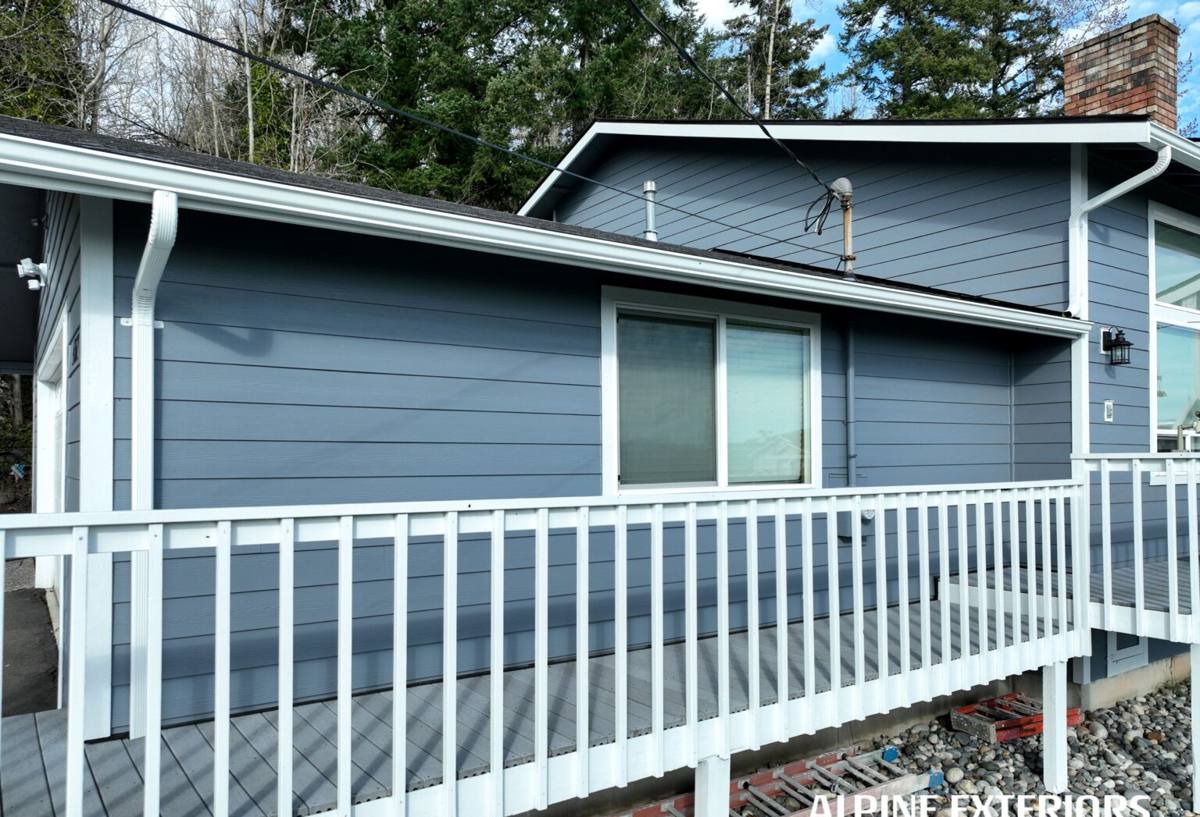
What Storm Damage Actually Looks Like Here
Wind
South Everett doesn't see hurricane-force gusts, but it does see repeated wind events strong enough to lift the tab seal on asphalt shingles, especially on roofs that are already a decade or more old. Once that seal breaks, the shingle can flap in every wind event after, wearing out the nail line and the shingles around it.
Wind-Driven Rain
Rain that comes in sideways behaves differently than rain that falls straight down. It gets pushed up under shingle edges, into open valleys, and around flashing at chimneys, skylights, and roof-to-wall transitions. These are the leaks that show up as a stain on a ceiling weeks after the storm that actually caused them, not during it.
Moss and Trapped Debris
Storm winds knock branches, needles, and leaves onto the roof, and Everett's damp climate keeps that debris wet long enough for moss to take hold in the shaded, north-facing sections. Moss doesn't just sit there — it lifts shingle edges as it grows, holds moisture against the roof deck, and works its way into any gap a storm has already opened up.
The Repair-or-Replace Decision
Not every storm-damaged roof needs a full replacement, and not every roof can be patched and called good. The right call depends on a handful of factors, and a straight answer up front is worth more than a sales pitch either way.
| Factor | Points Toward Repair | Points Toward Replacement |
|---|---|---|
| Roof age | Under 10-12 years, material still within its expected service life | Already near or past the typical lifespan for that roofing material |
| Extent of damage | Isolated area — one slope, one valley, a handful of shingles | Damage spread across multiple slopes or repeated problem areas |
| Underlying deck condition | Deck is solid and dry once shingles are pulled back | Deck shows soft spots, rot, or repeated water staining |
| Storm history | First real damage event on an otherwise sound roof | This is the latest in a pattern of storm damage over several seasons |
| Shingle match | Matching or close-matching shingles are available | Discontinued shingle style makes patch repairs visually mismatched |
We walk homeowners through where their roof lands on each of these before recommending anything. If a repair is the honest answer, that's what we quote.
Our Storm Damage Repair Process
Inspection and Documentation
We start on the roof itself, not just from the ground. That means checking shingles, flashing, valleys, vents, and the roof deck where it's accessible, and photographing anything storm-related we find. This documentation matters for the repair itself, and it's also what you'll want if you end up filing an insurance claim.
Temporary Protection
If a storm has left an active leak or exposed deck, we get that covered before anything else. Waiting on paperwork or scheduling while water keeps getting in only turns a repair into a bigger job.
Permanent Repair
Depending on what the inspection turns up, this can mean replacing damaged shingles and the underlayment beneath them, resealing or replacing flashing, or addressing a section of roof deck that's taken on moisture. We match materials as closely as possible so the repair blends into the existing roof rather than standing out as an obvious patch.
Cleanup and Final Check
We clear debris, remove old materials, and do a final walk of the repaired area — and check the rest of the roof while we're up there, since storms rarely damage just one spot.
Materials We Use for Storm Repairs
For asphalt shingle roofs, which make up most South Everett homes, we repair with composition shingles matched to the existing roof as closely as the market allows, along with synthetic underlayment and self-adhered membrane at vulnerable spots — valleys, eaves, and roof-to-wall transitions — where wind-driven rain is most likely to find a way in. Flashing gets replaced in metal, not just resealed, when it's been compromised, since a resealed flashing joint is only as good as the seal itself and that seal is exactly what a storm just tested and beat.
We're straightforward about one thing: a repair is a repair. It's meant to restore a section of roof to sound, watertight condition using materials that match what's already there — not to upgrade the whole roof's material or design. If a homeowner wants to talk about a different roofing system entirely, that's a separate conversation from storm damage repair, and we'll have it honestly rather than upselling during what should be a straightforward fix.
Working With Your Insurance Claim
Many storm damage repairs in South Everett go through homeowners insurance, and the documentation from our inspection is written with that in mind — clear photos, a plain description of the damage, and a repair scope that matches what an adjuster will expect to see. We're not a public adjuster and we don't negotiate your claim for you, but we'll give you an honest, itemized scope of work you can hand to your insurer, and we're glad to answer an adjuster's questions about what we found and why we're recommending it.
One thing worth knowing: insurance timelines and roofing timelines don't always match up. If your roof has an active leak, we'd rather get it protected now and sort out paperwork alongside that, instead of leaving a home exposed while a claim works through the process.
What To Do in the First 24-48 Hours After a Storm
What you do right after a storm can make a real difference in how much damage you end up with. A short checklist:
- Do a visual check from the ground — don't get on the roof yourself, especially on a wet or windy day.
- Look in the attic (if accessible) for new damp spots, staining, or daylight coming through the roof deck.
- Check gutters and downspouts for shingle granules, which can be an early sign of wind or hail wear.
- Note the date and rough time of the storm — insurers and roofers both use this to match damage to a specific event.
- Cover any obvious active leak with a tarp if you can do so safely, and call for an inspection rather than waiting to see if it happens again.
- Avoid climbing onto a wet or storm-damaged roof to inspect it yourself — that's exactly the situation roofing falls happen in.
Why a Crew That Already Works South Everett Matters
Storm damage repair isn't just a technical skill — it's a local one. A crew that regularly works roofs in this part of Snohomish County has already seen how wind off the Sound tends to hit certain roof orientations, how long moss takes to become a real problem in the local climate, and which flashing and valley details tend to fail first on the housing stock common to this area. That's the kind of pattern recognition that speeds up an inspection and sharpens a repair scope — you're not paying for a crew to learn South Everett roofs on your dime.
It also matters for response time. Storm damage doesn't wait for a convenient week, and a crew based locally can typically get eyes on a roof and materials on a truck faster than one traveling in from outside the county, especially in the days right after a storm when demand for roof repair spikes across the whole region.
If a recent storm has you wondering about your roof, we're happy to take a look and give you a straight answer — repair, replace, or nothing to worry about. Reach out for a free, no-pressure estimate using the form below.