 Everett
 Why Edmonds Homes Take a Different Kind of Beating
Edmonds sits right on the Puget Sound waterfront, and that location cuts both ways. It's one of the more desirable places to live in Snohomish County, but the same water that makes the views worth it also makes siding work harder than it does further inland. Salt-laden air moves off the Sound and settles on exterior walls, especially on homes with a westerly or water-facing exposure. Add in driving rain that comes sideways during winter storms, and a moss season that can run from late fall through spring under the region's tree cover and cloud ceiling, and you've got three separate stresses working on your siding at the same time, year after year.
None of this is unique to any one house in Edmonds — it's the baseline condition for the whole area. What it means practically is that siding installed without the right materials, the right water management details, and the right fastening gets tested faster here than it would in a drier, calmer climate. We install siding in Edmonds with that reality built into every step, not as an afterthought.
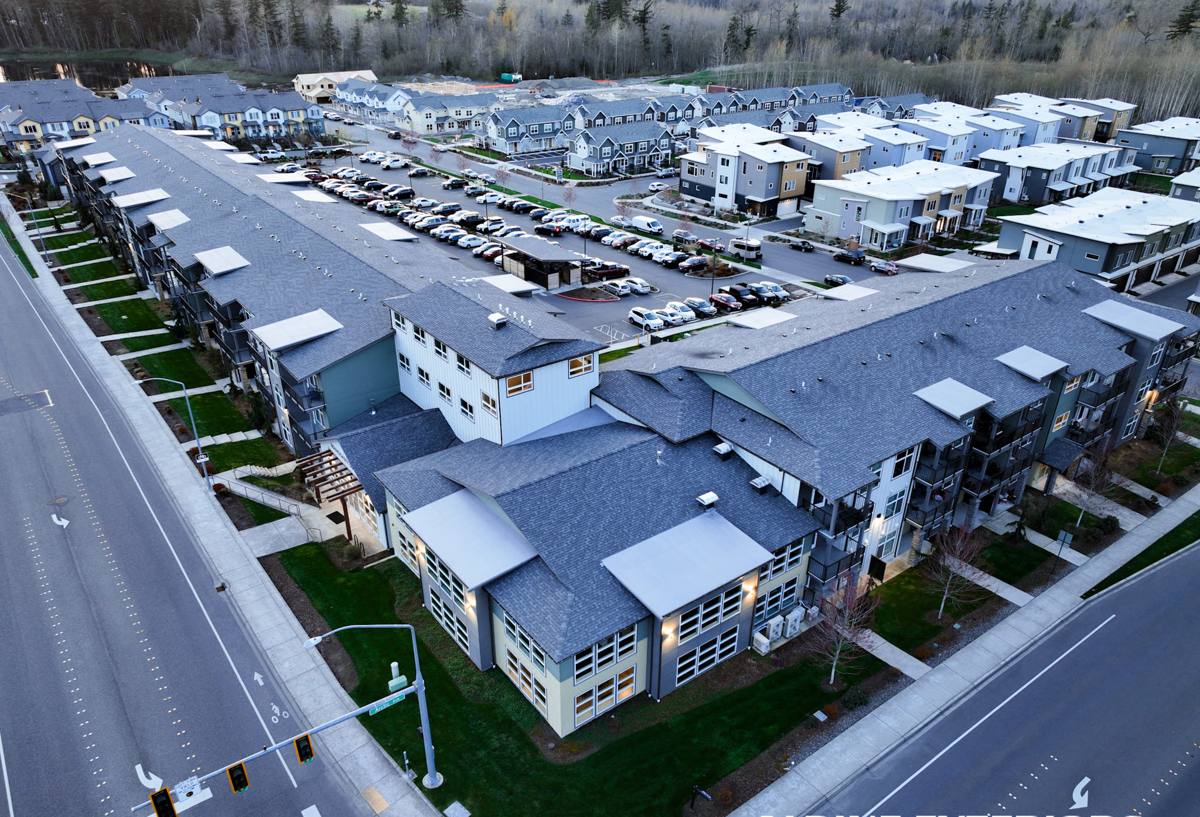
What "Salt Air, Driving Rain, and Moss" Actually Does to Siding
Salt Air
Airborne salt is corrosive to metal fasteners, flashing, and trim connectors. Over years, it can accelerate rust on the wrong hardware and contribute to premature failure at seams and joints — the places where water intrusion actually starts. It also tends to hold moisture against a wall surface longer than plain humid air does, which matters for any siding material that isn't dimensionally stable.
Driving Rain
Puget Sound storms don't just fall straight down — wind-driven rain gets pushed sideways and upward under laps, around window and door openings, and into any gap in the water-resistive barrier. A siding job that looks fine on a calm day can still leak during a January storm if the flashing details and overlaps weren't done correctly. This is a workmanship issue as much as a materials issue.
Moss and Sustained Moisture
Shaded, north-facing, and tree-covered walls in Edmonds stay damp longer than sun-exposed walls, which is exactly the condition moss and algae need to take hold. On siding materials that absorb moisture or that rely on paint film to stay sealed, sustained dampness accelerates rot, paint failure, and swelling at cut edges and butt joints. The siding material itself, and how its edges are sealed during installation, makes a real difference in how much of this problem you see over the life of the siding.
Why We Only Install James Hardie Fiber Cement
We standardized on James Hardie fiber cement siding for every installation we do, including in Edmonds, because it holds up to exactly the three stresses above better than the alternatives we used to install. It's non-combustible, it doesn't rot or delaminate the way wood-based and some engineered wood products can when they take on repeated moisture, and it's manufactured with a factory-applied ColorPlus finish that's baked on and warranted against fading and peeling — rather than relying on a field-applied paint job to hold up against salt air and driving rain for the next decade.
James Hardie also makes climate-engineered HZ product lines specifically formulated for different moisture and temperature zones. For the Pacific Northwest, that means a formulation built for a wet, moderate climate rather than a one-size-fits-all product. We don't install vinyl, LP SmartSide, Cemplank, Allura, primed spruce, or cedar siding. That's a deliberate standard, not a matter of what we happen to have on the truck — we've made the call that for the moisture load and salt exposure homes see in this area, fiber cement done right is the product that holds up with the least maintenance and the fewest callbacks.
What Correct Siding Installation Actually Involves
Siding is a system, not just a set of boards nailed to a wall. A correct installation in a climate like this one involves several layers working together, and skipping or rushing any one of them is where most siding failures start.
| Component | Why it matters in Edmonds' climate |
|---|---|
| Water-resistive barrier | Provides the last line of defense if wind-driven rain gets past the siding surface; must be continuous and properly lapped |
| Flashing at windows, doors, and penetrations | Directs water away from openings, which are the most common leak points during driving rain |
| Rainscreen or proper drainage gap | Lets moisture that does get behind the siding drain and dry out instead of sitting against the wall |
| Fastener type and placement | Corrosion-resistant fasteners driven per manufacturer spec resist salt-air corrosion and hold boards through wind and moisture cycling |
| Board clearances (ground, roofline, deck) | Keeps siding from sitting in standing moisture or splash-back, a major contributor to moss and rot at the base of walls |
| Caulking and sealant at joints | Prevents water entry at butt joints and trim without trapping moisture where it can't escape |
James Hardie publishes detailed installation specifications for exactly this reason — the product performs the way it's rated to perform only when it's installed to spec. Gaps in clearance, wrong fastener patterns, or skipped flashing details will undercut even the best siding material.
Our Process for Edmonds Siding Installation
- On-site assessment. We look at your home's specific exposure — how much direct water and salt air it takes, shaded and damp wall sections, existing moisture or moss damage, and the condition of the sheathing underneath the current siding.
- Tear-off and sheathing inspection. We remove the old siding and check the sheathing and framing for rot or water damage before anything new goes up. Problems found here get addressed, not covered over.
- Water-resistive barrier and flashing installation. This is the step that determines whether the wall stays dry over the next twenty years, and we don't shortcut it.
- James Hardie fiber cement installation. Boards, panels, or shingle-style siding installed to manufacturer clearance and fastening specifications, with attention to butt joints, corners, and transitions.
- Trim, caulking, and finish detail. Final sealing at penetrations and joints, and a walk-through so you know what was done and why.
Where Homes on the Water Get Extra Attention
Homes with direct or near-direct Sound exposure get closer attention to fastener selection and to sealing at the most weather-exposed elevations. Homes tucked under tree cover — common on the more wooded lots in and around Edmonds — get closer attention to ground clearance and drainage on the shaded sides of the house, since those are the walls most likely to develop moss and hold moisture longest.
Signs Your Current Siding Isn't Handling the Climate
- Moss or green-black staining that returns within a season or two of cleaning, especially on north-facing or shaded walls
- Soft or spongy spots when you press on the siding near the ground or below windows
- Paint that's peeling or bubbling rather than just fading evenly
- Visible gaps, cracks, or separation at butt joints and corners
- Rust streaking from fasteners or trim hardware
- Rooms with exterior walls that feel damp or musty during winter storms
- Warping, cupping, or swelling at siding edges
Any one of these is worth a look. Several at once usually means water has been getting behind the siding for a while, which is a bigger job than surface cleaning can fix.
What Drives the Cost of a Siding Installation
Every home is different, but the same handful of factors drive most of the cost variation we see on Edmonds projects:
| Factor | Why it affects cost |
|---|---|
| Home size and wall complexity | More square footage, more corners, dormers, and roof lines mean more cutting, flashing, and labor time |
| Condition of existing sheathing | Rot or water damage found during tear-off adds repair work before new siding can go on |
| Siding profile chosen | Lap, shingle-style, and panel products install differently and carry different material and labor costs |
| Trim and detail work | Window and door trim, corner boards, and fascia detailing add time relative to a plain wall run |
| Access and site conditions | Steep lots, limited staging space, or tall walls near water can affect equipment needs and labor time |
We give straightforward, itemized estimates so you can see what you're paying for rather than a single lump number.
Why Hiring a Crew That Already Works in Edmonds Matters
A siding crew that mostly works drier, inland areas doesn't always carry the same instincts about ground clearance, drainage details, and moss-prone wall sections that a crew working Puget Sound waterfront and Snohomish County homes develops over time. We see the same climate patterns repeat house after house in this area — the same shaded walls that hold moisture, the same exposures that take the worst of winter storms — and that shapes how carefully we handle flashing, clearances, and material choice on every job, not just the ones with obvious problems already.
It also means we're not guessing at how James Hardie's HZ product lines perform locally — we've installed them on homes dealing with the exact conditions your home deals with, and we stand behind the workmanship along with the manufacturer's product warranty.
Get a Straightforward Estimate
If your current siding is showing moss, moisture damage, or just isn't holding up to Edmonds' weather the way it should, we're happy to take a look and give you an honest read on what's going on and what it would take to fix it right. The estimate is free, there's no pressure, and you'll get a clear explanation of what we find — use the form below to get started.