 Everett
 Why Bayside Roofs Take a Different Kind of Beating
Homes in Bayside sit close enough to the water that the roof over your head is doing more work than a roof ten miles inland. Wind off Puget Sound doesn't just blow rain sideways — it drives it up under shingle edges and into places a roof was never designed to shed water from. Add Everett's long, wet winters and the salt content in the air near the shoreline, and you've got a roof system that ages faster and fails in different spots than a roof in a dry, sheltered part of Snohomish County.
Most storm damage doesn't announce itself with a hole in the roof. It shows up as a lifted shingle tab, a bent piece of flashing, or a granule trail in the gutter — small signs that, left alone through another storm or two, turn into a leak in the ceiling. Catching and correcting that damage early is cheaper and far less disruptive than waiting for water to find its way inside.
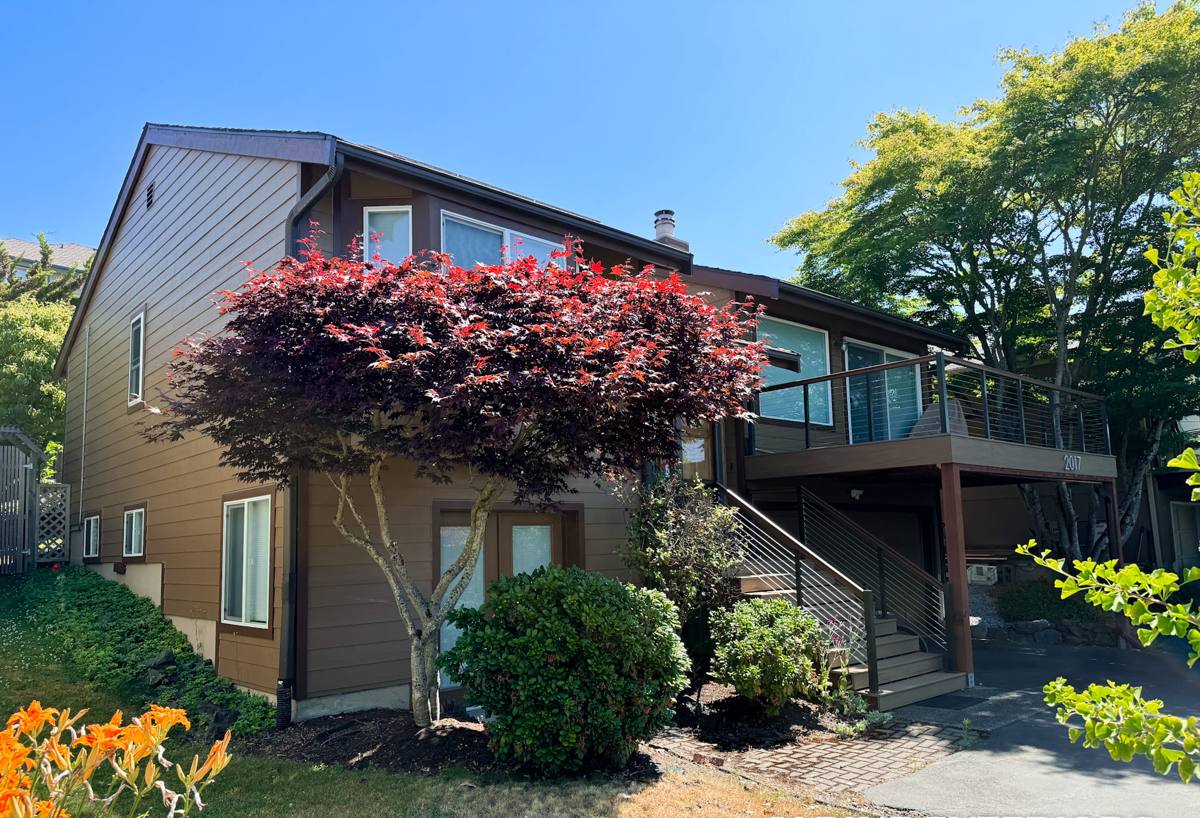
What Storm Damage Actually Looks Like on a Bayside Roof
Wind and Impact Damage
Wind gusts off the water don't hit a roof evenly. They tend to concentrate force at ridges, eaves, and the corners of the roof plane, which is why those are usually the first places we check after a storm. Common damage includes shingles lifted or creased at the tab, shingles torn away entirely, and nail heads that have backed out or popped through the shingle surface, leaving an open path for water.
Flashing, Valleys, and Penetrations
Flashing — the metal that seals roof edges, valleys, chimneys, and vent pipes — is where most storm-related leaks actually originate, not the shingle field itself. High wind can peel back step flashing at a wall intersection or work a valley's fasteners loose over repeated storms. Because flashing failures are often small and hidden under shingles, they're easy for an untrained eye to miss during a quick look from the ground.
Water Intrusion You Can't See From the Ground
By the time a stain shows up on an interior ceiling, water has usually been getting in for a while. A proper storm damage inspection includes checking the attic or roof deck from the underside where possible, looking for damp insulation, discolored sheathing, or a musty smell — signs of intrusion that haven't reached the living space yet but will if the roof isn't corrected.
Moss, Salt Air, and the Slow Damage Between Storms
A Long Moss Season Does Real Damage
Everett's moss season runs long compared to drier parts of the state, and Bayside's shaded, moisture-heavy microclimate near the water only extends it. Moss isn't just cosmetic — as it grows, it lifts shingle edges and holds moisture against the roofing material, which accelerates wear and creates an easy entry point the next time wind-driven rain hits. A roof that's already carrying a moss load is more vulnerable to storm damage, not less, because the shingles underneath are compromised before the wind ever arrives.
Salt Air and Metal Components
Proximity to the bay means more airborne salt reaching roofing metal — flashing, fasteners, gutter hardware, and vent caps. Salt exposure speeds up corrosion on lower-grade or unprotected metal, which is why the fasteners and flashing we use on Bayside repairs are chosen with that exposure in mind rather than defaulting to whatever's standard for an inland job. A repair that ignores this will often need to be redone sooner than it should.
What a Correct Storm Damage Repair Actually Involves
A repair that just replaces the shingles you can see from the driveway isn't a complete repair — it's a patch. Doing it right on a Bayside home means addressing the underlying causes, not just the visible symptoms:
- Confirming the full extent of damage, including areas hidden under adjacent shingles or behind flashing
- Checking and, where needed, replacing the underlayment beneath damaged shingles — not just the shingles themselves
- Re-securing or replacing flashing at valleys, walls, and penetrations with corrosion-resistant material suited to a coastal-influenced climate
- Matching replacement shingles as closely as possible in style, color, and exposure so the repair doesn't stand out
- Clearing moss and debris from the surrounding roof area so the repaired section isn't immediately undermined again
- Verifying proper sealing at every nail and seam before calling the job finished
Skipping any of these steps is how a "repaired" roof ends up leaking again after the next storm.
Our Storm Damage Repair Process
Inspection and Documentation
We start with a full inspection of the affected area and the roof as a whole, since storm damage is rarely limited to one spot. We photograph and document what we find — this record is useful for your own peace of mind and, if you're pursuing a claim, gives your insurance company clear evidence of the damage and its likely cause.
A Straight Answer Before Any Work Starts
Once we know what we're dealing with, we walk you through what actually needs to happen: a targeted repair, a larger section replacement, or in some cases a recommendation that a full roof replacement makes more sense than continuing to patch an aging roof. We explain the reasoning in plain terms — no pressure to upsize the job beyond what the roof actually needs.
The Repair and Cleanup
We complete the repair using materials suited to your existing roof and the local climate, then do a final check of the surrounding area — flashing, fasteners, and adjacent shingles — before we consider the job done. Cleanup includes removing old materials and debris from your property and gutters.
Repair or Replace? How We Help You Decide
Not every storm-damaged roof needs a full replacement, and not every damaged roof should just be patched. The right call usually comes down to a few practical factors:
| Factor | Leans Toward Repair | Leans Toward Replacement |
|---|---|---|
| Age of existing roof | Under 12-15 years, roof otherwise sound | Nearing or past typical service life |
| Extent of damage | Isolated to one section or slope | Spread across multiple areas or slopes |
| Underlying deck condition | Deck and underlayment intact | Deck shows rot or repeated water damage |
| Moss and wear history | Minimal moss, shingles otherwise in good shape | Heavy moss history, granule loss, brittle shingles |
| Prior repairs | First repair on this roof | Roof has been patched multiple times already |
We'll give you an honest read on where your roof falls on this table rather than defaulting to the more expensive option.
Working With Your Insurance Company
Most homeowner's policies cover sudden storm damage — wind, falling debris, hail — though coverage details and deductibles vary by policy and insurer, so we always recommend confirming specifics directly with your adjuster. What we can do is make the claims process easier on your end: clear photo documentation of the damage, a written scope of the repair needed, and a straightforward explanation of cause that you can hand to your insurance company. We're glad to speak directly with an adjuster if that helps move your claim along.
Why Hiring a Crew That Already Works Bayside Matters
A contractor who mainly works inland Snohomish County jobs isn't necessarily thinking about salt-air corrosion on fasteners or how long moss actually holds on in a shaded, water-adjacent yard. Those details change what "correct" looks like for a repair. A crew that regularly works Bayside and similar waterfront-influenced neighborhoods around Everett already knows which flashing grades hold up, which shingle lines handle wind-driven rain well, and which problem areas tend to show up first on this type of roof — because we've already seen them on the house down the street.
That familiarity also means faster, more accurate estimates. We're not guessing at how the local climate affects your specific roof — we're applying what we already know works here.
Storm Damage Checklist for Bayside Homeowners
After a windstorm or heavy rain event, a quick check from ground level can help you decide whether it's time to call for an inspection:
- Shingles or shingle pieces in the yard, gutters, or driveway
- Visibly lifted, curled, or missing shingles from the ground or a neighbor's upstairs window
- Dented or displaced gutters, downspouts, or roof vents
- New or worsening ceiling stains, especially near exterior walls or chimneys
- Granules collecting in gutters or at downspout outlets
- Visible moss growth combined with any of the signs above — a sign the roof's defenses are already compromised
- Bent, missing, or rust-streaked flashing around chimneys, skylights, or roof valleys
If any of these look familiar, it's worth having a professional take a closer look before the next storm rolls in off the water.
Get a Straight Answer About Your Roof
If your Bayside home has taken a hit from recent weather — or you just want a second opinion before moss and salt air turn a small issue into a bigger one — we're happy to take a look. Reach out for a free, no-pressure estimate, and we'll give you an honest assessment of what your roof actually needs.