 Everett
 James Hardie Siding Built for Forest Park's Wooded, Water-Close Lots
Forest Park is one of the more distinct pockets of Everett to side a house in. The name isn't just branding — a lot of the neighborhood sits under real, mature tree canopy, and a good share of homes here are close enough to Puget Sound that marine air reaches the siding on a regular basis. That combination — shade and moisture from the trees, salt and wind off the water — is a harder test for an exterior than most inland Snohomish County lots face, and it's exactly the kind of test that separates a siding job that looks fine at handoff from one that's still performing correctly in year twenty.
We install James Hardie fiber cement siding exclusively. Not because it's the only siding product on the market, but because after years of installing and repairing exteriors in this climate, it's the one system we're willing to put our name behind on a lot like a Forest Park property — wooded, damp, and within reach of the water. This page covers what that actually means for a Forest Park home: what the setting demands, what a correct install looks like, and how we run the job from first walkthrough to final inspection.
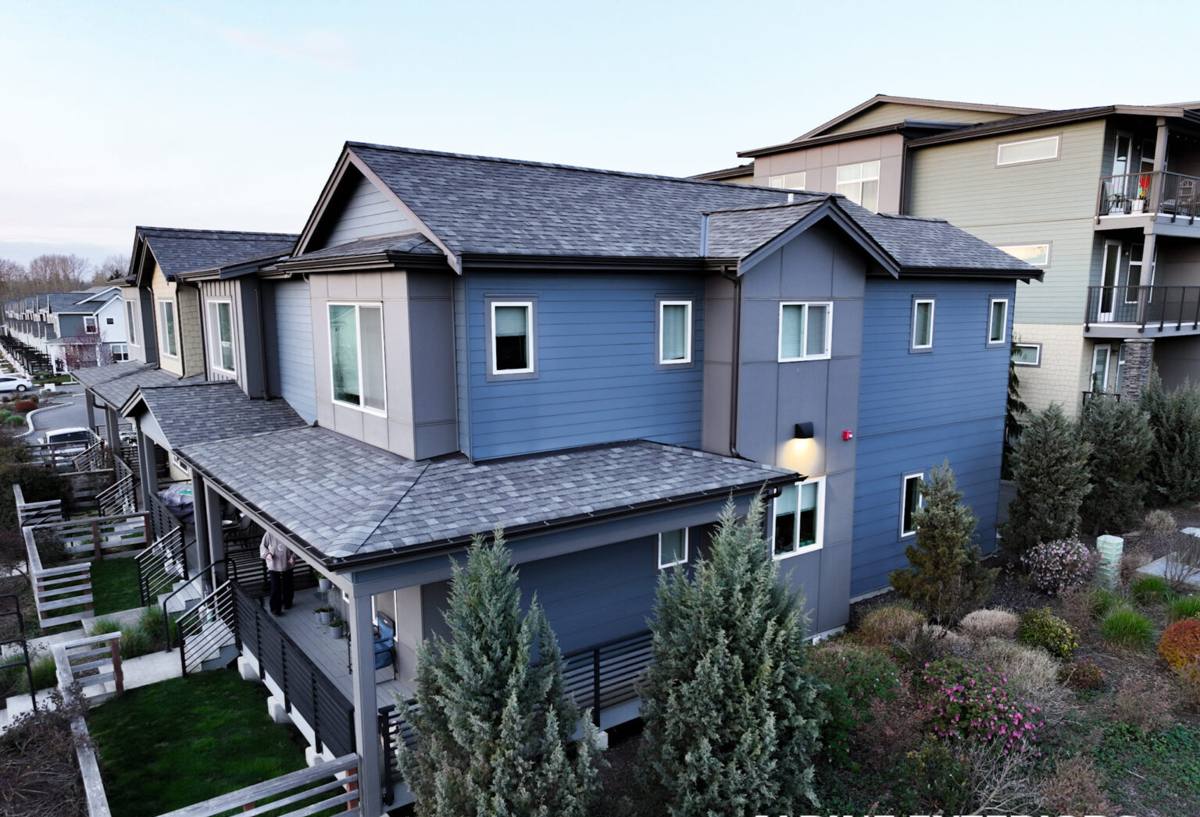
What Forest Park's Setting Asks of a Siding System
Salt Air and Wind Off the Water
Everett sits on Port Gardner Bay, and neighborhoods close to the water — Forest Park among them — see salt-tinged air moving across their exteriors more consistently than homes further inland. Salt exposure doesn't damage siding overnight, but it accelerates the slow processes: fading on lower-grade finishes, corrosion on exposed fasteners, and gradual breakdown of anything not built to shrug off airborne salt for decades at a stretch. Wind off the water also tends to drive rain sideways rather than straight down, which puts more pressure on horizontal seams and any gap where water could get behind the siding instead of running off it.
Mature Tree Canopy and a Long Moss Season
The flip side of Forest Park's tree cover is shade — a lot of it, on a lot of walls, for a lot of the year. Shaded, north-facing walls under mature evergreens dry out slowly after every rain, and slow-drying wood-adjacent siding is exactly what moss and algae need to take hold. Snohomish County's moss season already runs long compared to drier parts of the country; under heavy canopy it runs longer still. A siding material that stays damp against its substrate for weeks at a time is going to show that history eventually, whether that's discoloration, softening, or paint failure at the seams.
Driving Rain and Long Wet Stretches
Between the water exposure and the tree cover, Forest Park doesn't get many long dry spells to let a wall fully reset. Siding here needs to shed water reliably at every joint, corner, and penetration, and it needs a material underneath the finish that doesn't swell, cup, or soften when it inevitably takes on some moisture at a cut edge or fastener hole. This is less about any single storm and more about cumulative exposure — the difference between a wall assembly engineered for sustained wet conditions and one that's just tolerating them.
Why We Install Only James Hardie Here
Fiber cement isn't the only siding material that can technically handle a wet, wooded, salt-exposed lot. But the margin for error on a Forest Park property is smaller than on a dry inland lot, and that's why we standardized on one manufacturer's system rather than offering several tiers at different price points. James Hardie's fiber cement core is dimensionally stable — it doesn't expand, contract, or absorb moisture the way wood-based products do — and the ColorPlus factory-applied finish is cured under controlled conditions no jobsite can replicate, which matters in a climate that gives field-applied paint a genuinely hard time.
| Material | Behavior in Shade & Moisture | Behavior in Salt Air | Realistic Upkeep |
|---|---|---|---|
| James Hardie fiber cement | Doesn't swell or soften; resists moss better than wood-based products | ColorPlus finish resists fading and chalking | Low — periodic gentle washing |
| LP SmartSide (engineered wood) | More sensitive to prolonged moisture at cut edges and fastener holes | Field-applied protection depends on ongoing maintenance | Moderate — edge sealing and inspection |
| Vinyl | Doesn't rot, but can trap moisture behind it unnoticed | Can chalk and become brittle over long exposure | Low visible upkeep, but hidden issues are hard to catch |
| Cedar | Absorbs moisture readily under shade without regular sealing | Salt accelerates weathering of unsealed or under-maintained wood | High — recurring sealing or repainting |
Every one of those alternatives is a legitimate product, and other contractors install them competently. We simply made a professional call: on lots like the ones common in Forest Park, we'd rather stand behind one engineered system — HardieZone HZ5 boards, built for exactly this Pacific Northwest climate zone, backed by a strong transferable warranty — than offer a cheaper option that shifts more maintenance risk onto the homeowner over the following decade.
What a Correct James Hardie Install Involves
The finished wall is supposed to look simple. What makes it perform for thirty-plus years instead of ten is everything happening underneath, and on a shaded, water-close lot like a typical Forest Park property, none of the following steps are optional:
- Weather-resistive barrier installed and correctly lapped before any siding goes on, so water that does get past the surface has somewhere to go besides the wall sheathing
- A drainage gap or rainscreen behind the siding, which matters more on shaded walls that stay damp longer after every rain
- Corrosion-resistant fasteners at Hardie's specified spacing — not a generic "enough to hold it up" pattern, especially given this neighborhood's salt exposure
- Properly flashed and lapped transitions at every window, door, corner, and the base of the wall
- Field-cut edges primed before installation, since the factory ColorPlus finish only covers the board as manufactured, not any edge cut on site
- Clearance maintained at grade and at any hardscape or planting bed, so the siding isn't sitting in standing moisture against a shaded foundation wall
Skip any one of these on a dry, sunny lot and the wall might still perform acceptably for years. Skip one on a shaded, water-close Forest Park lot and the consequences tend to show up faster — moss creeping in at a seam, staining at a poorly lapped flashing detail, softening where a fastener wasn't corrosion-rated. The visible problems take a wet season or two to appear, which is exactly why a rushed or corner-cutting install can look fine on handoff day and still be the wrong job.
Our Process for a Forest Park Project
Walkthrough and Assessment
We start by looking at the specific walls — which ones sit under heavy canopy and dry slowly, which face the water and take more wind and salt, whether there's any existing moisture damage behind the current siding that needs addressing before new material goes up. New siding over a wall with hidden rot just buries the same problem for a few more years.
Planning the Details Before Install Day
Fastening pattern, flashing details, and drainage strategy get worked out before crews start cutting boards. On a lot with real shade and water exposure, deciding these details on paper first avoids field improvisation — which is usually where corners get cut on a job that isn't being planned carefully.
Installation to Manufacturer Spec
Every gap, fastener, and flashing lap follows James Hardie's published installation requirements for this climate zone, not a generic national standard. That's what keeps the manufacturer's warranty valid and what actually determines whether the wall performs the way it's designed to.
Final Walkthrough
We walk the finished job with you, explain what little maintenance a Hardie exterior actually needs, and make sure you know what a healthy wall looks like if you ever want to check it yourself down the road.
Why a Crew That Already Works Forest Park Matters
A lot of what makes a siding job hold up on a shaded, water-close lot isn't written on a spec sheet — it's judgment built from having seen how a specific kind of property actually behaves over multiple wet seasons. A crew that's already worked Forest Park properties knows which walls need extra attention because of tree cover, how much drainage clearance actually earns its keep in this specific setting versus a drier inland lot, and where salt exposure changes the fastener spec. That's the difference between a wall that still looks and performs the same in fifteen years and one that's showing moss staining or seam failure by year five, even though both jobs used the same brand of siding.
Cost Factors for James Hardie Siding in This Area
There's no single number that fits every Forest Park home — the factors below move the price more than square footage alone does:
| Factor | Why It Matters Here |
|---|---|
| Existing wall condition | Moisture or rot found during tear-off on a shaded wall needs repair before new siding goes up |
| Tree and canopy proximity | Limbs and dense growth close to the house can add labor for clearance and cleanup |
| Wall exposure and orientation | Walls facing the water or prevailing wind often need more attention to flashing and fastening detail |
| Access and site slope | Wooded and sloped lots common in this neighborhood can add setup and staging time |
| Product line and profile | Lap siding, panel, and shingle profiles carry different material and labor costs |
We walk your specific property and give you real numbers based on what your walls actually need, rather than a rough per-square-foot guess that doesn't account for shade, exposure, or existing wall condition.
Getting It Right the First Time
Redoing a siding job is expensive and disruptive in a way that makes getting it right the first time worth the extra planning up front — especially on a lot where shade and water exposure don't forgive shortcuts the way a dry, open lot might. That's the standard we hold every Forest Park project to: the right material, installed to spec, by a crew that understands what this specific setting asks of a wall.
If you're planning a siding project for a Forest Park home, we're happy to walk the property, talk through what your specific walls need given their exposure and tree cover, and put together a free, no-pressure estimate. There's a form below — reach out and we'll set up a time to take a look.