 Everett
 Mukilteo's Roofs Take a Different Kind of Beating
Mukilteo sits right where Puget Sound weather meets the rest of Snohomish County, and that location shapes what happens to a roof over time. Homes closer to the water deal with salt-laden air that accelerates corrosion on fasteners, flashing, and exposed metal. Add in driving rain that comes in sideways during winter storms, and you get wind-driven water finding its way under shingles and around penetrations that would stay dry in a calmer climate. Then there's the shade from mature evergreens common in this area, which keeps roofs damp longer after every rain and feeds a moss season that can run eight or nine months out of the year.
None of this means every Mukilteo roof is in trouble. It means storm damage here often shows up differently than it would in a drier climate, and it needs to be diagnosed and repaired with that in mind. A repair that only patches the visible problem, without accounting for what the wind and moisture did around it, tends to fail again at the next storm.
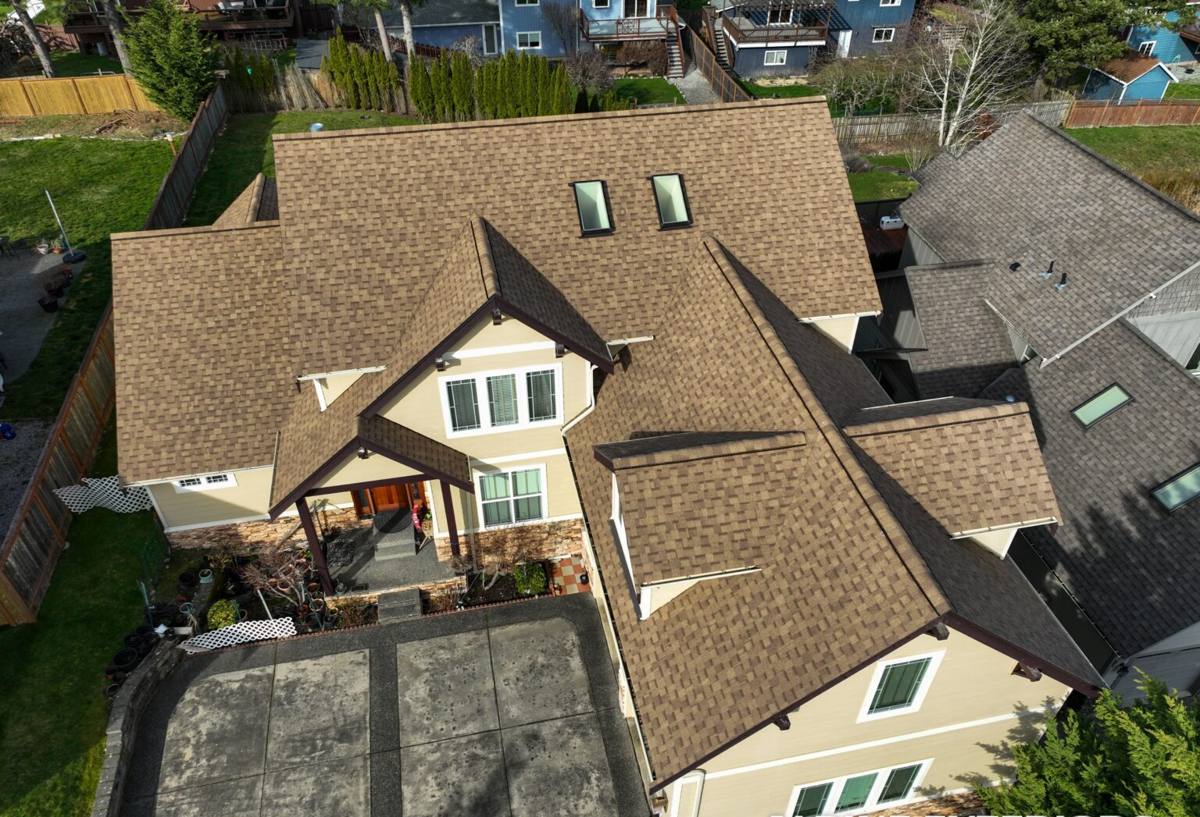
What Actually Counts as Storm Damage
Homeowners often assume storm damage means missing shingles after a windstorm, and sometimes it is that simple. More often it's less obvious:
- Shingles that are still in place but have been lifted and re-seated by wind, breaking the adhesive seal
- Flashing around chimneys, skylights, or vent pipes knocked loose or bent by wind or falling debris
- Granule loss from wind-driven rain and hail-like debris impact, which shows up as bare, shiny patches
- Small punctures or cracked shingles from tree limbs that didn't fully break but still made contact
- Gutter and fascia damage that lets water track back up under the roof edge
- Ridge cap damage, since the ridge takes the brunt of sustained wind
The damage that causes the most long-term trouble is usually the kind you can't see from the ground. A lifted shingle that reseals on its own after a storm looks fine from the driveway but has already lost its seal strip, and it will lift again in the next wind event, sometimes worse.
Why Moss and Salt Air Complicate the Picture
In Mukilteo and along the rest of the Snohomish County waterfront, storm damage rarely happens in isolation. A section of roof weakened by moss holding moisture against the shingles is far more likely to lose granules or tear during high wind than a clean, well-ventilated section. Salt air speeds up corrosion on nail heads and metal flashing, so fasteners that would hold fine inland can back out or rust through a season or two earlier here. When we inspect storm damage, we're not just looking at the storm's impact — we're looking at what condition the roof was already in when the storm hit, because that tells us whether a patch will actually hold.
What a Correct Storm Damage Repair Involves
A proper repair starts before anyone touches a shingle. It starts with figuring out the extent of the damage, not just the part that's obviously broken.
1. A Full-Slope Inspection, Not a Spot Check
Wind damage rarely stays confined to one shingle. We check the entire slope that took the wind, plus adjacent slopes, because wind that lifted one section usually stressed the shingles around it too, even if they didn't visibly fail.
2. Checking the Decking Underneath
If water got past the shingle layer, the plywood or OSB decking underneath may be damp or soft. Repairing shingles over compromised decking just hides a problem that will show up as a sag or a leak later. Any soft decking gets replaced, not papered over.
3. Matching Underlayment and Flashing to Code
Storm repairs are a chance to make sure the underlayment and flashing detail at the repair site actually meets current best practice, not just whatever was there originally. That matters most around valleys, chimneys, and anywhere two roof planes meet, since those are the spots water finds first.
4. Shingle Matching
We use shingles that match the existing roof as closely as the manufacturer's current product line allows. Exact matches aren't always possible if a roof is several years old and the color run has changed, and we'll tell you honestly if that's the case rather than promising a seamless match we can't deliver.
5. Cleanup That Doesn't Leave Debris Behind
Storm repair work generates old shingle pieces, nails, and granules. A magnetic sweep for nails and a real cleanup of the yard and gutters is part of the job, not an afterthought.
Our Process for a Mukilteo Storm Repair Call
- Initial assessment. We look at the roof from the ground and, where it's safe to do so, on the slope itself. We photograph what we find so you have a clear record of the damage.
- Honest scope of work. We tell you what's storm damage, what's pre-existing wear, and what's cosmetic versus what's actually letting water in. You get a written estimate before any work starts.
- Repair or replace decision. Most storm damage is repairable. We'll say plainly if a section is too far gone to patch and a larger repair or a full re-roof makes more sense.
- The repair itself. Decking replaced where needed, underlayment and flashing brought up to a proper standard, matching shingles installed and properly sealed.
- Final walkthrough. We show you what was done and what to watch for going forward.
Repair or Replace: What Actually Drives the Decision
Not every storm-damaged roof needs the same answer. The table below covers the main factors that push a decision one way or the other.
| Factor | Leans toward repair | Leans toward replacement |
|---|---|---|
| Roof age | Under 10-12 years, or a newer architectural shingle roof | Already near or past its expected service life |
| Extent of damage | Isolated to one or two slopes or a small area | Spread across most of the roof, or repeated storm damage over recent years |
| Decking condition | Solid, dry decking under the damaged shingles | Widespread soft or delaminated decking |
| Moss and moisture history | Minor moss, good attic ventilation | Heavy moss buildup with signs of trapped moisture over multiple seasons |
| Shingle availability | Current shingle line still made, close color match possible | Discontinued shingle, mismatched patch would be visually obvious |
We'll walk you through where your roof falls on each of these before recommending a direction, rather than defaulting to the option that's more expensive.
Insurance and Storm Claims
Many storm repairs in this area go through a homeowner's insurance policy, especially after a named windstorm event. We're glad to document damage with photos and a written scope that you can hand to your adjuster, and to meet an adjuster on-site if that's useful. What we won't do is inflate a scope of work to match a bigger payout, or tell you damage exists that we don't actually find on the roof. An honest inspection protects you either way — if the claim is approved, the repair is scoped correctly, and if it's denied, you still know exactly what condition your roof is in.
Why a Crew Already Working in Mukilteo Makes a Difference
After a significant windstorm, roofing crews get busy fast across Snohomish County, and response time matters more than people expect. A tarp or emergency patch that goes on within a day or two of a storm can be the difference between a contained repair and a much bigger interior damage problem. A crew that already routes through Mukilteo and the surrounding Everett area regularly can usually get eyes on a damaged roof faster than one dispatching from farther away.
Local familiarity also means we already have a working sense of how homes in this specific area age — the roof pitches common in the neighborhood, how much shade cover the typical lot has, and how salt exposure varies depending on how close a property sits to the water. That context shortens the inspection and sharpens the diagnosis, because we're not guessing at conditions we've never seen before.
Simple Things That Reduce Storm Damage Between Now and Your Next Repair
- Keep gutters clear so wind-driven rain has somewhere to go instead of backing up under the roof edge
- Trim back branches that hang over or brush against the roof, since even non-breaking contact wears shingles during wind
- Have moss treated before it builds up into thick mats that hold moisture against the shingle surface
- After any major windstorm, do a visual check from the ground for lifted shingles, displaced flashing, or debris on the roof
- Address small leaks quickly — a stain on the ceiling is almost always smaller and cheaper to fix than the same leak six months later
What to Expect From an Estimate
If you've had recent storm damage or you're not sure whether what you're seeing on your roof is storm-related, we're happy to take a look. There's no charge for the estimate and no pressure to move forward with anything — you'll get a straight answer about what we find, what it would take to fix it correctly, and what it costs. If you'd like us to come out and assess your roof, the form below is the fastest way to get in touch.