 Everett
 Mukilteo's Waterfront Setting Is Tough on Exterior Walls
Mukilteo sits right on Puget Sound, which means homes here deal with a combination of stresses that inland Snohomish County properties simply don't face as often. Salt-laden air drifts off the water and settles on exterior surfaces year-round. Wind-driven rain off the Sound doesn't just fall straight down — it gets pushed sideways into walls, seams, and trim joints. And because the region stays cool and damp for much of the year, moss and algae get a long growing season on anything that holds moisture or sits in shade.
None of this is unusual for a Puget Sound community, but it does change what "good siding" needs to do. A product and installation approach that works fine in a drier inland climate can fall short on a bluff-top or near-shore lot in Mukilteo. That's the lens we bring to every siding job here: what does this specific house, on this specific street, need to hold up for the long haul.
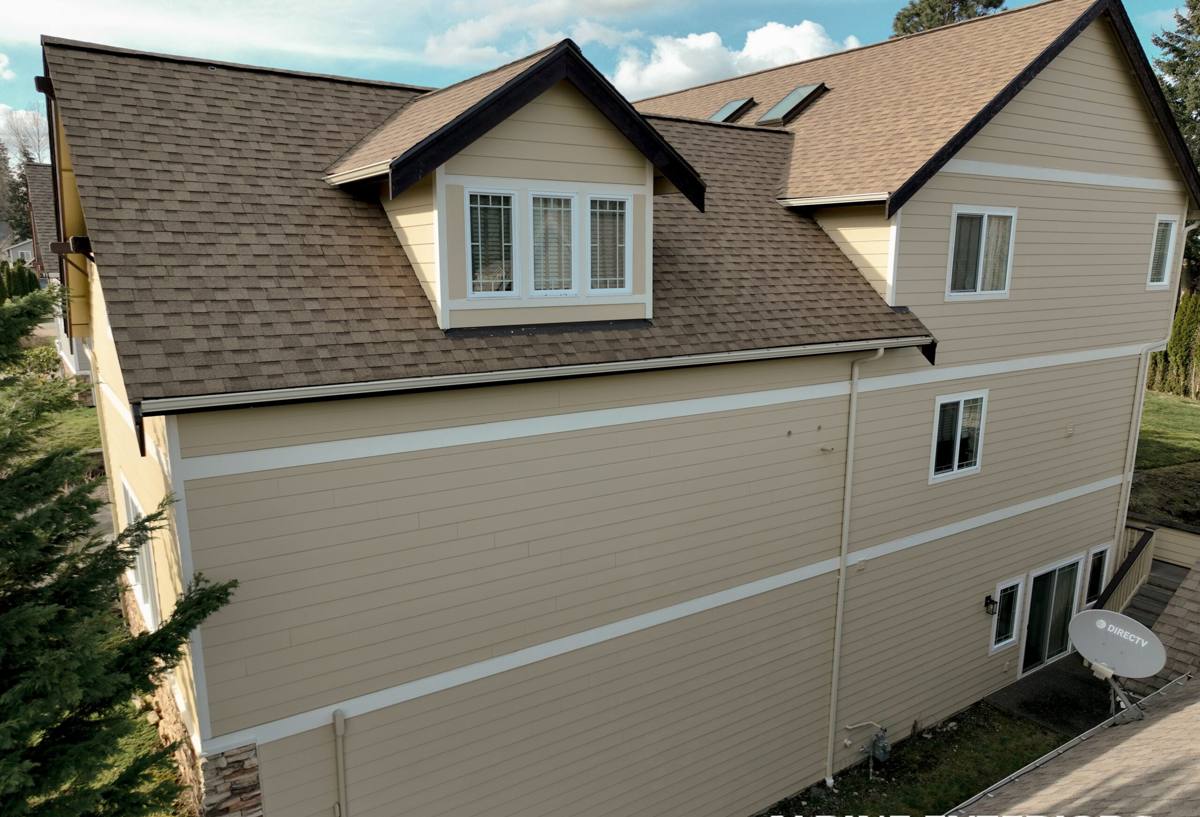
Why We Only Install James Hardie
We standardized on James Hardie fiber cement siding for every project we take on, including here in Mukilteo, and we don't install vinyl, LP SmartSide, or wood alternatives. That's a deliberate choice, not a default. Fiber cement is non-combustible, dimensionally stable, and doesn't absorb moisture the way wood-based products can. In a salt-air, high-rainfall environment, that stability matters more than it does in milder climates — it's the difference between siding that shrugs off decades of weather and siding that needs constant attention to stay looking and performing right.
James Hardie also backs its products with ColorPlus Technology, a factory-applied finish that's baked on rather than field-sprayed. That finish is engineered to resist fading and hold up to UV exposure and moisture cycling better than a standard field-applied paint job, which matters on a home that's going to see a lot of both.
Product Lines Built for This Climate
James Hardie makes climate-engineered product lines, and for Pacific Northwest coastal exposure, the HZ10 line is formulated specifically for regions with high moisture and humidity. We spec HZ10 for Mukilteo homes as a matter of course, not as an upsell — it's the right product for the exposure this area gets.
What a Correct Installation Actually Involves
Fiber cement siding is only as good as the installation behind it. Hardie's own warranty terms hinge on correct installation, and in a demanding climate like Mukilteo's, the details that get skipped on a rushed job are exactly the details that cause problems five or ten years down the line.
Water Management Comes First
Before a single piece of siding goes up, the wall needs a proper weather-resistive barrier, correctly lapped and taped, with flashing integrated at every window, door, and horizontal trim transition. In a house exposed to driving rain off the Sound, water is going to hit the wall — the goal is making sure it sheds down and out instead of finding a way behind the cladding.
Clearances and Gaps
Hardie specifies minimum clearances between siding and grade, roof lines, decks, and other horizontal surfaces, along with gaps at butt joints and around penetrations. These aren't arbitrary numbers — they're what keeps standing water and trapped moisture away from the bottom edge of the siding, which is where deterioration starts if it's going to start at all.
Fastening
Correct fastener type, spacing, and placement affect both the warranty and how the siding performs in wind. Mukilteo's exposed waterfront lots can see stronger gusts than a sheltered inland site, and siding that's fastened to spec stays tight instead of working loose over time.
Choosing Products and Colors for a Mukilteo Home
James Hardie's lineup gives homeowners real choices without stepping outside a system engineered to work together — trim, siding, and soffit all designed for the same performance standards.
- HardiePlank lap siding — the most common choice, available in several textures and exposure widths, works well on traditional and craftsman-style homes throughout the area.
- HardiePanel vertical siding — often used for board-and-batten looks or as an accent on modern and Northwest contemporary designs.
- HardieTrim — matches the siding system for window and door surrounds, corners, and fascia, so the whole exterior weathers consistently.
- ColorPlus finishes — a range of factory-baked colors chosen with coastal light and moisture exposure in mind, reducing the need for repainting.
Darker colors show dust and pollen streaking a bit more in a humid coastal climate, while lighter and mid-tone colors tend to hide moss and mildew staining better between cleanings — worth thinking about before you commit to a color, not after.
Moss, Algae, and the Realities of Long-Term Maintenance
No siding product is maintenance-free in a Puget Sound climate, and we won't tell you otherwise. What changes with James Hardie is how much maintenance it actually needs and how forgiving it is when maintenance slips for a season. Fiber cement doesn't rot, and it doesn't provide the same food source for mold and mildew that wood-based siding can, but it still needs periodic attention on a property with heavy shade, tree cover, or a north-facing wall that stays damp longer.
A Practical Maintenance Checklist for Mukilteo Homes
- Rinse siding annually with a garden hose and soft brush attachment — avoid high-pressure washing, which can force water behind seams and joints.
- Check caulking at trim joints, window surrounds, and butt joints yearly; recaulk before gaps open up enough to let water in.
- Trim back vegetation and tree branches that keep a wall shaded and damp, since those areas grow moss fastest.
- Clear gutters and downspouts before the fall rains so overflow doesn't run down the siding face.
- Inspect the bottom courses near grade and near decks or patios, where splash-back and trapped moisture cause the most wear over time.
- Address any nicks or chips in the ColorPlus finish promptly with touch-up paint matched to the product, before bare fiber cement is exposed to weather.
Cost Factors for a Mukilteo James Hardie Project
Every home is different, so we don't quote a flat number without seeing the property, but a few factors consistently move the price on projects in this area.
| Factor | Why It Matters Here |
|---|---|
| Home size and wall complexity | More corners, dormers, and trim details mean more cutting, flashing, and labor time |
| Existing siding removal | Tear-off and disposal of old siding, and any sheathing repair found underneath, adds time before new siding goes up |
| Product line and profile | HZ10 climate-engineered boards, panel accents, and trim upgrades price differently than a basic lap siding package |
| Site access | Steep or bluff-adjacent lots common near the waterfront can require extra staging and safety setup |
| Water management upgrades | Homes with prior moisture issues may need added flashing or drainage work as part of the install |
Our Process, Start to Finish
We keep the process straightforward and give you a clear picture before any work begins.
1. On-Site Assessment
We walk the exterior, check the condition of the existing siding and sheathing, and note any problem areas — trapped moisture, damaged trim, or spots where prior work wasn't done to spec.
2. Product and Scope Recommendation
Based on the home's exposure — waterfront, wooded, elevated, or sheltered — we recommend the right Hardie product line, profile, and color, and lay out the full scope in writing.
3. Prep and Water-Resistive Barrier
Old siding comes off, sheathing gets inspected and repaired as needed, and a new weather-resistive barrier goes on with proper flashing at every penetration before any siding is installed.
4. Installation to Manufacturer Spec
Siding, trim, and accessories go up following James Hardie's fastening, clearance, and gap requirements, so the finished job qualifies for the manufacturer's warranty.
5. Final Walkthrough
We inspect the finished exterior with you, check caulking and paint touch-ups, and go over basic maintenance so you know what to expect going forward.
Why Local Experience in Mukilteo Matters
A crew that regularly works Mukilteo and the broader Everett area already understands what a waterfront lot throws at a building — how far wind-driven rain travels up a wall, which orientations hold moss longest, and how to sequence a job around this area's wetter stretches of the year. That local pattern recognition shows up in small decisions: where to add extra flashing, which wall needs a tighter fastening schedule, how to plan the install window around the weather. It's the kind of judgment that only comes from doing this work repeatedly in this specific climate, not from a general installation manual.
If you're weighing a siding replacement or new construction project in Mukilteo, we're glad to take a look at your home and walk you through what James Hardie siding would involve for your specific site and exposure. Reach out for a free, no-pressure estimate using the form below.