 Everett
 Why North Everett Decks Fail Sooner Than You'd Expect
North Everett sits close enough to Puget Sound and the Snohomish River delta that salt-laden air, near-constant fall and winter rain, and a moss season that can run from October through May all work against a deck at the same time. Homeowners here are often surprised at how much faster a deck ages compared to what they remember from drier climates or even other parts of Western Washington further from the water. It isn't one factor — it's the combination.
Salt air accelerates corrosion in fasteners, joist hangers, and any exposed metal hardware. Once galvanized coatings break down, rust spreads into the wood fibers around the fastener, weakening the connection long before the boards themselves look bad. Add in driving rain that gets pushed sideways by wind off the Sound, and water finds its way into ledger connections, board end grain, and post bases that a calmer climate would never stress test.
Moss and algae growth compounds the problem. A deck surface that stays damp and shaded for months at a time becomes a moisture trap. Moss holds water against the wood, blocks airflow, and turns walking surfaces slick and dangerous. By the time moss is visibly established, it's usually been feeding on trapped moisture in the wood grain for a season or more.
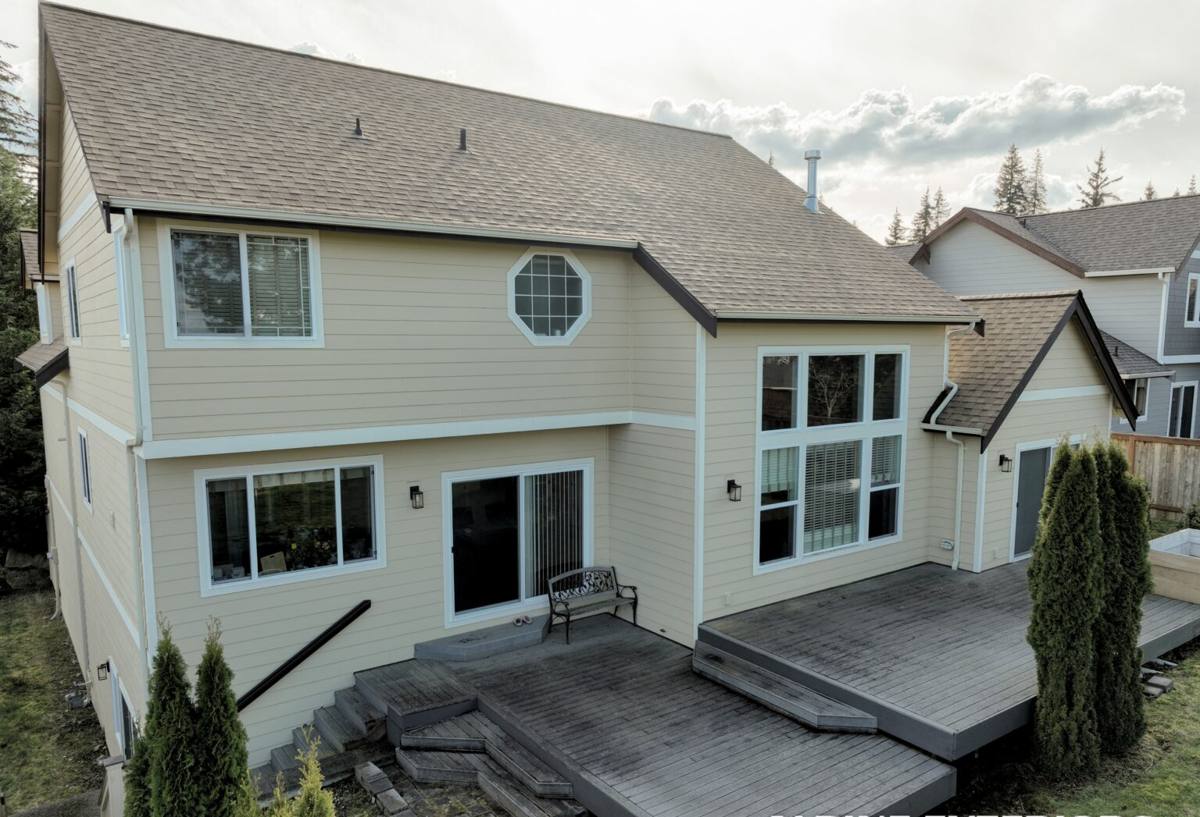
Repair or Replace? How We Tell the Difference
Not every aging deck needs full replacement, and we won't sell you one if it doesn't. But there's a point where patch repairs stop making financial sense and start masking a structural problem instead of fixing it. Here's what we look for during an inspection:
- Soft, spongy, or spring-loaded decking boards, especially near board ends or fastener locations
- Rust streaking below joist hangers or visible corrosion on structural hardware
- A ledger board that shows gaps, staining, or movement where it meets the house
- Post bases sitting in standing water or soil contact instead of proper elevated footings
- Persistent moss or algae that returns within weeks of cleaning, indicating a drainage or shading issue rather than a surface problem
- Structural framing (joists, beams, posts) that's original to a deck 20+ years old, even if the surface boards were replaced more recently
If the problems are limited to surface boards and the framing underneath is sound, repair or a resurface can be the right call. If we find rot or corrosion in the framing, ledger, or footings, replacement is the honest recommendation — a new deck surface on a compromised structure just hides the real issue for another season.
What a Correct Deck Replacement Actually Involves
Starting Below the Surface
A deck replacement done right starts with the parts nobody sees once the project is finished: the ledger board attachment, the footings, and the framing. In a climate that drives this much moisture into a structure, these details matter more than the decking material choice itself.
The ledger board — where the deck attaches to the house — is the single most common failure point we find on older Everett-area decks. Proper flashing (metal or high-quality membrane flashing, not just caulk) has to direct water away from the house sheathing, not toward it. We also check that the ledger is through-bolted rather than lag-screwed where code and structural loads call for it, and that there's a gap or flashing detail preventing water from wicking between the ledger and the siding.
Footings and Framing
Footings need to sit below frost depth and be sized for the actual load of the deck, including snow load where applicable. We use joist hangers and structural connectors rated and coated for exterior, coastal-adjacent exposure — standard electro-galvanized hardware corrodes faster here than in drier inland climates, so we favor hot-dip galvanized or stainless connectors in high-exposure areas like near the ledger and any spots close to grade.
Drainage and Airflow
Because moss thrives on trapped moisture, we build in airflow underneath the deck wherever the design allows, and we grade or direct water away from post bases rather than letting it pool. Small design choices here — joist spacing, gap width between boards, how close the structure sits to grade — make a real difference in how fast moss and algae come back after the deck is finished.
Decking Material Options for This Climate
There's no single "best" decking material — there's a best material for your budget, your maintenance appetite, and how much moss and rain exposure your specific yard gets. Here's how the common options actually perform in a North Everett setting:
| Material | Moisture & Moss Behavior | Maintenance | Typical Lifespan Here |
|---|---|---|---|
| Pressure-treated wood | Absorbs water at cut ends and fastener holes; needs sealing to resist moss and splitting | Annual cleaning, re-sealing every 1-2 years | 10-15 years with upkeep |
| Cedar | Naturally moisture- and insect-resistant, but greys and can host moss if not cleaned | Cleaning and oil/sealer every 1-2 years | 15-20 years with upkeep |
| Composite decking | Won't rot, but surface can still grow algae/moss film if shaded and damp | Periodic washing; no sealing or staining | 25-30 years, per most manufacturer warranties |
| PVC/capped polymer decking | Fully moisture-resistant surface, most moss-resistant option | Occasional washing | 25-30+ years, per most manufacturer warranties |
We install all of the above and will give you a straight opinion based on your yard's actual sun and shade pattern, not just a sales pitch for whatever has the best margin. A heavily shaded, tree-covered lot in North Everett is a very different moss risk than an open, sun-exposed one, and that should factor into your material choice as much as budget.
A Note on Composite and PVC Installation
Composite and PVC boards perform differently than wood during installation — they expand and contract with temperature more than people expect, and gapping/fastening specs vary by manufacturer. Installing them like wood (wrong gap spacing, wrong fastener type) is a common source of buckling and hardware pull-through we get called to fix on other contractors' work. We follow manufacturer spec sheets for whatever brand we install, including hidden fastener systems where specified.
Our Deck Replacement Process
- On-site inspection. We assess the existing deck, ledger connection, framing condition, and drainage before quoting anything, so the estimate reflects what your deck actually needs.
- Design and material selection. We walk through material options, railing style, and layout based on your budget and how the space gets used.
- Permit handling. Most deck replacements in Everett and unincorporated Snohomish County require a building permit, especially for elevated decks or any change to footprint or footings. We handle the permit application and inspections as part of the project.
- Demolition. The old deck comes down, and we inspect the ledger connection and house framing behind it for hidden water damage before rebuilding.
- Framing and structural work. New footings, ledger flashing, joists, and structural hardware go in to current code, sized for your deck's actual load.
- Decking, railing, and finish work. Boards, railings, stairs, and any fascia or skirting are installed per manufacturer spec.
- Final walkthrough and inspection. We review the finished deck with you and coordinate the final building inspection.
Permits and Code in Everett and Snohomish County
Deck permitting gets skipped more often than it should, usually because a homeowner or contractor assumes a "like-for-like" replacement doesn't need one. In practice, most elevated deck replacements do require a permit, and inspections cover footings, framing, and ledger attachment at different stages of the build. Skipping this isn't just a paperwork risk — it means nobody with structural expertise other than the installing crew ever verified the footings and ledger connection were done correctly. For a structure attached to your house and rated to hold people and furniture, that's not a step worth cutting. We pull the permits and schedule the inspections as a normal part of the job.
Maintaining Your New Deck Against Moss and Rain
Whatever material you choose, a little seasonal attention goes a long way in this climate. Here's what we recommend to every North Everett homeowner after a deck replacement:
- Clean the deck surface at least once a year, ideally before fall rains start building up moss
- Keep gutters and downspouts clear so roof runoff isn't dumping directly onto or near the deck
- Trim back overhanging branches and vegetation that keep sections of the deck shaded and damp
- Check that gaps between boards stay clear of debris, which traps moisture and feeds moss growth
- For wood decks, reseal on the schedule recommended for your specific product — don't wait until graying or moss shows up
- Walk the perimeter each fall and spring to check for soft boards, loose railings, or hardware showing early rust
Why Hiring a Crew That Already Works North Everett Matters
A deck built to a generic national code minimum, without accounting for this area's rain volume, salt exposure, and moss pressure, tends to show problems within a handful of years — even when it looked fine on installation day. Crews that work Snohomish County regularly know which hardware grades hold up near the water, which ledger flashing details actually stop water intrusion in a Pacific Northwest wet season, and which material choices are worth the upcharge for a specific yard's sun exposure. That local pattern recognition is hard to get from a crew that only occasionally works this region.
It also matters for permitting. Everett and Snohomish County inspectors know what they're looking for on deck footings, ledger attachment, and guard rail height and spacing. A crew familiar with local inspection expectations moves through that process without surprises or rework.
Getting an Honest Estimate
Every deck and every yard here is a little different — sun exposure, shading, how close you are to the water, and the condition of the existing structure all factor into what your replacement actually needs. If you're seeing soft boards, rust streaks, recurring moss, or you just know the deck is getting old, we're happy to come take a look. We'll give you a straight read on repair versus replacement, walk through material options that fit your budget and your yard's moss and moisture exposure, and put together a free, no-pressure estimate using the form below.