 Everett
 Why Mukilteo Decks Wear Differently
Mukilteo sits right on the water, and that changes what a deck goes through compared to a deck ten miles inland in Everett or up toward Silver Lake. Salt-laden air corrodes fasteners and hardware faster than plain rain does. Wind off the Sound drives moisture sideways into ledger boards and railing posts that a covered porch elsewhere might never see wet. And because so many Mukilteo lots have partial shade from mature trees or sit close enough to the water to stay damp longer into the morning, moss and algae get a longer runway every year. None of this means a deck here is doomed — it means the repair has to account for corrosion, moisture intrusion, and biological growth as three separate problems, not one.
We've repaired decks throughout Snohomish County long enough to know that a deck that looks fine from the yard can still have soft framing underneath, especially near the ledger board where the deck attaches to the house. That's usually where water collects and where the consequences of ignoring it are worst.
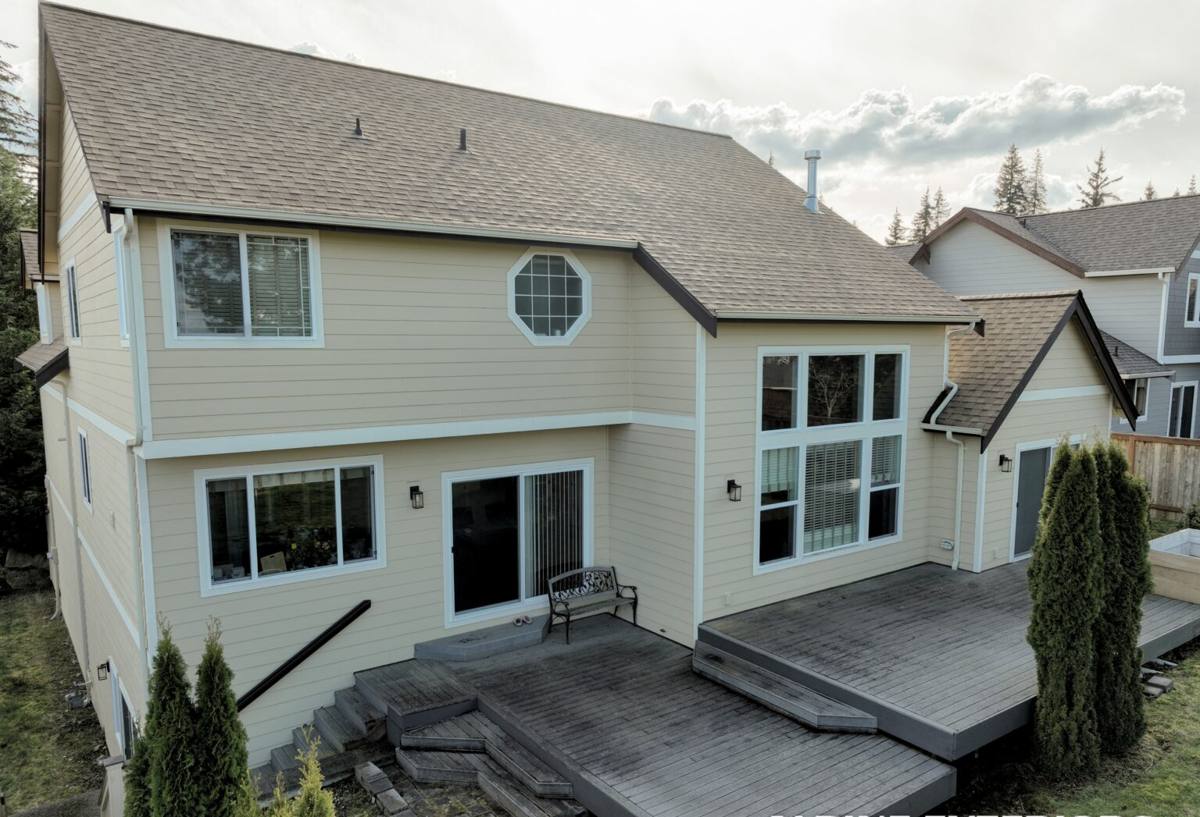
The Damage Patterns We See Most in Mukilteo
Corroded or Failing Fasteners
Nails, screws, and joist hangers that aren't rated for coastal exposure will rust out well before the wood around them fails. You'll see rust streaks bleeding down decking boards, screw heads that strip or snap when touched, or joist hangers that have thinned enough to bend under load. This is more common close to the shoreline but shows up further inland too, especially on decks more than 12-15 years old that were built before stainless or coated coastal-grade hardware was standard practice.
Rot at the Ledger Board and Post Bases
The ledger board — where the deck bolts to the house — is the single most important structural connection on most decks, and it's also the spot most likely to trap water if flashing is missing or has failed. Post bases at ground level are the second-most common failure point, especially where a post sits directly on concrete without a standoff base, holding moisture against the wood.
Moss, Algae, and Slippery Surfaces
Snohomish County's long wet season gives moss and algae months to establish themselves on horizontal wood and composite surfaces that don't dry out quickly. Beyond looking bad, moss holds moisture against the board surface, which accelerates rot on wood decks and can stain or etch composite decking over time. It's also a genuine slip hazard on stairs and ramps.
Cupped, Split, or Warped Boards
Repeated wet-dry cycling — soaked by driving rain, then dried by wind and sun — causes individual boards to cup or split faster here than in drier climates. Once a board splits, water gets into the end grain and the damage accelerates.
What a Correct Deck Repair Actually Involves
A lot of deck "repairs" amount to swapping a bad board and calling it done. That fixes the symptom, not the cause. Our process is built around finding out why a section failed before we touch a saw.
- Structural inspection first. We check the ledger board connection, flashing, joists, beams, and post bases before looking at surface boards. This is where hidden rot and hardware failure actually live.
- Probe suspect wood. Soft spots get tested with an awl or screwdriver, not just eyeballed. Wood that looks fine on top can be punky underneath.
- Identify the moisture source. Replacing a rotted board without fixing the flashing, grading, or drainage that caused the rot just buys you a few years before the same spot fails again.
- Match hardware to coastal exposure. Fasteners and hangers get upgraded to stainless steel or heavy-duty coated hardware rated for coastal and treated-lumber use, not whatever standard-grade screw happens to be on the truck.
- Rebuild or sister damaged framing. Depending on severity, we sister new lumber alongside a compromised joist or replace it outright — patch jobs on structural members aren't worth doing twice.
- Address moss and drainage before closing up. Any factor that let moisture sit — poor slope, tight board spacing, standing water under the deck — gets corrected as part of the repair, not left for the homeowner to deal with separately.
Deck Repair Checklist: What to Look For Before You Call
- Soft or spongy spots when you walk the deck, especially near the house
- Rust streaks below screws or nail heads
- Railings or posts that wobble when pushed
- Visible gap or dark staining where the deck meets the house siding
- Green or black film on boards that doesn't wash off with a hose
- Boards that have visibly cupped, twisted, or split at the ends
- Standing water or bare dirt under the deck that never fully dries out
Repair vs. Replacement: How We Make the Call
Not every damaged deck needs to come down. The framing (posts, beams, joists) is the expensive part to replace and the part most worth saving if it's still structurally sound. Surface decking is comparatively cheap to swap out. The table below is a general guide — every deck gets an actual inspection before we recommend either path.
| Condition | Usually Repairable | Usually Needs Replacement |
|---|---|---|
| Framing (joists, beams, posts) | Isolated soft spots, corrosion at connections | Widespread rot, structural sag, multiple failed posts |
| Decking boards | A handful of split or cupped boards | Most boards cupped, split, or spongy throughout |
| Railings | Loose posts, damaged balusters | Rot at multiple post bases, code-noncompliant spacing |
| Ledger connection | Missing or failed flashing, corroded bolts | Rot extending into the house rim joist |
| Overall age | Under 15-20 years, maintained regularly | Original construction predates modern hardware and flashing standards |
Composite vs. Wood: What Holds Up Near the Water
We get asked often whether switching to composite decking during a repair is worth it. Both materials work in Mukilteo's climate, but they fail differently, and that's worth knowing before you decide.
Wood decking costs less up front and is straightforward to repair board by board, but it needs regular sealing or staining to resist the wet-dry cycling and salt air here — skip that maintenance for a few years and you'll see it in cupped or split boards. Composite decking resists moisture and doesn't need staining, which appeals to a lot of homeowners who don't want an annual maintenance task, but it costs more initially, and lower-quality composite can still stain or hold algae film if it's not cleaned periodically. Neither material is maintenance-free near salt water — it's a question of what kind of upkeep you're willing to do. We'll walk you through both honestly based on your specific deck rather than pushing whichever one we happen to have on hand.
Why Local Experience with Mukilteo Conditions Matters
A deck repair crew that mostly works drier inland areas can miss things that are routine for us here. They may not think to check for coastal-grade corrosion on hardware that looks fine on the surface, or under-spec the flashing detail at the ledger board because it's not something they deal with every job. We work Mukilteo and the rest of Snohomish County regularly enough to know where water tends to collect on a shoreline-adjacent lot, which fastener grades actually hold up long-term this close to the Sound, and how aggressive the moss season really gets on a shaded, north-facing deck. That's the difference between a repair that lasts five years and one that lasts fifteen.
Maintenance That Extends the Life of a Repair
Once we've fixed the underlying problem, a little upkeep goes a long way in this climate:
- Clean moss and algae off decking and stairs at least once a year, ideally before the wet season sets in
- Keep gutters and downspouts clear so runoff isn't dumping extra water onto or under the deck
- Reseal or restain wood decking on the manufacturer's recommended schedule — don't stretch it because it "still looks okay"
- Check the ledger board area and post bases once a year for early signs of water intrusion
- Trim back vegetation that's shading the deck and keeping it damp longer than necessary
Get an Honest Look at Your Deck
If your deck has soft spots, rust streaks, wobbly railings, or just feels like it's on borrowed time, it's worth getting an honest assessment before it gets worse or more expensive to fix. We'll tell you straight whether you're looking at a targeted repair or something more involved, with no pressure either way. Fill out the form below for a free estimate on your Mukilteo deck repair.