 Everett
 Why Marysville Decks Wear Out Faster Than the Brochure Says
Most decks in Marysville don't fail because the wood was bad or the builder was careless. They fail because Snohomish County weather is relentless in ways that don't show up until years three, five, or eight. Driving rain off the Sound pushes moisture sideways under railings and into end grain. A long moss season — often eight or nine months of the year here — keeps deck surfaces damp and shaded far longer than a sunnier climate ever would. Add in salt-tinged coastal air moving inland off Port Susan and Possession Sound, and you've got a slow, steady attack on fasteners, ledger connections, and any wood that wasn't properly sealed at the cut ends.
By the time a deck looks bad — graying boards, soft spots, a railing that wiggles — the structure underneath has usually been dealing with moisture intrusion for a while. That's the gap we focus on: what's happening below the surface, not just what's visible from the yard.
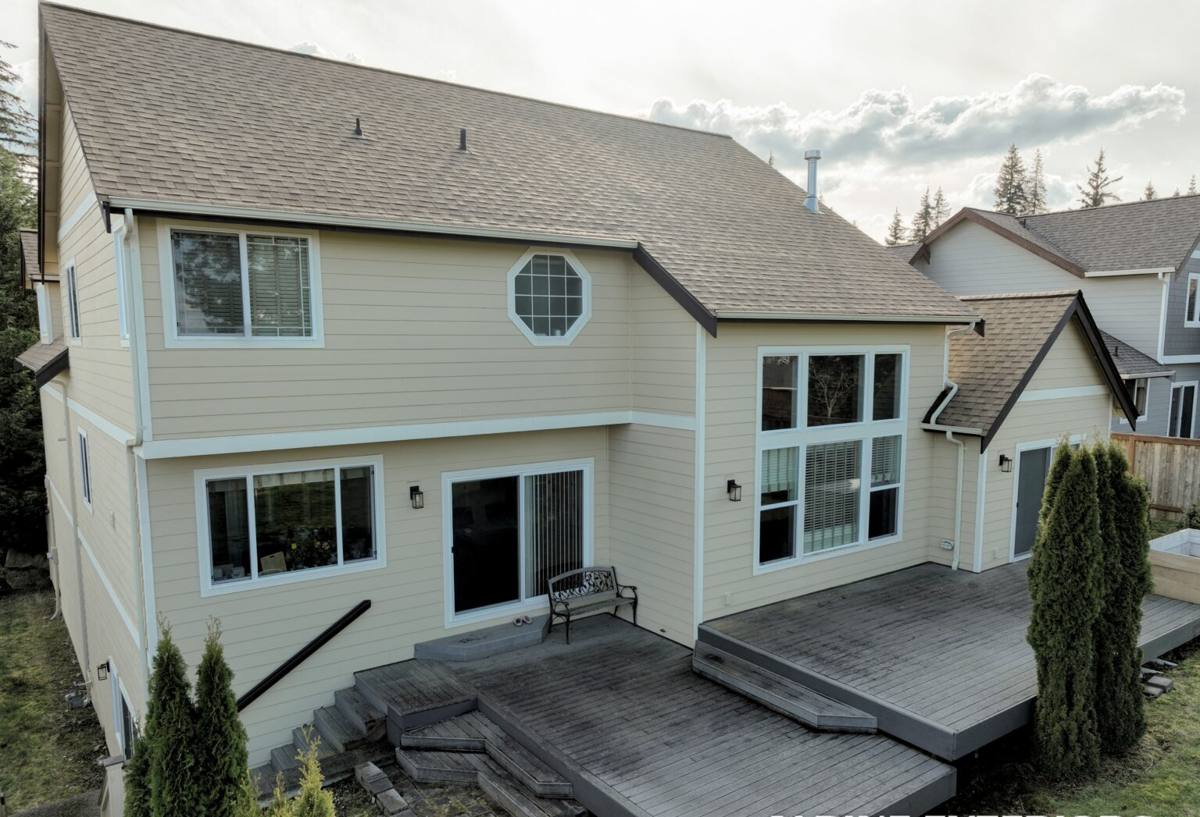
Signs a Marysville Deck Needs Replacement, Not Just Repair
Not every tired-looking deck needs a full teardown. But there's a point where patching individual boards is throwing money at a structure that's already compromised. Here's how we tell the difference on a site visit.
Repair usually makes sense when:
- A handful of deck boards are cupped, splintering, or gray but the frame underneath is solid
- Railings are loose at a connection point but the posts themselves are sound
- Fasteners are popping or rusting on an otherwise structurally healthy deck
- The deck is under 10-12 years old and was built to current code with proper flashing
Replacement is the honest answer when:
- The ledger board attachment to the house shows rot, soft wood, or was never properly flashed
- Joists or beams flex, feel spongy, or show fungal decay when probed
- Post bases have been sitting in standing water or direct soil contact for years
- Multiple structural components are failing at once rather than one isolated spot
- The deck predates current ledger-flashing and joist-hanger requirements
A screwdriver test tells a lot — probing joists, the ledger, and post bases for soft, punky wood versus firm resistance. If we find decay at the ledger connection, that's usually the deciding factor, because that's the single most moisture-exposed joint on the whole structure and the one most likely to have been under-flashed originally.
What a Correct Deck Replacement Involves Here
A deck replacement done right in this climate is really a moisture-management project that happens to end with a place to put your furniture. The steps that matter most aren't the ones a homeowner necessarily sees once the boards are down.
Tear-out and structural assessment
We remove the old decking and railing, then inspect framing, ledger, and footings before deciding what gets reused versus rebuilt. In Marysville's clay-heavy soils, we also check post bases and footings for movement or frost heave, which is more common on properties without good drainage away from the foundation.
Ledger flashing — the step that gets skipped most often
The ledger board is where the deck attaches to the house, and it's the single highest-risk point for water intrusion into your home's structure. We install proper flashing (typically a metal flashing with a self-adhered membrane behind it) so water sheds away from the house rather than wicking into the rim joist. This one detail prevents the majority of the rot problems we see when we tear into an older deck.
Joist protection
Exposed joist tops are one of the most overlooked failure points. A joist tape or flashing membrane over the top of each joist keeps deck screws from creating a thousand small entry points for water into end grain. It's a small material cost that meaningfully extends the frame's life.
Fasteners and hardware
We use fasteners and structural hardware rated for exterior/treated-lumber contact. Mismatched hardware is a quiet cause of premature corrosion, especially with the salt content in coastal air working against it year-round.
Decking material selection
This is where the surface-level decisions happen — and where budget, maintenance tolerance, and appearance goals need an honest conversation.
Decking Material Comparison for Snohomish County Conditions
| Material | Moisture Performance Here | Maintenance | Typical Lifespan |
|---|---|---|---|
| Pressure-treated lumber | Good if sealed and re-sealed on schedule; end cuts need field treatment | Annual cleaning, re-seal every 1-2 years | 10-15 years with upkeep |
| Cedar | Naturally rot-resistant but still needs sealing in this rainfall | Cleaning and re-sealing every 1-2 years to hold color | 15-20 years |
| Composite decking | Excellent — doesn't absorb water or support moss growth like wood | Periodic washing; no sealing or staining | 25-30 years, often warrantied |
| PVC decking | Excellent — fully moisture-inert | Lowest maintenance of the group | 25-30+ years |
We don't push composite or PVC on everyone — a well-maintained cedar or treated-lumber deck can look great and last a long time here. But we're straightforward about the trade-off: wood decking in a climate with this much sustained moisture and moss pressure needs a real maintenance commitment, or it will show it. If low maintenance matters more to you than the look and feel of real wood, composite or PVC removes moss and re-sealing from your to-do list entirely.
Railings, stairs, and code
Railings and guard systems get rebuilt to current code, not just matched to what was there before — height, baluster spacing, and post attachment all get checked, since older decks in the area often predate current requirements.
Our Process for a Marysville Deck Replacement
- Site visit and assessment — We inspect the existing deck, probe for decay at the ledger, joists, and posts, and talk through what you actually use the space for.
- Written scope and pricing — You get a clear breakdown of what's being removed, what's being rebuilt, material options, and a firm price before any work starts.
- Permitting — Marysville and Snohomish County typically require a permit for deck replacement, especially when structural elements are involved. We handle that process rather than leaving it on you.
- Tear-out — Old decking, railing, and any compromised framing come out; we protect landscaping and walkways during removal.
- Structural rebuild — Ledger flashing, joist protection, hardware, and framing repairs happen before a single deck board goes down.
- Decking and railing installation — Installed to manufacturer spec for whichever material you chose, with attention to drainage and airflow underneath.
- Final walkthrough — We check the deck with you, cover care and maintenance for your specific material, and make sure everything's tight before we call it done.
Drainage and Placement Matter as Much as the Deck Itself
A deck can be built perfectly and still develop problems if water has nowhere to go underneath it. We look at grading and downspout placement near the deck footprint during the assessment — if runoff is pooling near footings or draining toward the house foundation, that's worth addressing at the same time rather than after the fact. Ground-level decks and low-clearance decks need extra attention to airflow underneath, since standing moisture under a deck with poor ventilation is a common cause of joist decay that isn't visible from above.
What to Check Before Hiring for Deck Work in This Area
- Ask specifically how they handle ledger flashing — a vague answer is a red flag
- Confirm they pull permits rather than skip the step
- Ask what fastener and hardware spec they use, and whether it's rated for treated lumber contact
- Get the scope and pricing in writing before work starts, not verbally
- Ask how they handle joist-top protection, not just the visible decking
- Check that railing and guard specs will meet current code, not just match the old deck
A crew that already works in Marysville and the surrounding Everett area has usually already run into the specific problems local soil, rainfall, and salt air create — under-flashed ledgers on older builds, moss-driven surface decay, posts sitting in poorly draining soil. That's less guesswork on your project and fewer surprises once tear-out starts.
Timing a Deck Replacement Around Our Weather
Deck replacement can happen most of the year here, but the drier stretch from late spring through early fall gives the most flexibility for framing work and material curing. That said, we don't tell people to wait if their deck has active decay — a ledger or joist that's failing doesn't get better by putting it off through another wet season. If timing is a concern, we'll talk through what's realistic for your situation during the site visit.
If your deck is showing its age or you're just not sure whether it needs repair or full replacement, we're happy to take a look. Fill out the form below for a free, no-pressure estimate — we'll give you a straight assessment and honest options, not a sales pitch.