 Everett
 Port Gardner's Waterfront Climate Asks More of a Roof
Port Gardner sits close enough to the water that homes here deal with a different roofing environment than houses a few miles inland. Salt-laden air moves off Port Gardner Bay and Possession Sound, driving rain comes in sideways during winter storms, and the long stretch of overcast, wet months from fall through spring keeps roof surfaces damp far longer than in drier parts of Snohomish County. That combination is hard on roofing materials that aren't specifically chosen and installed with it in mind.
Asphalt shingles hold moisture, granules wear faster near salt air, and moss gets a long runway to establish itself on north-facing slopes and anywhere shade lingers. Metal roofing, done correctly, handles all three of those pressures better than most alternatives — but "done correctly" is doing a lot of work in that sentence. The wrong panel type, the wrong fastener, or a rushed flashing detail near the coast will show problems years before the same mistake would on a roof further from the water.
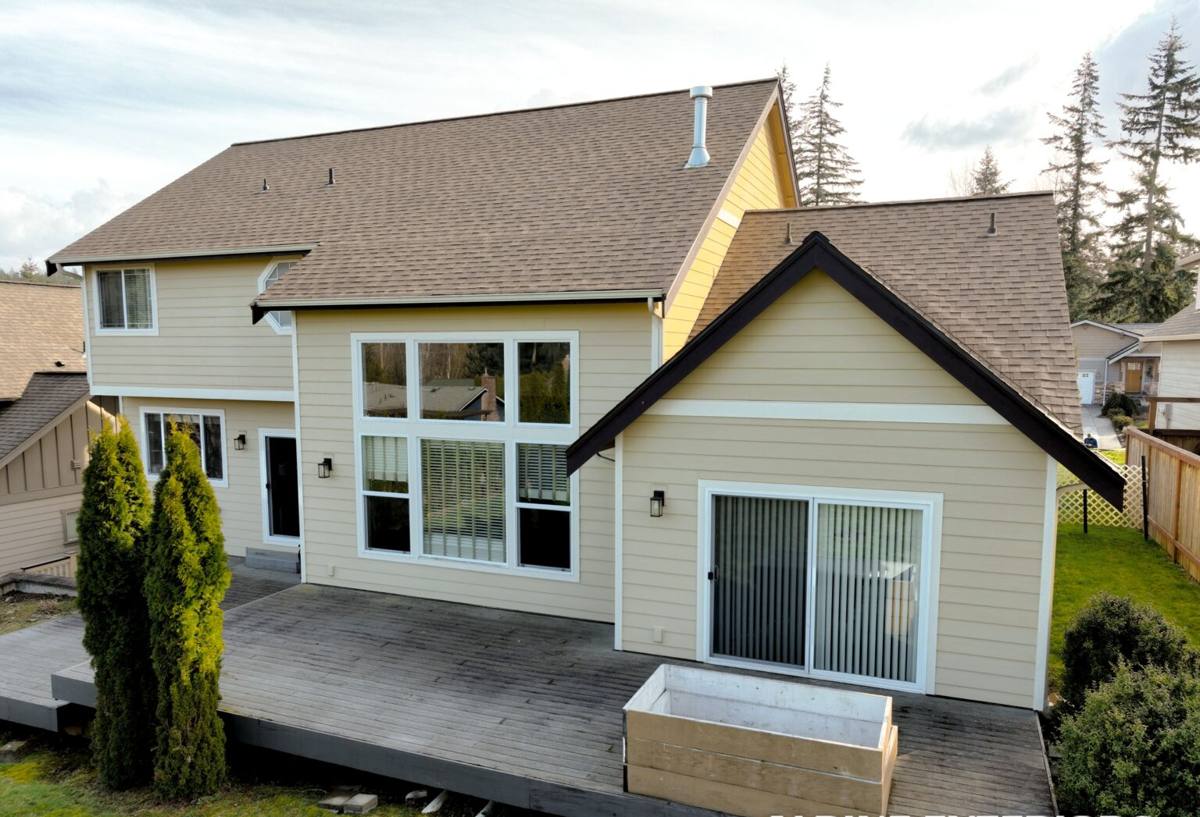
What a Metal Roof Needs to Do in a Coastal Neighborhood Like This
Before talking about panel styles or costs, it helps to be clear about what the roof actually has to withstand in Port Gardner specifically:
- Resist corrosion from airborne salt, not just occasional rain
- Shed steady, driving rain without backing up at seams, valleys, or penetrations
- Discourage moss and algae growth through a long wet season, especially on shaded slopes
- Stay fastened and sealed through wind gusts that come off the water
- Hold its finish and color without chalking or streaking prematurely in salt exposure
A metal roof that checks these boxes will typically outlast asphalt by decades and require far less maintenance in between. One that's specified or installed without the coastal exposure in mind can corrode at fastener heads, streak at seams, or develop rust bleed at cut edges well before its expected lifespan — problems that are avoidable with the right material choice and installation practice, not inherent flaws in metal roofing itself.
Why Metal Handles Moss Better, But Isn't Immune
Metal panels don't give moss the textured, porous surface it needs to root the way shingle granules do, so moss growth on a properly installed metal roof is far less common. It's not impossible, though — debris that collects in valleys, at panel laps, or against chimneys and vents can hold enough moisture for moss and algae to get a foothold even on metal. Keeping those areas clear matters more in a place with Everett's moss season length than it does somewhere with a shorter wet stretch.
Not All Metal Roofing Handles Salt Air the Same
This is where a lot of the long-term performance difference actually gets decided. "Metal roofing" covers a range of materials and finishes, and they don't all age the same way a few blocks from Port Gardner Bay.
| Material / Finish | Salt Air Performance | Typical Maintenance | Where It Fits |
|---|---|---|---|
| Aluminum, painted | Excellent — aluminum doesn't rust | Low; occasional rinse and gutter clearing | Strong choice for close-to-water homes |
| Steel with premium paint finish (e.g. PVDF-type coatings) | Very good when coating and cut edges are properly sealed | Low; watch cut edges and fastener heads | Common, cost-effective standing seam option |
| Steel with standard/economy paint | Fair; more prone to early chalking, edge rust near salt exposure | Moderate; touch-up and edge sealant checks | Better suited to inland, less exposed sites |
| Galvalume/galvanized, unpainted or mill finish | Fair to good depending on coating weight; can streak near salt | Moderate; monitor for white rust and staining | Utility buildings more than close-to-water homes |
| Copper | Excellent; develops a stable patina in salt air | Low, but higher upfront cost | Accent roofs, dormers, entry features |
For a home in Port Gardner, we generally steer homeowners toward aluminum or a steel panel with a premium factory coating, and we're careful about how cut edges, fasteners, and flashing metals are handled — mixing incompatible metals or leaving raw steel edges exposed is where most premature corrosion actually starts, not in the panel field itself.
What a Correct Installation Involves
The panel choice matters, but installation detail is what determines whether a metal roof performs for 40-plus years or develops problems in 8. In a driving-rain, salt-air environment, a few details matter more than they would inland:
Underlayment and Water Management
A high-temperature, self-adhered underlayment at eaves, valleys, and around penetrations gives a backup layer if wind-driven rain gets past the panel laps — which happens more often here than in sheltered inland areas. Valleys and low-slope transitions get extra attention since that's where standing water and debris both collect.
Fasteners and Flashing
Fastener material has to match or be compatible with the panel metal to avoid galvanic corrosion — a mismatch here is one of the most common causes of early rust staining on an otherwise good metal roof. Flashing at chimneys, walls, and dormers needs to be formed and lapped correctly, not just caulked, since sealant alone doesn't hold up to years of salt air and UV.
Ventilation
Trapped moisture under a metal roof deck causes its own problems — condensation, wood rot, and reduced panel life from underneath. Proper intake and exhaust ventilation keeps the deck dry, which matters even more in a climate where the air itself carries a lot of moisture most of the year.
Wind Uplift Resistance
Panel spacing and fastening patterns need to account for exposure to wind coming off the water. This is a detail that's easy to under-spec if a crew is used to more sheltered sites.
Moss, Debris, and Long-Term Maintenance
A correctly installed metal roof in Port Gardner is low-maintenance, not no-maintenance. The realistic upkeep looks like this:
- Clear valleys, gutters, and low-slope transitions of leaves and debris a couple times a year
- Check for moss or algae buildup where shade and debris combine, and remove it before it holds moisture against the panel
- Visually inspect flashing and sealant at penetrations every year or two — sealant is the part most likely to need attention over time, not the metal itself
- Rinse off salt residue if the home is close enough to the water that a visible film builds up
- Watch fastener heads for early signs of corrosion, especially on older or economy-finish installations
Our Process for Port Gardner Metal Roofing Projects
We treat coastal Everett projects differently from the start, not just at the install stage:
1. On-Site Assessment
We look at the roof's exposure — how close it sits to open water, which slopes get shade and moss buildup, existing ventilation, and the condition of the current roof deck.
2. Material Recommendation
We walk through panel and finish options honestly, including trade-offs in cost, maintenance, and appearance, and explain why we'd steer a given home toward one option over another based on its actual exposure, not a one-size answer for every job.
3. Detailed Installation
Underlayment, flashing, fastener compatibility, and ventilation are planned before the first panel goes up, not improvised on the roof.
4. Final Walkthrough
We go over what maintenance actually looks like for the specific roof we just installed, so there are no surprises down the road.
What Affects Your Cost
Metal roofing costs more upfront than asphalt shingles, and pricing on a specific home depends on several factors more than any flat per-square number:
| Factor | Why It Matters |
|---|---|
| Panel material and finish | Aluminum and premium coatings cost more than economy steel or galvalume |
| Roof complexity | Valleys, dormers, and multiple roof planes take more flashing and labor than a simple gable |
| Existing deck condition | Rot or damage found during tear-off adds repair cost before panels go on |
| Ventilation upgrades | Older homes often need intake/exhaust improvements as part of the job |
| Tear-off vs. overlay | Removing old roofing versus installing over it (where code allows) shifts labor cost |
We give a firm, itemized estimate after seeing the roof in person — broad ballpark ranges without seeing the actual roof tend to be misleading either direction.
Why Local Experience in Port Gardner Matters
A crew that regularly works waterfront and near-waterfront neighborhoods in Everett already knows which slopes on a given home get moss first, how much salt exposure a particular block typically sees, and which flashing and fastener choices hold up here versus further inland. That's not something a generic roofing estimate accounts for — it comes from working these specific conditions repeatedly. It also means we're a known, reachable local contractor if a question comes up on year three or year ten, not a crew that passed through once.
If you're weighing a metal roof for a home in Port Gardner, we're glad to walk the roof with you and give a straightforward, no-pressure estimate — there's a form below to get started.