 Everett
 Building Decks That Hold Up in Mukilteo's Marine Climate
Mukilteo sits right on the water, and that location cuts both ways. The views and the breeze off Possession Sound are part of why people want a deck in the first place, but that same air carries salt, and Snohomish County's long, wet fall-through-spring stretch means a deck here spends more months damp than dry. Add in the moss season that settles over most of Western Washington and you have a structure that's under constant low-grade attack from moisture, salt corrosion, and organic growth. A deck built the same way you'd build one in a dry inland climate will show its age fast out here — soft boards, rusted fasteners, and a slick green film by year three or four.
We build decks for homes throughout the Everett and Mukilteo area, and the difference between a deck that lasts and one that doesn't almost always comes down to decisions made before the first board is ever cut: the framing hardware, the flashing at the house, the slope of the surface, and the gaps between boards. This page walks through what actually matters for a deck built in this specific environment, not generic deck-building advice that ignores where you live.
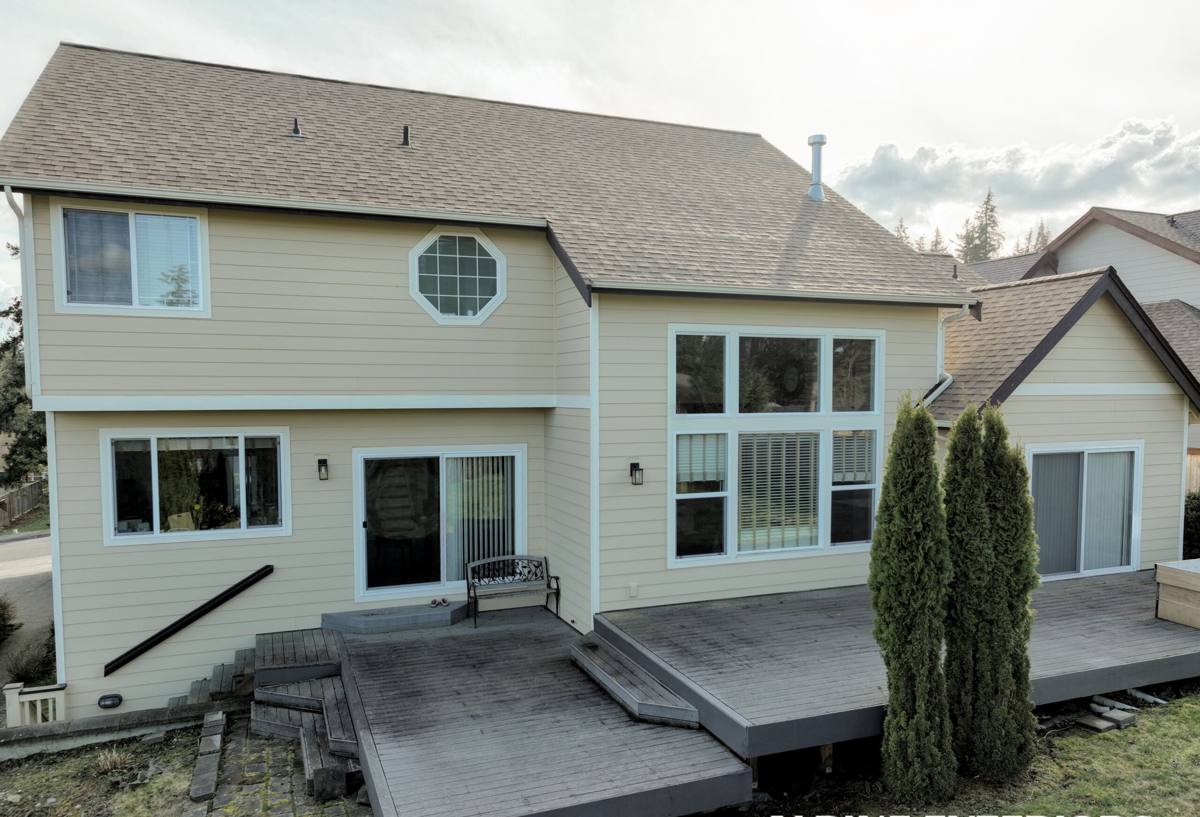
What Salt Air, Rain, and Moss Actually Do to a Deck
It helps to understand the three things working against a deck here, because each one calls for a different response in materials and design.
Salt air and corrosion
Airborne salt from Puget Sound accelerates corrosion on any exposed metal — fasteners, joist hangers, railing brackets, structural screws. Standard electro-galvanized hardware that might last for years in a drier, inland part of the county can start showing rust streaks and pitting much sooner this close to the water. Once a fastener corrodes, it loses holding strength long before it looks obviously bad, which is part of what makes this an easy thing to overlook.
Driving rain and moisture intrusion
Western Washington rain doesn't just fall straight down — wind-driven rain gets pushed sideways into ledger boards, under railing posts, and into any gap where flashing is missing or installed wrong. The point where a deck attaches to the house (the ledger) is the single most common place we find rot on decks we're asked to repair or rebuild, because that's where water gets trapped against the house framing if it isn't flashed correctly.
Moss and organic growth
Wherever there's shade, moisture, and a surface for spores to land, moss and algae will eventually show up on a deck in this region. Beyond looking bad, moss holds moisture against the decking surface and turns some materials genuinely slippery and dangerous underfoot, especially on stairs.
Decking Material Comparison for a Wet, Salt-Exposed Site
There's no single "best" decking material for every home — it depends on your budget, how much upkeep you want to take on, and how close to the water you are. Here's how the common options actually perform under Mukilteo conditions.
| Material | Moisture & Salt Behavior | Maintenance | Typical Lifespan Here |
|---|---|---|---|
| Pressure-treated wood | Resists rot chemically but still absorbs moisture; needs sealing to perform well near salt air | Annual cleaning and re-sealing/staining | 10-15 years with upkeep |
| Cedar | Naturally moisture-resistant, ages to gray without sealing, but softer and can show wear near the water | Regular cleaning; sealing recommended to slow graying and cupping | 15-20 years with upkeep |
| Capped composite | Cap layer resists moisture absorption and salt staining well; core doesn't rot | Occasional washing, no sealing or staining | 25+ years |
| PVC decking | Fully synthetic, no wood fiber to absorb moisture; very stable near salt air | Occasional washing | 25+ years |
Composite and PVC cost more upfront, but for a deck that's exposed to salt spray or heavy shade, the reduced maintenance burden is a real, honest trade-off worth weighing — you're not fighting moss and re-sealing every summer. Wood costs less to install but asks more of you every year to keep it performing. Neither choice is wrong; it's about matching the material to how much maintenance time you actually want to spend.
Framing and Fasteners: Where Decks Actually Fail First
The decking surface is what you see, but the framing underneath is what determines whether the deck is safe in ten years. This is the part of the job that's easy to shortcut and hard to inspect once it's covered up.
- Ledger flashing: The connection to the house needs proper metal flashing and moisture barrier detailing, not just lag bolts through the siding.
- Fastener grade: Near the water, we favor stainless steel or heavy hot-dip galvanized structural screws and hangers over standard electro-galvanized hardware, which corrodes faster in salt air.
- Joist protection: Flashing tape over the tops of joists keeps standing water from soaking into end grain, which is where rot typically starts.
- Post bases: Posts should sit on raised metal bases, never buried in concrete or sitting directly on a damp surface, so they're not constantly wicking moisture.
- Footing depth: Footings need to go below the frost line and be sized for the actual load and soil conditions on your lot.
None of this is visible once the decking boards go down, which is exactly why it matters who's doing the work and how carefully they follow through on it.
Design Choices That Fight Back Against Moss and Standing Water
A deck's shape and layout affect how much moss and mildew it grows just as much as the material choice does. A few design decisions make a real difference over the life of the deck.
Slope and drainage
Decking should be built with a slight slope away from the house so water sheds off rather than pooling. Boards installed dead level, especially in a shaded spot, hold water longer and grow moss faster.
Board gaps and airflow
Proper spacing between boards lets air circulate and water drain through rather than sitting on the surface. Too tight, and the deck stays damp; too wide, and small debris and moisture collect between boards instead.
Under-deck ventilation
For raised decks, keeping the space underneath from becoming a permanently damp, shaded pocket helps reduce moss and mildew both on the underside of the deck and on the ground below it.
Sun exposure and layout
Where possible, we talk through how the deck's shape and any attached structures (like a pergola or roof) affect how much shade falls on the surface, since shaded, north-facing decks are the ones that need the most moss management over time.
Permits, Guardrails, and Local Code Requirements
Deck construction in Snohomish County and within Mukilteo city limits is subject to building permit requirements once a deck exceeds certain height or size thresholds, and code covers things like guardrail height, baluster spacing, stair rise and run, and footing requirements. These requirements exist because a deck is a structure people stand on, and getting the structural details wrong isn't something you find out about until it's a real problem.
We handle the permit and inspection process as part of the job rather than treating it as optional paperwork. That includes making sure guardrails meet the required height and spacing, stairs meet rise-and-run limits, and the ledger attachment and footings are documented and inspected before they're covered up.
Our Deck Building Process
- On-site assessment: We look at your home's ledger wall, grade, drainage, and sun/shade exposure before recommending a design or material.
- Design and material selection: We walk through the honest trade-offs between wood, cedar, composite, and PVC based on your budget, maintenance preference, and the site's exposure.
- Permitting: We prepare and submit what's required for your project and coordinate inspections at the appropriate stages.
- Framing and structural work: Ledger flashing, footings, posts, and joists are built to the fastener and flashing standards described above, not the minimum that will pass a quick glance.
- Decking, railing, and finish work: Boards, railings, stairs, and any trim are installed with proper spacing and fastening for the material chosen.
- Final walkthrough: We go over the completed deck with you, including basic care for whatever material you chose, before calling the job done.
Keeping Your New Deck Looking Good Through Moss Season
However well a deck is built, it still needs some seasonal attention in this climate. What that attention looks like depends on the material, but the basics apply across the board.
- Sweep off leaves, needles, and debris regularly, especially in the fall, so they don't trap moisture against the surface.
- Rinse or wash the deck a couple of times a year to clear early moss growth before it establishes, particularly in shaded areas.
- Check that gaps between boards stay clear of compacted debris so water can keep draining through.
- For wood and cedar decks, plan on re-sealing or staining on a regular schedule rather than waiting until it visibly needs it.
- Look over fasteners, railing connections, and stair treads once a year for early signs of rust, looseness, or soft spots.
- Keep gutters and downspouts near the deck clear so runoff isn't being dumped directly onto or under the structure.
Why It Matters Who Builds Your Deck in Mukilteo
A lot of deck problems we get called out to repair aren't failures of the decking material — they're failures of decisions made during framing that nobody could see once the job was finished: the wrong fastener grade, missing ledger flashing, a footing that didn't go deep enough. A crew that works in Mukilteo regularly already knows which details matter more here than they would somewhere drier and further inland, and builds to that standard by default rather than by exception.
That local familiarity also means fewer surprises with permitting and inspections, since the process and expectations are the same ones we work with on every project in the area. When you're comparing bids, it's worth asking directly how a contractor handles ledger flashing, what fastener grade they use, and how they account for drainage and shade in the design — the answers tell you a lot about how the deck will hold up in five or ten years, not just how it looks on day one.
If you're planning a new deck or replacing one that's showing its age, we're happy to come take a look and talk through what your home and site actually need. Reach out for a free, no-pressure estimate using the form below.