 Everett
 Why Mukilteo Homes Wear Out Their Siding Faster Than You'd Expect
Mukilteo sits right on Puget Sound, which means homes here take on a combination of weather stress that inland Snohomish County neighborhoods simply don't deal with. Salt-laden air moves off the water and settles on exterior surfaces, driving rain comes in sideways during winter storms, and the region's long, damp shoulder seasons give moss and algae months at a time to get established on north-facing walls and anything shaded by mature trees. Individually, none of these are dramatic. Together, over ten or fifteen years, they're exactly what breaks down siding that wasn't built or installed for this environment.
Salt air is corrosive to exposed metal fasteners and trim, and it accelerates the breakdown of paint films faster than a typical inland exposure. Driving rain doesn't just wet the surface of your siding — wind-driven moisture gets forced up and under laps, seams, and trim joints that would stay dry in a calmer climate. And moss doesn't just look bad; it holds moisture against the wall surface, which is a problem for any siding material that isn't dimensionally stable when wet.
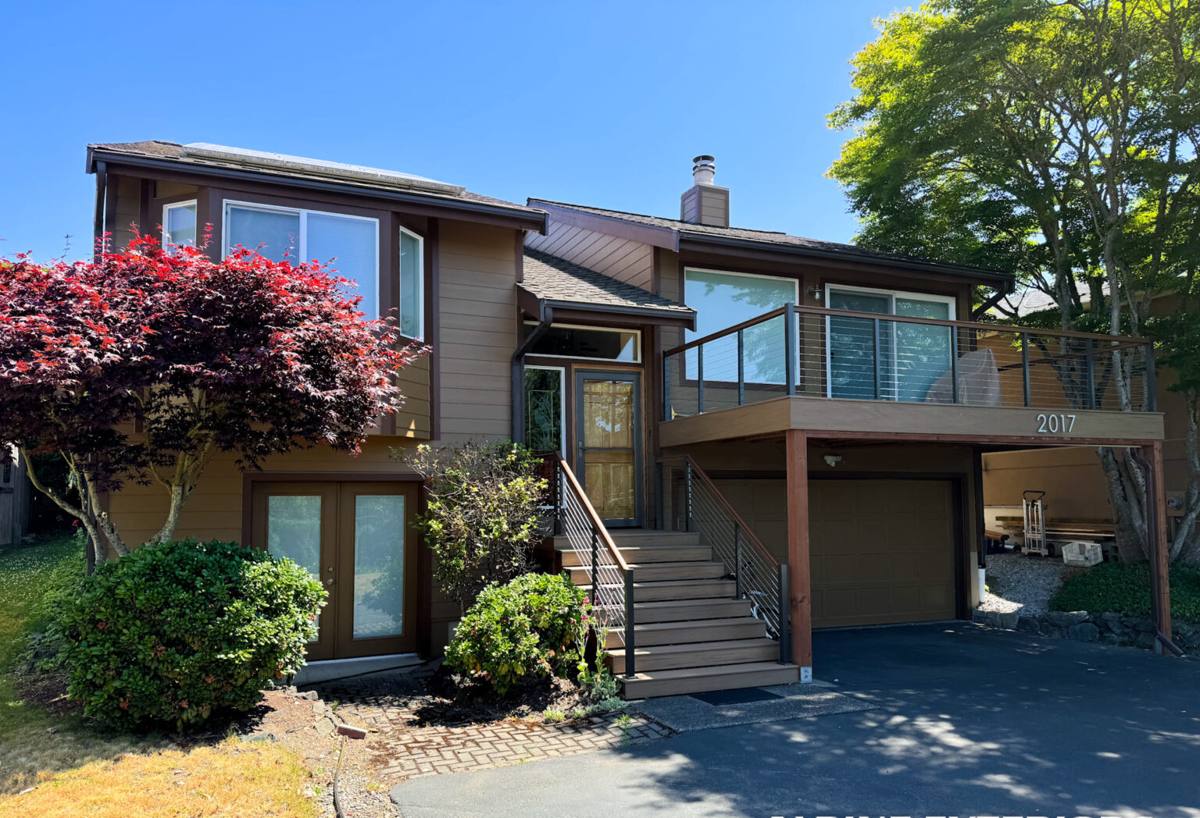
How to Tell Your Mukilteo Home's Siding Is Past the Point of Repair
Not every siding problem means a full replacement. But there's a point where patching stops making sense and a full replacement becomes the more honest recommendation. Signs we look for on a Mukilteo home include:
- Soft or spongy spots when you press on the siding, especially near the bottom courses and around window trim
- Paint that's failing in the same spots year after year, no matter how often it's repainted
- Persistent moss or algae growth that returns within a season of cleaning
- Visible gaps, warping, or cupping in individual boards or panels
- Rust streaking from fasteners or trim, which is common with salt-air exposure on the wrong materials
- Interior signs — musty smells, peeling interior paint, or soft drywall near exterior walls — that point to moisture getting past the siding entirely
If you're seeing two or more of these, especially on the sides of the house that face the water or prevailing weather, it's worth a real inspection rather than another round of caulk and touch-up paint.
What a Correct Siding Replacement Actually Involves
A siding replacement isn't just swapping old boards for new ones. Done correctly, it's a full building-envelope job, and skipping steps here is exactly how a brand-new siding job ends up with the same rot problems five years later.
Full Tear-Off, Not Overlay
We remove the old siding down to the sheathing rather than installing new siding over the old. Overlaying hides — and traps — whatever moisture damage or rot is already there, which is a real risk on a house that's spent years absorbing driving rain and salt air.
Sheathing Inspection and Repair
Once the old siding is off, we can actually see the wall. Any soft, water-damaged, or rotted sheathing gets cut out and replaced before anything new goes up. This is the step that gets skipped when a job is priced too low, and it's the step that matters most for a coastal Snohomish County home.
Weather-Resistive Barrier and Flashing
A correctly detailed water-resistive barrier, properly lapped and taped, combined with correct flashing at windows, doors, and every horizontal trim transition, is what actually keeps wind-driven rain out of the wall assembly. The siding itself is the second line of defense — the barrier and flashing behind it are the first, and in a driving-rain climate like Mukilteo's, they matter just as much as the visible product.
Correct Fastening and Clearances
Manufacturer-specified fastener patterns, proper nail penetration, and correct clearance from grade, decks, and roof lines all affect how the siding performs over time — particularly around moisture wicking at the bottom edge, which is the single most common failure point we see on older siding jobs near the water.
Why We Only Install James Hardie Fiber Cement
We install James Hardie fiber cement siding exclusively. We don't install vinyl, LP SmartSide, primed spruce, cedar, or other fiber cement brands, and that's a deliberate standard, not a limitation in what we're capable of installing.
Fiber cement is non-combustible and dimensionally stable — it doesn't expand, contract, warp, or absorb moisture the way wood-based or engineered-wood products can, which matters directly in a climate with a long wet season and persistent moss pressure. Hardie's ColorPlus factory-applied finish is baked on under controlled conditions rather than field-painted, which gives it better adhesion and color consistency over time than a job-site paint job, and it holds up better against the fading and chalking that salt air and UV exposure cause on lesser finishes. Hardie's HZ5 product line is specifically engineered for wetter, colder climate zones like ours, and the company backs its products with a strong, transferable limited warranty when installed to spec — which is a real consideration for anyone who may sell the home down the road.
None of that means other products are junk. It means that after years of tearing out failed siding and repairing water damage on Snohomish County homes, we standardized on the one system we're confident holds up here without surprises.
James Hardie Product Lines for a Mukilteo Home
| Product | Best Suited For | Why It Fits Mukilteo |
|---|---|---|
| HardiePlank lap siding | Most single-family homes, classic and modern styles | Wide range of profiles and ColorPlus finishes; strong track record in wet coastal climates |
| HardiePanel vertical siding | Modern facades, accent walls, gables | Clean vertical lines that shed rain efficiently when detailed correctly |
| HardieShingle siding | Craftsman and cottage-style homes, accent gables | Staggered or straight-edge shingle look without the moisture sensitivity of real wood shingles |
| HardieTrim boards | Window, door, and corner trim on any of the above | Matches the fiber cement performance of the field siding instead of mixing in wood trim that weathers differently |
Our Siding Replacement Process, Start to Finish
Homeowners generally want to know two things upfront: how long it takes, and how disruptive it is. Here's the general sequence for a full siding replacement on a typical Mukilteo home.
- On-site inspection and estimate — we walk the exterior, check for soft spots and moisture entry points, and give you an honest read on scope before any contract is signed.
- Material selection — choosing HardiePlank, HardiePanel, or HardieShingle profiles and ColorPlus colors based on your home's style and exposure.
- Tear-off and disposal — old siding and trim removed and hauled away.
- Sheathing repair — any damaged sheathing identified and replaced before moving forward.
- Weather barrier and flashing installation — the part of the job that determines whether the wall stays dry for the next 30 years.
- Siding and trim installation — installed to Hardie's fastening and clearance specifications, not shortcuts.
- Final inspection and cleanup — walk-through with the homeowner, site cleared of debris and old material.
Weather is a real factor in scheduling here — we work around Snohomish County's wet stretches rather than installing over damp sheathing, which is a corner some crews cut to keep a schedule.
What Affects the Cost of Siding Replacement in Mukilteo
Every home is different, but the same handful of factors drive most of the variation in price. We won't quote a number without seeing the house, but this is what typically moves the estimate up or down.
| Factor | Why It Matters |
|---|---|
| Extent of sheathing damage found during tear-off | Rot repair is priced separately from siding installation and can't be known until the old siding is off |
| Home size and wall complexity | More corners, gables, and trim details mean more labor and material cuts |
| Siding profile and finish choice | Lap widths, textures, and ColorPlus color selections carry different material costs |
| Trim and accent work | Shingle accents, band boards, and custom trim add labor beyond a straightforward lap-siding install |
| Access and site conditions | Steep lots, limited driveway access, or extensive landscaping near the walls can affect setup time |
Why Hiring a Crew That Already Works in Mukilteo Matters
A siding crew that regularly works Snohomish County's waterfront and near-waterfront neighborhoods already knows what to check for that a crew from outside the region might miss: where moss tends to establish first, which wall orientations take the worst of the driving rain, and how salt exposure affects fastener and trim choices over time. That local pattern recognition shows up in the small decisions — flashing details, fastener selection, where extra attention goes during the pre-installation inspection — that separate a siding job that lasts decades from one that needs attention again in five to seven years.
It also matters for accountability. A contractor with an established local presence has a reputation in the community to protect and is easier to reach if a warranty question comes up years down the road, compared to a traveling crew that isn't based in the area.
Preparing for a Siding Replacement: A Homeowner Checklist
- Walk your home's exterior and note any soft spots, staining, or moss concentrations before the estimate visit
- Trim back shrubs, vines, and tree branches touching exterior walls
- Move outdoor furniture, planters, and decorations away from the work area
- Ask your contractor how they handle sheathing repair pricing if damage is found
- Confirm what warranty applies to both materials and labor, and get it in writing
- Plan for noise and limited exterior access during the tear-off and install phases
- Ask about paint or finish touch-up availability years down the road if ColorPlus color matching is ever needed
If your Mukilteo home's siding is showing its age, we're happy to take a look and give you a straightforward, no-pressure assessment of what's actually going on and what it would take to fix it right. Use the form below to request a free estimate.