 Everett
 Windows for a Waterfront Community, Not a Generic Suburb
Mukilteo sits right on Puget Sound, and that location shapes what a window has to do here that it doesn't have to do twenty miles inland. Homes facing the water take a steady diet of salt-laden air, wind-driven rain off the Sound, and a long gray moss season that keeps everything damp for months at a stretch. A window that's fine in a sheltered Snohomish County subdivision can start failing years early on a bluff-facing wall in Mukilteo. Custom window work here isn't about upgrading looks — it's about matching the product and the installation to what the site actually throws at the house.
"Custom" also means something practical in this town beyond style: a lot of Mukilteo housing stock includes older homes with non-standard openings, additions built to capture a water view, and mid-century construction that was never built to modern window sizes. Off-the-shelf replacement windows don't always fit those openings without reframing, which adds cost and risk if it's not handled correctly. Custom-sized and custom-configured windows solve that without cutting into structural framing you don't want to touch.
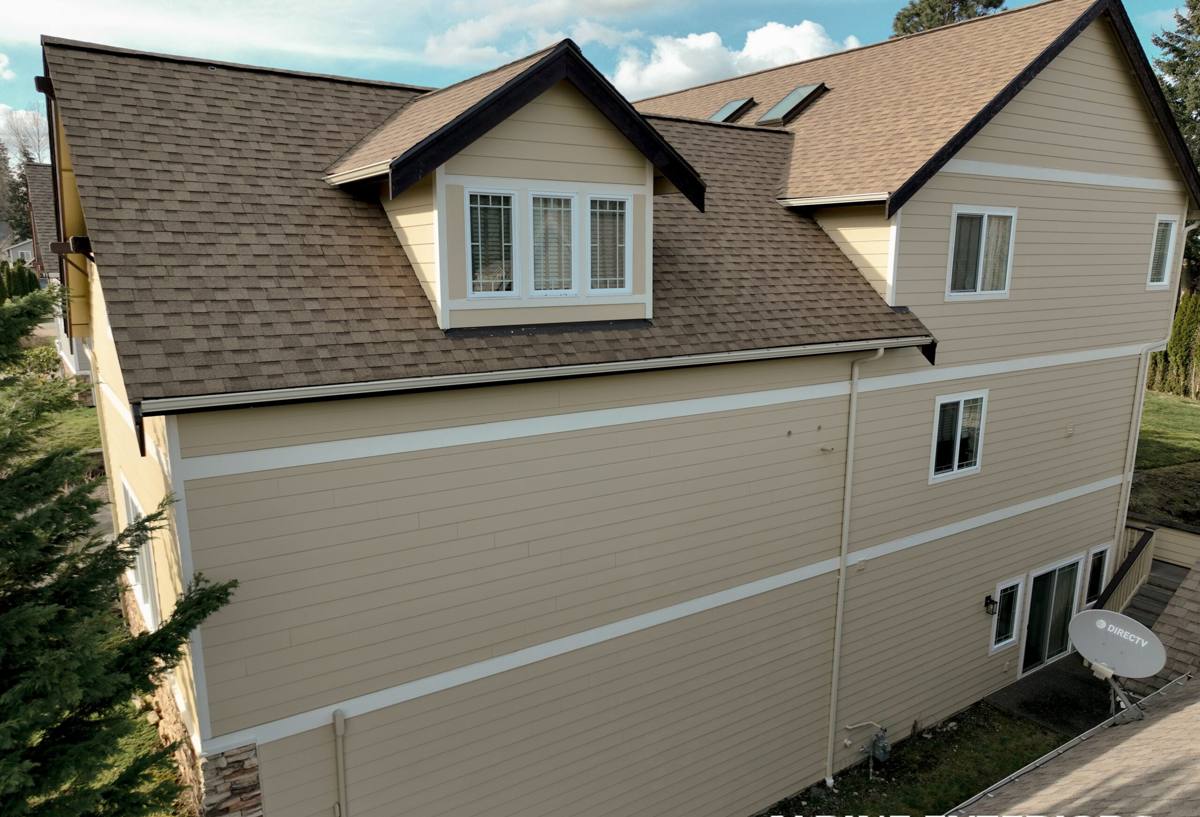
What Puget Sound Weather Actually Does to a Window
Salt Air and Hardware Corrosion
Airborne salt from the Sound accelerates corrosion on anything metal — hinges, locks, balance systems, and especially aluminum frames or components. It doesn't take a direct waterfront lot to feel this; homes several blocks up the hill still get enough salt exposure over years to pit hardware and pull finish off cheaper cladding. Window hardware and frame materials need to be rated for coastal exposure, not just general Pacific Northwest use.
Wind-Driven Rain
Storms coming off the water don't just fall straight down — wind pushes rain sideways into wall assemblies, and that means water gets tested against every seam, joint, and flashing detail a window has. A window that's watertight in a still-air test can still leak under driving rain if the installation flashing wasn't detailed for lateral water pressure. This is one of the most common causes of hidden rot we find behind older windows in this area.
Moss, Mildew, and Constant Dampness
Snohomish County's wet season runs long, and homes near the water stay damp even longer thanks to fog and marine moisture. Wood sills and frames that aren't properly sealed or that use lower-grade cladding will hold moisture, grow mildew, and soften over a handful of seasons. Anything at the base of the window — sill pans, drainage paths, weep systems — has to actually move water out, not just slow it down.
Temperature Swings and Condensation
Puget Sound moderates temperatures, but the humidity plus indoor heating in cooler months creates real condensation pressure on glass and frames. Poorly rated glass packages fog, sweat, and eventually let moisture into the frame cavity itself, which is a slower but just as damaging problem as bulk water intrusion.
Choosing a Frame Material for a Coastal Home
There's no single "best" window material — there's a best fit for your exposure, your budget, and how much upkeep you want to take on. Here's how the common options actually compare for a Mukilteo setting:
| Frame Material | Coastal Performance | Maintenance | Typical Trade-offs |
|---|---|---|---|
| Vinyl | Good — won't corrode or rot | Low | Most affordable; fewer color/finish options; can look less premium on higher-end homes |
| Fiberglass | Excellent — very stable in wet, salty conditions | Low | Higher upfront cost; strong long-term value on exposed elevations |
| Wood-clad (exterior clad, wood interior) | Good if cladding and flashing are done right | Moderate | Attractive interior finish; the cladding must be sealed correctly at every joint or moisture gets trapped against the wood |
| Aluminum | Fair — needs marine-grade finish or it corrodes faster near the Sound | Moderate | Strong and slim sightlines; not our default recommendation for direct waterfront exposure without upgraded coatings |
For homes with a direct, unobstructed view of the Sound, we generally steer people toward vinyl or fiberglass because they simply shrug off salt air and moisture with the least long-term fuss. Wood-clad is a fine choice further from direct exposure, or when the interior look matters more than minimizing maintenance, as long as the installer isn't cutting corners on the flashing behind the cladding.
What a Correct Custom Window Installation Actually Involves
The window product only does half the job. The other half is the installation detailing, and this is where most window problems in this area actually originate — not from a bad product, but from a rushed or incomplete install.
- Sill pan flashing: a sloped, sealed pan under the window opening that directs any water that gets past the window itself back outside the wall, instead of down into the framing.
- Head and side flashing integration: flashing at the top and sides has to shingle correctly with the water-resistive barrier and siding so water sheds down and out, never behind the window.
- Correct fastening method for the frame type: nailing-fin windows and block-frame (or "flush-fin") windows attach and seal differently, and using the wrong technique for the product is a common source of early leaks.
- Sealant that's rated for the exposure: not all caulks and sealants hold up to constant marine moisture and UV — the wrong one fails in a few years instead of a couple decades.
- Insulation of the gap between frame and rough opening: done without over-compressing the frame, which can bow it and cause operational problems.
- Interior and exterior trim sealed and finished properly so the whole assembly reads as one weathertight unit, not a window dropped into a hole.
Washington's energy code also sets minimum performance requirements for replacement windows — U-factor and, in some cases, solar heat gain coefficient — depending on the home and project scope. We account for this during product selection so you're not stuck with a window that doesn't meet code on the permit side.
Our Process, Start to Finish
- On-site assessment and measurement. We look at each opening individually — older Mukilteo homes rarely have perfectly uniform window sizes, and we'd rather catch framing issues now than during install.
- Product selection. We walk through frame material, glass package, and configuration options based on your home's exposure, your budget, and how the window needs to perform on that specific wall.
- Permitting, when required. Window replacement can trigger permit requirements depending on scope and whether it's a like-for-like swap or a size/structural change. We handle that conversation with the local jurisdiction so you're not guessing.
- Removal. Old windows come out carefully to protect the surrounding siding and framing, and we inspect the opening for hidden rot or water damage before anything new goes in — this is often where old flashing mistakes get discovered.
- Installation with full flashing and sealing detail. Sill pan, head flashing, side flashing, fastening, and sealant, done in the correct sequence — not shortcut order.
- Siding tie-in. Because we do siding as well as windows, we finish the trim and siding integration around the new window as one continuous weatherproofing system instead of leaving a seam for someone else to figure out later.
- Cleanup and walkthrough. Old materials hauled off, area cleaned, and we walk you through operation and any care recommendations specific to the product installed.
Why Windows and Siding Are Really One Job
Window leaks very often show up as siding problems, and siding problems very often show up as window leaks — the two systems share the same wall plane and the same flashing details. When a window contractor and a siding contractor are two separate companies pointing fingers at each other, the homeowner is the one stuck in the middle. Handling both trades together means one crew is accountable for the whole weatherproofing envelope around every opening, not just their piece of it. On a home taking direct wind-driven rain off the Sound, that continuity matters more than it would on a sheltered inland lot.
Signs Your Current Windows Are Losing the Fight
- Fogging or moisture between the panes of double- or triple-pane glass — a sign the seal has failed.
- Soft or discolored trim, siding, or drywall directly around a window frame.
- Windows that are hard to open, close, or lock — frames can warp from trapped moisture or age.
- Visible corrosion, pitting, or chalky residue on metal hardware or aluminum frames.
- Noticeable drafts or a cold wall around the window even when it's fully closed.
- Musty smell near a window, especially after a stretch of wet or windy weather.
- Rising heating costs without another clear explanation.
Any one of these on its own might be minor. Two or three together, especially on a wall that faces the water or prevailing wind, usually means the assembly behind the window needs attention, not just the glass.
Why a Crew That Already Works in Mukilteo Matters
A contractor who works waterfront and near-waterfront properties around Mukilteo regularly has already seen how differently a bluff-facing wall performs compared to a sheltered one two streets back, and that shapes product and detailing recommendations before a single window is ordered. It also means familiarity with the local permitting process, realistic expectations about weather windows for exterior work in this climate, and a track record you can actually check with neighbors rather than a name that showed up in a search result from out of the area. When something needs a callback years down the road, a local, established crew is the one still around to handle it.
Get a Straightforward Estimate
If your windows are original to an older home, showing wear from years of salt air and wet weather, or you're planning a renovation that includes new openings, we're glad to take a look and give you an honest read on what your home actually needs. There's no pressure and no obligation — just a straight assessment and a clear estimate using the form below.