 Everett
 When Mukilteo Siding Damage Isn't Cosmetic
A cracked board or a soft spot near the bottom of a wall rarely stays a small problem in Mukilteo. This is a waterfront community on Puget Sound, and homes here take a specific combination of punishment that inland siding doesn't see nearly as often: salt-tinged air moving off the water, winter storms that drive rain sideways into every seam and joint, and a moss and algae season that runs for most of the year under the Pacific Northwest's cloud cover and mature tree canopy. Individually, none of those forces is dramatic. Together, over years, they turn a hairline crack or a failed bead of caulk into water sitting behind the cladding where you can't see it.
That's the real reason siding repair deserves more attention here than a quick patch-and-paint. What looks like a cosmetic fix on the surface is often standing in for a moisture question underneath — and answering that question correctly is most of what separates a repair that lasts from one you're paying for again in two years.
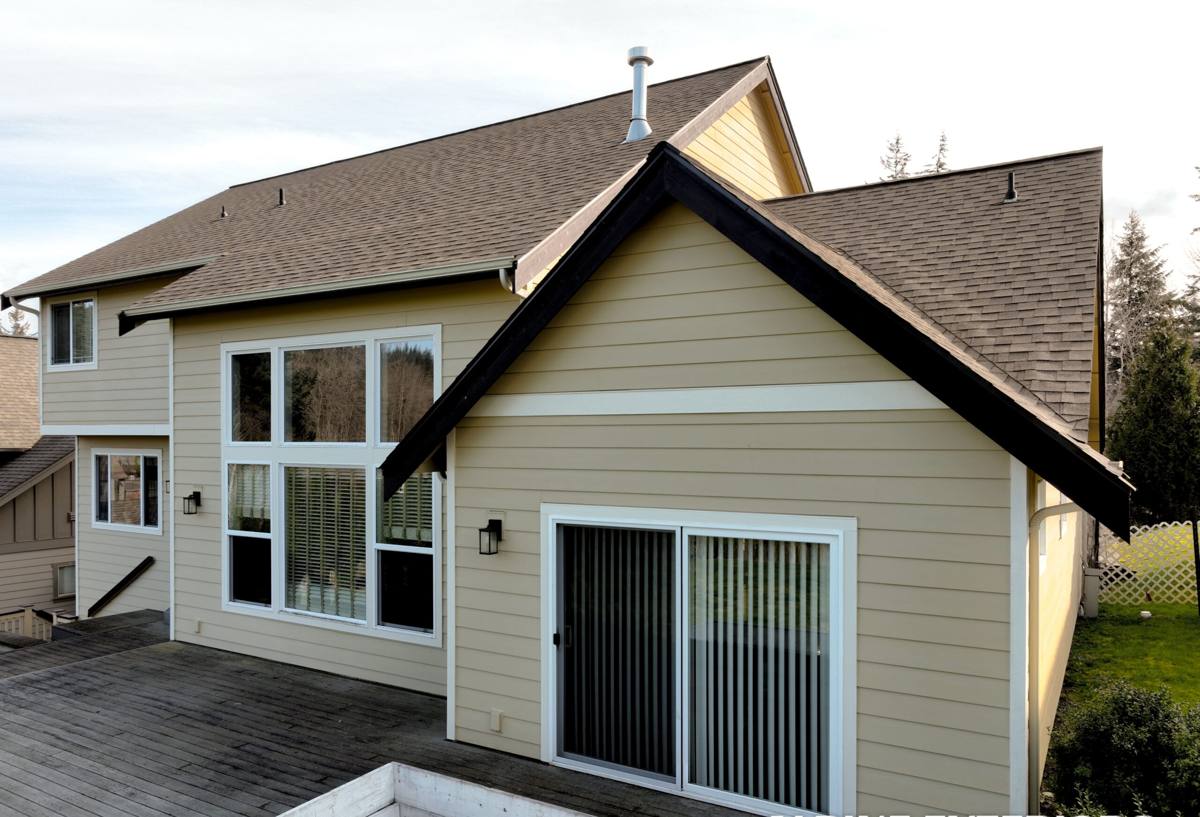
What a Small Problem on Mukilteo Siding Usually Means
Most repair calls we get start with something the homeowner describes as minor: a hairline crack near a butt joint, a stain bleeding down from a nail head, a corner trim board that's started to separate from the wall. On its own, any one of those can be a simple fix. The reason we treat every call as an inspection first and a repair second is that these symptoms are frequently the visible edge of moisture that's already gotten behind the board — and fiber cement siding, like any exterior cladding, is only as good as the water management system working behind it.
Common Culprits Around Mukilteo
- Salt-laden air near the water accelerating wear on fasteners, caulk joints, and exposed finish edges
- Wind-driven winter rain forcing moisture into gaps around window trim, corner boards, and butt joints rather than running off cleanly
- Moss and algae taking hold on shaded, tree-covered lots, holding damp against the siding surface longer than a sun-exposed wall would see
- Original caulk and sealant reaching the end of its service life at seams and penetrations, well before the siding itself is due for attention
None of these are unusual or a sign of a bad install. They're just what Snohomish County's marine climate does to any exterior wall over time, and why a repair visit here needs to look past the visible damage to what's happening behind it.
Repair vs. Replace: How We Make the Call
Not every damaged section needs a full re-side, and not every crack is "just cosmetic." The honest answer depends on how much of the wall is affected, what's happening behind the cladding, and how the existing siding was installed in the first place. Here's roughly how we think through it on a Mukilteo home:
| Factor | Points Toward Repair | Points Toward Replacement |
|---|---|---|
| Extent of damage | Isolated to one or two boards or a single wall section | Recurring damage across multiple walls or elevations |
| Moisture behind the wall | Dry sheathing and house wrap once the board is pulled | Soft sheathing, staining, or a musty smell at the wall cavity |
| Age and condition of the rest of the siding | Siding is otherwise sound and reasonably current | Siding is near or past its expected service life, or was a lower-durability product to begin with |
| Color and profile match | Matching material and finish are realistically available | Existing product is discontinued, faded, or mismatched beyond a clean blend |
| Root cause | A one-time or localized failure (impact damage, one bad seam) | A systemic issue — flashing, drainage plane, or original installation error |
We'll walk you through where your specific situation lands on that spectrum before we recommend either path. A repair that's scoped honestly is often the right call; a repair that's papering over a bigger problem just delays a more expensive fix.
What a Correct James Hardie Repair Actually Involves
We install and repair James Hardie fiber cement exclusively, which means every repair we do follows the same manufacturer installation standards as a new install — not a workaround. That starts with confirming what's happening behind the visible damage: checking moisture levels with a meter, pulling the affected board to inspect the house wrap and flashing underneath, and identifying whether the failure is at the board itself, the seam, or the water management layer behind it.
From there, a correct repair means sourcing matching material in the right product line, profile, and ColorPlus factory finish; cutting and fastening it to Hardie's published spec for our climate zone, including proper fastener spacing and clearance at butt joints; and re-integrating flashing and house wrap correctly at the repair point so water sheds the way it's supposed to rather than finding a new path in behind the patch.
Why We Don't "Patch and Paint"
It's tempting to caulk a crack, dab on some touch-up paint, and call it done — and for a truly cosmetic nick, that's sometimes genuinely fine. But when a repair is standing in for a moisture problem, caulk and paint just seal the symptom while the cause keeps working behind the wall. We'd rather tell you honestly that a section needs to come off and be redone correctly than hand you a fix that looks good for one dry season and fails again the next wet one.
Why the Material Behind the Repair Matters
We occasionally get called to look at repair needs on homes sided in vinyl, LP SmartSide, or cedar. We'll always give you an honest assessment of what we see. But our standard — the one we hold our own work to — is James Hardie fiber cement, and if a repair on one of those other products turns out to be more than a minor fix, we'll tell you why we'd recommend a Hardie re-side rather than continuing to patch a product with a different maintenance and moisture profile. That's not a knock on those products in isolation; it's a reflection of the trade-offs we've weighed and the standard we've chosen to build our business around: fiber cement that doesn't feed moss or absorb water the way wood-based products can, a factory-cured ColorPlus finish that doesn't depend on field paint conditions, and a climate-engineered HZ5 board built for exactly the wet, marine conditions Mukilteo sees.
Doing This Work in Mukilteo Specifically
Mukilteo isn't a uniform stretch of siding — it's a mix of waterfront lots facing Puget Sound directly, hillside homes with real elevation and wind exposure, and streets tucked under mature evergreen canopy that stay damp and shaded most of the year. Each of those settings shows different repair patterns. Waterfront-facing walls tend to show more finish wear and fastener corrosion from salt air. Shaded, tree-covered lots tend to show more moss growth and slower drying after rain. Homes near the ferry terminal and the busier corridors see a bit more airborne grime that can mask early signs of a failing seam. Knowing which pattern applies to your property changes what we look for first when we show up.
Our Repair Process, Start to Finish
- On-site inspection of the damaged area and a broader check of the wall for related issues you may not have noticed
- Moisture check behind the cladding where failure is suspected, not just a look at the visible surface
- Honest scope: repair, partial section replacement, or a recommendation to consider a larger re-side, explained in plain terms
- Matching material sourced in the correct Hardie product line, profile, and ColorPlus finish
- Repair executed to manufacturer fastening and flashing spec, integrated properly with the existing water management layer
- Final walk-through so you can see exactly what was done and why
What Repair Costs Usually Depend On
We won't quote a number without seeing the wall, but the honest cost drivers on most Mukilteo repair jobs are consistent: how much of the wall is affected, whether the sheathing or house wrap behind it needs attention too, how accessible the area is (a second-story gable over a steep waterfront slope takes longer than a ground-level wall), and how close we can get to an exact color and profile match. A small, localized repair with no hidden moisture issue is a modest job. A repair that uncovers water damage behind the wall costs more because the fix has to address the cause, not just the symptom — but that's also the repair that actually protects the house going forward.
A Practical Checklist Before You Hire a Mukilteo Siding Repair Contractor
- Ask whether they'll check for moisture behind the wall, not just repair what's visible
- Ask specifically about experience with James Hardie fiber cement repair, not just general siding work
- Confirm they're licensed and bonded to work in Washington and will pull a permit if the scope requires one
- Get a written scope that states exactly what's being repaired and why, before work starts
- Ask how they'll match the existing color and profile, and what happens if an exact match isn't available
- Be wary of a quote that skips inspection entirely and jumps straight to a patch price
If you're seeing cracked, stained, or damaged siding on a Mukilteo home and want an honest look at what's actually going on behind it, we're happy to come take a look. There's no pressure and no charge for the estimate — just a straight assessment of what your siding needs.