 Everett
 Why Bayside's Exposure Is Different From an Inland Everett Lot
Bayside sits above Port Gardner Bay, and that position is exactly what makes it a demanding spot for exterior siding. Homes here catch weather that inland Snohomish County lots simply don't see as often: salt-tinged air coming off the water, wind-driven rain that hits water-facing walls almost horizontally during a fall or winter blow, and a moss season that, thanks to tree cover and near-constant dampness, runs a good chunk of the year rather than just a few soggy months. None of that means Bayside is a bad place to live — it's a beautiful spot to have a house — but it does mean the siding on that house has to work harder than siding on a home a mile inland with less water exposure and more sun.
We install James Hardie fiber cement exclusively, and a large part of why is that we've seen firsthand what this specific combination of salt air, driving rain, and shaded dampness does to lesser siding systems over time. This page walks through what Bayside's climate actually demands from siding, what a correctly installed Hardie job looks like, and why working with a crew that already understands this neighborhood's exposure pattern is worth something.
Salt Air and Coastal Exposure
Airborne salt is a slow, steady stressor. It doesn't destroy siding overnight, but over years it can accelerate the breakdown of lower-grade coatings, corrode exposed metal fasteners and trim, and cause fading and chalking on finishes that weren't engineered for marine air. A siding product's finish system matters as much as the substrate underneath it here — a strong board with a weak factory finish will still show its age early on a bay-facing wall.
Driving Rain at Elevation
Many Bayside homes sit on elevated, bluff-facing lots that catch wind and rain coming straight off the water with little to break it up. That means water-facing walls, window and door openings, and any penetration in the siding take more direct, sustained moisture pressure than a sheltered inland wall would. If the water management behind the siding — the flashing, the weather-resistant barrier, the laps — isn't done correctly, that pressure is exactly what finds the gap.
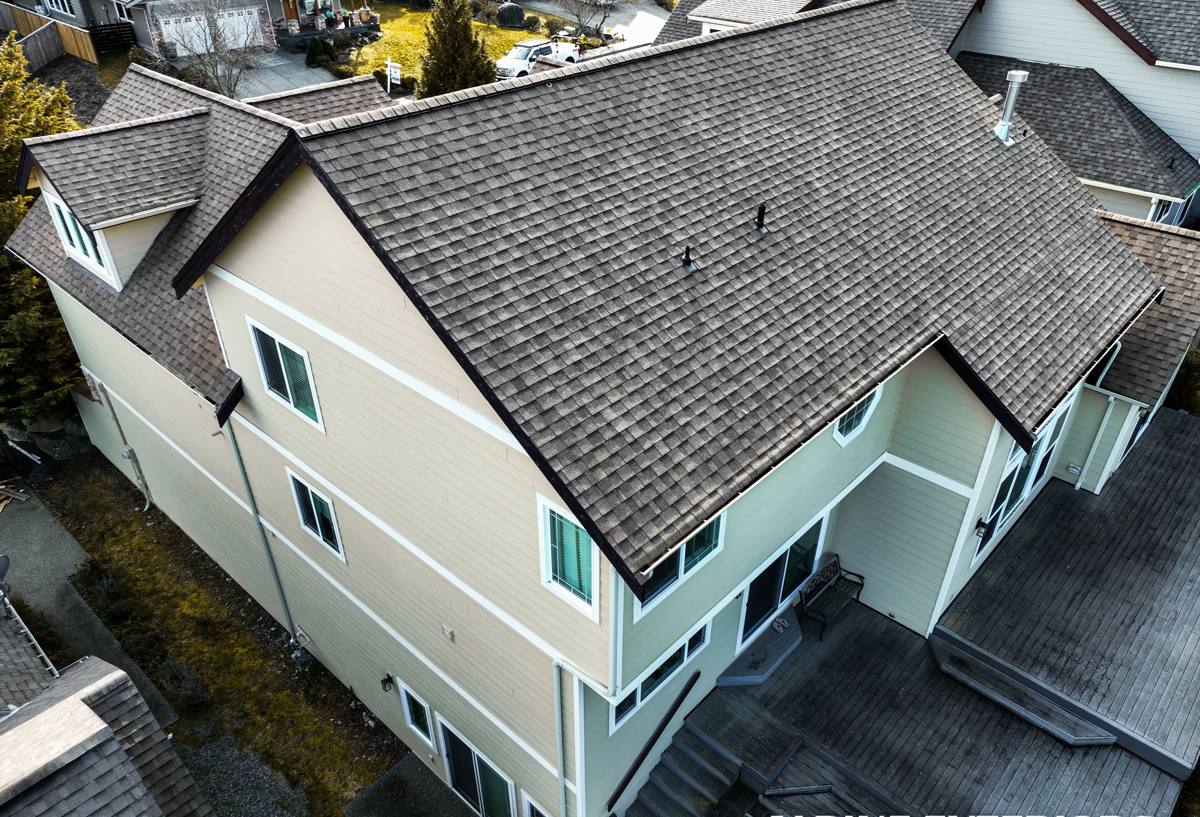
Why James Hardie Fits This Environment
James Hardie fiber cement is non-combustible, dimensionally stable, and, unlike wood-based products, it isn't an organic material that rot fungus or moss roots can feed on directly. That's a meaningful advantage on a lot that stays damp and shaded for long stretches. The ColorPlus factory finish is also engineered to resist fading and hold its color better than field-applied paint, which matters on a wall that's taking on salt air and UV exposure day after day.
Built for This Climate Zone: The HZ5 Line
James Hardie engineers its siding into region-specific HZ (Hardie Zone) products rather than selling one board everywhere. The HZ5 line is built for wetter, more moisture-challenged climates like western Washington, with formulation and testing aimed at this kind of exposure rather than a generic national spec. On a Bayside project, using the product line actually engineered for this climate — not just "fiber cement" in general — is part of what makes the installation hold up.
What a Correct Installation Actually Involves
Fiber cement siding is only as good as the water management behind it. A board can be the right product and still fail early if the details underneath it are wrong — and on a bay-facing wall taking direct wind-driven rain, there's less margin for those details to be off.
Flashing and Water Management
Every window, door, and penetration needs correctly installed flashing that directs water out and away rather than behind the siding plane. The weather-resistant barrier underneath needs to be continuous and properly lapped, shingle-style, so water moving down the wall stays on the outside of it. On elevated, water-facing walls, this isn't a place to cut corners — it's the layer that actually keeps a driving rain event from becoming a moisture problem behind the siding.
Fastening, Gapping, and Finish Details
James Hardie publishes specific fastener patterns, minimum gaps between boards and trim, and clearance requirements from rooflines, decks, and grade. Boards installed too tight against trim or too close to grade can trap moisture and defeat the product's own moisture resistance. Cut edges need to be sealed or primed per manufacturer instructions, since a factory finish only protects the face of the board — a raw cut edge exposed to constant dampness is a weak point regardless of how good the board itself is.
| Factor | James Hardie Fiber Cement | Vinyl | Cedar / Wood |
|---|---|---|---|
| Behavior in salt air and driving rain | Engineered for this exposure (HZ5); factory finish holds up well | Can warp, fade, and become brittle with sun and temperature swings | Absorbs moisture; prone to rot and splitting without vigilant upkeep |
| Moss and algae resistance | Not an organic material moss can root into; surface growth cleans off | Doesn't rot, but algae and mildew can still stain the surface | Moss and moisture together accelerate wood decay |
| Fire performance | Non-combustible | Combustible; can melt or deform under heat | Combustible |
| Typical maintenance | Periodic gentle rinse; check caulk lines | Low, but hard to repair without full-panel replacement | Regular refinishing, sealing, and rot inspection |
| Expected service life when installed to spec | Multiple decades | Variable; shorter in harsh exposure | Shorter without consistent maintenance |
Moss and Algae: Managing a Season That Runs Most of the Year
Shaded, tree-lined lots near the water hold moisture longer than open, sunny lots, and that's exactly the recipe moss and algae need. On wood-based siding, that combination of dampness and organic growth is a real threat, because moss can hold water against the surface long enough for rot to set in underneath. Fiber cement doesn't give moss the same foothold — there's no organic material for it to feed on — but that doesn't mean a Hardie wall stays spotless on its own. Surface growth can still take hold on north-facing or heavily shaded sections, and it's worth rinsing off periodically before it builds up.
Beyond the siding itself, a few property-level habits go a long way on a shaded Bayside lot: keeping gutters clear so overflow isn't running down the wall face, and keeping nearby vegetation trimmed back enough that walls get some airflow and don't stay damp for days after a storm.
Our Process on a Bayside Project
Every Bayside home faces the water a little differently — some sit right at the edge of the bluff and take the brunt of it, others are set back with more tree cover and less direct wind. We start by assessing your specific exposure rather than treating every project the same way, then walk through product line, color, and finish decisions with that exposure in mind.
- On-site assessment of wall orientation, exposure to wind-driven rain, and existing moisture or rot conditions
- Check of the sheathing and framing underneath the old siding before anything new goes up — problems found now are far cheaper to fix than problems found later
- Product line, color, and finish selection suited to your specific exposure, not a one-size-fits-all recommendation
- Installation following manufacturer flashing, fastening, and clearance specifications, not shortcuts
- Final walk-through so you understand what was done and how to care for it going forward
Why Local Experience in Bayside Matters
A crew that has already worked on homes in this neighborhood has seen how the bay's wind and rain actually behave against these lots, which walls tend to take the worst of it, and what moisture problems tend to look like when they show up here specifically. That's not something you can fully substitute with a generic install checklist. It also means fewer surprises with Everett and Snohomish County permitting, since the process for a re-side or new installation is familiar rather than something being figured out for the first time on your project.
A few things worth confirming with any siding contractor before you hire them for a Bayside project:
- Are they a certified James Hardie installer, and can they speak specifically to the HZ5 product line
- Have they worked on homes with similar water exposure, not just siding in general
- Are they licensed and bonded to work in Washington, and will they pull the required permit
- Will they check the sheathing condition before installing over it, not just install over whatever is there
- Do they show you the actual flashing and fastening details they'll use, not just the finished-look color options
Caring for Your Siding After Installation
James Hardie siding installed to spec doesn't ask for much, but a little attention goes a long way on a bay-facing home. A gentle rinse a couple of times a year keeps salt residue and surface growth from building up. It's worth a periodic look at caulk lines around windows, doors, and trim, since caulk is a maintenance item on any siding system and tends to be the first thing to need attention. Keeping gutters clear and vegetation trimmed back from the walls helps keep moisture from lingering against the siding longer than it needs to.
If you're weighing a re-side or new siding install on a Bayside home and want an honest read on what your specific exposure calls for, we're happy to take a look and put together a free, no-pressure estimate.