 Everett
 Composite Decking for Lynnwood Homes in Snohomish County's Wet Climate
Lynnwood sits in one of the wettest, greenest corners of Snohomish County, and that's exactly the environment that makes composite decking worth a serious look. Between the driving rain off the Sound, the humidity that never fully clears in the shoulder seasons, and the moss that seems to find every shaded corner of a yard, outdoor living spaces here take a beating that homeowners in drier climates never have to think about. A deck built without that reality in mind will show it within a couple of seasons — cupped boards, black-green streaking, soft spots where water sat too long.
We install composite decking for homeowners throughout the Lynnwood and greater Everett area, and this page covers what actually matters for a deck built to hold up here: the climate factors at play, what a correctly built substructure and surface look like, how to pick a board that fits your yard and budget, and what upkeep really looks like once it's in the ground.
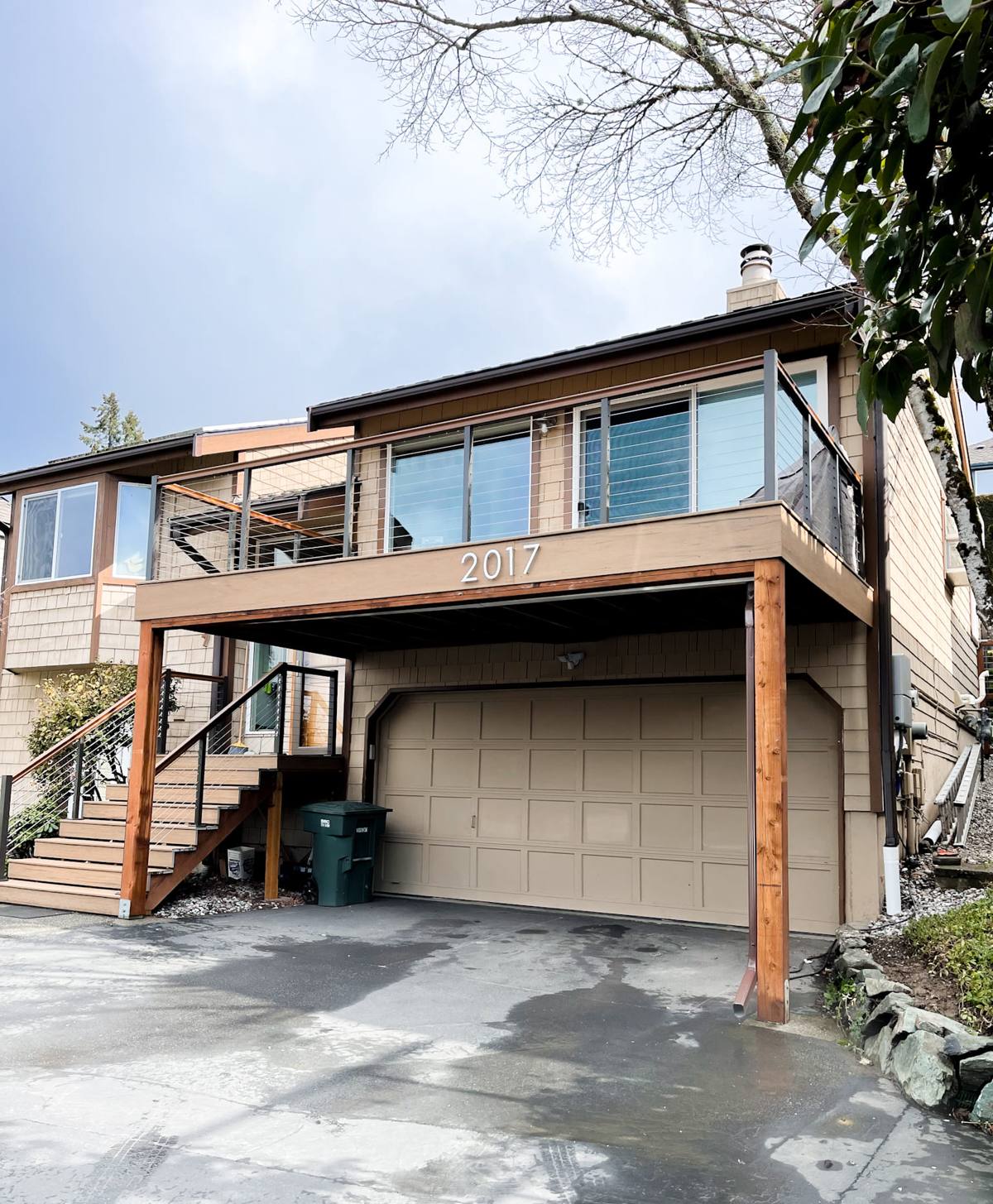
What Snohomish County Weather Does to a Deck Over Time
Moss and Algae Season Runs Long
In Lynnwood's tree-covered lots and shaded backyards, moss and algae growth isn't a once-a-year nuisance — it's closer to a year-round condition, easing up only during the driest weeks of summer. On wood decking, spores settle into the grain and gaps between boards and take hold fast, especially on the north side of a house or under tree canopy. Composite doesn't feed organic growth the way wood fibers do, but it isn't immune either — pollen, dirt, and moisture still sit on the surface and give moss something to grow on top of if a deck is never cleaned. The difference is that on a quality capped composite board, that growth stays on the surface instead of working into the material.
Salt Air and Coastal Proximity
Lynnwood isn't waterfront, but it's close enough to Puget Sound that salt-laden air and marine moisture reach fasteners, flashing, and any exposed metal on a deck structure. Over years, that accelerates corrosion on cheap or uncoated hardware, which is often what actually fails on an older deck long before the decking boards themselves do. Any deck built out here needs fastener and connector hardware rated for it — this is a structural detail, not a cosmetic one.
Driving Rain and Freeze-Thaw Cycles
Snohomish County doesn't get brutal winters, but it does get repeated cycles of rain, cold snaps, and thaw through the fall and winter months. Water that gets trapped under boards, in ledger connections, or in footings that weren't properly drained will expand and contract with those cycles, loosening fasteners and stressing joints over time. A deck built for this area needs drainage designed in from the start, not patched in after problems show up.
Why Composite Decking Makes Sense in This Climate
We install both wood and composite decking, and for Lynnwood's climate specifically, composite solves problems that wood decking here runs into repeatedly. Here's how the two compare for a typical Snohomish County backyard:
| Factor | Wood Decking | Composite Decking |
|---|---|---|
| Moss and algae resistance | Absorbs moisture, feeds growth into the grain | Growth stays on the surface, easier to remove |
| Annual maintenance | Sealing/staining every 1-2 years in this climate | Periodic cleaning, no sealing or staining |
| Warping and cupping in wet-dry cycles | Common, especially on lower-grade lumber | Minimal with quality capped boards |
| Splintering underfoot | Increases with age and weather exposure | Not a factor with capped composite |
| Upfront material cost | Lower | Higher |
| Typical lifespan before major work | 15-20 years with diligent maintenance | 25-30+ years, backed by manufacturer warranty |
Wood is still the right call for some budgets and some homeowners who want that natural look and don't mind the upkeep. But for a lot of Lynnwood households, the deciding factor is simple: composite trades a higher upfront cost for far less maintenance in a climate that's genuinely hard on outdoor wood.
What a Correctly Built Composite Deck Involves
Substructure and Drainage
The composite boards on top get all the attention, but the framing underneath is what determines whether a deck lasts. In this climate, that means pressure-treated or better-grade framing lumber, joist tape or flashing over the joists to keep water from sitting on bare wood, and a layout that actually lets water drain and airflow reach the underside of the deck instead of trapping moisture against the house.
Ledger Board and House Connection
Where the deck attaches to the house is the single most common failure point we see on older decks in this area — usually because flashing was skipped or installed wrong, letting water get behind the siding or into the rim joist. This connection has to be flashed correctly and sealed to keep water out of the house structure, not just the deck itself.
Fastening and Board Spacing
Composite boards expand and contract with temperature more than people expect, so spacing and fastening have to account for that movement — too tight and boards can buckle, too loose and you get an uneven surface over time. We use hidden fastener systems on most composite installs for a cleaner look and to avoid the screw-head corrosion issues that come with exposed fasteners in a salt-air climate.
Hardware and Fasteners
Every bolt, screw, joist hanger, and post base should be corrosion-resistant hardware rated for exterior and coastal-adjacent use. This is one of the easiest places for a lower-cost install to cut corners, and it's usually invisible until the hardware starts failing years down the road.
Choosing the Right Composite Board for a Lynnwood Yard
Capped vs. Uncapped Composite
Capped composite boards have a protective outer shell wrapped around the core, which is what actually gives them their moisture, staining, and fade resistance. Uncapped or lower-grade composite boards cost less but are more prone to moisture absorption and surface wear over time — in a climate with this much sustained rain and humidity, that difference shows up faster than it would somewhere drier. We install capped composite on nearly every project out here for that reason.
Color and Heat Considerations
Darker composite boards run warmer underfoot on sunny days and can show pollen, dust, and mineral deposits from rain differently than lighter tones. In a heavily shaded, tree-covered lot — common in Lynnwood — lighter and mid-tone colors also tend to show less visible streaking from tannins dropped by overhanging trees. We'll talk through color options with your specific yard and sun exposure in mind, not just what looks good in a sample.
Board Profile and Grip
Textured, grooved-edge composite boards are worth the small upcharge in this climate. A slightly textured surface stays safer underfoot when it's wet, which in Lynnwood is a good chunk of the year, and grooved edges pair with hidden fastener systems for a cleaner finished look.
Our Process for a Lynnwood Composite Decking Project
- On-site assessment — we look at your existing deck or the build site, sun and shade exposure, drainage slope, and how the deck ties into the house.
- Honest scope and estimate — a clear breakdown of what the job involves, what board tier fits your budget, and what the framing and flashing work will require.
- Permitting — most deck rebuilds and new builds in Snohomish County require permits; we handle that process so it's done correctly, not skipped.
- Demo and structural work — removing old decking where applicable, correcting or rebuilding the substructure, flashing the ledger connection properly.
- Composite installation — hidden fastener installation, proper board spacing for expansion, and finished trim and fascia work.
- Final walkthrough — we go over the finished deck with you, including what maintenance actually looks like going forward.
Maintaining a Composite Deck in a Moss-Prone Climate
Composite decking cuts down maintenance significantly compared to wood, but "low maintenance" doesn't mean "no maintenance" — especially with the amount of moisture and organic debris Lynnwood yards deal with. A simple seasonal routine keeps a composite deck looking right and prevents buildup that can eventually stain even a capped board:
- Sweep leaves, needles, and debris off the deck regularly, especially in fall — trapped organic matter holds moisture against the surface
- Wash the deck surface with a soft-bristle brush and mild soap and water at least once or twice a year, more often in heavily shaded areas
- Rinse pollen and tree sap buildup promptly in spring before it sets into the surface texture
- Keep gutters and downspouts near the deck clear so runoff isn't dumping extra water directly onto or under the decking
- Check and clear any debris from underneath the deck periodically to keep airflow moving and prevent trapped moisture
- Avoid pressure washing at close range or high PSI, which can damage the cap layer on composite boards over time
Why a Crew That Already Works in Lynnwood Matters
Deck-building fundamentals don't change from region to region, but the details that determine whether a deck actually lasts do — how much drainage slope to build in, which hardware holds up against Puget Sound-area moisture, how much clearance to leave for airflow given how long moss season runs here. A crew that's already installed decks throughout Lynnwood and the wider Everett area has seen how these builds perform after a few Snohomish County winters, not just on install day. That experience shows up in the small decisions — flashing details, fastener choices, board spacing — that don't matter until year three or four, and by then it's expensive to fix.
It also matters for permitting and local building requirements, since deck permit review can vary by jurisdiction even within the same county. Working with a crew that's familiar with local requirements means fewer surprises and delays once the project is underway.
Get a Straight Answer for Your Lynnwood Deck Project
If you're weighing a new composite deck or replacing an aging wood one, we're happy to come take a look, walk you through what your specific yard and budget call for, and give you a straightforward estimate — no pressure, no upsell. Use the form below to get in touch and we'll set up a time to talk through your project.