 Everett
 Port Gardner Is a Different Kind of Exposure Than Inland Everett
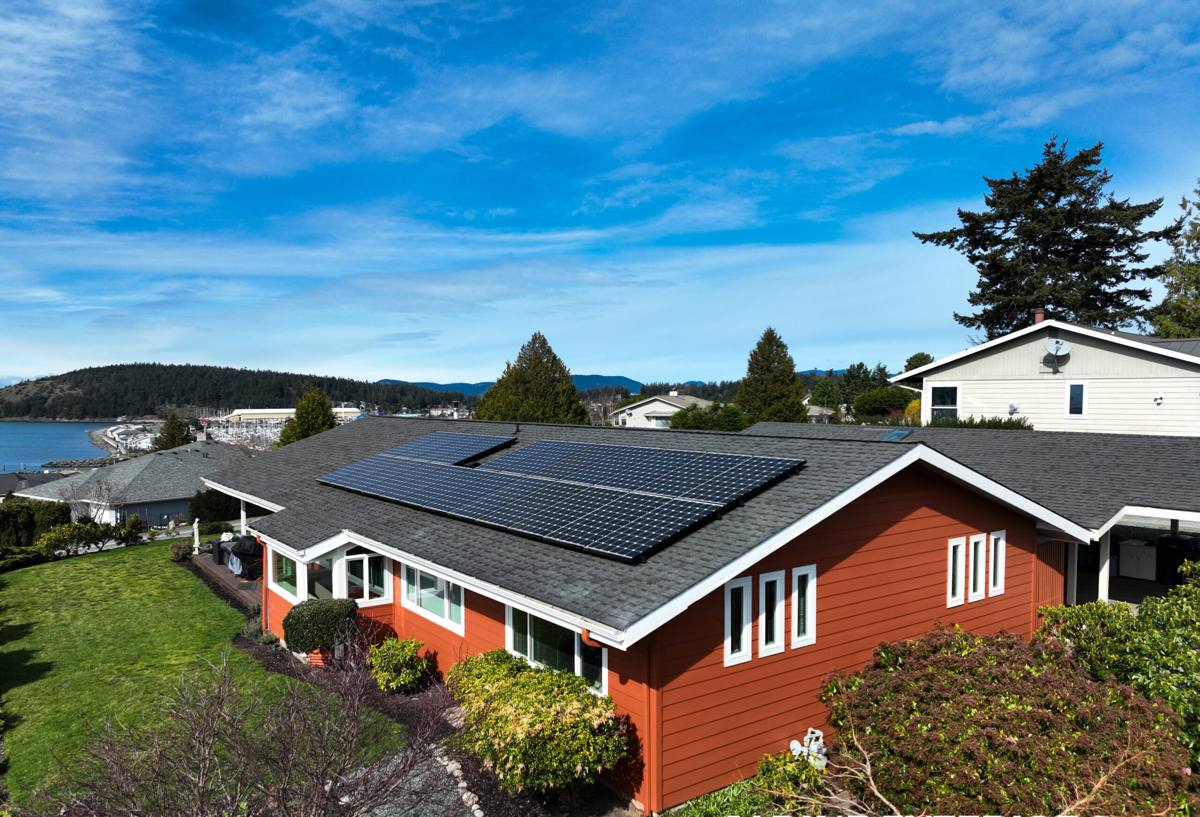
Port Gardner sits up on the bluff overlooking the bay it's named for, and that setting gives homes here a level of wind, salt, and moisture exposure that houses a mile or two inland just don't deal with in the same way. If you've owned a place on this bluff for a while, you already know it works harder than a house tucked back from the water — trim fades faster, north walls stay damp longer, and anything metal seems to need attention sooner than the manufacturer's timeline suggests it should. Siding is no exception, which is why we treat a Port Gardner install differently from a generic Everett job rather than running the same approach on every property in Snohomish County.
We install James Hardie fiber cement exclusively, and this page is about exactly what that looks like for homes in this specific part of Everett: what the climate actually does to a wall up here, what a correct fiber cement installation has to account for, how our process runs on a bluff-exposed property, and why hiring a crew that already works this neighborhood is worth more than it looks on a quote sheet.
What Port Gardner's Climate Actually Does to a Wall
None of the mechanisms below are unique to this neighborhood, but three things about Port Gardner's position speed them up compared to a sheltered inland lot.
Salt Air and Corrosion
Air moving off the bay carries salt, and salt-laden air accelerates corrosion in anything metal fastened to your walls — nails, flashing, hose bibs, light fixtures. A corroding fastener loses holding strength over time and can open a small gap around itself, which becomes an entry point for water long before it shows up as a visible problem from the ground. Homes on the most exposed faces of the bluff see this fastest.
Wind-Driven Rain
The elevation that gives Port Gardner its water views also means more direct wind exposure than a sheltered inland property gets. Rain that would fall straight down on a protected lot instead comes in at an angle here, pushed by wind off the water, and gets driven into laps, seams, and trim lines that were only designed to shed water moving downward. That's as much a flashing and detailing problem as it is a materials one — the right board still needs to be installed correctly to actually perform.
A Moss Season That Runs Most of the Year
Snohomish County's mild, wet climate keeps moss and algae active on shaded and north-facing walls for the better part of the year, and mature tree cover on many Port Gardner lots adds shade that keeps those walls damp even longer between storms. Moss doesn't just look bad sitting there — it holds moisture against the siding surface, which extends every wet cycle the material underneath it goes through.
Why Fiber Cement Is the Right Material for This Exposure
Fiber cement is made from cement, sand, and cellulose fiber rather than a solid or engineered wood core, which makes it dimensionally stable — it doesn't swell, cup, or delaminate at cut edges the way wood-based products do when they go through repeated wet-dry cycles. That matters directly on a bluff lot that sees more of those cycles per year than a sheltered property does. It's also non-combustible, which is a real consideration for homes with wildfire smoke and ember exposure during dry summer stretches, even in a generally wet climate like ours.
We install James Hardie specifically, not fiber cement generally, because of how the whole system is engineered together rather than any single feature on its own. For this region we use Hardie's HZ5 product line, formulated for colder, wetter climate zones and the moisture cycling the Pacific Northwest puts a wall through. The factory-applied ColorPlus finish is cured under controlled conditions before the board ever reaches your property, which sidesteps a lot of the variability that field-applied paint runs into on a jobsite that doesn't always cooperate with weather. That combination — a stable base material, a climate-specific formulation, and a factory finish — is the standard we hold every Port Gardner install to.
What a Correct Installation Involves
A high-quality board installed with poor flashing and sequencing can fail faster than a modest board installed correctly, because siding is one layer in a stacked system and every layer depends on the ones around it. On an exposed bluff lot, a few details matter more than they would on a sheltered inland property:
- Flashing at windows, doors, and every wall penetration, sequenced correctly with the water-resistive barrier so water is shed outward and down, not trapped behind the siding
- Correct fastener type, spacing, and depth for HZ5 board — under-driven or over-driven fasteners both compromise how the siding holds up to wind loading
- Sealed and primed cut edges everywhere Hardie's installation instructions call for it, since a raw cut edge is where moisture intrusion starts
- A drainage gap or rainscreen detail behind the siding so incidental moisture has somewhere to go instead of sitting against the sheathing
- Proper clearance between the bottom of the siding and grade, decks, or roof lines, where water tends to collect and sit longest
- Joint and caulk detailing that accounts for wind-driven rain hitting the wall at an angle, not just straight-down exposure
These details are largely invisible once a project is finished, which is exactly why they get skipped on rushed or underbid work — and exactly why they're worth asking about directly before you hire anyone.
How the Job Runs on a Port Gardner Property
Assessment and Tear-Off
We start by walking the property and looking at what's actually happening behind the existing siding, not just what's visible from the street — soft spots, staining near penetrations, and moss buildup on shaded walls all tell us something about how water has been moving. Fiber cement is a full tear-off product; it isn't installed over existing siding, so this stage also confirms what the sheathing and water-resistive barrier look like underneath before we plan the rest of the job.
Access and Staging
Sloped and bluff-adjacent lots are common in this part of Everett, and they change how a job gets staged compared to a flat inland yard — scaffolding, material staging, and equipment access all need a plan specific to the property rather than a default approach. We account for that at the estimate stage so it isn't a surprise once work starts.
Product and Color Selection
We walk through HardiePlank, HardiePanel, and HardieShingle options along with the ColorPlus palette against your actual roof, trim, and lot — not a sample chip under showroom lighting. Homes closer to the water tend to hold up better with the factory ColorPlus finish rather than field-painted primed board, given how much more work salt air does to a field-applied coating over time.
Installation and Permitting
We pull the required City of Everett or Snohomish County permit before work begins, then install to the flashing, fastening, and drainage standards covered above. Cleanup includes full material and debris removal — a re-side generates a lot of waste, and leaving a property as clean as we found it is part of the job, not an afterthought.
What Affects the Cost of a Port Gardner Fiber Cement Project
Every property is different, but the same handful of factors drive most of the variation we see on bluff and waterfront-adjacent Everett homes. The table below is meant to help you understand what's driving your specific estimate rather than to pin down a number in isolation.
| Factor | Why It Matters Here |
|---|---|
| Tear-off scope | Full removal of existing siding down to sheathing is standard for fiber cement; condition of what's underneath affects how much repair is needed before new siding goes on |
| Site access | Sloped or bluff-adjacent lots can require more scaffolding, staging time, and equipment planning than a flat inland yard |
| Product line and profile | HardiePlank lap, HardiePanel vertical, and HardieShingle carry different material and labor costs; texture and reveal size also factor in |
| Finish choice | Factory ColorPlus finish costs more upfront than primed board but avoids a field-painting phase and holds up better to salt air over time |
| Wall complexity | Dormers, multiple gables, and a lot of window and door trim add labor time for flashing and cutting compared to simple wall planes |
| Underlying repairs | Rot or moisture damage found at tear-off — more likely on the most wind- and rain-exposed faces of the bluff — needs to be addressed before new siding goes on |
Why a Crew That Already Works This Neighborhood Matters
A contractor who's worked Port Gardner before already knows which wall orientations take the worst of the wind-driven rain, how sloped lots here typically need to be staged, and what the permitting process looks like for this part of Everett. That's not a small thing — a crew that's installing fiber cement in this neighborhood for the first time is learning those lessons on your house instead of bringing them with them. Fastener corrosion timelines, drainage detailing for exposed walls, and realistic access planning for bluff lots are all things you want a contractor to already understand walking in, not figure out mid-project.
It also matters for accountability after the job is done. A local crew is easy to reach if a question comes up in year three, and they're the ones who stand behind the flashing and drainage details they installed — details that, as covered above, are invisible once the siding is up but determine most of how the wall performs over the following decades.
Keeping Fiber Cement Siding Performing After Installation
Fiber cement is low-maintenance compared to wood-based siding, but "low-maintenance" isn't the same as "no-maintenance," especially in this climate. A gentle wash once or twice a year — garden hose and a soft brush, not a pressure washer aimed directly at joints and seams — keeps salt residue and organic growth from building up on shaded and water-facing walls. It's also worth a periodic visual check of caulk joints around windows, doors, and trim, since those are the points most likely to need attention first, well before the board itself shows any wear. Catching a failed caulk joint early is a small fix; ignoring it for a few wet seasons can turn into a bigger repair.
Getting a Straight Answer for Your Property
Every bluff lot in Port Gardner faces the water a little differently — wind exposure, tree cover, and wall orientation all vary block to block, sometimes house to house. That's why we look at the actual property rather than quoting off a general template, and why we're upfront about what a correct install requires here rather than cutting corners that won't show up as a problem until a few winters in. If you're planning a re-side or want a straight assessment of what your current siding is dealing with, we're happy to walk the property with you and put together a free, no-pressure estimate.