 Everett
 Why Siding Takes a Beating in Delta
Delta is one of Everett's older, established neighborhoods, and its name comes from its position near where the Snohomish River meets Port Gardner Bay. That waterside location is part of what makes the neighborhood distinctive, but it also means the homes here deal with a specific combination of weather stress that inland Snohomish County properties don't face in quite the same way: salt-laden air rolling off the water, long stretches of driving rain through fall and winter, and a moss season that can run from October well into spring.
None of that is unusual for western Washington. But it adds up faster on siding that isn't built for it. Salt air accelerates corrosion on fasteners and metal trim. Wind-driven rain doesn't just fall straight down — it gets pushed sideways into laps, seams, and corner boards where lesser materials struggle to shed it. And moss doesn't just sit on a roof; given a shaded north wall or a spot that stays damp under an overhang, it will colonize siding too, holding moisture against the surface and giving mildew a foothold.
Older homes in Delta were often sided with materials that made sense decades ago — cedar, older vinyl products, or in some cases early fiber cement — but weren't engineered with this exact combination of salt exposure and near-constant moisture in mind. When we get called out to look at failing siding in this part of Everett, the underlying problem is almost always the same: water got behind the cladding, had nowhere to go, and sat there long enough to do damage to the sheathing or framing underneath.
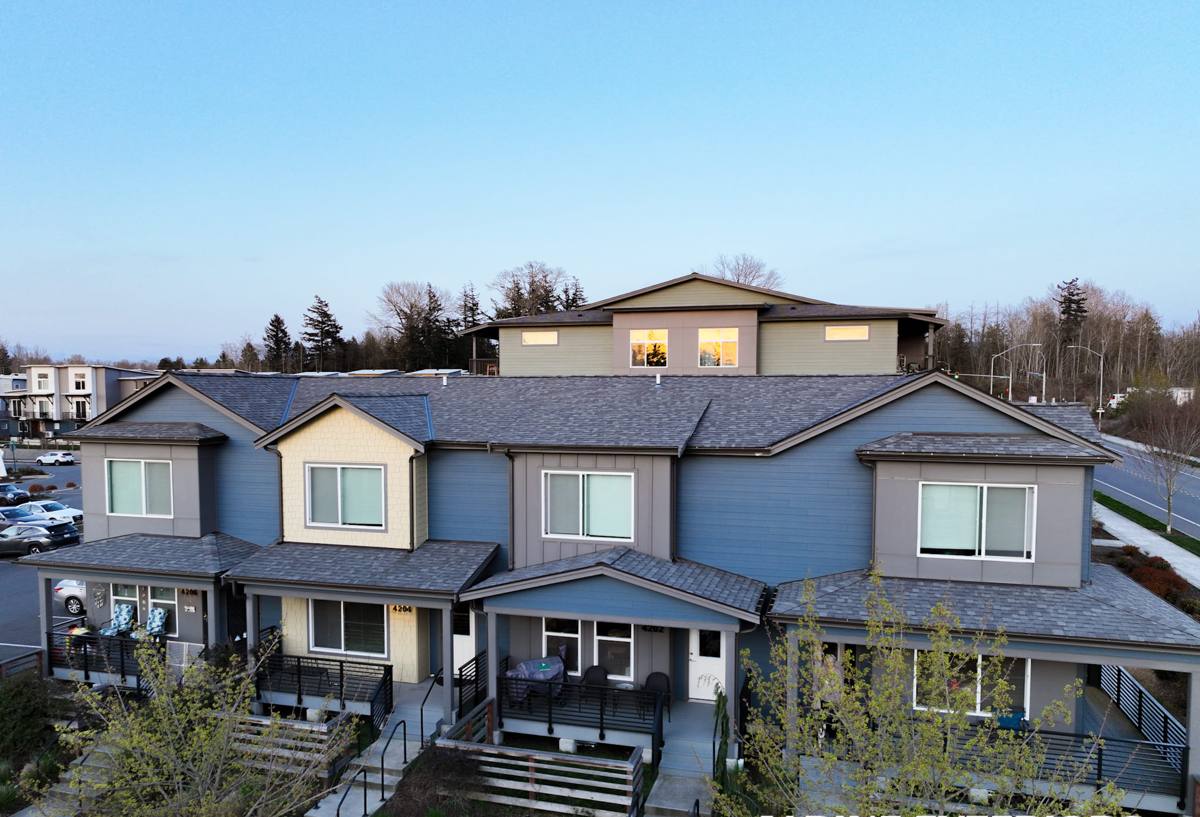
What James Hardie Siding Actually Solves
We install James Hardie fiber cement exclusively, and in a neighborhood like Delta the reasons are practical, not theoretical. Fiber cement is made from cellulose fiber, sand, and Portland cement, which means it doesn't rot, doesn't feed mold or moss the way wood fiber can, and doesn't warp or delaminate the way some engineered wood products can when they take on repeated moisture. It's also non-combustible, which matters everywhere but is a genuine plus for any home near dry vegetation during Washington's summer fire season.
The factory-applied ColorPlus finish is the other half of the equation. Because the color is baked on at the factory under controlled conditions rather than field-applied, it holds up better against the fading and chalking that salt air and UV exposure cause over time, and it resists the kind of surface degradation that leaves field-painted siding needing a repaint every several years. That's less maintenance for a homeowner and a more consistent look for the life of the siding.
Why This Matters More Near the Water
Salt air is corrosive to more than just siding — it works on fasteners, flashing, and any exposed metal trim. Part of doing this job right in Delta is using fastener and flashing hardware rated for that exposure, not just whatever is cheapest to source. A siding product that resists moisture intrusion is only as good as the metal and fasteners holding it in place.
Choosing the Right Hardie Product Line for This Climate
James Hardie makes region-specific product lines, and the Pacific Northwest falls into their HZ5 climate zone, engineered for areas with significant moisture exposure and moderate freeze-thaw cycling. That's a meaningful distinction — it's not just marketing. The HZ5 formulation and installation specs are built around exactly the kind of wet, temperate conditions Everett sees most of the year.
| Product Line | Typical Use on Delta Homes | Why It Fits |
|---|---|---|
| HardiePlank lap siding | Most common choice for full re-sides | Traditional lap profile, wide color and texture selection, proven moisture performance |
| HardieShingle | Accent areas, gables, dormers | Cedar-shingle look without the moisture and moss vulnerability of real wood shingle |
| HardiePanel | Modern facades, garage walls, accent panels | Clean vertical lines, works well paired with trim board accents |
| HardieTrim | Corner boards, window and door trim, fascia | Matches the fiber cement performance of the field siding instead of mixing in wood trim that will fail first |
What a Correct Installation Actually Involves
Fiber cement siding is only as good as the install behind it. We see plenty of Hardie siding around Snohomish County that was installed without the water management details that make it perform the way it's supposed to. In a wet, salt-air climate like Delta's, those details aren't optional.
The Non-Negotiables
- A properly lapped weather-resistive barrier behind the siding, with all seams and penetrations sealed
- Correct starter strip placement so the first course sheds water the way every course above it will
- Flashing at every window, door, and horizontal trim transition — not caulk used as a substitute for flashing
- Manufacturer-specified fastener spacing and placement, driven straight and not overdriven
- Proper clearance between siding and grade, decks, roofing, and other hard surfaces so moisture and debris can't wick or collect
- A rainscreen gap where conditions call for one, so any moisture that does get behind the cladding can drain and dry instead of sitting against the sheathing
Skip any one of these and you can end up with a wall system that looks right for a few years and then fails from behind — which is a much more expensive repair than the siding itself.
Our Process for a Delta Re-Side
1. On-Site Assessment
We start by looking at what's actually there — siding type, condition, trim, and any signs of past moisture problems around windows, decks, or roof lines. On a coastal-adjacent property like this, we're specifically checking north- and west-facing walls, since those tend to hold moisture and collect moss longest.
2. Tear-Off and Sheathing Check
Old siding comes off down to the sheathing, and we inspect what's underneath before anything new goes up. This is the point where hidden rot or water damage — if it exists — gets found and dealt with, rather than sealed behind new siding and left to keep spreading.
3. Water Management Layer
We install the weather-resistive barrier and flashing package correctly the first time, since this layer does more long-term work than the visible siding itself.
4. Hardie Installation to Spec
Siding, trim, and accent products go on following James Hardie's published installation instructions for the HZ5 zone — fastener pattern, gaps, caulking, and clearances included.
5. Final Walkthrough
We walk the finished job with the homeowner, checking sightlines, caulking, and trim details before calling it done.
Maintenance in a Salt Air, Moss-Prone Climate
One of the real advantages of Hardie siding is how little maintenance it asks for compared to wood or older vinyl, but "low maintenance" isn't "no maintenance," especially this close to the water.
- Rinse siding annually, focusing on north-facing and shaded walls where moss and grime build up fastest
- Keep gutters clear so overflow doesn't run down the face of the siding during heavy rain
- Trim back vegetation and shrubs that hold moisture against the wall or shade it enough to encourage moss growth
- Check caulking at trim joints and penetrations every year or two, and recaulk if it's cracked or pulling away
- Address any moss or algae growth promptly with a gentle wash rather than letting it establish and spread
- Watch for any staining or discoloration near ground contact, decks, or roof intersections — early signs of a flashing or drainage issue
Cost Factors to Expect
Every re-side is different based on square footage, trim complexity, tear-off scope, and how much repair work turns up once old siding comes off. Rather than quote a number that won't reflect your actual home, here's what tends to move the price up or down.
| Factor | Effect on Cost |
|---|---|
| Full tear-off vs. siding over existing wall | Tear-off costs more upfront but is the only way to check and fix what's underneath — the right call on most re-sides |
| Hidden rot or sheathing damage | Adds cost, but far cheaper to fix now than after new siding goes up over it |
| Trim and accent detail (shakes, panel accents, wide trim) | More labor-intensive than straight lap siding runs |
| Home height and access | Two-story and steep-site homes take longer and require more equipment |
| Color selection | Factory ColorPlus finishes vary slightly by line, but avoid the repeated repainting cost of field-applied finishes |
Why a Crew That Already Works in Delta Matters
Everett has enough micro-variation in housing stock and site conditions that experience in the actual neighborhood counts for something. A crew that has worked on homes in Delta already understands the mix of older and newer construction here, knows what to expect when older siding comes off a wall that's been sitting close to salt air for decades, and isn't guessing at how local permitting and inspection works for exterior work in the City of Everett. That familiarity shows up in fewer surprises mid-job and a tighter, more accurate quote up front.
It also means we're not applying a one-size-fits-all install spec. A home three blocks from the water gets the same attention to flashing and drainage details as one further inland, but we're not overbuilding or underbuilding either — we're matching the install to what the specific site actually needs.
Warranty and Long-Term Value
James Hardie backs its siding products with a strong, transferable limited warranty, and the ColorPlus factory finish carries its own separate finish warranty — both of which are only as good as the installation behind them. Doing the job to spec is what keeps a warranty claim valid if something ever does go wrong, and it's a big part of why we won't cut corners on the water management details even when they add a little time to the job.
For a Delta homeowner, that combination — a material engineered for this exact climate, a factory finish that holds its color, and an installation done to the manufacturer's actual specifications — is what turns a re-side into a decades-long fix instead of a repeat expense.
If you're dealing with aging, failing, or high-maintenance siding on a Delta-area home, we're happy to come take a look and walk you through what we're seeing — no pressure, no obligation. Reach out using the form below for a free estimate.