 Everett
 West Everett's Roofs Work Harder Than Most
West Everett sits close enough to Puget Sound and the Snohomish River delta that homes here deal with a specific combination of weather most inland roofing crews rarely see day to day: salt-laden air, wind-driven rain that finds its way sideways under poorly flashed edges, and a moss season that runs longer than it does just a few miles east. None of that is exotic or unusual for this part of Washington, but it does mean a roof here is judged less by how it looks the first year and more by how it holds up over the next twenty.
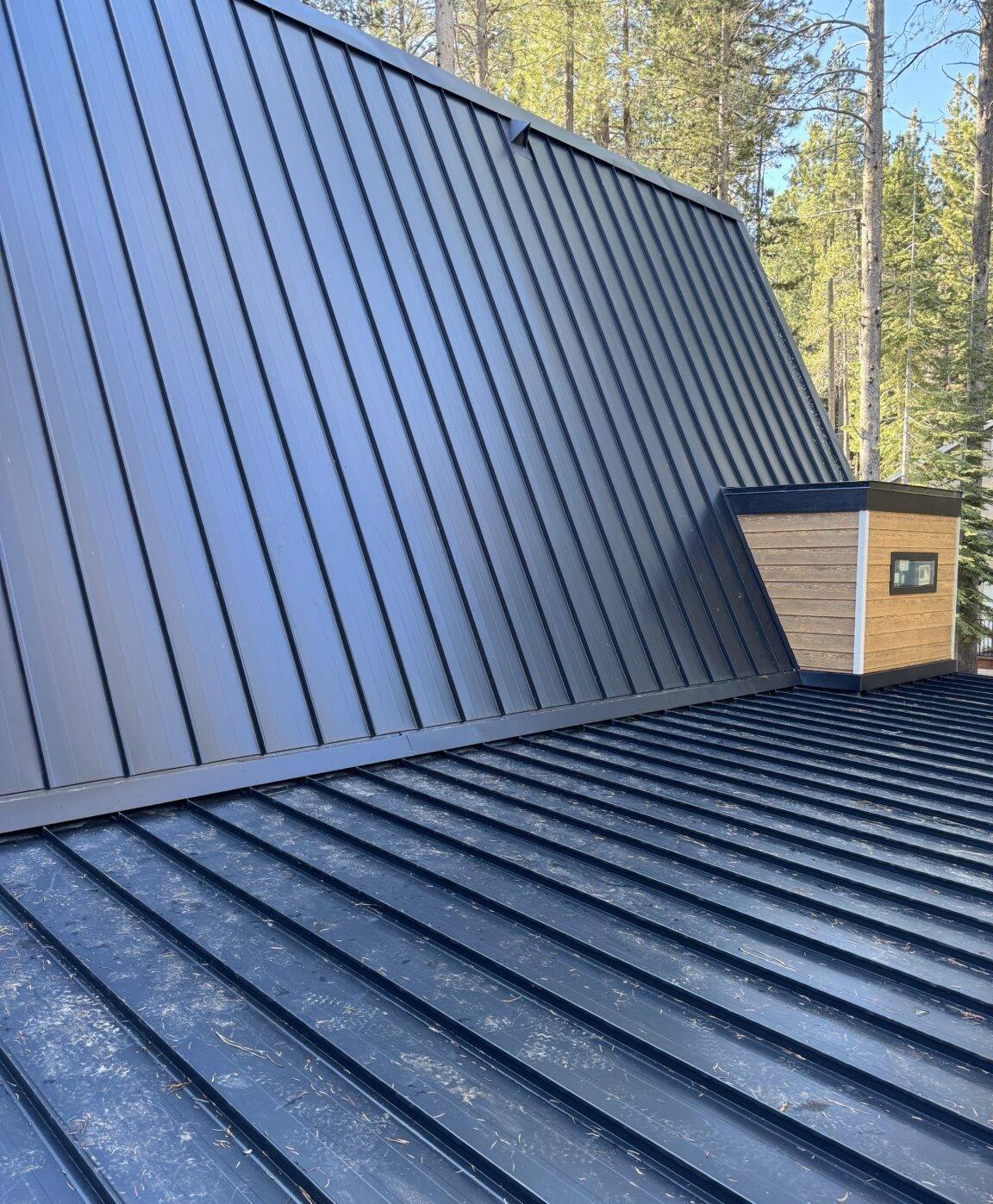
Metal roofing has become a popular answer for homeowners in this neighborhood who are tired of replacing shingles every 15-20 years or scraping moss off a roof every spring. Done correctly, a metal roof shrugs off the rain load, resists moss better than any shingle product, and holds its seal against wind in a way that asphalt struggles to match. Done poorly — wrong fastener choice, wrong underlayment, wrong flashing details — it can leak worse than the roof it replaced. This page is about what "done correctly" actually means for a home in West Everett specifically.
Why the Local Climate Changes the Job
Salt Air and Corrosion
Proximity to Puget Sound means airborne salt is a real factor here, even set back from the water. Salt accelerates corrosion at fastener heads, cut edges, and any spot where a panel's protective coating gets scratched during installation. A crew that doesn't account for this will use whatever fasteners are in the truck. A crew that works this area regularly specs corrosion-resistant fasteners and finishes as a default, not an upgrade.
Driving Rain
Storms coming off the Sound tend to push rain at an angle rather than straight down. That matters at every roof penetration — vent pipes, chimneys, skylights — and at every valley and wall transition. Flashing details that would be fine in a drier climate can fail here within a few seasons if they weren't built for wind-driven water.
Moss Season
Snohomish County's damp, shaded conditions extend moss season well beyond what homeowners moving here from drier states expect. Moss holds moisture against a roof surface, works into seams, and on shingle roofs it can lift edges over time. Metal roofing doesn't give moss the foothold it needs the way shingle granules do, but it's not moss-proof by design alone — panel selection and slope still matter.
What a Correct Metal Roof Installation Involves
A metal roof is only as good as what's underneath it and how the details are handled. For West Everett homes, we treat the following as non-negotiable, not optional add-ons:
- A high-temperature, self-adhering underlayment at eaves, valleys, and penetrations, not just standard felt
- Closed-cell foam or a properly designed closure strip at panel ends to block wind-driven rain and pests
- Fasteners and clips rated for coastal exposure, matched to the panel's metal type to avoid galvanic corrosion
- Ice-and-water style protection at eaves and low-slope transitions where wind can drive rain uphill under panels
- Properly lapped and sealed flashing at every wall, chimney, and vent penetration — the single most common source of leaks on any roof, metal or otherwise
- Attention to expansion and contraction — metal panels move with temperature swings, and fastening methods have to allow for that movement without loosening over time
Skipping any one of these doesn't usually show up as a problem in year one. It shows up in year five or six, as a slow leak that's hard to trace because the water is entering somewhere other than where it's showing up inside.
Standing Seam vs. Exposed Fastener: Which Fits West Everett Homes
Most metal roofing decisions for houses in this area come down to one of two panel systems. Both can perform well here, but they have different maintenance profiles worth understanding before you choose.
| Factor | Standing Seam | Exposed Fastener |
|---|---|---|
| Fastener exposure | Concealed under the seam — no exposed penetrations on the field of the roof | Screws penetrate the panel face directly |
| Long-term maintenance | Very low — no gaskets to inspect or replace | Fastener gaskets can compress or wear over 10-15 years and may need attention |
| Coastal/salt air fit | Better suited — fewer penetration points for corrosion to start | Workable with the right fasteners, but more points of vulnerability |
| Upfront cost | Higher material and labor cost | More affordable option |
| Typical use | Primary roofs, homes planning to stay long-term | Shops, additions, budget-conscious full replacements |
We'll walk through both options honestly during an estimate rather than defaulting to whichever is easier to install. For a lot of West Everett homes exposed to open weather, the lower long-term maintenance of standing seam ends up paying for itself, but that's not a blanket rule — roof pitch, budget, and how long you plan to stay in the home all factor in.
Moss and Algae Management on a Metal Roof
Metal sheds moss far better than shingles because there's no rough granule surface for spores to anchor into, but a metal roof still needs the same basic conditions in its favor: reasonable slope, clear valleys, and gutters that aren't backing water up against the eave. On heavily shaded lots — common in parts of West Everett with mature tree cover — we'll sometimes recommend zinc or copper strips near the ridge as a low-maintenance way to discourage moss growth on adjacent sections, rather than relying on chemical treatments that need reapplying every year.
The other piece homeowners often miss: gutters and downspouts. A metal roof moves water off fast — often faster than an aging gutter system was sized for. Part of a correct install is checking that the existing gutter system can actually handle the volume and speed of water a metal roof sheds, especially during the heavy rain events this area gets in fall and winter.
Signs It's Time to Consider Replacing or Repairing
Homeowners in West Everett usually call us for one of a few reasons:
- Visible rust streaks or corrosion at fastener heads on an existing metal roof
- Moss buildup that's thick enough to hold visible moisture against the roof surface
- Interior water stains that appear only during wind-driven storms, suggesting a flashing issue rather than a general roof failure
- An aging asphalt roof nearing the end of its service life, where the homeowner is weighing a like-for-like replacement against switching to metal
- Loose or lifting panels after a windstorm, which usually points to a fastening or clip issue rather than a defective panel
Not every issue means a full replacement. Isolated flashing failures or a handful of loose fasteners are often a straightforward repair. We'll tell you plainly when a repair is the right call instead of pushing a full re-roof.
Our Process for West Everett Projects
1. On-Site Assessment
We look at slope, existing decking condition, penetrations, gutter capacity, and tree exposure before recommending a panel type or system.
2. Honest Scope and Estimate
You get a clear breakdown of panel choice, underlayment, flashing work, and any decking repair — no vague allowances that turn into surprise costs mid-project.
3. Correct Installation
Underlayment, flashing, and fastening are handled to the standard described above, not the minimum code allows. This is where most of the long-term performance difference actually comes from.
4. Final Walkthrough
We review the finished roof with you, including gutter and drainage checks, before calling the job done.
Cost Factors for West Everett Metal Roofing Projects
Every roof is different, but the same handful of factors drive most of the cost variation we see on jobs in this area.
| Factor | Why It Matters |
|---|---|
| Panel system (standing seam vs. exposed fastener) | Standing seam runs higher in both material and labor |
| Roof complexity | Valleys, dormers, and multiple penetrations add flashing labor |
| Decking condition | Rot or damage found once old roofing is removed adds repair cost |
| Access and pitch | Steep or hard-to-access roofs take longer and require more safety setup |
| Coating and finish grade | Higher-grade coatings resist salt air corrosion longer but cost more upfront |
We'd rather walk your specific roof and give you real numbers than quote a price range that doesn't reflect your home.
Why a Crew That Works This Neighborhood Matters
Metal roofing done right isn't complicated, but it is detail-sensitive, and those details change based on local conditions. A crew that mostly works drier, inland climates may not default to coastal-grade fasteners or plan for wind-driven rain at every penetration, because they haven't had to. A crew that works Everett and Snohomish County regularly has already seen how these roofs perform through a few wet seasons and knows where the corners can't be cut. That's less about loyalty to a local business and more about experience matching the environment your roof actually has to survive.
If you're weighing metal roofing for a home in West Everett — whether it's a full replacement or you're just trying to understand your options — we're happy to take a look and give you a straightforward, no-pressure estimate. Use the form below to get started.