 Everett
 Why North Everett Roofs Wear Differently Than Roofs Inland
North Everett sits close enough to Puget Sound that salt-laden air is a real factor in how roofing materials age, not just a talking point. Add Snohomish County's long wet season, driving rain that comes in sideways off the water during winter storms, and heavy tree cover in many of the neighborhood's older blocks, and you get a roof environment that's tougher on materials than a lot of manufacturers' warranty testing accounts for. Metal fasteners corrode faster near saltwater exposure. Asphalt granules erode quicker under sustained wind-driven rain. And shaded, north-facing roof slopes barely dry out between October and April, which is exactly the setup moss needs to take hold.
None of this means North Everett homes need exotic materials or need to be over-built. It means the installation details that get skipped on a rushed job — the ones that don't show up until year three or four — matter more here than in a drier, calmer climate. A correct roof for this area is less about the shingle brand on the wrapper and more about how the whole system is put together underneath it.
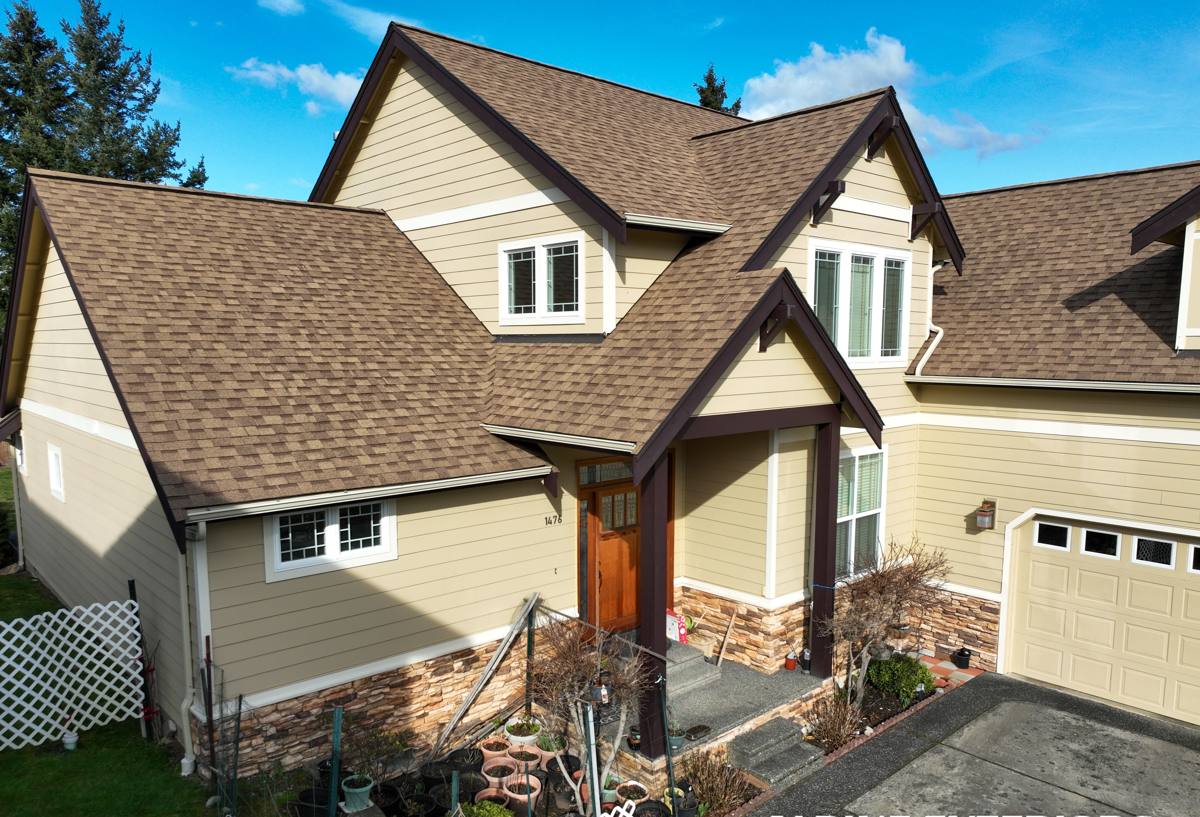
What a Correct New Roof Installation Actually Involves
Full Tear-Off and Deck Inspection
We don't install over existing layers. A second layer traps moisture, hides deck damage, and voids most manufacturer warranties outright. Every North Everett install starts with a full tear-off down to the roof deck, so we can actually see what's underneath — soft spots, old water staining, delaminated plywood, or rot around old flashing points. Any damaged decking gets replaced before anything else goes down. Skipping this step is the single most common shortcut we see on jobs we're called in to fix.
Underlayment Built for Wind-Driven Rain
In a climate where rain rarely falls straight down, underlayment choice matters more than most homeowners realize. We use synthetic underlayment across the field of the roof for its tear resistance and consistent water resistance, and we run self-adhered ice-and-water barrier at the eaves, valleys, and any low-slope transitions — the spots where wind-driven rain is most likely to work its way backward under standard shingle coverage.
Flashing Details That Actually Hold Up
Roofs almost never fail in the open field — they fail at transitions: chimneys, skylights, sidewalls, valleys, and pipe boots. We install new flashing at every one of these points rather than reusing old metal, and we pay particular attention to sidewall step flashing on the two-story home styles common around North Everett, since a poorly stepped sidewall is one of the most frequent sources of hidden leaks in this area.
Ventilation That Matches the Climate
Balanced intake and exhaust ventilation keeps the attic close to outdoor temperature and humidity, which does two things in this climate specifically: it reduces condensation buildup during our long damp stretches, and it keeps the underside of the roof deck from staying cold and wet longer than it needs to — one of the conditions that lets moss and algae get a foothold from below as well as above.
Choosing Materials for Moss, Moisture, and Salt Air
There's no single "best" roofing material for North Everett — the right choice depends on the home's roofline, budget, and how much maintenance the homeowner wants to take on. Here's how the common options actually compare in this specific climate:
| Material | Moss Resistance | Salt Air / Corrosion Behavior | Maintenance Load |
|---|---|---|---|
| Standard 3-tab asphalt | Low — flat profile holds moisture | Fasteners need corrosion-resistant coating | Higher — needs regular moss treatment |
| Algae-resistant architectural shingles | Moderate to good, with copper or zinc-infused granules | Standard with proper stainless or coated fasteners | Moderate |
| Standing seam metal | Very good — sheds moisture fast, little surface for moss to grip | Needs marine-grade or coated fasteners and trim near the water | Low, once installed correctly |
| Cedar shake | Poor in shaded, damp areas without diligent upkeep | Fine on its own, but fasteners still need to be corrosion-rated | High |
For most North Everett homes with any meaningful tree cover, we steer clients toward algae-resistant architectural shingles or standing seam metal, specifically because of how much less moss maintenance they require over the life of the roof. That's a professional recommendation based on how these materials actually perform here, not a knock on any other product — cedar and standard three-tab shingles are perfectly good materials in the right setting; this particular setting just asks more of them.
Fasteners and Flashing Metal Deserve Attention Too
Salt air affects more than the shingle surface. Standard electro-galvanized nails and exposed fasteners can start showing surface corrosion years before the roofing material itself is due for replacement, especially on homes with more open exposure toward the water. We use corrosion-rated fasteners and flashing metal on every North Everett install as a standard practice, not an upgrade option.
Our Installation Process
- On-site assessment — we walk the existing roof, check the attic for ventilation and moisture issues, and identify problem areas like valleys, chimneys, or shaded slopes with existing moss growth.
- Written scope and material selection — you get a clear, itemized plan covering tear-off, decking, underlayment, flashing, ventilation, and the shingle or metal system chosen for your roof.
- Permitting — we handle the City of Everett permit and inspection requirements so nothing holds up your project or creates problems at resale.
- Tear-off and deck repair — full removal of old roofing, deck inspection, and replacement of any compromised sheathing.
- Underlayment and flashing installation — ice-and-water barrier at vulnerable points, synthetic underlayment across the field, new flashing throughout.
- Roofing material installation — installed to manufacturer specification, which is what keeps the warranty valid if you ever need it.
- Ventilation check and cleanup — intake and exhaust venting confirmed, site cleaned, magnetic sweep for stray fasteners, and a final walk-through with you.
Signs a North Everett Roof Needs Replacement, Not Just Repair
Repairs make sense for isolated issues. A full replacement makes more financial sense once a roof shows several of these signs at once, which is common on older roofs in this area once they pass the 20-year mark:
- Granule loss heavy enough that shingles look patchy or bald in spots
- Moss growth that returns within a season or two of cleaning, especially on shaded slopes
- Curling, cracking, or lifted shingle edges, particularly on sides exposed to prevailing wind and rain
- Daylight visible through the attic roof boards, or damp insulation after storms
- Rusted or deteriorating flashing around chimneys, skylights, or sidewalls
- Sagging rooflines or soft spots underfoot, which usually indicate deck damage
- Multiple isolated leaks appearing in different areas within the same year
Cost Factors for a North Everett Roof Replacement
Every roof is priced on its own specifics, but the variables that actually move the number are consistent. This is meant to help you understand what drives cost, not to substitute for a written estimate:
| Factor | Why It Matters | Relative Cost Impact |
|---|---|---|
| Roof size and number of stories | More material, steeper access requirements, longer labor time | Moderate to high |
| Roof pitch and complexity | Steep or multi-valley roofs take longer and need more flashing work | Moderate to high |
| Decking condition | Rot or soft spots found during tear-off require plywood replacement | Variable — depends on damage found |
| Material choice | Standard shingles cost less upfront than algae-resistant or metal systems | Low to high, by material |
| Ventilation upgrades | Adding proper intake/exhaust venting where none existed | Low to moderate |
| Access and site conditions | Steep lots, tight driveways, or heavy tree cover affect equipment and disposal logistics | Low to moderate |
The only way to get real numbers is a written estimate based on your specific roof, which is why we walk every roof in person before quoting anything.
Why It Matters That This Crew Already Works North Everett
A roofing crew that regularly works in North Everett already knows which older homes tend to have undersized ventilation, which streets sit in enough shade to need extra attention to moss-prone materials, and how the City of Everett's permitting and inspection process actually runs in practice — not just on paper. That familiarity shortens the time between estimate and finished roof, and it means fewer surprises mid-project because we've already seen the deck conditions and flashing setups common to this part of Snohomish County.
It also means faster response when weather causes a problem. A driving winter storm off the Sound can turn a small flashing gap into an active leak overnight, and having a crew nearby that already knows your neighborhood's roof types means a faster tarp-and-assess response instead of a multi-day wait.
Maintenance After Installation to Stay Ahead of Moss Season
A correctly installed roof still benefits from basic upkeep in this climate. Keep gutters clear so water isn't backing up under the eave line, especially during fall leaf drop. Trim back overhanging branches where practical, since reduced airflow and shade are the biggest contributors to moss regrowth. Have the roof looked at every couple of years, particularly after the wetter winters, so small issues like a lifted shingle edge or a hairline gap in flashing sealant get caught before they turn into a deck repair.
If you're planning a new roof for a North Everett home, we're glad to come take a look and walk you through what your specific roof actually needs — no pressure, no sales script, just a straight assessment and a written estimate you can think over. There's a form below to get that started whenever you're ready.