 Everett
 Storm Damage Roof Repair Built for Port Gardner's Conditions
Port Gardner sits close enough to the water that homes here take a different kind of beating than roofs a few miles inland. Salt-laden air off the bay accelerates corrosion on flashing, fasteners, and any exposed metal. Wind-driven rain off Puget Sound doesn't just fall straight down — it gets pushed sideways under shingle edges and into anything that isn't sealed correctly. And Snohomish County's long, wet stretch from fall through spring means moss and moisture have months to work into a roof that has even one weak spot. When a windstorm or a heavy rain event exposes that weak spot, the damage shows up fast, and it tends to keep getting worse until someone fixes it properly.
Storm damage repair in this neighborhood isn't just about patching what's visibly broken. It's about understanding why that spot failed in the first place and making sure the fix holds up against the next storm, not just the one that just came through.
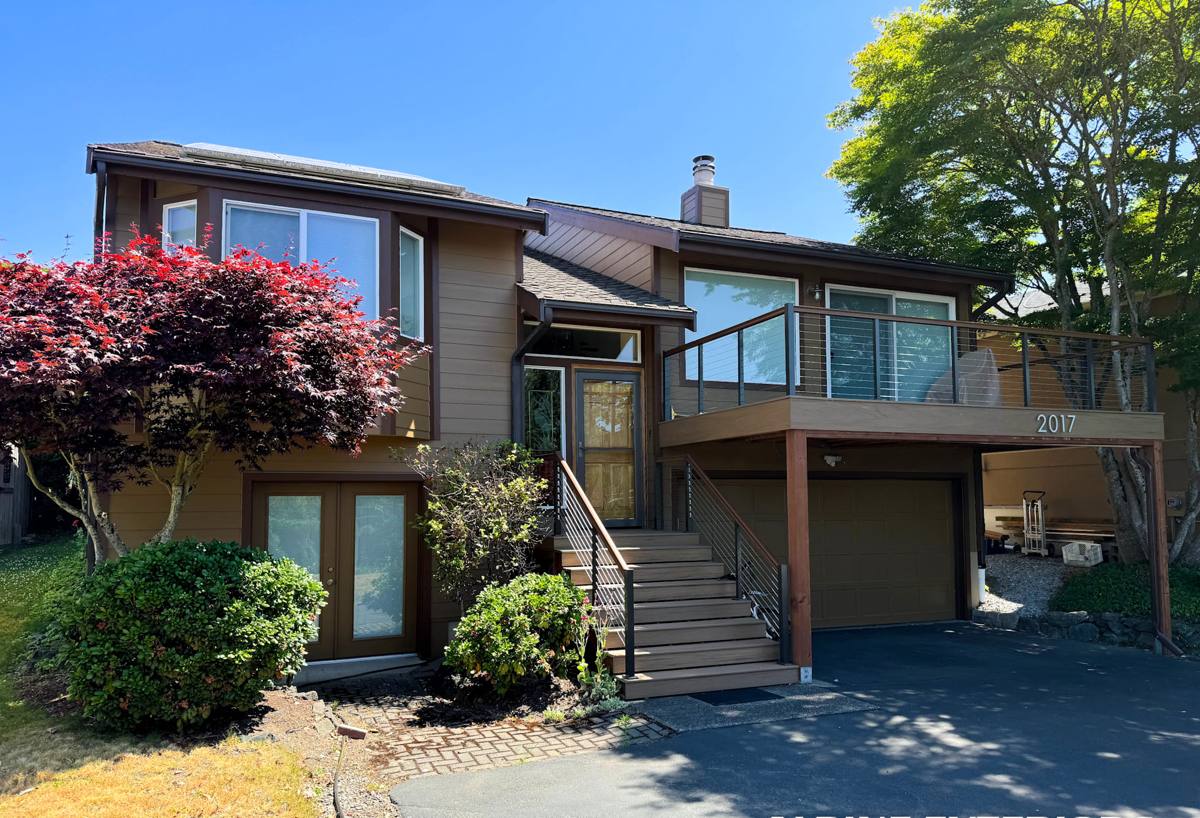
What Storms Actually Do to Port Gardner Roofs
Wind Damage
Gusts off the water can lift shingle tabs, crack ridge caps, and peel back the edges of a roof where wind pressure is highest — usually along the eaves, rakes, and ridge lines. Once a shingle is lifted even slightly, the seal underneath is broken, and it won't reseal itself. That spot stays vulnerable until it's repaired, even if the shingle looks mostly fine from the ground.
Wind-Driven Rain Intrusion
This is the damage homeowners notice last, because it doesn't always show up as a visible roof problem — it shows up as a ceiling stain, a musty smell in the attic, or soft drywall weeks later. Sideways rain finds its way in through compromised flashing around chimneys, vents, skylights, and wall-to-roof transitions, especially on the side of the house facing prevailing weather.
Debris Impact
Fir and cedar limbs come down hard in Snohomish County storms. Impact damage can crack shingles, dent metal flashing, or puncture the roof deck outright. Even small impacts can bruise a shingle's mat layer in a way that isn't obvious until it fails months later.
Moss and Trapped Moisture
Storm damage and moss problems often show up together here, not because one causes the other, but because both are symptoms of the same climate. A roof with poor airflow or shaded, damp sections is already growing moss; when a storm opens a gap in that same area, moisture gets trapped underneath organic growth instead of draining off, and the damage spreads faster than it would on a drier, cleaner roof.
Why Salt Air and Long Wet Seasons Change the Repair
A storm repair that would hold up fine in a drier inland climate can fail early near Port Gardner if it's not done with the local conditions in mind. Salt air corrodes standard fasteners and unprotected metal faster than it would even ten miles inland, so the hardware and flashing materials used in a repair matter more here than in most of the county. And because the rainy season stretches for months rather than weeks, any repair with a gap — even a small one — has a long window to let water work its way in before anyone notices a problem.
That's why we don't treat storm repair as a quick patch job. A patch that isn't properly integrated into the surrounding roofing system, flashed correctly, and matched to materials that hold up in salt air is a repair that's likely to need redoing within a season or two.
What a Correct Storm Damage Repair Involves
- Full roof inspection, not just the reported spot. Wind and impact damage rarely stays confined to one area. We check the whole roof plane, valleys, flashing points, and attic for secondary damage before quoting a repair.
- Interior check for water intrusion. If there's any sign the storm let water in, we look at the attic decking and insulation, not just the roof surface, so a hidden moisture problem doesn't get sealed up and left to rot.
- Matching materials correctly. Shingle color, profile, and age all affect how well a repair blends and seals. We match as closely as the existing roof allows rather than using whatever's on the truck.
- Flashing and fastener quality suited to the coastal air. Where corrosion resistance matters — chimney flashing, valley metal, exposed fasteners — we use materials chosen for durability in salt-exposed conditions, not just the cheapest code-minimum option.
- Proper sealing and reinstallation, not just caulk. A shingle that's been lifted needs to be reset and resealed correctly. Caulking over a lifted edge without addressing the underlying seal is a short-term cover, not a repair.
- Debris and moss cleared from the work area. If moss contributed to the failure, we clear it from the repair zone so the new work isn't compromised by the same trapped moisture that caused the original problem.
Our Process for Port Gardner Storm Calls
1. Prompt Assessment
After a storm, we prioritize getting eyes on the roof quickly — both to stop ongoing water intrusion and to document the damage while it's fresh, which matters if you're filing an insurance claim.
2. Honest Scope, in Writing
We tell you what's storm damage, what's pre-existing wear the storm happened to expose, and what can reasonably wait. Not every issue found during an inspection needs to be fixed immediately, and we'll say so.
3. Temporary Protection If Needed
If a repair can't happen the same day and there's active water intrusion, we can install temporary weatherproofing to stop further damage while permanent repair materials are lined up.
4. The Repair Itself
Work is done to integrate cleanly with your existing roofing system — proper shingle lacing, correct flashing laps, and fastening patterns that hold up to wind, not just quick surface fixes.
5. Final Walkthrough
We walk the completed repair with you, explain what was done and why, and flag anything else worth keeping an eye on going forward.
Repair vs. Replacement: How We Help You Decide
Not every storm-damaged roof needs full replacement, and not every roof is worth repeatedly repairing either. The right call depends on the roof's age, how widespread the damage is, and what condition the rest of the roofing system is in.
| Factor | Leans Toward Repair | Leans Toward Replacement |
|---|---|---|
| Roof age | Under 12-15 years, still within expected service life | Nearing or past typical shingle lifespan for this climate |
| Extent of damage | Isolated to one section or a handful of spots | Widespread across multiple roof planes |
| Underlying condition | Deck and underlayment sound, no prior moisture damage | Existing moss, rot, or repeated past leaks in other areas |
| Material availability | Matching shingles still available or close match possible | Discontinued product, poor match likely |
| Insurance scope | Adjuster scope covers a defined repair area | Adjuster scope determines full slope or full roof replacement |
We'll give you our honest read on which side of that table your roof falls on — we don't push replacement on a roof that just needs a solid repair, and we won't recommend patching a roof that's already at the end of its useful life.
Insurance Claims: What to Know Before You Call
Most homeowner policies cover sudden storm damage — wind, impact, and the water intrusion that results from it — but coverage details and deductibles vary by policy. A few things that help the process go smoother:
- Document the damage with photos as soon as it's safe to do so, before any temporary repairs.
- Get an independent contractor inspection rather than relying solely on the insurance adjuster's assessment — a second set of eyes can catch damage the adjuster's walkthrough missed.
- Keep records of the storm date and any local weather reports, which can support the timeline of a claim.
- Ask your contractor for a detailed written scope of damage and repair, not just a verbal estimate — adjusters respond better to specifics.
- Don't sign anything committing to full payment before your insurance scope is finalized, in case the approved amount differs from the initial estimate.
We work with homeowners through this process regularly and can provide the documentation and scope detail that makes a claim easier to process, though the claim itself is always between you and your insurer.
Why a Crew That Already Works Port Gardner Matters
A roofer who works this part of Everett regularly already knows which roof orientations take the worst of the weather off the water, which older neighborhoods tend to have specific flashing or ventilation quirks, and how fast moss and moisture problems compound if a storm repair isn't done right the first time. That local familiarity means fewer surprises during the inspection and a repair that's built for the conditions your roof actually faces — not a generic fix pulled from a general storm-repair checklist.
It also means faster response. When a storm moves through Snohomish County, contractors who are already local and already working nearby jobs can typically get to your roof sooner than a crew dispatching from farther away, which matters when water is actively getting in.
Get a Free, No-Pressure Estimate
If a recent storm left you with damage, a suspected leak, or just questions about what shape your roof is really in, we're glad to take a look. The estimate is free, there's no pressure to move forward, and you'll get a straight answer about what's actually needed — whether that's a targeted repair or something more.