 Everett
 Why Riverside Roofs Face Different Conditions Than the Rest of Everett
Riverside sits close to the water, and that proximity shapes what a roof in this part of Everett has to put up with year after year. Salt-laden air drifting up from Port Gardner Bay and the Snohomish River corridor accelerates corrosion on exposed metal — fasteners, flashing, vent caps, and gutter hardware age faster here than they would ten miles inland. Add in driving rain that comes sideways during winter storms, and any weak point in a roof's water-shedding system gets tested hard, repeatedly, every wet season.
Snohomish County's tree cover compounds the problem. Many Riverside lots have mature conifers and deciduous trees close to the house, which means constant shade on parts of the roof, needle and leaf litter in valleys and gutters, and moisture that never fully dries out between storms. That combination is exactly what moss and algae need to take hold, and once they do, they work their way under shingle edges and around fasteners in ways that are easy to miss from the ground.
None of this means Riverside roofs fail faster than roofs anywhere else in Western Washington. It means the maintenance and repair standard has to account for salt exposure, sustained moisture, and a moss season that can run eight or nine months out of the year instead of just a few weeks. A repair that would hold up fine in a dry inland climate can fall short here if it doesn't address those specific conditions.
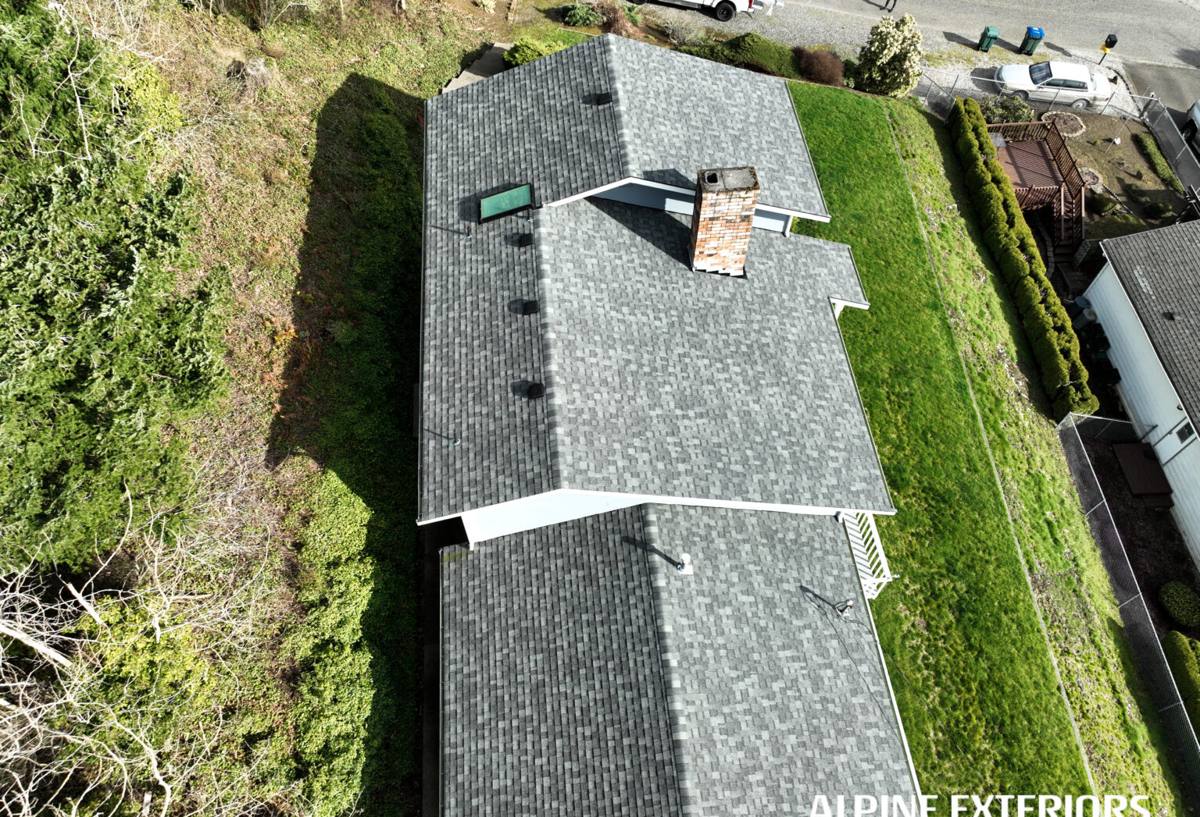
How to Tell a Riverside Roof Needs Repair, Not Replacement
Most roofs don't fail all at once — they show warning signs first, and catching those signs early is usually the difference between a repair bill and a full replacement. On Riverside homes, we typically see a handful of patterns repeat themselves.
- Dark streaking or a green-black tint on north-facing slopes, which usually means algae or early moss growth rather than a structural problem
- Granule buildup in gutters and downspouts, a sign that asphalt shingles are wearing thin
- Soft or spongy spots underfoot when walking the roof, which points to decking that has absorbed moisture
- Rust staining below metal flashing or vent boots, common where salt air has been eating at fasteners
- Water stains on interior ceilings near exterior walls, chimneys, or skylights — often the first sign homeowners actually notice
- Lifted, curled, or missing shingles after a windstorm, especially along the roof's edges and ridge
Any one of these on its own is usually a repair, not a replacement. It's when several of them show up together, or when the underlying decking has been wet for an extended period, that the conversation shifts toward a larger project. We'll tell you plainly which situation you're in — there's no benefit to us in overselling a repair job into a replacement, and an honest assessment is the only kind worth having.
What a Correct Roof Repair Actually Involves
A roof repair that actually lasts through another Everett winter is more than swapping out a few shingles. It's about tracing the water's actual path and fixing the whole system at that point, not just the spot where the leak happened to show up inside the house.
Flashing and Transitions
Most leaks on older Riverside homes trace back to flashing, not the field shingles themselves — the metal transitions around chimneys, skylights, dormers, and roof-to-wall junctions. Salt air shortens the working life of these components, and once a flashing seam opens up even slightly, driving rain will find it. A correct repair re-seats or replaces the flashing itself rather than just caulking over the gap, since caulk is a short-term patch, not a fix.
Decking and Structural Checks
Once shingles are pulled back, we check the plywood or plank decking underneath for soft spots, delamination, or rot. Wet decking has to be replaced before new roofing goes down — covering damaged decking with new shingles just hides the problem and guarantees a repeat visit, usually after the damage has spread further into the framing.
Matching Materials
For an isolated repair on an otherwise sound roof, we match the existing shingle profile, color, and weight as closely as the manufacturer's current line allows. Discontinued colors sometimes require pulling a slightly larger section so the patch doesn't stand out as a obvious mismatched square in the middle of the roof plane.
Roofing Materials Common on Riverside Homes
Riverside's housing stock spans several decades, so we see a mix of roofing materials on repair calls. Each behaves differently under salt air, moss pressure, and sustained rain, which affects how we approach a repair.
| Material | Typical Repair Considerations | Moss/Algae Resistance |
|---|---|---|
| Asphalt composition shingle | Most common; granule loss and nail pops are typical repair triggers | Moderate — algae-resistant granule versions help but aren't immune |
| Cedar shake/shingle | Requires matching weathered material carefully; individual shakes can be replaced without disturbing the whole field | Lower — organic material retains moisture longer in shaded areas |
| Metal (standing seam or panel) | Repairs focus on seams, fasteners, and flashing rather than the panels themselves | High — sheds moss and water quickly if slope allows |
| Torch-down/flat membrane | Common on additions and low-slope sections; seam failures are the usual culprit | Moderate — ponding water on flat sections invites growth |
We'll tell you honestly whether your existing material is worth repairing in place or whether the section in question has reached the point of diminishing returns — that call depends on the material's age and condition, not on which material we'd simply prefer to sell.
Our Roof Repair Process
We keep the process straightforward, and every step happens before you're asked to commit to anything.
- On-roof inspection: We walk the roof (weather permitting) and inspect from the interior attic space when accessible, tracing suspected leaks to their actual source rather than the spot where water happens to be showing.
- Written assessment: You get a clear explanation of what's failing, why, and what a proper fix requires — including whether moss or debris removal needs to happen first so we're not repairing over a mess.
- Repair scope and estimate: A straightforward estimate covering materials, labor, and any decking replacement if it's needed, with no surprise add-ons once work begins.
- The repair itself: Old material is removed cleanly, decking is checked and replaced where necessary, and flashing, underlayment, and shingles go back in correctly — sequenced so water always sheds downhill and away from seams.
- Cleanup and walkthrough: Gutters and ground are cleared of debris, and we walk you through what was done and what to watch for going forward.
What Roof Repair Costs Depend On
Every repair is different, but the price generally comes down to a few consistent factors. We won't quote a number without seeing the roof, but this is what tends to move the estimate up or down.
| Factor | Why It Matters |
|---|---|
| Extent of decking damage | Sound decking keeps a repair small; rotted plywood adds material and labor to replace |
| Roof pitch and access | Steep sections or roofs surrounded by trees take longer to work safely |
| Material availability | Matching an older or discontinued shingle line can require sourcing time or a larger patch area |
| Number of penetrations involved | Chimneys, skylights, and multiple vents each add flashing work beyond the field shingles |
| Moss or debris removal needed first | Heavily grown-in sections need to be cleared before the actual repair can be assessed accurately |
Moss, Algae, and the Long Wet Season
Snohomish County's wet season runs long, and shaded, tree-lined lots like many in Riverside stay damp even between storms. Moss doesn't just sit on top of shingles — its rhizoids work down into the granule layer and lift shingle edges, which is exactly where water gets underneath the roofing system instead of running off of it. Left unaddressed long enough, moss growth turns a simple maintenance issue into an actual repair.
Where a repair is being done in a moss-prone area, we treat the surrounding roof surface as part of the job, not an afterthought. That means physically clearing built-up moss (rather than pressure-washing, which can strip granules and shorten shingle life), and discussing zinc or copper strip options as an ongoing prevention measure for the future. Prevention is far cheaper than repeated repair, and a roof that's kept clear of moss buildup will consistently outlast one that isn't.
Why Hiring a Crew That Already Works in Riverside Matters
Roofing repair work in a neighborhood like Riverside benefits from familiarity with the area's specific conditions — the salt exposure off the water, the tree canopy that shades certain lots year-round, and the mix of home ages that means older flashing details and newer synthetic underlayments both show up on the same street. A crew that already does this kind of work locally recognizes those patterns quickly instead of treating every roof as a blank slate.
Local familiarity also matters for practical reasons: knowing Snohomish County's permit requirements for the scope of work involved, understanding typical access constraints on tighter Riverside lots, and being realistic about scheduling around the region's wet-season weather windows. None of that replaces a careful, individual inspection of your specific roof — but it does mean fewer surprises once work is underway.
A Simple Maintenance Checklist for Riverside Homeowners
Between professional inspections, a few habits go a long way toward catching problems while they're still small and inexpensive to fix.
- Clear gutters and downspouts at least twice a year, more often if you have heavy tree cover overhead
- Look for streaking, moss patches, or dark staining from the ground after major storms
- Trim back branches that overhang or touch the roof surface to reduce shade and debris buildup
- Check the attic after heavy rain for damp insulation, staining, or daylight where there shouldn't be any
- Have flashing around chimneys and skylights checked every few years, since these are the most common failure points
- Don't ignore a small water stain on a ceiling — trace it before it becomes a bigger repair
If you're seeing any of the warning signs above, or it's simply been a while since your roof was looked at, we're happy to come out and take an honest look. The estimate is free, there's no pressure attached to it, and you'll walk away knowing exactly what your roof needs — whether that's a small repair or nothing at all right now. Use the form below to get started.