 Everett
 Roofing on the Port Gardner Bluff Is Its Own Job
Port Gardner sits up on the bluff overlooking the bay, which means the roofs here take a different beating than a roof three miles inland in a sheltered subdivision. You've got salt-laden air coming off the water, wind that gets funneled and accelerated along the bluff face, driving rain that hits shingles at an angle instead of falling straight down, and a heavy tree canopy in a lot of the older streets that keeps everything shaded and damp for months at a time. None of that is unusual for Everett or Snohomish County generally — but Port Gardner gets a concentrated version of it, and a roof that would be perfectly fine in a drier, more sheltered part of town can start showing problems here years earlier than expected.
This page is specifically about asphalt shingle roofing for Port Gardner homes — what the climate demands, what a correct installation actually involves, and why the details matter more here than they do in an easier neighborhood.
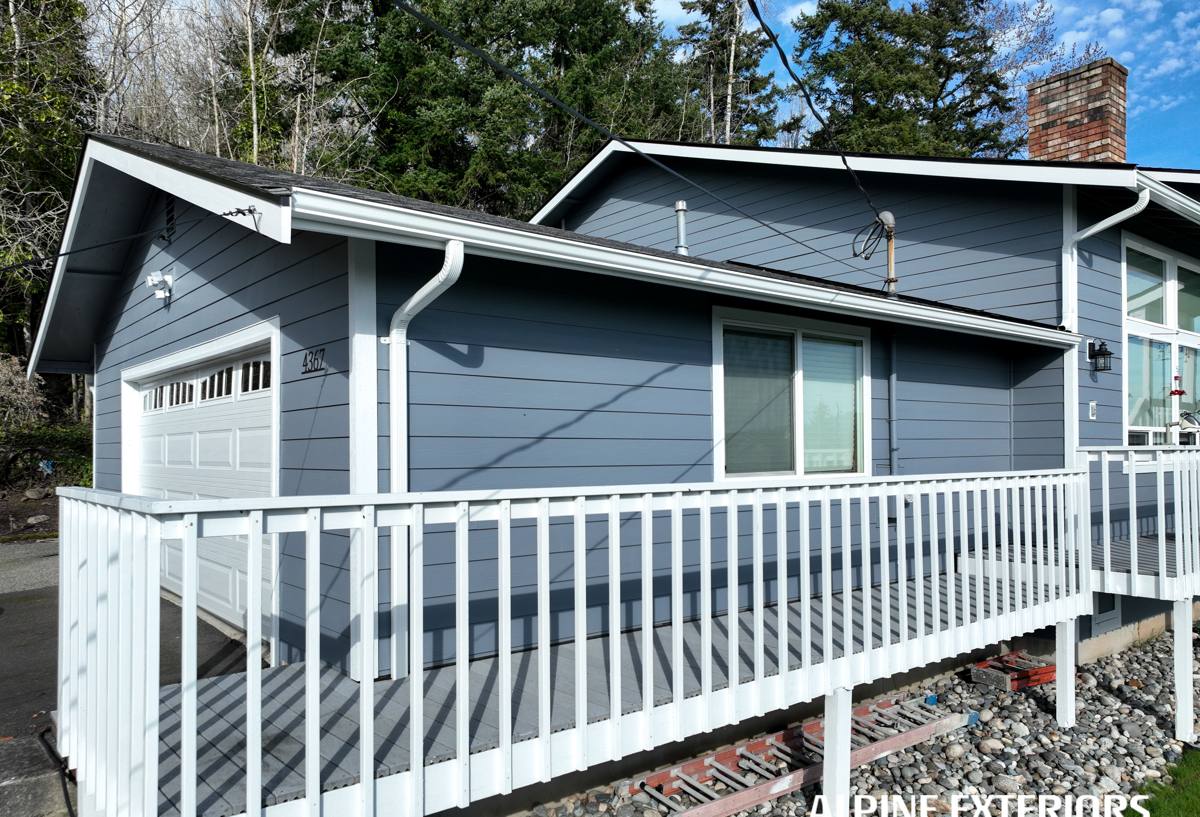
What Salt Air, Driving Rain, and Moss Actually Do to a Shingle Roof
Salt Air
Salt-laden air doesn't damage asphalt shingles the way it corrodes metal, but it does accelerate wear on exposed metal components — flashing, drip edge, roof vents, nail heads, and gutter hardware. Over years, that shows up as rust streaking, weakened fastener holding power, and flashing that fails before the shingles around it do. On a bluff-front property, this is one of the most common reasons a roof develops a leak at a valley or chimney years before the shingle field itself is worn out.
Driving Rain
Wind off the bay doesn't let rain fall straight — it pushes it sideways and up under shingle tabs, laps, and any flashing that isn't sealed and lapped correctly. A roof that's "good enough" for a calm inland lot can leak at Port Gardner because water is being forced into gaps that would never see moisture in a less exposed location. This is why underlayment coverage, proper shingle nailing patterns, and flashing detail work matter more here than the shingle brand itself.
Moss and Algae
Shade from mature trees, persistent damp air, and the Pacific Northwest's long wet season combine to make moss and algae growth a near-constant maintenance issue on north-facing and shaded slopes throughout Port Gardner. Moss isn't just cosmetic — its root structure lifts shingle edges, holds moisture against the roof deck, and accelerates granule loss. Left unchecked for a few years, a mossy roof section will wear out well before the rest of the roof.
What a Correct Installation Looks Like Here
An asphalt shingle roof built for Port Gardner's conditions isn't a different product than what goes on any other Everett roof — it's the same materials installed with more attention to the details that matter in this exposure.
- Full underlayment coverage, not spot coverage, with synthetic underlayment that handles the wetter install season better than old-style felt.
- Ice-and-water shield at eaves, valleys, and around penetrations — the areas most likely to see wind-driven water forced backward under shingles.
- Corrosion-resistant flashing and fasteners at chimneys, skylights, sidewalls, and valleys, given the salt exposure on bluff-facing roofs.
- Balanced attic ventilation — intake at the eaves, exhaust at the ridge — to keep moisture from condensing on the underside of the deck, which is a major contributor to premature moss and rot in shaded, damp neighborhoods.
- Proper nailing pattern and wind-rated shingles matched to the exposure of the specific roof slope, not a one-size-fits-all spec.
None of this is exotic. It's standard trade practice done thoroughly instead of rushed — which is exactly where a lot of roofs in this kind of exposure go wrong.
Choosing the Right Shingle for This Exposure
Architectural (laminated) shingles are the better fit for most Port Gardner homes over basic 3-tab shingles. They carry a heavier weight, a higher wind rating, and generally more granule coverage — all things that matter directly on a bluff-exposed roof. Most manufacturers also offer algae-resistant shingles with copper-infused granules built to slow the blue-green algae streaking that's common on damp, shaded Pacific Northwest roofs. It doesn't eliminate the need for moss maintenance, but it slows the buildup meaningfully over the life of the roof.
We'll walk you through the manufacturer options and warranty structures that make sense for your roof's slope, sun exposure, and tree cover, rather than pushing one product across every job. A steep, shaded, north-facing roof and a sunnier south-facing roof on the same street can reasonably call for different shingle choices.
Shingle Grade Comparison
| Shingle Type | Typical Lifespan | Best Fit For |
|---|---|---|
| 3-Tab | 15–20 years | Budget-driven projects, lower wind exposure |
| Architectural / Laminated | 25–30+ years | Most Port Gardner homes — bluff wind exposure, driving rain |
| Algae-Resistant Architectural | 25–30+ years | Shaded, tree-covered lots with heavy moss/algae history |
| Impact-Rated / Premium | 30+ years | Homeowners prioritizing longevity and warranty strength |
Our Process on a Port Gardner Roof
- Inspection and assessment. We look at the current shingles, flashing condition, deck moisture (especially under any moss or shaded sections), attic ventilation, and the specific wind exposure of your roof's slopes given its position on the bluff.
- Tear-off and deck check. Old roofing comes off down to the deck so we can see the actual condition of the sheathing — soft or delaminated deck sections get replaced before anything new goes down, not covered over.
- Underlayment and flashing. Full synthetic underlayment plus ice-and-water shield at the vulnerable areas, and new flashing everywhere the old flashing shows corrosion or fatigue.
- Ventilation correction. If the attic isn't venting properly — a common issue on older Port Gardner homes — we address intake and exhaust balance as part of the job, not as an afterthought.
- Shingle installation. Installed to the manufacturer's nailing and exposure spec, matched to the wind rating your roof actually needs.
- Cleanup and walkthrough. Magnetic sweep for nails, full debris removal, and a walkthrough so you know exactly what was done and why.
Repair or Replace? Signs to Watch For
Not every roof problem on a Port Gardner home means a full replacement. Here's a general read on when repair makes sense versus when replacement is the more honest answer.
- Isolated flashing leaks around a single chimney or valley on an otherwise sound roof — usually a repair, not a full tear-off.
- Moss buildup with intact granules underneath — often a cleaning and maintenance issue, not a roofing failure.
- Widespread granule loss and curling shingles across multiple slopes — a sign the roof is at or past its service life.
- Soft spots or staining on the attic deck in more than one area — usually points to a systemic moisture problem worth a full evaluation.
- Roof age near or past 20–25 years combined with any of the above — replacement is typically the more cost-effective path at that point.
What Affects the Cost of a Port Gardner Re-Roof
| Factor | Why It Matters Here |
|---|---|
| Roof pitch and complexity | Steeper, multi-valley roofs common on bluff lots take more labor and flashing detail |
| Deck condition | Moisture from moss and shade can mean deck repair costs found during tear-off |
| Shingle grade | Algae-resistant and architectural shingles cost more upfront, less in maintenance |
| Ventilation upgrades | Correcting intake/exhaust balance adds cost but protects the new roof |
| Access and staging | Bluff-lot driveways and tree cover can affect equipment staging and cleanup time |
We give straightforward, itemized estimates so you can see exactly where the cost is going — no vague lump-sum numbers.
Why a Crew That Already Works Port Gardner Matters
A roofing crew that's worked this specific stretch of Everett knows which slopes need extra flashing attention, which streets hold moss year-round because of tree cover, and how the wind actually behaves off the bay on this bluff versus a more sheltered part of the city. That's not something you get from a general contractor who mostly works flatter, more sheltered neighborhoods inland. It shows up in fewer callbacks, fewer surprises during tear-off, and a roof that's built for the exposure it's actually going to face — not a generic Snohomish County spec.
If you're seeing moss buildup, granule loss in the gutters, or a roof that's simply getting up in years, we're glad to take a look and give you a straightforward read on where things stand. Reach out through the form below for a free, no-pressure estimate.