 Everett
 A Waterfront Neighborhood That's Hard on Siding
Bayside sits close to Everett's waterfront, which means homes here take a different kind of weathering than houses further inland in Snohomish County. The air carries salt off Port Gardner Bay and the wider Puget Sound, wind-driven rain hits exterior walls at an angle instead of falling straight down, and the tree cover common in this part of Everett keeps north- and east-facing walls shaded and damp for long stretches of the year. None of that is a defect in a home. It's just what waterfront and near-waterfront living in the Pacific Northwest does to exterior materials over time, and it's why siding repair requests from Bayside tend to look a little different than the calls we get from drier, more sheltered parts of the region.
Salt air accelerates corrosion on fasteners and trim metal. Driving rain finds its way into laps, seams, and butt joints that would stay dry in a calmer climate. And the long moss season here, often stretching from fall through spring, keeps organic growth active on shaded siding far longer than most homeowners expect. Any repair plan for a Bayside home needs to account for all three, not just patch the visible damage and move on.
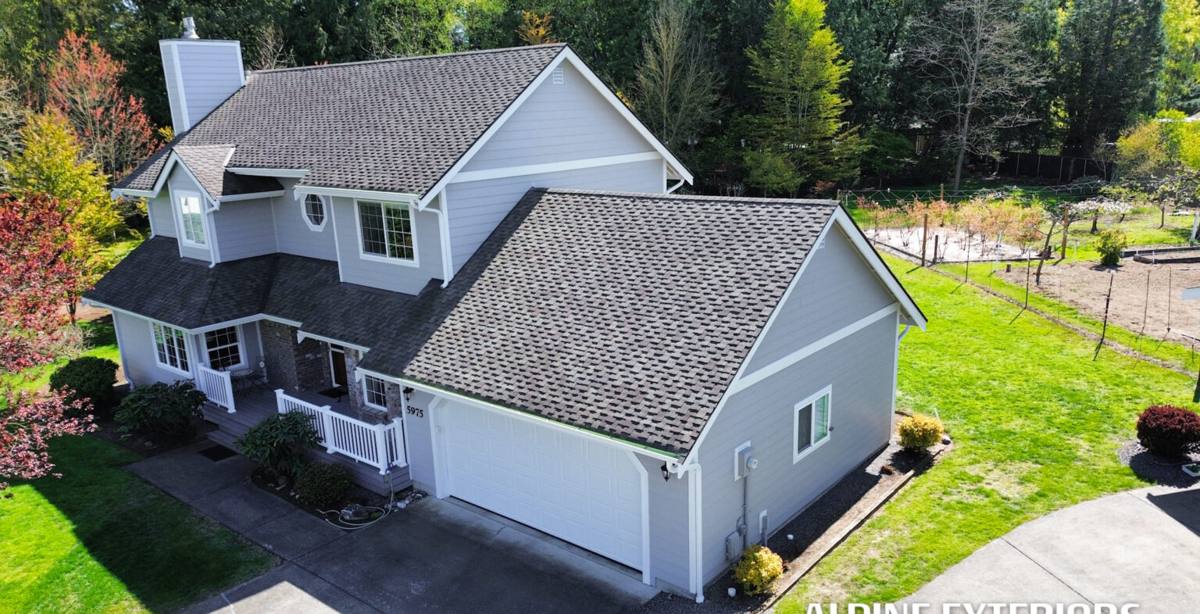
Signs Your Siding Needs Repair, Not Just Cleaning
Moisture and Rot Signs
Soft spots, dark staining, or a slightly spongy feel when you press on a board are early signs that moisture has gotten behind the surface. On wood-based products this often means active rot underneath even when the face still looks intact. On fiber cement, staining at seams or fastener heads usually points to a flashing or caulking failure rather than the material itself failing.
Storm and Impact Damage
Cracked or dented boards, popped fasteners, and sections that have pulled away from the wall are common after the wind events that roll through Snohomish County in fall and winter. Left alone, even a small crack becomes an entry point for the driving rain that's typical of a bayside exposure.
Moss, Algae, and Persistent Green or Black Staining
Some surface growth is cosmetic and comes off with a gentle wash. But moss that keeps returning to the same spots, especially at the base of walls or under eaves with poor airflow, is usually a sign that the siding in that area stays wet longer than it should. That's worth a closer look, not just another cleaning.
What's Actually Causing the Damage
Most of the repair calls we run in this part of Everett trace back to a handful of root causes:
- Wind-driven rain forcing water into horizontal laps and butt joints on the walls that face open water or prevailing weather
- Caulking that has dried out, shrunk, or separated at trim and window edges
- Flashing that was undersized, missing, or installed incorrectly above windows, doors, and roof-to-wall transitions
- Splash-back from grade, gutters, or downspouts that keeps the bottom courses of siding wet
- Shaded, poorly ventilated wall sections that hold moisture and feed moss and mildew growth
A repair that only replaces the damaged board without addressing one of these causes tends to fail again within a season or two. That's the single biggest mistake we see in patch jobs done without a real diagnosis first.
What a Correct Siding Repair Involves
Diagnosing the Real Cause
Before anything gets pulled off the wall, we trace the moisture path. That means checking the flashing detail above the damaged area, looking at the condition of the weather-resistant barrier underneath, and confirming whether the damage is isolated or part of a wider pattern along that wall.
Matching Existing Material and Finish
If your home already has James Hardie fiber cement siding, matching board profile, exposure, and ColorPlus finish is straightforward because the product line is consistent and well documented. If the existing siding is another material, matching gets harder, and we'll walk you through the realistic options rather than promising a seamless patch that isn't achievable.
Flashing, Sealing, and Water Management
Every repair we do resets the water management detail in that section of wall, not just the visible cladding. That includes correct head flashing at openings, proper lap sequencing so water sheds outward, and fastening that meets manufacturer spacing and clearance requirements rather than whatever gets the board to sit flat.
Repair or Replace? How We Help You Decide
Not every damaged section calls for a full re-side, and not every home is a good candidate for another round of patching. Here's how we weigh it:
| Factor | Favors Repair | Favors Replacement |
|---|---|---|
| Extent of damage | Isolated to one or two wall sections | Recurring across multiple elevations |
| Underlying material | Existing James Hardie siding in otherwise good condition | Original material is failing broadly (rot, warping, chalking, repeated cracking) |
| Moisture behind the wall | Barrier and sheathing test dry | Sheathing shows sustained water damage |
| Age of the siding | Well within expected service life | Near or past the end of its useful life |
| Match availability | Color and profile can be matched closely | Product discontinued or too weathered to blend |
When the damage is contained and the wall assembly behind it is dry, a well-executed repair is the right call, and it's usually the more cost-effective one. When we find widespread moisture intrusion or a siding material that's simply reached the end of what it can do, we'll say so plainly and talk through what a re-side with James Hardie fiber cement would look like instead.
Our Siding Repair Process
The steps below are the same ones we follow on every repair in Bayside and the surrounding Everett neighborhoods:
- On-site inspection, including a moisture check on the affected sheathing, not just a visual look at the siding face
- A clear explanation of what caused the damage and what we recommend, before any work starts
- Sourcing or matching material, prioritizing James Hardie product lines and ColorPlus finishes when the existing siding allows it
- Careful removal of the damaged section, checking the weather barrier and framing underneath as we go
- Repair or replacement of any compromised sheathing or house wrap found during removal
- Installation of new siding with correct flashing, fastening, and lap detail
- Finish work so the repair blends with the surrounding wall as closely as the material allows
- A final walk-through so you know exactly what was done and why
We don't skip the moisture check to save time. On a bayside property, hidden moisture is the difference between a repair that lasts and one you're calling us back about next winter.
Why We Repair With James Hardie Fiber Cement
We install James Hardie exclusively, and that shapes how we approach repairs too. Hardie's HZ5 product line is engineered for wetter, harsher climates like this one, the fiber cement itself is non-combustible, and the ColorPlus factory finish is baked on rather than field-applied, which means it holds color and resists peeling far longer than a site-painted patch would. When we repair a Bayside home that already has Hardie siding, we can usually match the existing board almost exactly because the product specifications are consistent and well supported by the manufacturer.
We don't install LP SmartSide, vinyl, Cemplank, Allura, primed spruce, or cedar, and that's a deliberate choice based on years of seeing how those products age in wet, salt-exposed climates, not a knock on any homeowner who has one of them now. If your home has one of these materials and needs a repair, we'll still do honest work on it. But if you're facing repeat repairs on the same wall, it's worth talking about whether continuing to patch is the best use of your money.
When Patching Stops Being the Right Answer
There's a point where repair costs start adding up to more than they're worth. Wood-based products that keep rotting at the same corner, vinyl that keeps cracking from impact or UV exposure, or fiber cement that was installed without proper flashing years ago and keeps letting water in at the same joint are all signs that the underlying problem is bigger than any one patch. In those cases, a full re-side with James Hardie is usually the more economical decision over a five- to ten-year horizon, even though the upfront cost is higher than another round of spot repairs. We'll always give you the honest comparison rather than just billing for another patch.
Before You Call: A Quick Homeowner Checklist
- Note which side of the house the damage is on, especially if it faces open water or prevailing wind
- Check whether the area stays damp or shaded most of the day
- Look for soft or spongy spots, not just visible cracks or stains
- Check gutters and downspouts near the damaged section for overflow or misdirected water
- Take note of how long the damage has been there and whether it's spreading
Having these details ready helps us diagnose the cause faster when we come out for an estimate.
Why Hiring a Crew That Already Works in Bayside Matters
Bayside isn't a large area, but its exposure varies block by block depending on how close a home sits to the water, how much tree cover it has, and which direction its walls face. A crew that regularly works this part of Everett already has a feel for which walls take the worst of the driving rain, where moss tends to come back no matter how often it's cleaned, and how local permitting and inspection work in Snohomish County. That local knowledge shows up in small but important decisions during a repair, like where to add extra flashing that wasn't in the original build or how to sequence a patch so it survives the next wet season instead of just looking good for a few months.
If you're dealing with siding damage on a Bayside home, we're happy to take a look, explain what we find in plain terms, and give you a free, no-pressure estimate. There's a form below to get started.