 Everett
 Why North Everett Windows Wear Out Differently
North Everett sits close enough to Port Gardner Bay and the greater Puget Sound corridor that homes here take a different kind of weathering than houses further inland in Snohomish County. It's not one big storm that does the damage — it's the steady combination of salt-laden air, wind-driven rain that hits window faces at an angle instead of straight down, and long stretches of gray, damp months where surfaces rarely get a full chance to dry out. Add a heavy moss season on top of that, and window frames, sills, and the flashing details around them are under nearly constant low-grade stress for most of the year.
Generic window advice doesn't account for any of this. A window that performs fine in a drier part of the state can still fail early here if it wasn't installed with this specific exposure in mind. This page is about what custom window work actually needs to look like for a North Everett home — not a national franchise pitch, but the practical decisions that matter when your house is a few miles from saltwater and gets rained on sideways for half the year.
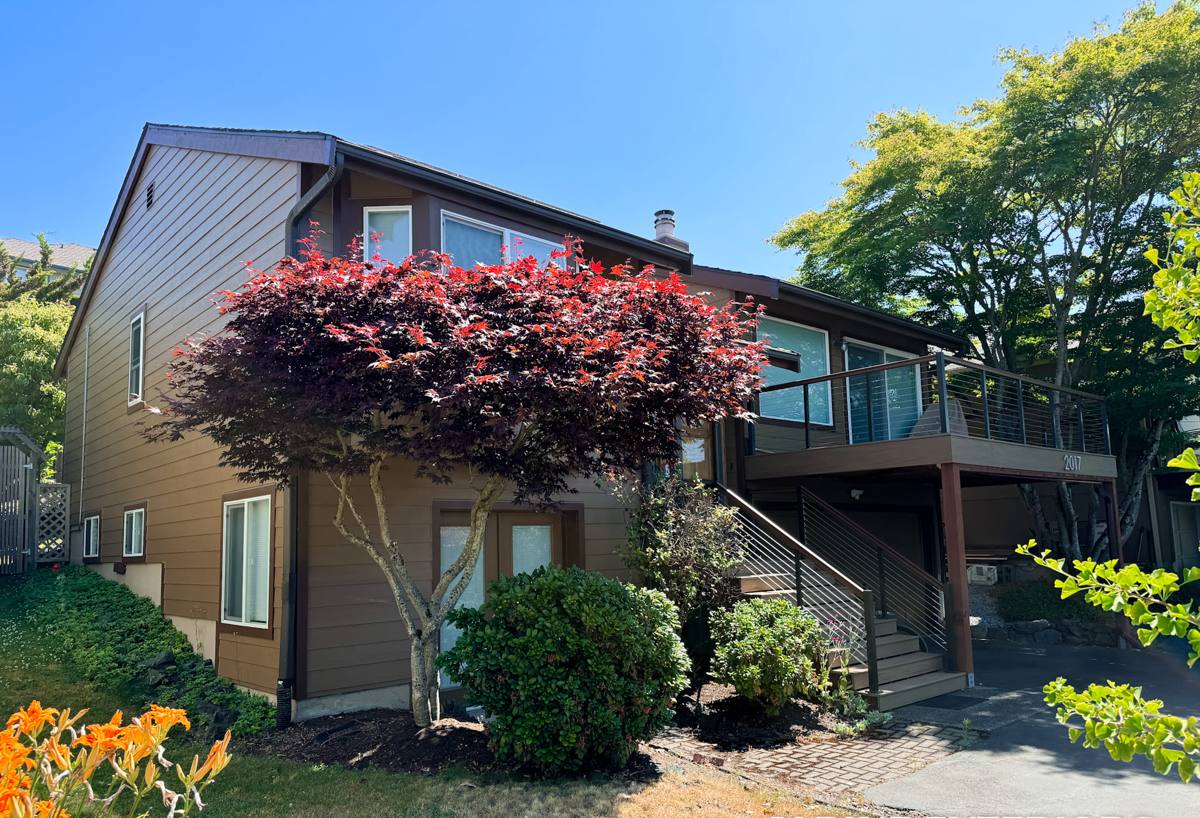
What Salt Air, Driving Rain, and Moss Season Actually Do to Windows
Salt Air
Airborne salt is corrosive to unprotected metal hardware — hinges, locks, balance mechanisms, and some lower-grade aluminum components. Over years, it can pit finishes and accelerate corrosion on parts that are supposed to move smoothly. It also breaks down cheaper sealants and gaskets faster than a drier inland climate would, which is why weatherstripping and seals on the west- and south-facing sides of a North Everett home often show wear before the rest of the house does.
Driving Rain
Wind-driven rain doesn't just run down a window — it pushes moisture sideways and upward, testing details that would never see water in a calmer climate: the top of the frame, the corners, the seam where the window meets the siding. This is where flashing and sealant quality matter more than the window brand itself. A great window with poor flashing will leak. A modest window with correct flashing usually won't.
Moss and Sustained Dampness
Everett's long wet season means moss and algae get a foothold anywhere moisture lingers — window sills, the tops of trim boards, and shaded north-facing walls especially. Beyond the cosmetic issue, sustained dampness against wood trim or sill material is a slow path to rot if the surface isn't sealed and detailed correctly, or if drainage paths get blocked by buildup over time.
What a Correct Custom Window Installation Involves Here
"Custom" doesn't just mean an unusual size or shape, though we do plenty of that for North Everett's mix of older homes and newer builds. It means every window is treated as its own installation, not a one-size-fits-all swap. For this climate, that includes:
- Full removal of the old window and inspection of the rough opening for hidden water damage or rot before anything new goes in
- Correct flashing sequence — sill pan, side flashing, and head flashing installed in the right order so water is always directed outward and down, never trapped behind the trim
- Sealants and backer rod rated for sustained UV and moisture exposure, not general-purpose caulk that hardens and cracks within a couple of seasons
- Shimming and leveling that keeps the window square so sashes operate smoothly and seals compress evenly around the whole frame
- Insulation of the gap between the window frame and the rough opening, sized correctly so it doesn't compress out or leave voids
- Exterior trim and caulk lines finished to shed water rather than collect it
Skipping or rushing any one of these steps is usually where callbacks come from — and in a driving-rain climate, a flashing shortcut that would go unnoticed in a mild climate shows up as a leak here within a season or two.
Choosing Frame Materials for a Marine Climate
There's no single "best" window material — the right choice depends on the home's style, budget, and how much upkeep you want to take on. Here's how the common options hold up specifically against salt air, driving rain, and moss:
| Material | How It Handles This Climate | Maintenance |
|---|---|---|
| Vinyl | Doesn't corrode or rot; handles moisture well; good baseline choice for most North Everett homes | Low — occasional cleaning, no painting |
| Fiberglass | Very stable in temperature swings and moisture; strong seal retention over time | Low — durable finish, minor cleaning |
| Wood-clad | Attractive for period or higher-end homes, but the exterior cladding must be detailed carefully to keep water away from the wood core | Moderate to higher — cladding needs periodic inspection at joints and sills |
| Aluminum | Strong but conducts cold and can be prone to condensation; needs a quality finish to resist salt-air corrosion over the long run | Moderate — watch hardware and finish wear |
For most North Everett homes, we lean toward vinyl or fiberglass for the bulk of window openings because they shrug off the salt-and-rain combination with the least long-term fuss. Wood-clad still has a place where the look matters and the homeowner is comfortable with more upkeep — we just make sure the cladding details are done right, since that's where wood-clad windows in this climate tend to fail if they're going to fail.
Glass and Weatherstripping Choices That Matter Here
Beyond the frame, two things make a real difference in a wet, salt-influenced climate:
Glass Packages
Dual-pane, low-E glass is the practical standard for this region — it manages heat loss and condensation risk better than older single-pane or basic dual-pane setups, and condensation control matters more here than in drier climates because of the sustained humidity. Argon-filled units add a modest efficiency bump; whether it's worth the upgrade cost depends on the specific opening and your budget.
Weatherstripping and Hardware
Corrosion-resistant hardware and quality compression seals are worth prioritizing over cosmetic upgrades if you have to choose. Cheap weatherstripping is one of the first things to give out under salt air and constant damp-dry cycling, and once seals fail, water intrusion and drafts follow.
Signs Your Current Windows Are Already Struggling
Because the damage here tends to be gradual, a lot of homeowners don't realize their windows are failing until it's fairly advanced. Worth checking for:
- Fogging or moisture between panes — a sign the seal has failed on a dual-pane unit
- Soft or discolored wood trim or sill around the window frame
- Visible moss or algae buildup on sills or trim that keeps coming back
- Windows that are hard to open, close, or lock, especially on the sides that face prevailing weather
- Drafts you can feel near the frame even when the window is fully closed
- Peeling or bubbling paint or finish around the window opening
- Visible corrosion on hinges, locks, or balance hardware
Any one of these on its own isn't necessarily an emergency, but a few together usually mean the window and its surrounding flashing are due for a real look, not just a caulk touch-up.
Our Process From Estimate to Finished Install
We keep this straightforward. We come out and look at the actual openings — not just measure for a quote, but check the condition of the trim, sill, and siding around each window, since that tells us what the installation actually needs. From there we walk through material and glass options that make sense for the home and the budget, with honest trade-offs explained rather than a hard upsell. Once you approve a plan, we schedule the install, protect the work area, remove the old windows, address the opening (repairing any hidden rot before it gets covered back up), and install with the flashing and sealing approach described above. We finish with trim and caulk lines detailed to shed water, and we walk the job with you before we call it done.
Why Local Experience in North Everett Matters
A crew that works Snohomish County regularly knows which exposures on a house take the worst of the driving rain, where moss tends to build up fastest, and which older North Everett homes commonly have specific rough-opening quirks from how they were originally built. That local pattern-recognition is what keeps a window job from becoming a callback. It also means we're not guessing at material choices — we're applying what consistently holds up against this specific combination of salt air, wind-driven rain, and a long wet season, rather than a generic recommendation that ignores the local climate.
Living With New Windows in This Climate
Even a correctly installed window benefits from a little seasonal attention here. Rinsing sills and tracks periodically discourages moss and algae buildup, checking caulk lines once a year catches small cracks before they become leaks, and keeping gutters and downspouts clear reduces the amount of water running down the wall near window openings in the first place. None of this is heavy maintenance — it's the kind of upkeep that keeps a well-installed window performing for its full lifespan instead of fighting the climate from year one.
If your North Everett home has windows showing any of the wear signs above, or you're planning a renovation and want windows installed correctly for this climate from the start, we're happy to come take a look. Estimates are free and there's no pressure — just an honest read on what your home actually needs.